
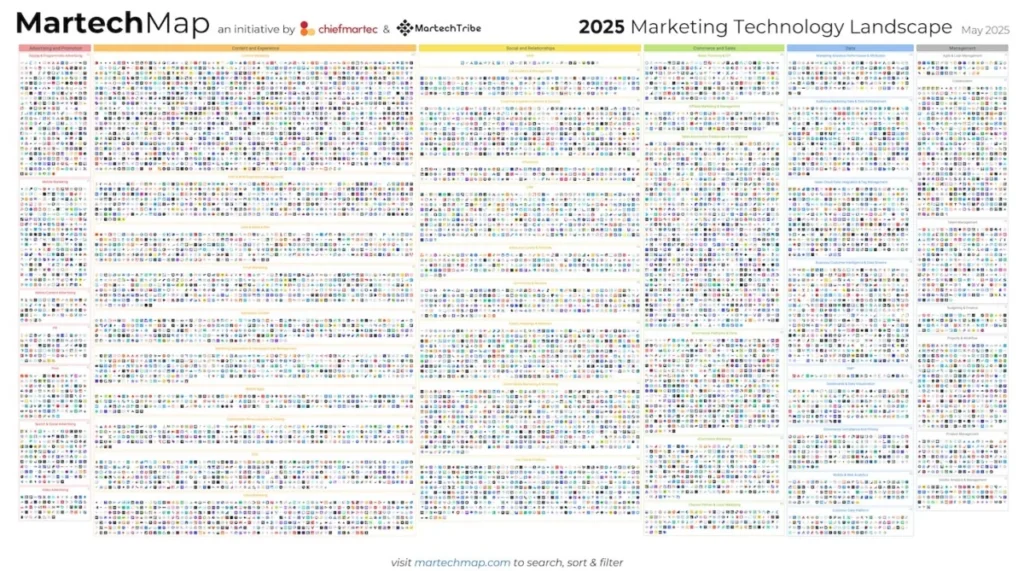
The Martech Explosion: 15,384 Solutions and the Rise of the "Hypertail"
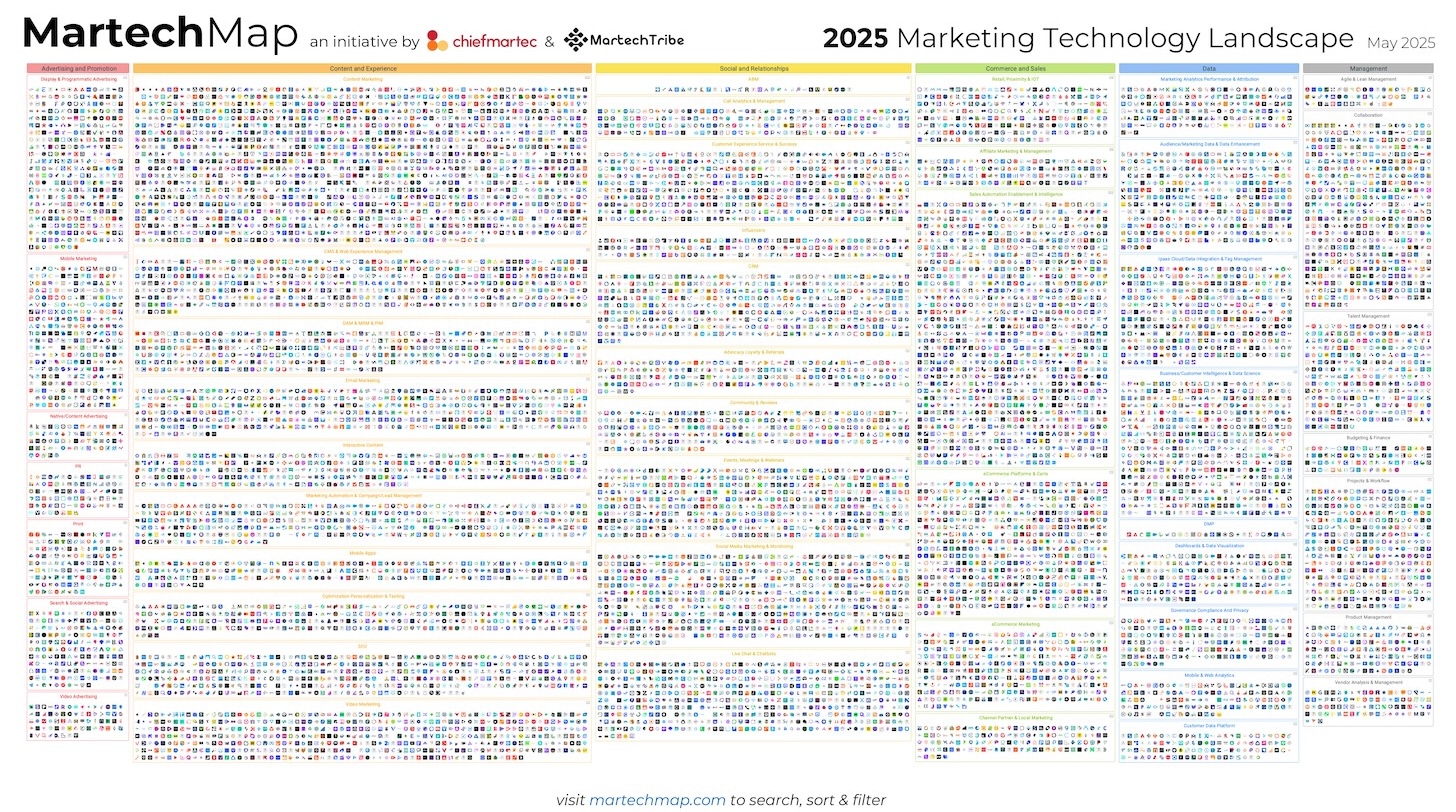
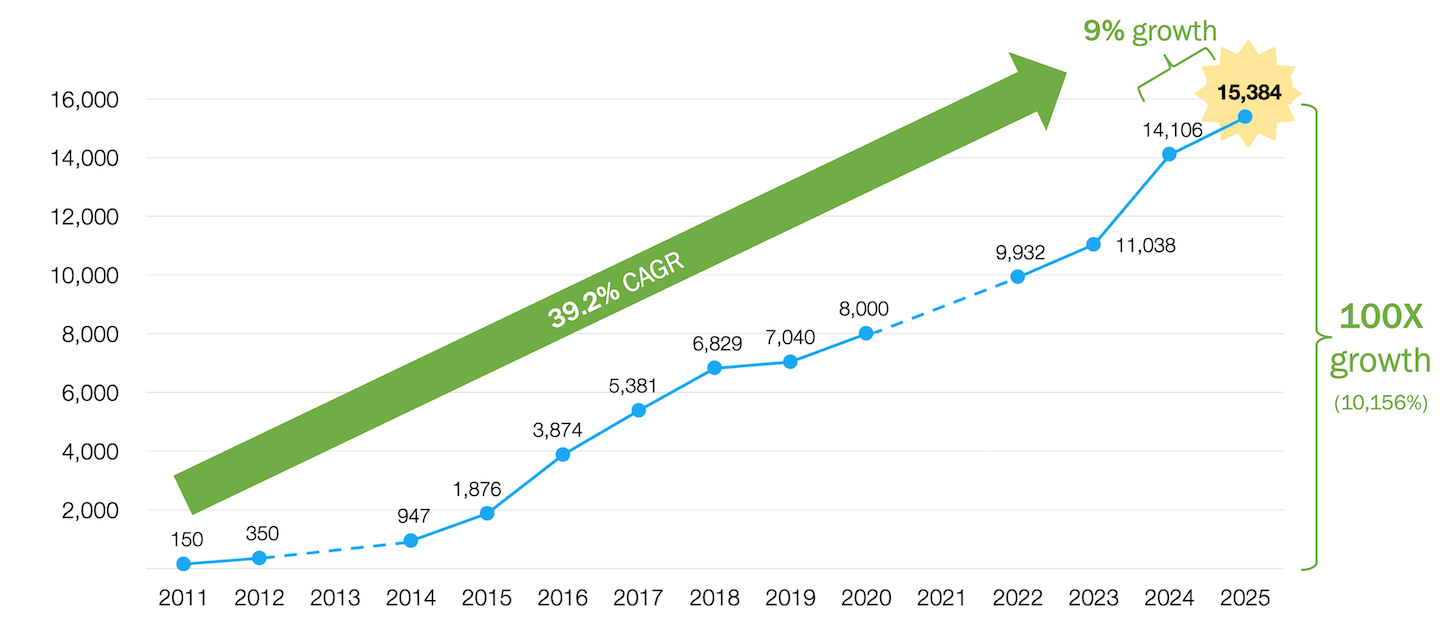
The marketing technology (martech) industry has reached a staggering milestone. According to the 2025 Marketing Technology Landscape, the ecosystem now boasts 15,384 distinct solutions—a 9% increase over last year’s count of 14,106. This growth, which defies years of industry skepticism and predictions of a market crash, signals that the digital transformation of marketing is not merely continuing; it is accelerating into an era of near-infinite, AI-driven software creation.
The findings, compiled by industry veteran Scott Brinker and researcher Frans Riemersma, paint a picture of a sector that is simultaneously consolidating its legacy players while rapidly expanding through an influx of AI-native startups and custom-built "hypertail" applications.
A Chronology of Growth: From 150 to 15,000+
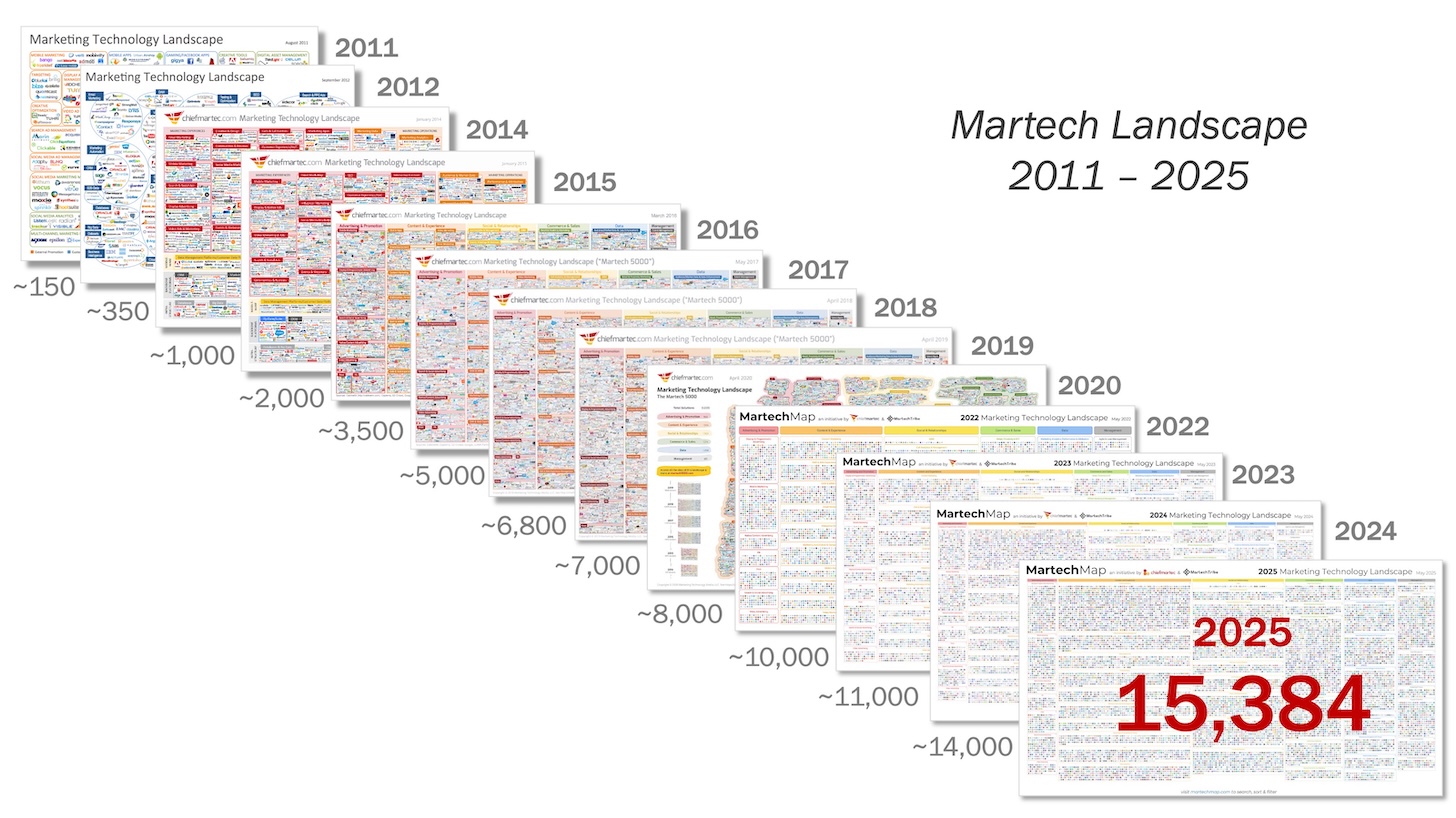
To understand the current state of martech, one must look back at the industry’s humble beginnings. When the first marketing technology landscape was unveiled in 2011, it categorized a mere 150 solutions. At the time, the "marketing technologist" was a nascent role, and the concept of a tech-integrated marketing department was viewed with curiosity rather than necessity.
Year after year, analysts predicted the "bubble" would burst. Instead, the landscape expanded at an exponential rate. By 2015, the numbers reached into the thousands, and by 2025, the growth has hit a 100x increase compared to the inaugural 2011 report. This 10,156% growth underscores a fundamental shift: marketing has evolved from a creative discipline into one defined by engineering, data science, and complex software stacks.
Data-Driven Insights: The Mechanics of the 2025 Landscape
The 2025 report is not a collection of vanity metrics; it is a rigorous exercise in market filtering. To arrive at the final tally of 15,384, researchers evaluated 11,133 new candidates, of which only 2,489 met the criteria for inclusion.
The Reality of Churn
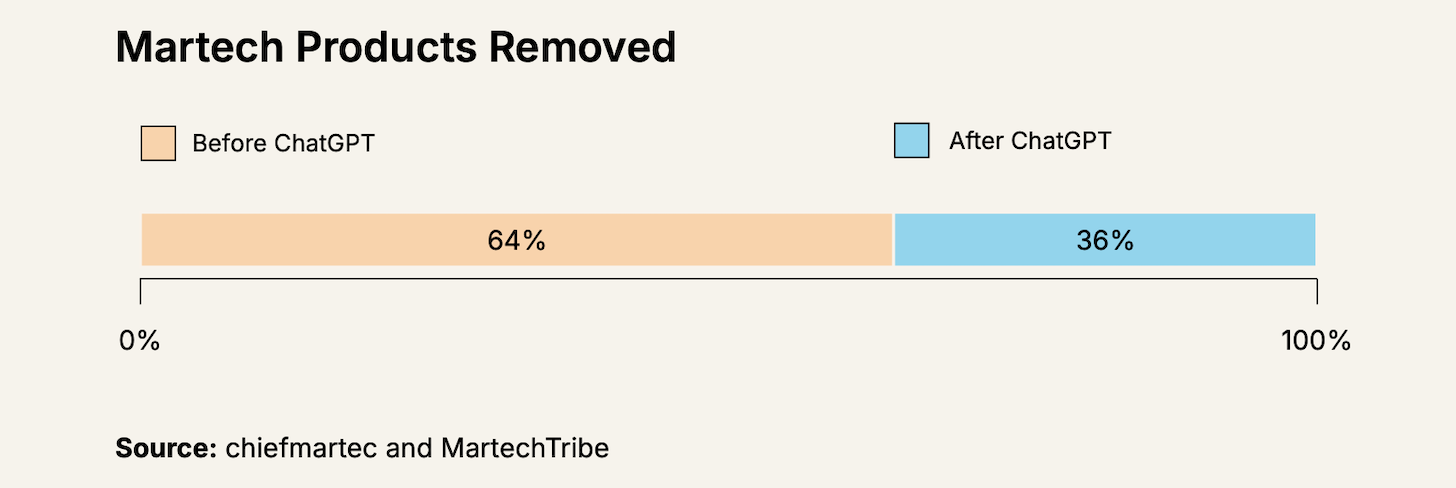
Consolidation is no longer a theory—it is an empirical reality. This year saw the removal of 1,211 solutions from the previous list, resulting in an 8.6% churn rate. Significantly, two-thirds of the companies that vanished were from the 2010–2020 cohort. This marks the "death of the salesperson" for a previous generation of martech vendors that failed to pivot or sustain their value propositions in an increasingly crowded market.
Growth by Domain
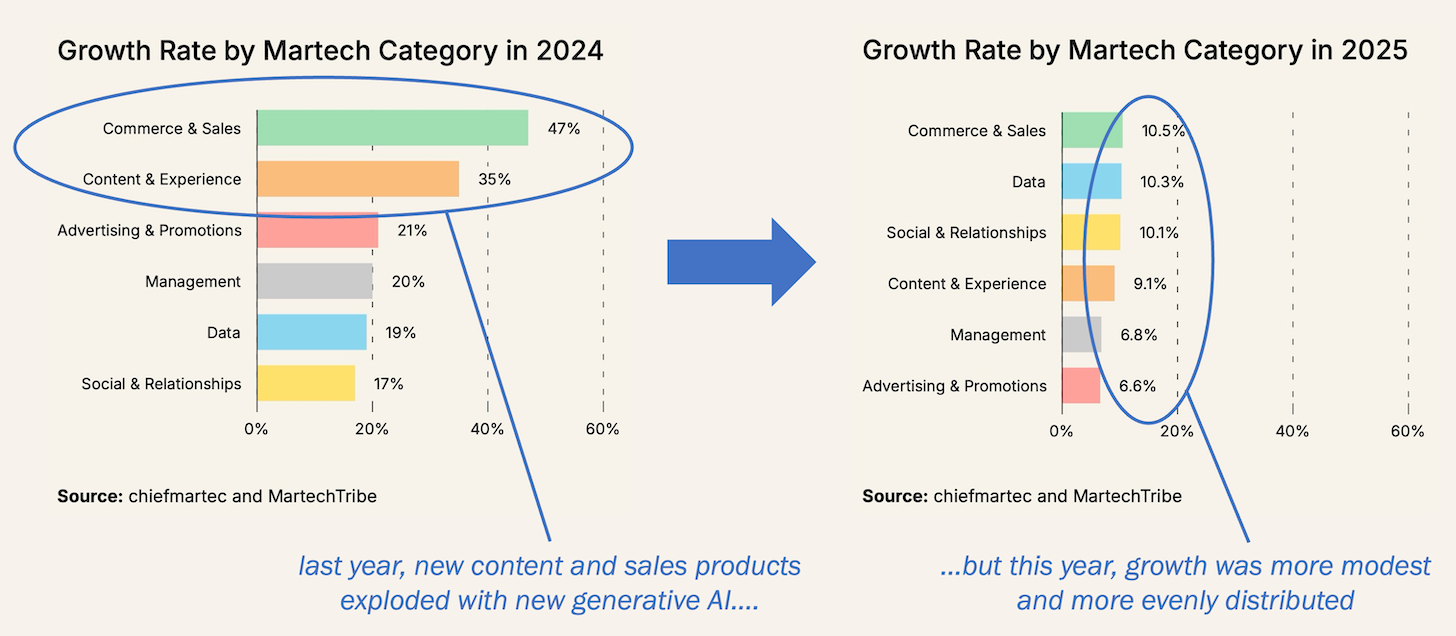
While the explosive growth seen in 2024—driven by the immediate aftermath of generative AI—has stabilized, growth remains consistent. Each of the six major martech domains saw a steady 7–10% expansion. Notably, the SEO category saw a 24% surge in products, growing from 212 to 262. This rise is attributed to the emergence of "AI Optimization" (AIO), as marketers scramble for tools to navigate the new landscape of AI-driven search and content generation.
Shifting Architectures: The Heart of the Stack
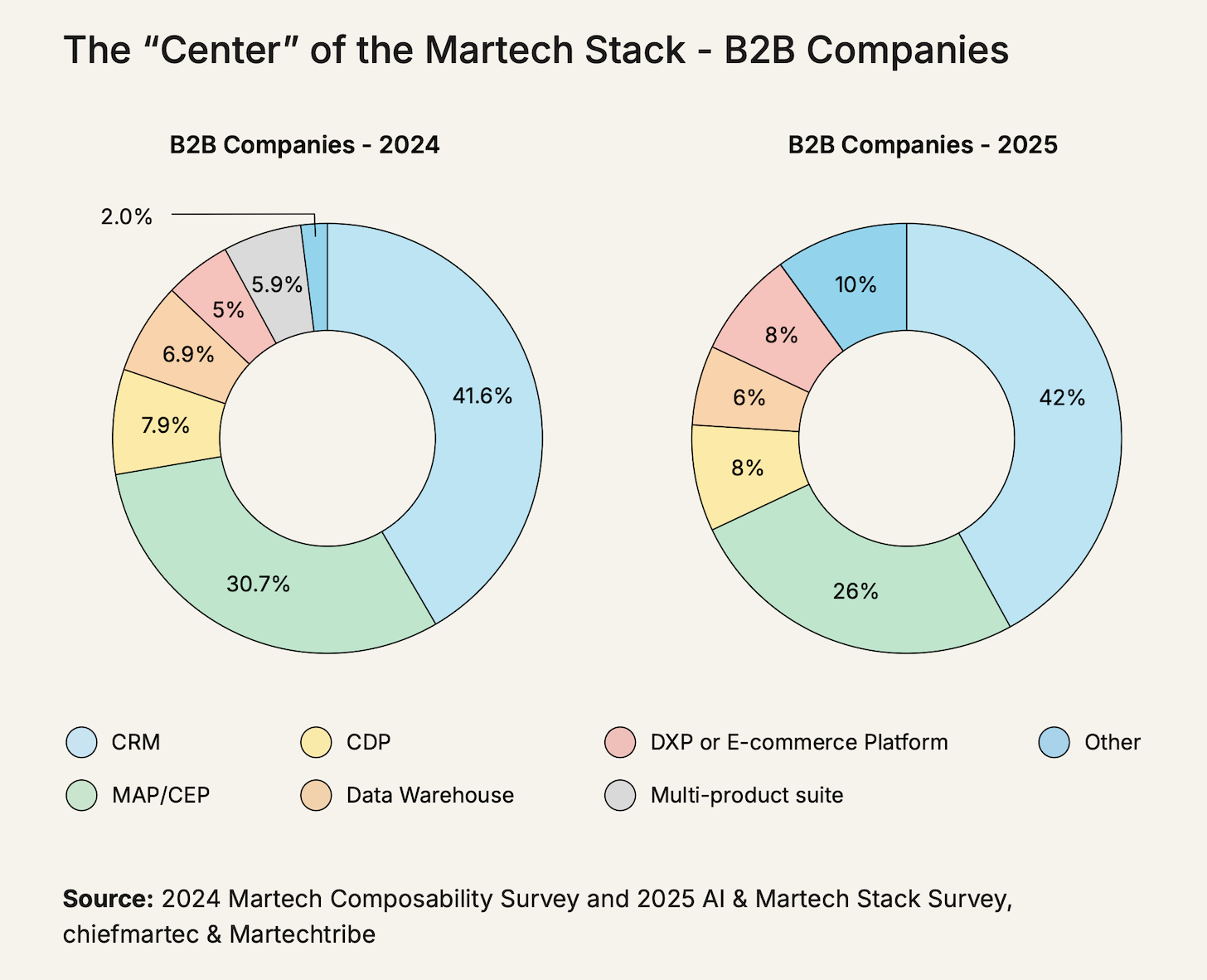
As the sheer volume of tools increases, marketing leaders are rethinking the "center" of their operations. In the B2B sector, the CRM and Marketing Automation Platforms (MAP) remain the primary anchors. However, a significant trend has emerged: the rise of "Other" as a category, which now accounts for 10% of B2B setups. This signifies a move toward bespoke, custom-built martech platforms, reversing a decade-long trend of reliance on standardized, commercial off-the-shelf software.
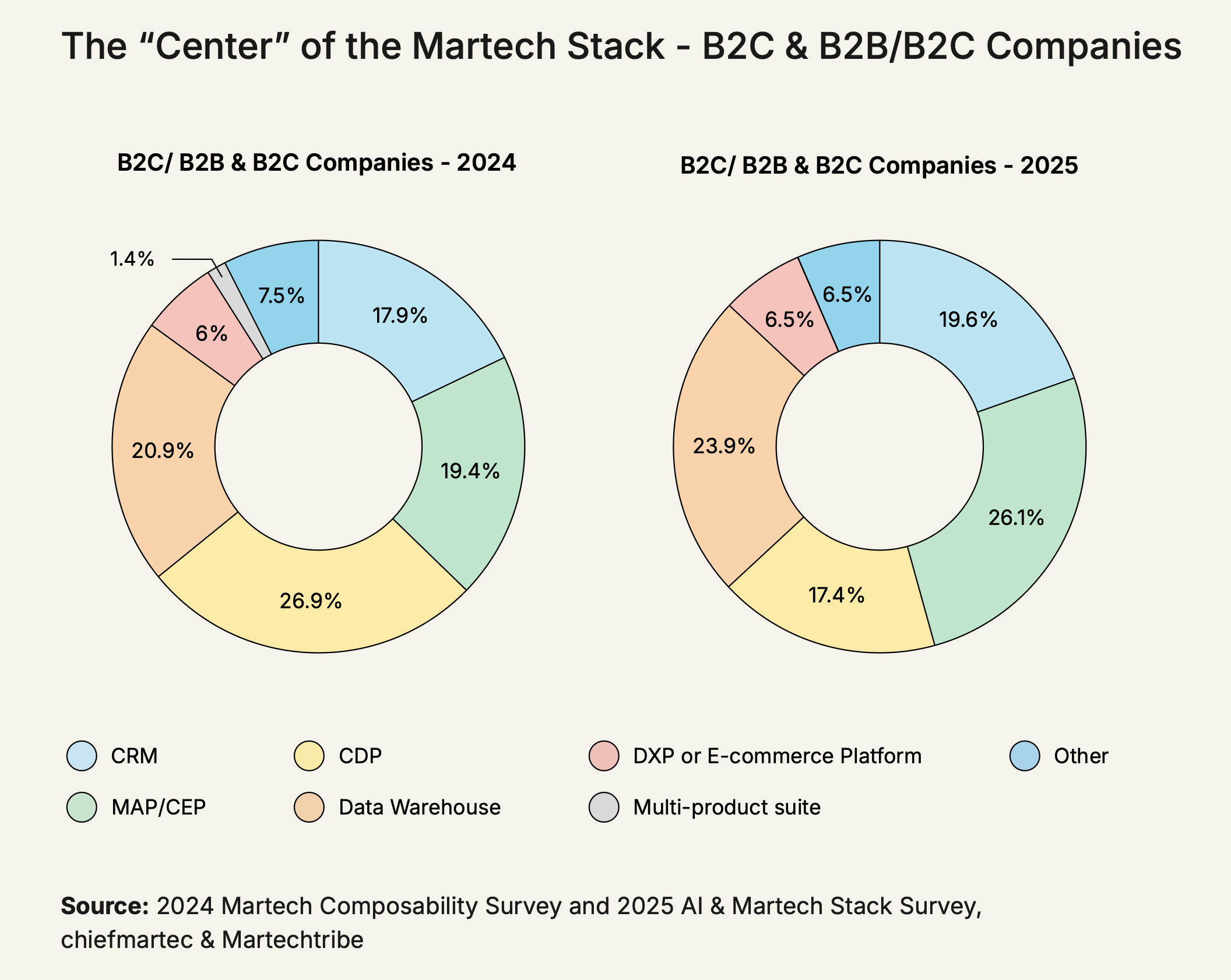
For B2C and hybrid organizations, the role of the Customer Data Platform (CDP) is undergoing a transformation. The survey shows a decline in CDPs being cited as the "center" of the stack (dropping from 26.9% to 17.4%). Instead, functions are migrating:
- The Data Layer: Cloud data warehouses are capturing more of the "center" (rising to 23.9%).
- The Engagement Layer: Marketing automation and customer engagement platforms (CEP) have expanded their influence (growing to 26.1%).
This migration suggests that the capabilities once unique to CDPs are being absorbed either into the backend data architecture—giving rise to "composable CDPs"—or into the frontend engagement tools that marketers use daily.
The "Hypertail": The Next Frontier of Software
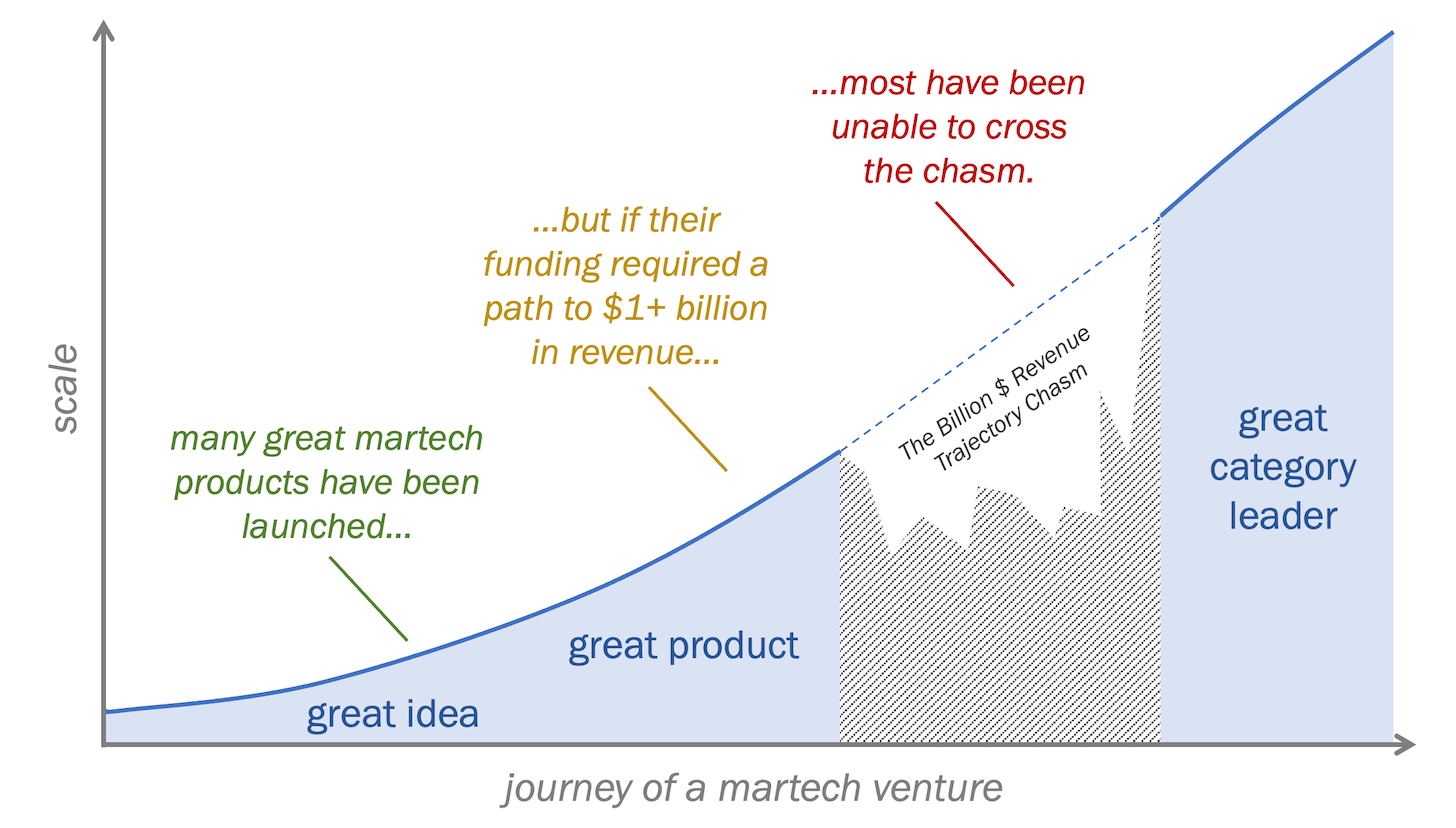
Perhaps the most profound takeaway from the 2025 report is the emergence of the "hypertail." While the 15,384 commercial products are visible, they represent only the tip of the iceberg.
The Era of "Vibe Coding"
The rise of low-code and no-code platforms, combined with the power of generative AI, has democratized software creation. Professional developers are now utilizing "vibe coding"—a process where complex programs are constructed in hours rather than weeks—while non-technical "citizen developers" use natural language prompts to create lightweight apps and automated workflows.
This is the manifestation of Clay Christensen’s theory of disruptive innovation. AI is serving the underserved, allowing marketers to "scratch their own itch" by building custom, ephemeral tools that solve specific, localized problems. These applications often exist outside of traditional IT oversight. When factoring in the automated programs generated by AI assistants like ChatGPT and Claude, the number of digital tools currently powering business operations is likely in the billions or even trillions.
Implications for Marketing Leaders
For the modern CMO, these findings present both an opportunity and a daunting challenge.
- Tech Stack Fluidity: The era of the monolithic, rigid tech stack is over. Modern stacks are fluid, with a core platform (CRM or Warehouse) acting as the anchor for a revolving, modular set of AI-native tools.
- Integration Over Acquisition: As companies continue to adopt more tools, the competitive advantage will not go to the company with the most software, but to the company that can best integrate these tools into a cohesive, data-driven workflow.
- The Rise of the Citizen Developer: Leadership must now account for the "hypertail." IT and Marketing departments must develop governance frameworks that encourage innovation via no-code tools without sacrificing data security or organizational coherence.
Conclusion: Looking Ahead
The State of Martech 2025 report makes it clear: we are living through a period of unprecedented software proliferation. The "martech bloat" that critics have warned about for a decade has not collapsed the industry; instead, it has evolved into a sophisticated, highly fragmented, and deeply automated ecosystem.
As Scott Brinker notes, the great circle of martech continues. The vendors that thrived in the last decade are facing the realities of consolidation, while the next generation of AI-native, custom-built solutions is already redefining the rules of the game. For those looking to navigate this landscape, the full report—available for download at the Martech Day portal—offers a critical roadmap for the year ahead.
The 2025 research was made possible through the support of industry partners including GrowthLoop, Hightouch, MetaRouter, MoEngage, Progress, and SAS, with additional data analysis provided by G2.
