
The AI Marketing Revolution: Scaling Strategy and Substance in 2026
The narrative surrounding Artificial Intelligence in marketing has evolved. We have moved past the initial "hype cycle" where AI was viewed merely as a tool to shave minutes off a task list. In 2026, the industry consensus is clear: AI does not just save time—it fundamentally redefines the boundaries of what is possible. For modern agencies and brands, the true cost of business isn’t the software subscription fee; it is the staggering loss of opportunity caused by manual, repetitive labor, generic messaging, and strategic decisions made in the absence of data.
Agencies that have successfully integrated AI into their core operations are pulling away from the pack. By executing with machine-level speed, personalizing at a depth previously thought impossible, and optimizing campaigns continuously, these organizations are transforming their marketing from a cost center into a high-precision engine of growth.
The Chronology of Adoption: From Automation to Orchestration
The integration of AI into marketing stacks has followed a predictable, yet rapid, trajectory over the last several years.
- 2023–2024 (The Era of Generative Drafting): Marketing teams primarily utilized LLMs like ChatGPT for ideation and basic copy generation. The focus was on overcoming "blank page syndrome" and accelerating the drafting of blog posts and social media captions.
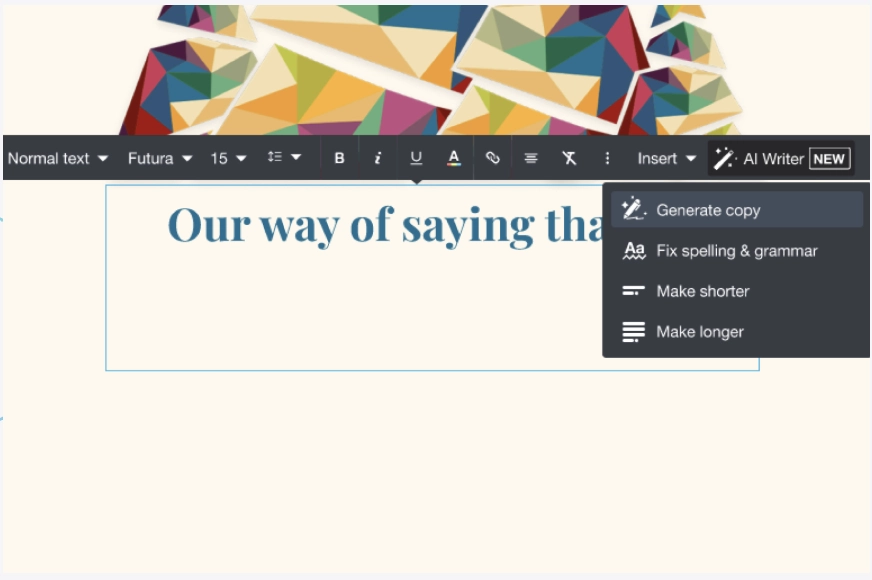
- 2025 (The Era of Integration): Platforms began embedding AI directly into the workflow. We saw the rise of "AI-in-the-loop" systems, where tools like Campaign Monitor, HubSpot, and Salesforce began offering native AI writers and predictive scoring, moving the technology from a standalone chatbot to a core component of the CRM and ESP.
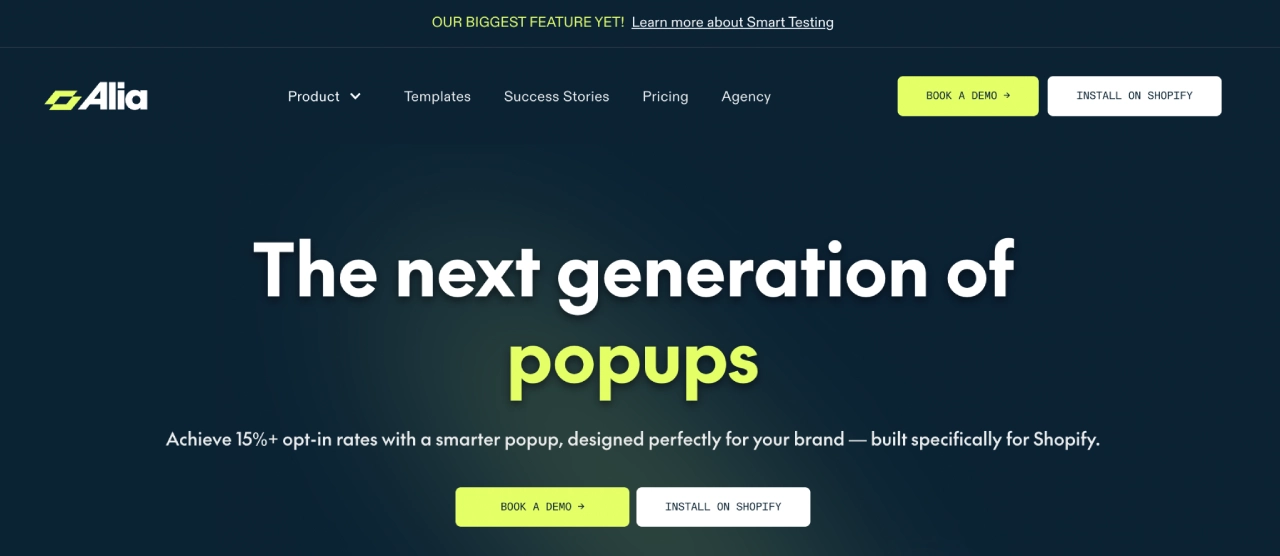
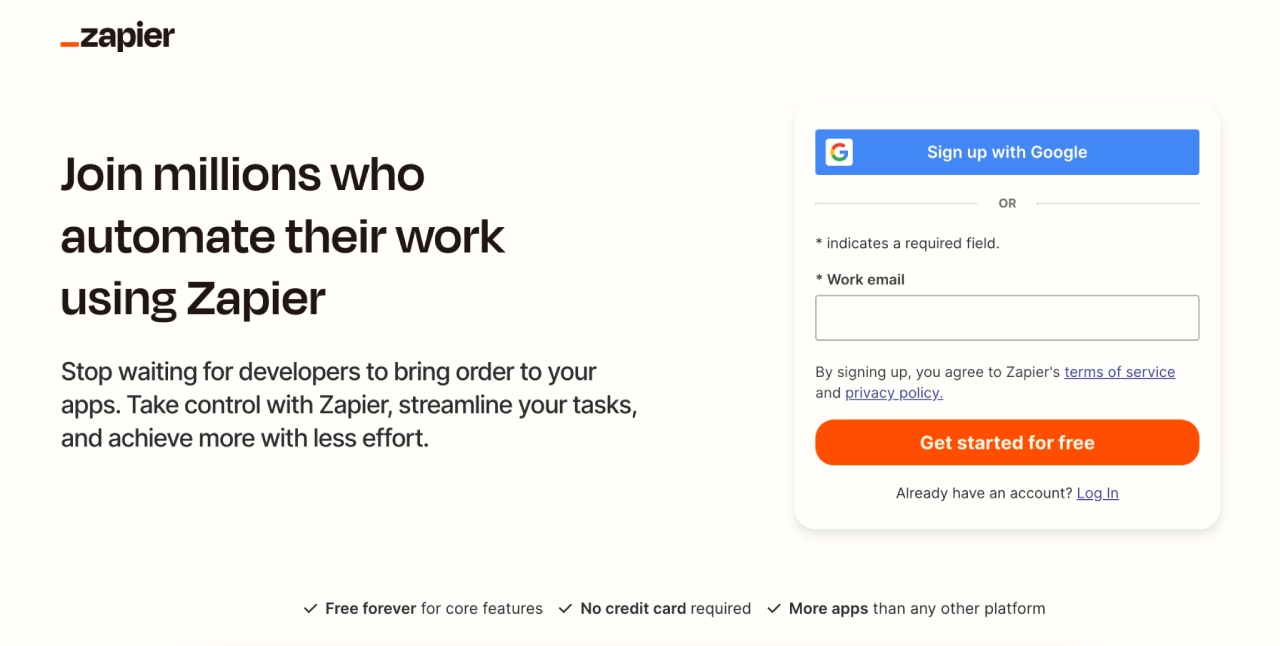
- 2026 (The Era of Orchestration): We are now in the age of intelligent orchestration. It is no longer about one-off tasks; it is about autonomous workflows. From Zapier’s complex, no-code AI chains to Alia’s zero-party data-driven popups, the focus has shifted to cross-platform harmony where data flows seamlessly, triggering personalized experiences without human intervention.
Supporting Data: Why AI is No Longer Optional
The data confirms that this shift is not merely aesthetic—it is financial. Brands that move away from manual, "batch and blast" methods toward AI-driven, hyper-personalized engagement report significant upticks in performance.
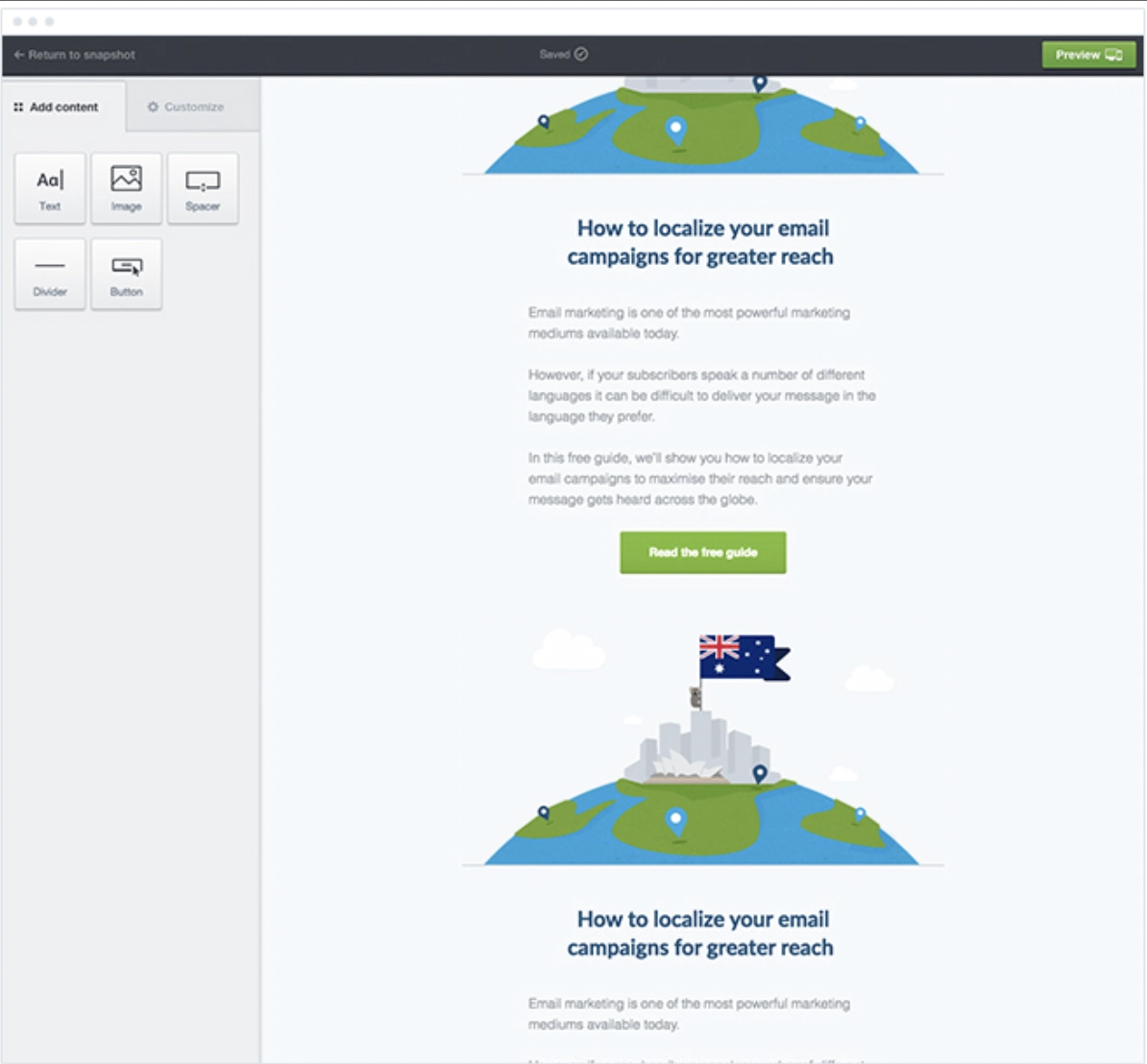
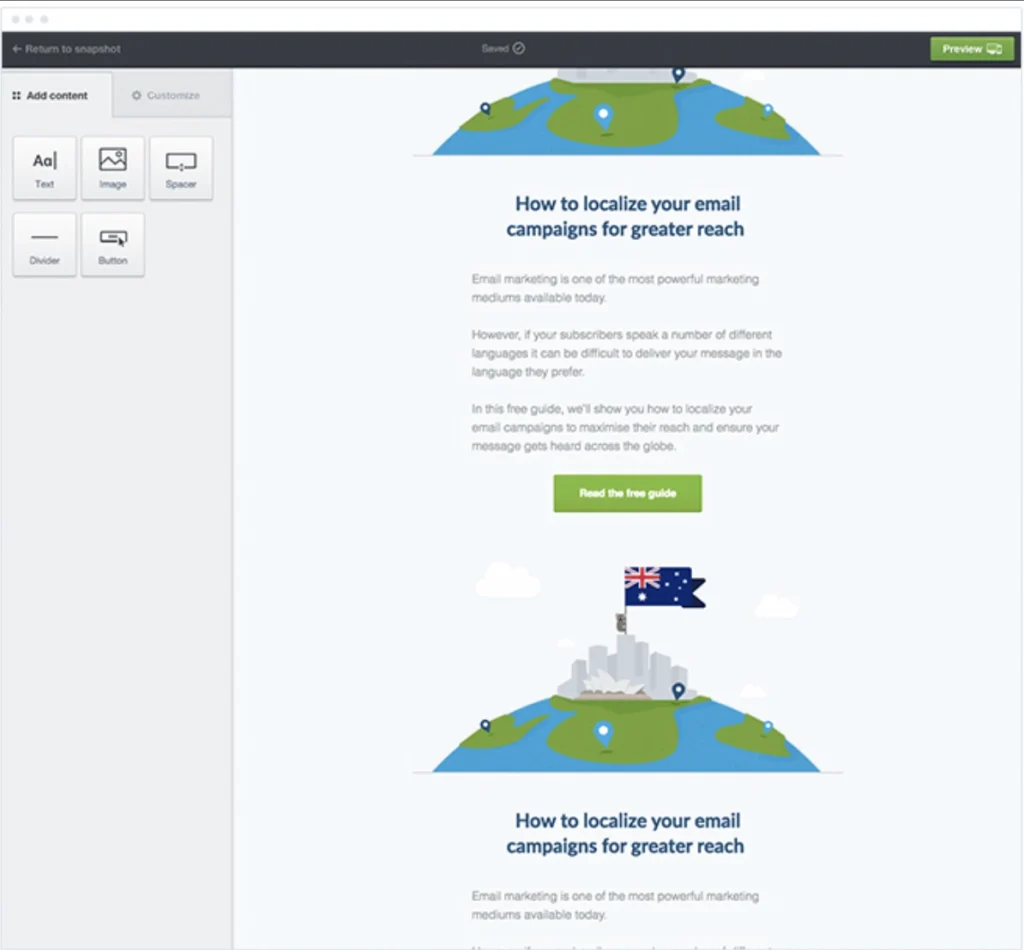
For instance, retail powerhouse On leveraged AI-driven email marketing to drive 20% of their total e-commerce revenue through a single channel, with personalized sends yielding a 10% increase in engagement compared to standard newsletters. Similarly, the Australian Red Cross utilized advanced segmentation and automation to realize a 75% increase in conversions. These are not incremental improvements; they are transformative results that justify the transition to AI-integrated infrastructure.
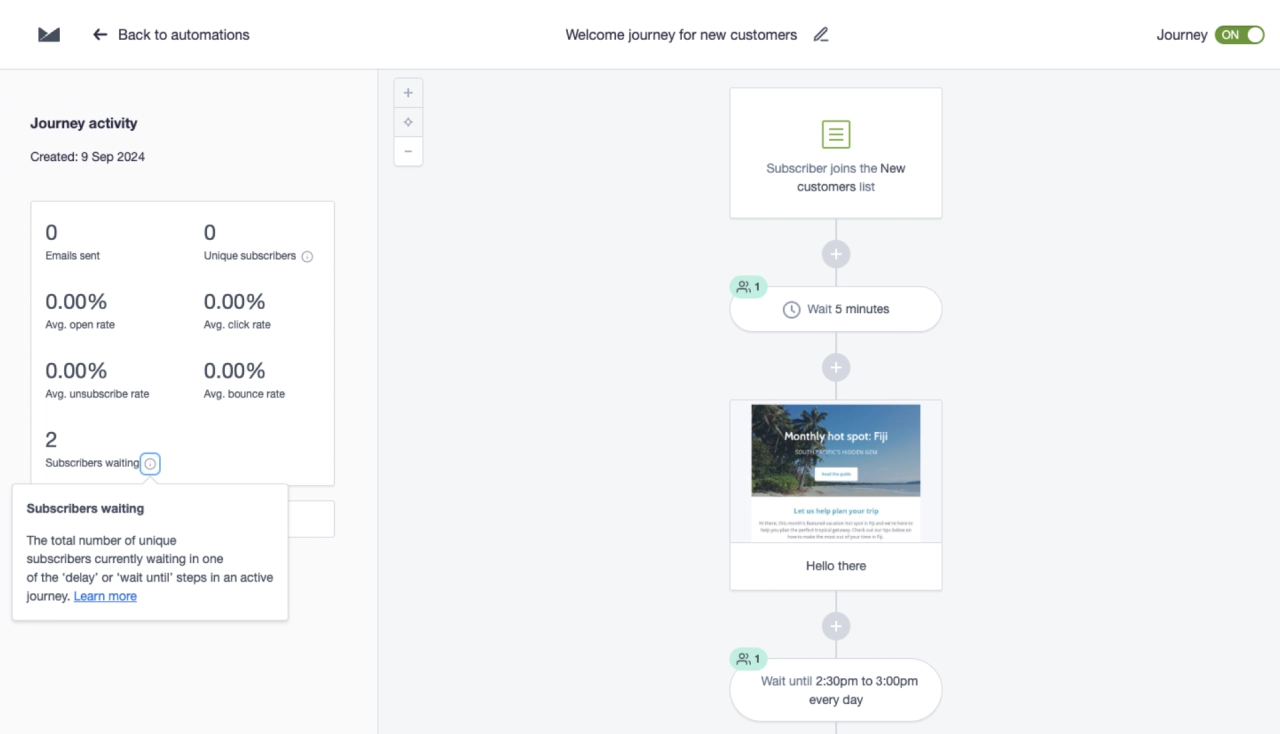
The 2026 AI Marketing Landscape: Categorical Breakdown
The modern marketing stack is vast. To assist leaders in navigating this, we have categorized the most impactful tools currently shaping the industry.
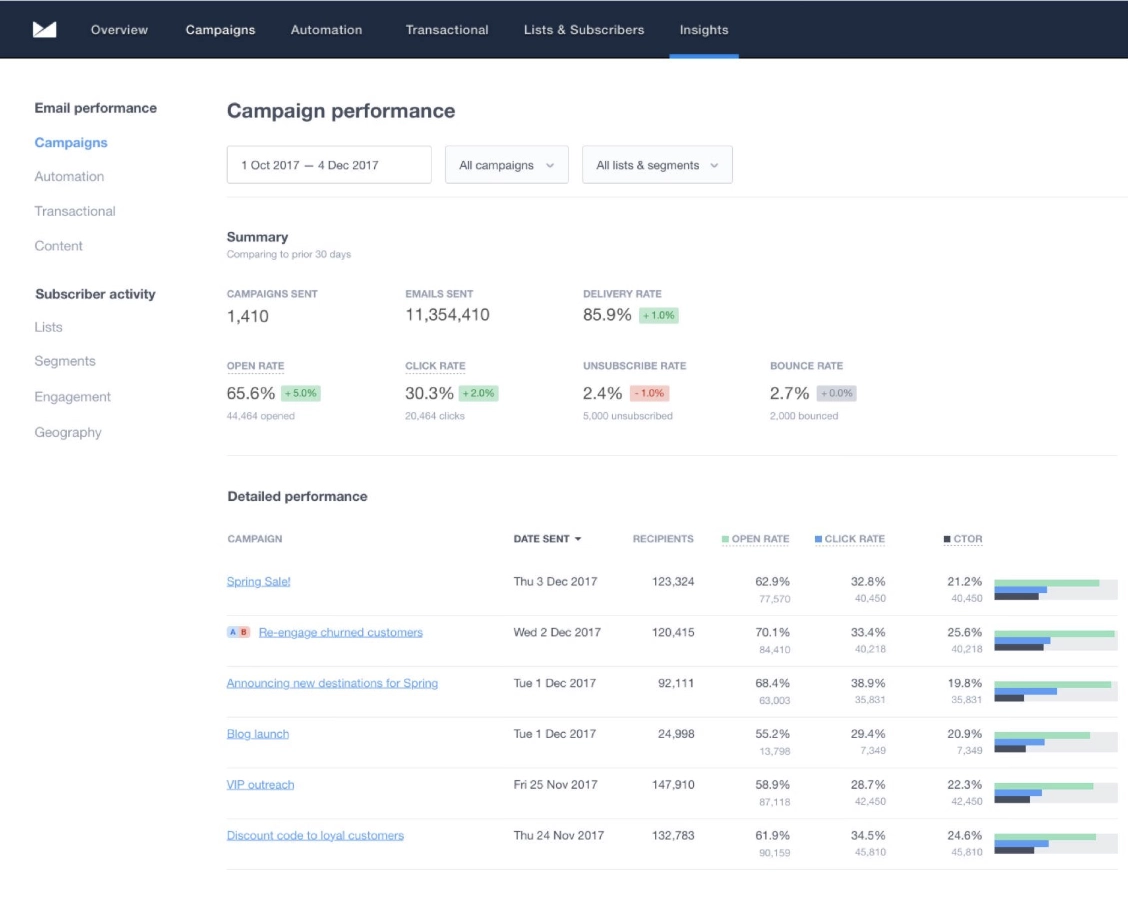
1. Email Marketing & Customer Journeys
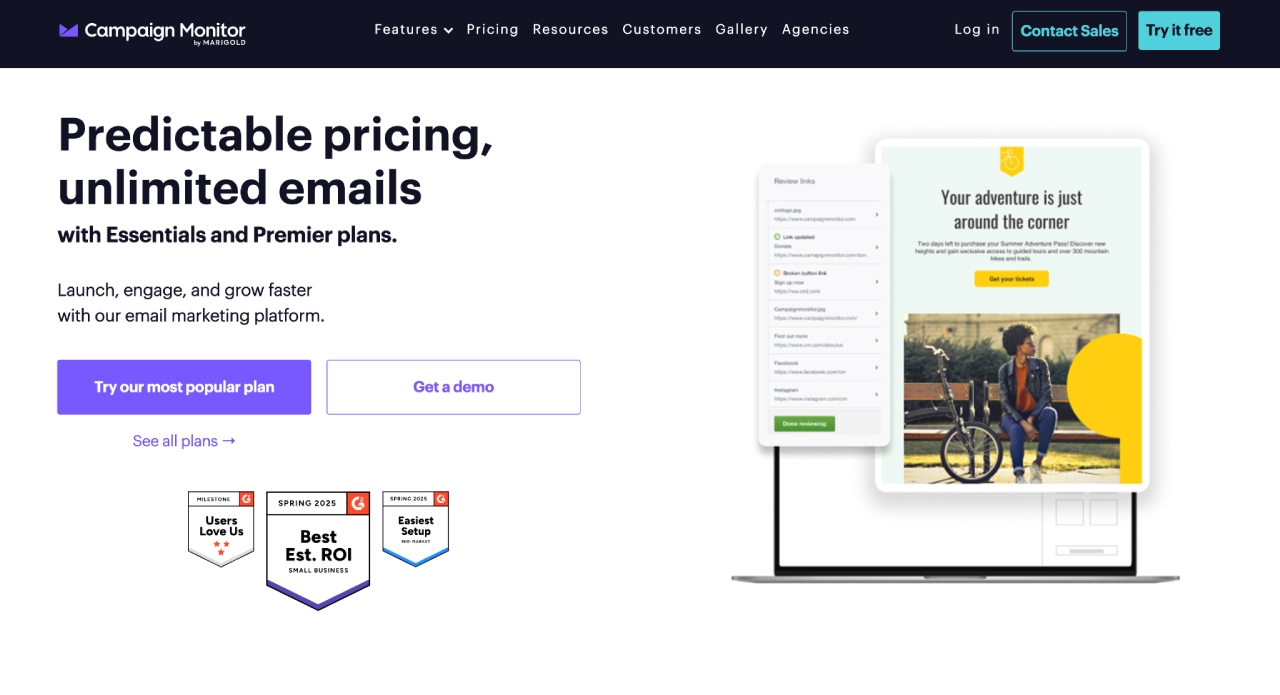
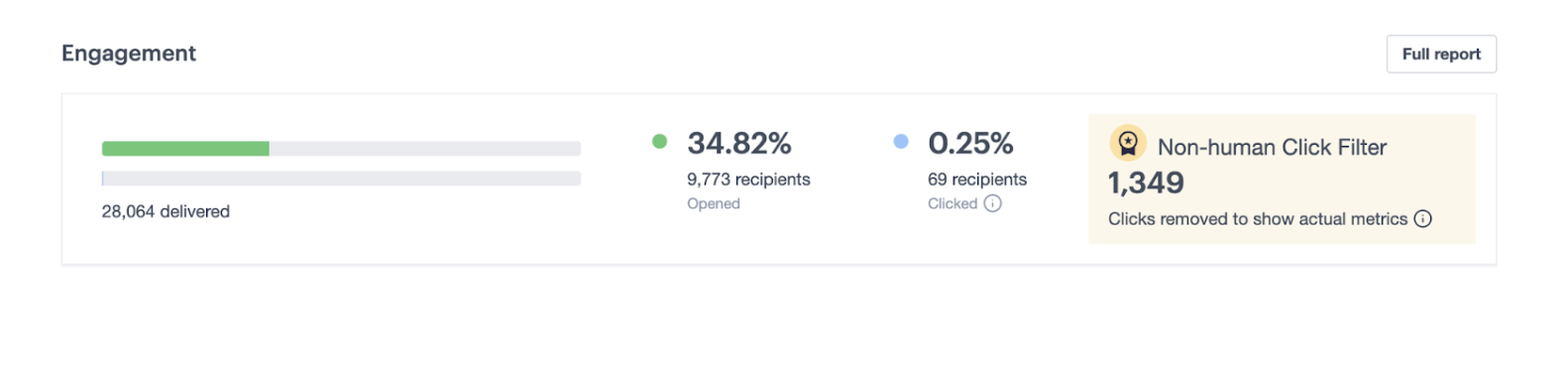
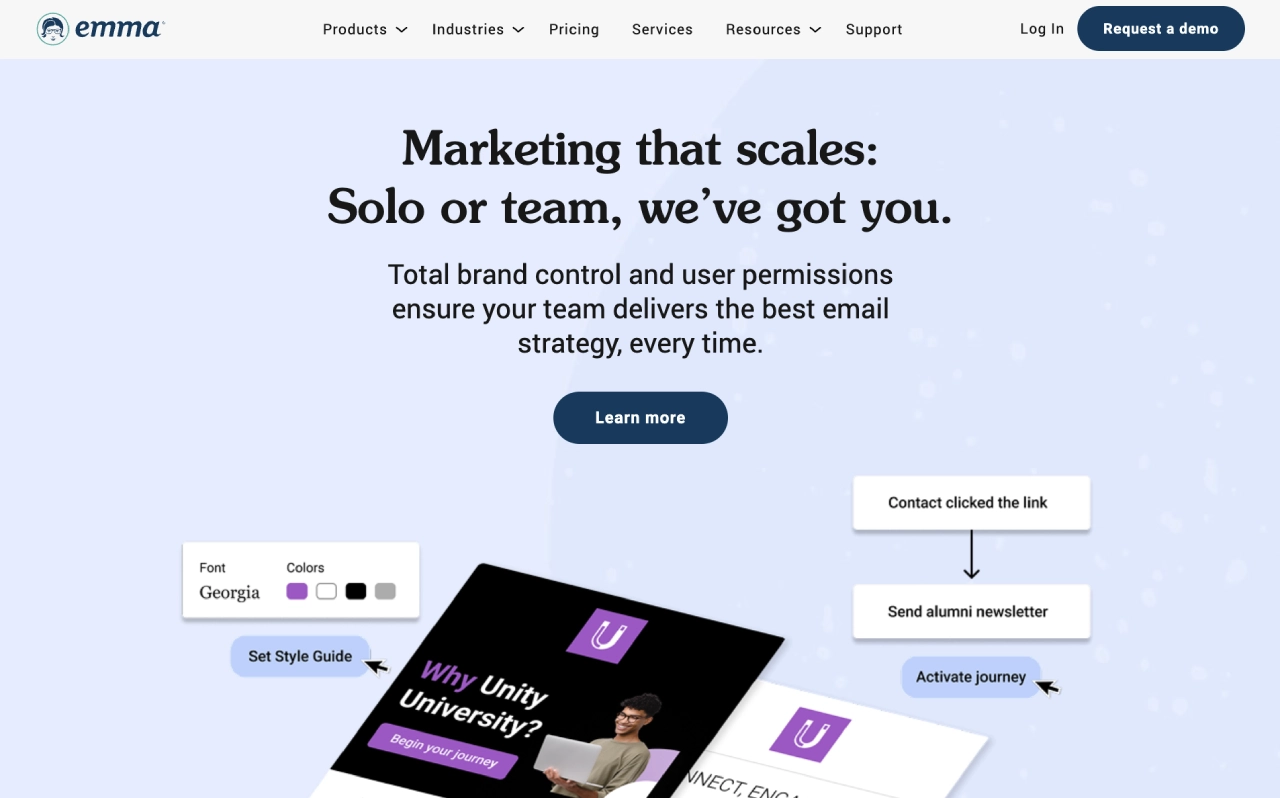
The cornerstone of owned media remains email. Modern platforms like Campaign Monitor and Emma are redefining this space by acting as the brain of the operation. By utilizing AI Writers for dynamic, segment-specific copy and bot-click filtering to clean analytics, these platforms ensure that marketers are making decisions based on human engagement rather than robotic traffic.
2. Content Creation & SEO
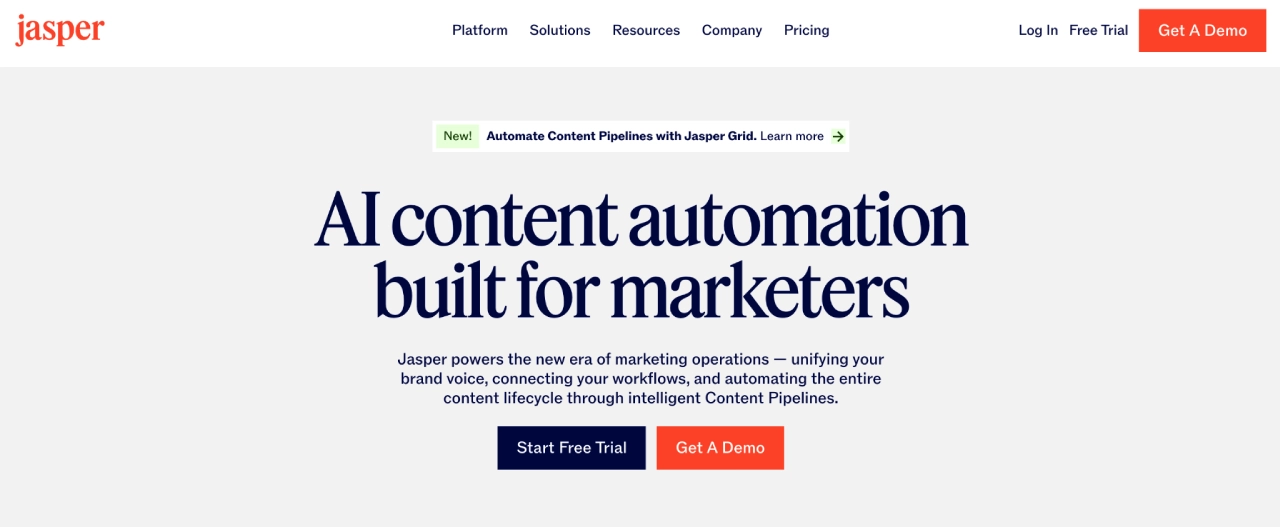
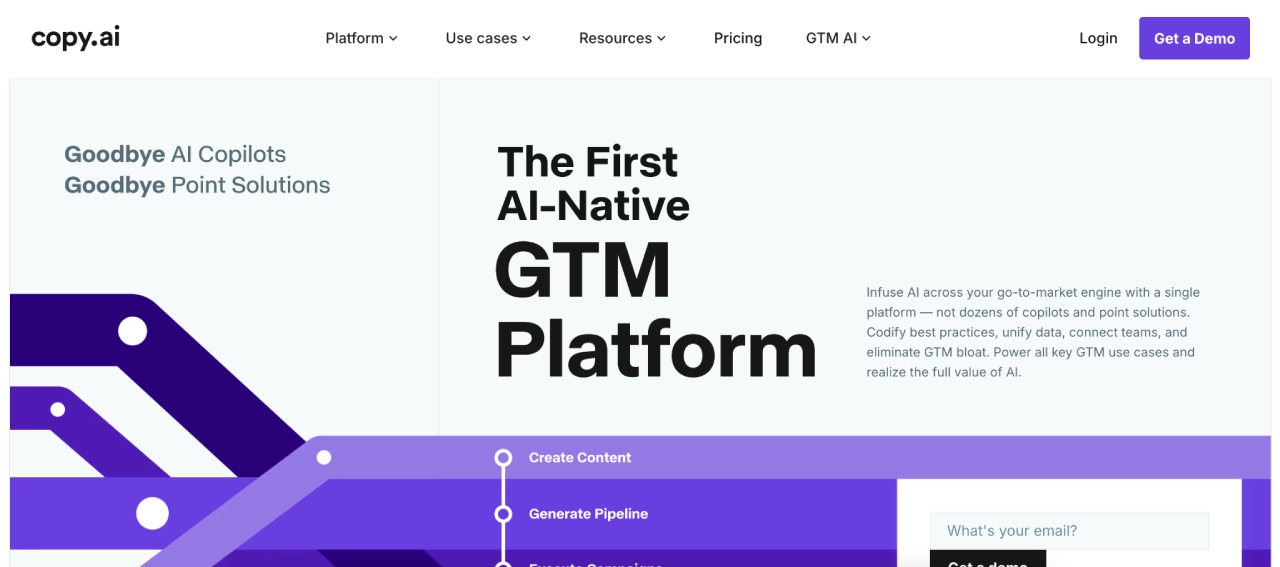
For teams producing high-volume content, the goal is "Brand Voice Consistency." Jasper has become the gold standard for long-form content that adheres to strict brand guidelines, while Copy.ai excels in structured, multi-step workflows. For those focused on search visibility, Clearscope remains the benchmark for enterprise-grade SEO scoring, ensuring that content is not just written well, but structured to rank.
3. Visual Production
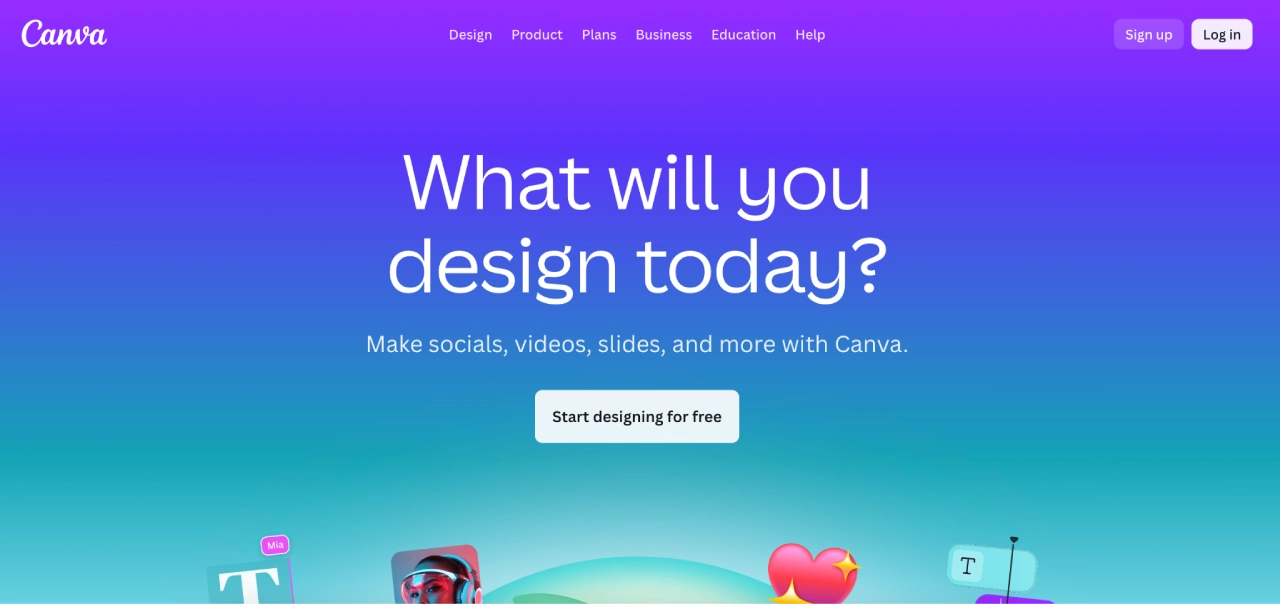
The barrier to entry for high-quality creative has vanished. Canva AI has democratized design for small teams, while Runway serves the performance marketing sector, allowing for the rapid generation and editing of video assets, motion tracking, and green-screen effects that were once the sole domain of high-budget production houses.
4. Enterprise-Grade Intelligence
For large organizations, tools like Salesforce Einstein and HubSpot AI provide a unified layer of intelligence. These platforms don’t just draft emails; they perform predictive lead scoring, forecast sales opportunities, and recommend the "next best action" for sales and marketing teams to take, effectively bridging the gap between demand generation and revenue closure.
The 7-Point Selection Framework: A Professional Guide
Not all AI tools provide a return on investment. Some introduce "tech debt" by requiring constant manual workarounds or by failing to integrate with existing CRM and analytics suites. To ensure your investments are sound, apply this 7-point scorecard before procurement:
- Integration Capability: Does the tool plug into your existing stack, or does it require manual API work?
- Brand Alignment: Does the AI learn your brand voice, or does it force you to rewrite generic outputs?
- Use Case Specificity: Does it solve a genuine bottleneck, or is it a "shiny object"?
- Data Integrity: Does the tool use clean data and offer compliance/privacy safeguards?
- Scalability: Does the cost-to-value ratio improve as your team grows?
- ROI Tracking: Can you clearly map the tool’s output to revenue?
- Usability: Can your existing team use it effectively without needing a dedicated "AI Engineer"?
The Implications of the "3P Model"
To succeed in this environment, leaders should adopt the 3P Model—People, Platform, and Process.
- People: The role of the marketer is shifting from "Creator" to "Editor and Curator." Humans must remain the final filter for tone, empathy, and intent.
- Platform: Invest in platforms that offer native AI, as these are more likely to have the data context required to deliver accurate results.
- Process: Build workflows that allow AI to handle the "heavy lift" (data tagging, basic drafting, scheduling) while humans handle the high-level strategy and creative review.
Official Perspectives: The Role of Human Oversight
Industry leaders increasingly warn against the "set it and forget it" mentality. While AI excels at speed and pattern recognition, it lacks the context of human emotion and cultural nuance. The most successful organizations are those that treat AI as a junior partner—a high-speed assistant that requires professional oversight.
"The formula is simple," notes the consensus among modern CMOs. "Let AI handle the heavy lift, then apply human judgment to review, edit, and test." This "human-in-the-loop" approach consistently outperforms AI-only execution, as it mitigates the risk of "AI drift"—where content becomes repetitive or loses its connection to the brand’s core values.
Final Verdict: Building for the Future
The shift in marketing is undeniable: we are moving away from busywork and toward precision. As we progress through 2026, the winners will be those who refuse to use AI just for the sake of using it, but rather deploy it where impact compounds—specifically in personalization, automated lifecycle management, and data-driven insights.
If your organization is still launching campaigns manually, you are competing against teams that are moving at twice your speed with twice the personalization. Whether you start by optimizing your email journeys with tools like Campaign Monitor or by restructuring your content workflow with Jasper, the time to audit your stack and implement an AI-first strategy is now.
The future of marketing isn’t about choosing between human intuition and machine intelligence; it is about creating an environment where the two work in tandem to deliver experiences that are faster, smarter, and significantly more profitable.
