
The New Frontier: Why LLM Ranking Is the Next Evolution of SEO
Large Language Models (LLMs) have moved beyond the realm of speculative technology to become the primary architects of the modern digital experience. For nearly two decades, "Search Engine Optimization" (SEO) was the undisputed North Star for digital visibility. If you weren’t on Page 1 of Google, you effectively didn’t exist. However, the rise of generative AI has fundamentally altered the terrain. If Google Search was the map, LLMs are the tour guide—curating answers, recommending products, and effectively relegating traditional "blue link" search results to the background.
For businesses and brands, this shift represents more than just a change in interface; it is a fundamental disruption of the customer acquisition funnel. "LLM Rankings"—the measure of your brand’s presence within AI-generated responses—have become the new critical metric. If you aren’t tracking your visibility inside ChatGPT, Gemini, Claude, and Perplexity, you are likely ceding market share to competitors without even realizing it.
What Are LLM Rankings?
At its core, LLM ranking can be viewed as "SEO for AI assistants." In the traditional model, your objective was to optimize content so that a crawler would index your page and a ranking algorithm would display it as a relevant link. In the era of AI, the objective has shifted: you are now competing for inclusion within the narrative of an answer.
When a user asks a high-intent question—such as "What is the best project management software for a remote team of 50?"—the AI doesn’t just show a list of links. It synthesizes information to provide a definitive recommendation. If your brand is not mentioned in that generated response, you have lost a highly qualified lead to the entities that were. This is not just about visibility; it is about being part of the "consideration set" defined by an algorithm that the user trusts.
The Chronology of Search Evolution
The transition from keyword-based search to conversational intelligence did not happen overnight. We can trace this evolution through three distinct eras:
- The Directory Era (Late 90s): Human-curated lists like Yahoo! defined how we found information. Visibility was a matter of categorization.
- The Algorithmic Era (2000s–2023): Google’s PageRank revolutionized the web. SEO became a technical discipline focused on backlinks, domain authority, and keyword density.
- The Conversational Era (Present Day): With the integration of LLMs into search, the user no longer wants a list of sources; they want a synthesis of truths. The "link" is no longer the destination—the "answer" is.
Ignoring LLM rankings today is akin to ignoring SEO in 2005. While some legacy traffic remains, the smartest capital and the most valuable intent are migrating toward AI-first discovery.
The Big Four: Platforms Shaping the New Landscape
While dozens of models exist, the "Big Four" currently dictate the rules of engagement for consumer and business discovery.
1. OpenAI (ChatGPT)
As the pioneer of the current wave, ChatGPT is the default interface for millions. Its ability to leverage browsing tools to cite sources makes it a critical battleground for brand mentions.
2. Google Gemini
Gemini represents the most direct threat to traditional SEO. By integrating generative AI directly into the Google Search Experience (SGE), Google is forcing brands to compete simultaneously for organic links and "AI-generated snippets."
3. Anthropic (Claude)
Known for its nuance and large context windows, Claude is increasingly used by professionals for research and complex decision-making. Its ability to process massive documents makes it a key target for B2B brands.
4. Perplexity
Perplexity is the "answer engine" built specifically to replace the search journey. By providing direct, cited answers to queries, it has become a favorite among power users who value speed and accuracy over traditional browsing.
Because user preferences vary, brands cannot rely on one platform to represent the "truth." Just as you wouldn’t optimize for Google and ignore Bing entirely, you must monitor all four, as each possesses a unique personality and indexing behavior.
The Importance of API-Driven Analysis
LLMs are fluid; they are updated, fine-tuned, and modified regularly. To get an accurate snapshot of brand visibility, you must test via API-connected models rather than relying on web-based interfaces alone. Web interfaces often include personalized "chaff" (past history, localized settings, or beta features) that can skew results. API access allows for a standardized, "clean room" environment, ensuring the data you see is the data your potential customers are receiving.
The Process: A New Methodology for Visibility
Since there is no "LLM Search Console," businesses must adopt a manual or automated methodology to track performance:
- Define the Corpus: Identify the top 50–100 keywords or "informational queries" that drive your business.
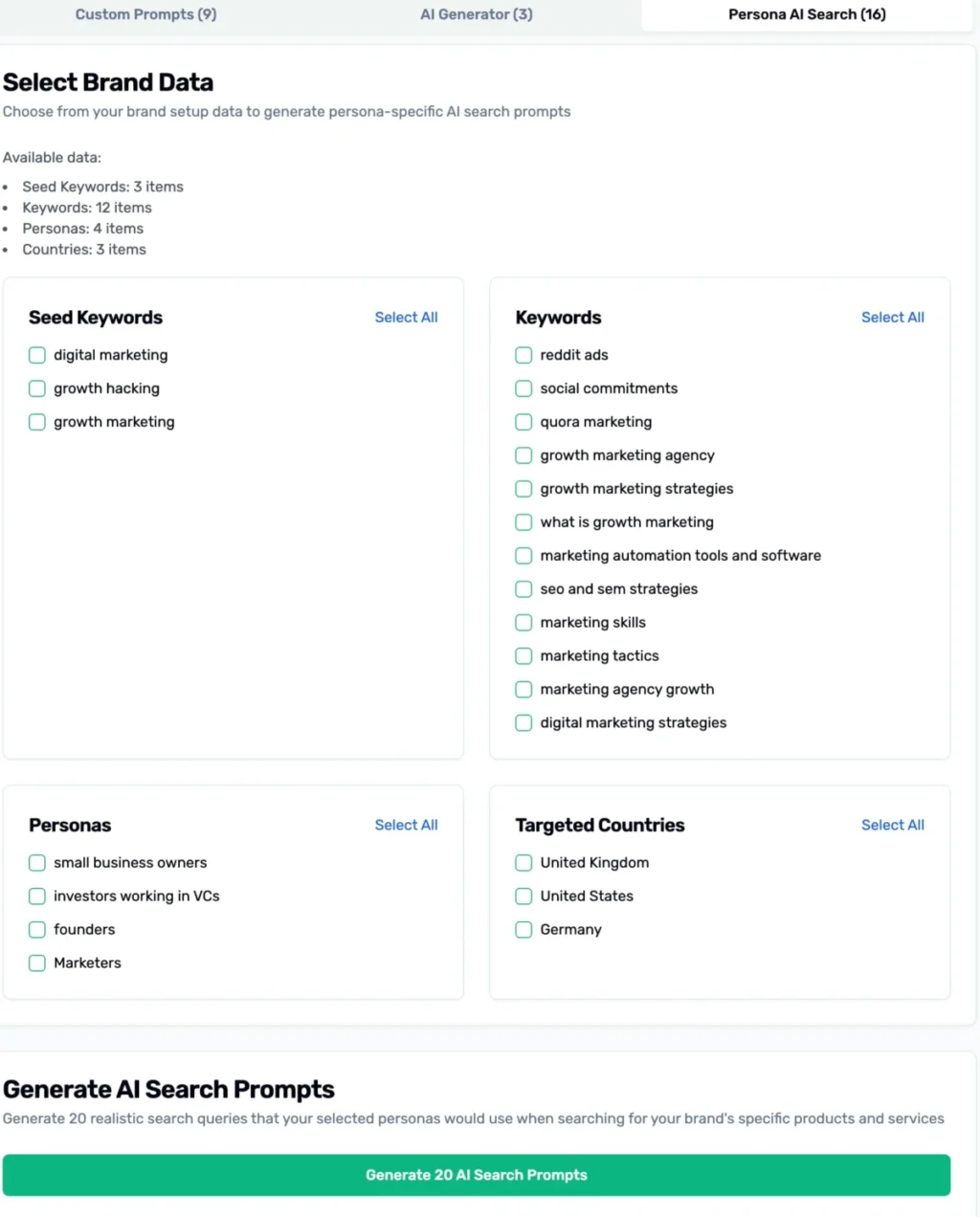
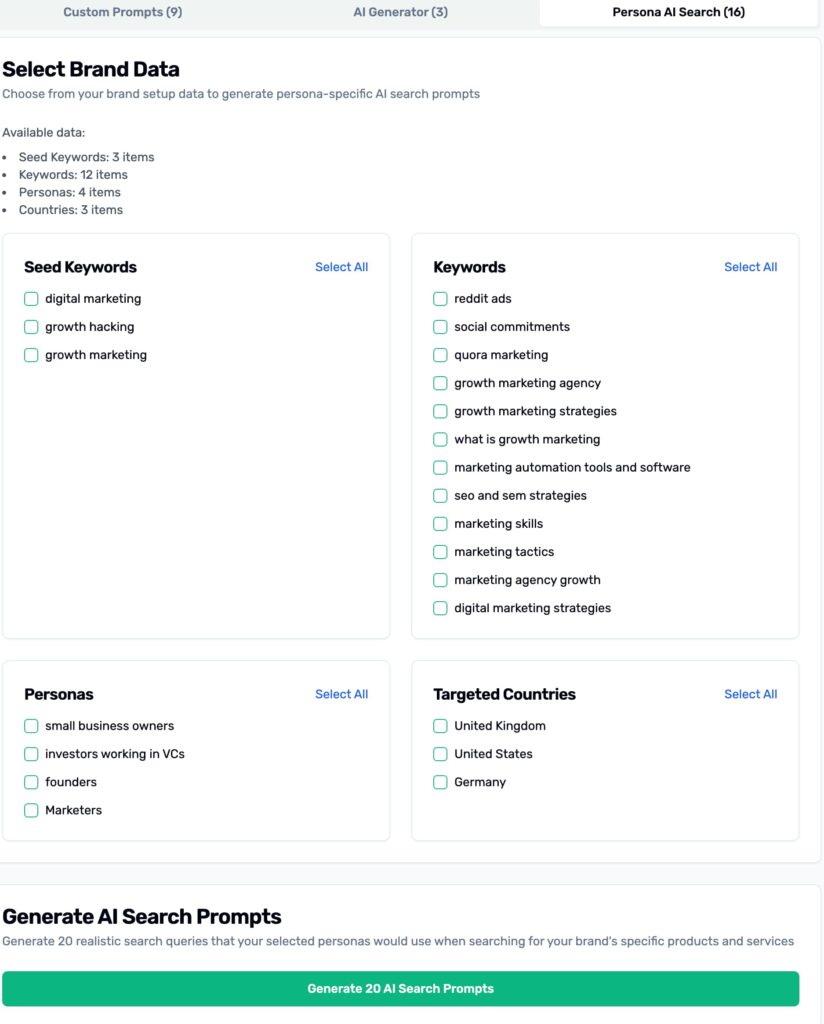
- Establish the Prompt Set: Develop a rigorous set of prompts. These should cover brand-specific questions, product category queries, and "best-of" or comparison searches.
- Execute and Log: Run these prompts across all major models.
- Analyze and Classify: Categorize mentions as positive, neutral, or negative.
Crafting the Right Prompts
Your results are only as valid as your prompts. To gain a comprehensive view, you must mirror the way humans actually search. This means using:
- Problem-based queries: "How do I fix [issue]?"
- Comparison queries: "[Brand A] vs [Brand B]."
- Contextual queries: "I am a [role] looking for a [solution] under [budget]."
Pro tip: Even if you think no one would search for a specific, obscure term, test it. AI models often synthesize information in unpredictable ways. A hidden mention can be a signal of a larger trend, or an early warning that a competitor is gaining mindshare in a niche segment.
Implications and Data Analysis
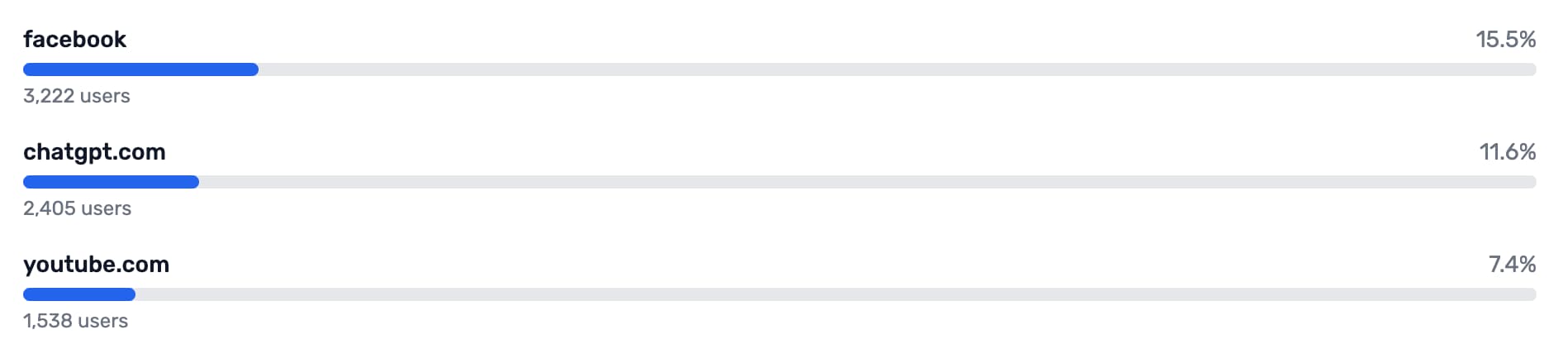
When analyzing your LLM rankings, look beyond simple inclusion. Break down the data into:
- Share of Voice: How often are you mentioned compared to competitors?
- Sentiment Alignment: Are you being framed as the "premium choice," the "budget option," or "the reliable standard"?
- Citation Frequency: When the AI mentions you, does it link back to your site?
If you see a consistent pattern—for instance, a competitor appearing in 8 out of 10 runs for a specific category—you can be confident this is not a random hallucination, but a systemic bias built into the model’s training data or current retrieval context.
The Cost of the New Search Paradigm
The cost of LLM monitoring is non-trivial. It consists of three primary pillars:
- Computational Costs: Running thousands of API calls across multiple models is expensive.
- Infrastructure: Storing results and running sentiment analysis requires robust data pipelines.
- Human Expertise: Interpreting the "why" behind the results requires a new breed of strategist who understands both data science and brand narrative.
Quick math suggests that for a mid-sized brand, tracking 500 queries across four models weekly can lead to thousands of API hits. When you factor in the labor of manual review and strategy adjustment, it is a significant, yet necessary, operational expense.
Toward AIO: AI Optimization
What comes after analysis? The goal is to move from passive tracking to AI Optimization (AIO). This involves:
- Content Synthesis: Updating your website to provide clear, concise, and structured data that is easy for LLMs to ingest and summarize.
- Entity Authority: Building a digital footprint that establishes your brand as an authority on specific topics.
- Prompt Engineering for Brand Presence: Proactively engaging in public discourse and documentation that informs the training data of future model iterations.
In our own platform, Growth OS, we have developed proprietary mathematical formulas to identify exactly what modifications are needed to influence LLM outputs. It is no longer enough to "write for SEO"; you must "structure for intelligence."
Bottom Line: The Battle for the First Point of Contact
LLM rankings are not a transient tech fad; they are the new foundation of the digital economy. As search evolves, the brands that thrive will be those that master the art of being the "answer."
If you are not visible in the AI-generated responses of today, you are essentially invisible to the future consumer. The transition is underway, and the winners will be those who treat AI visibility with the same rigor, discipline, and strategic investment that they once reserved for the early days of Google. Don’t wait until you’ve vanished from the conversation; start optimizing for the era of AI today.
