
The Professional Pulse: Definitive LinkedIn Statistics for 2026
In the rapidly evolving landscape of digital networking, LinkedIn has cemented its status as the world’s premier professional ecosystem. As the platform celebrates its 24th anniversary in 2026, it has transitioned from a simple digital Rolodex into a multifaceted powerhouse for lead generation, recruitment, and high-level B2B marketing.
For business leaders and marketers alike, understanding the data behind the platform is no longer optional—it is a prerequisite for a successful digital strategy. With a massive global user base and a diversifying revenue stream, LinkedIn is shaping how the world defines "work" in the mid-2020s.

The Evolution of a Global Giant: Key Facts
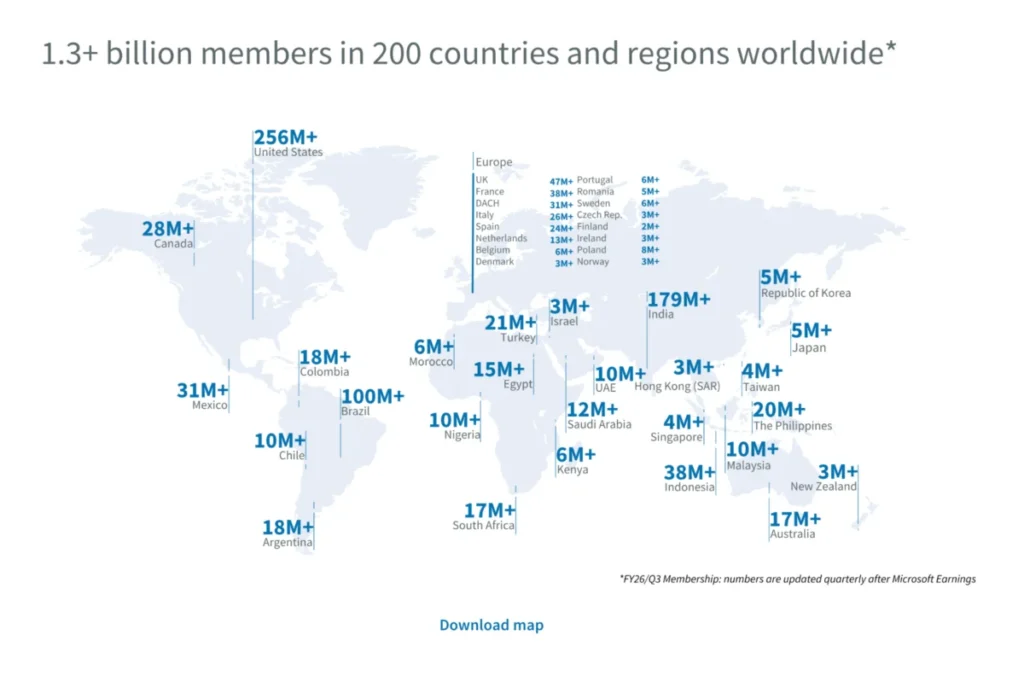
LinkedIn’s journey from a living-room startup to a Microsoft-owned enterprise is a masterclass in scale. Since its inception on May 5, 2003, the platform has grown to host 1.3 billion registered members. This figure represents more than just a list of names; it is a global database of professional talent, decision-makers, and corporate entities.
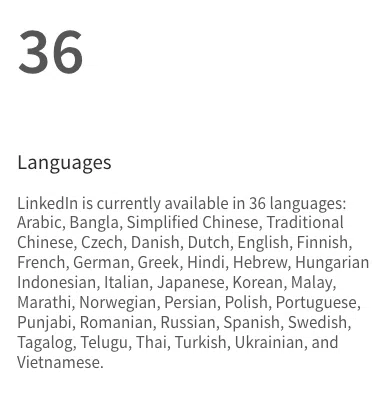
The company now operates with a workforce of over 17,500 employees across 38 cities worldwide, ensuring that its infrastructure supports 36 different languages. This linguistic and geographic diversity is critical to its status as the world’s largest professional network, with significant user bases across North America, the Asia-Pacific region, and the rapidly growing markets of South America—most notably Brazil, which reached the 100-million-member milestone in June 2026.

Financial Performance and Leadership
Under the guidance of new CEO Daniel Shapero, who assumed the role in April 2026 after serving as the company’s COO, LinkedIn has demonstrated remarkable financial resilience. In 2025, the platform generated $17.8 billion in revenue, a significant year-over-year increase from $16.3 billion in 2024. A standout success for the company has been the growth of its Premium subscription model, which surpassed $2 billion in annual revenue in early 2025. By the third quarter of 2026, LinkedIn reported a 12% year-over-year revenue growth, signaling that despite global economic shifts, the demand for professional networking and talent solutions remains inelastic.
Chronology of Influence
To understand where LinkedIn is going, one must look at how it arrived here:
- 2003: Founded by Reid Hoffman; launches just months before the emergence of Facebook.
- 2016: Acquired by Microsoft, sparking a new era of integration with productivity tools.
- 2023: Crosses the 1-billion-member threshold, signaling global saturation of the professional demographic.
- 2025: Surpasses 100 million verified members, a massive security and credibility milestone.
- 2026: CEO transition to Daniel Shapero; expansion of AI-driven tools and video-first content initiatives.
Supporting Data: User Behavior and Demographics
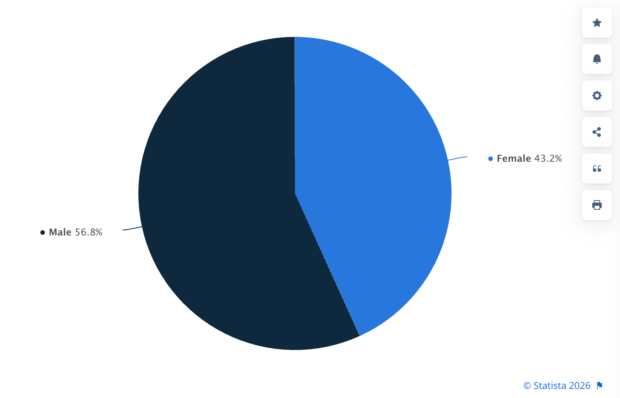
The demographic makeup of LinkedIn provides essential insights for those looking to capture B2B interest. While the platform skews slightly male (56.8%) compared to female (43.2%), its age distribution is its most compelling feature.
The Rise of Gen Z and Mid-Career Professionals
The largest segment of the platform consists of 25- to 34-year-olds, who make up 33.4% of the global user base. This group represents the transition from early-career development to management and decision-making roles. Furthermore, Gen Z is the fastest-growing demographic on the platform. As this generation—which already accounts for 27% of the global workforce—continues to ascend, their influence on corporate culture and purchasing power will only increase.
Engagement at Scale
The volume of activity on the platform is staggering. Every single minute, 1.5 million pieces of content are engaged with, and 18,000 new professional connections are formed. This highlights that LinkedIn is not merely a site to visit once a year when updating a resume; it is a dynamic, daily hub for industry news, thought leadership, and career advancement.
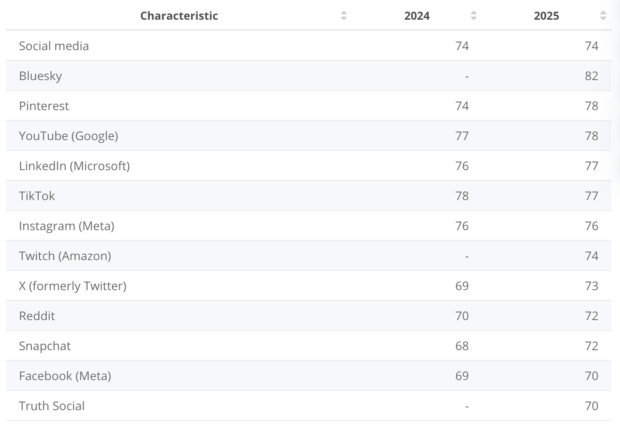
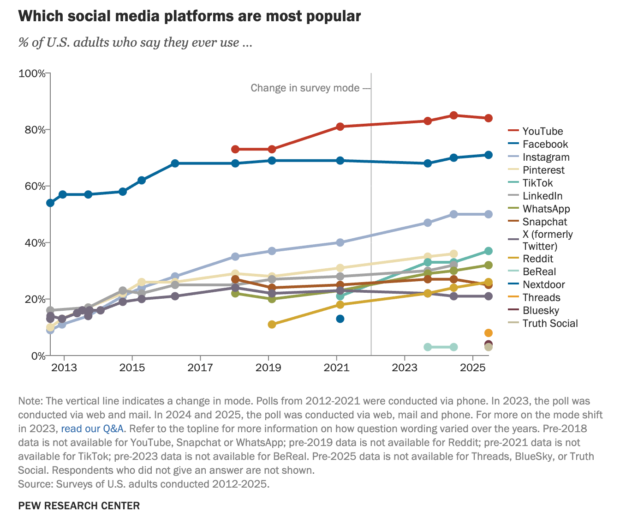
For the average professional, the platform has become a "second home" for identity, with 35% of U.S. adults reporting active usage—a figure that places it firmly ahead of newer, trend-driven social platforms.
The Advertising Engine: Why B2B Marketers are Investing
For marketers, the most critical takeaway from 2026 is the performance of LinkedIn’s advertising solutions. Despite higher costs—with an average cost-per-click (CPC) of approximately $6.93—the platform consistently outperforms its competitors in terms of Return on Ad Spend (ROAS).
The ROAS Advantage
Data from 2026 shows that LinkedIn delivers a 121% ROAS for B2B marketers, significantly outpacing both Google Search (67%) and Meta (51%). This is largely due to the unique professional intent of the audience. Unlike users on consumer-focused platforms, LinkedIn members are in a professional headspace, making them more receptive to high-value B2B offers.
Trends in Ad Strategy
- Video Dominance: Paid video ads on LinkedIn grew by nearly 30% in Q3 2026. As attention spans shorten, brands are finding that visual-first storytelling is the best way to stop the scroll.
- Budget Allocation: Between 2024 and 2025, LinkedIn ad budgets increased by 31.7%, reflecting a shift in trust from general social platforms to specialized professional environments.
- Brand Awareness: Interestingly, the focus of LinkedIn campaigns has shifted. While it remains a lead-generation tool, nearly double the number of campaigns are now dedicated to brand awareness and engagement compared to previous years.
Implications for Businesses and Professionals
The data paints a clear picture for the future of business operations on LinkedIn. The platform has effectively bridged the gap between personal branding and corporate sales.
The "Human" Advantage
One of the most profound shifts in 2026 is the "humanization" of corporate pages. CEO posting on the platform has surged by 52%, as leaders recognize that their personal voices often carry more weight than sterile corporate press releases. Companies that post at least once a week see a 2x lift in engagement, proving that consistency and personality are the keys to cutting through the digital noise.
The Long Game of B2B Sales
It is important for marketers to manage their expectations regarding the sales cycle. The average time from a first LinkedIn ad impression to a closed revenue deal is approximately 281 days. This reinforces the idea that LinkedIn is not a "quick win" platform; it is a long-term trust-building engine. It acts as the primary channel for thought leadership, with 76% of B2B marketers ranking it as their most effective tool for establishing market authority.
Strategic Recommendations
- Prioritize Video: With a 36% increase in video views, incorporating product demos, behind-the-scenes content, and quick, sound-off-friendly explainers is no longer optional.
- Verify Your Presence: With over 100 million verified members, trust is the new currency. Verified company pages receive 10.9x more views than unverified ones.
- Optimize Posting Times: Based on current engagement heatmaps, the "golden hour" for LinkedIn content is between 4 AM and 6 AM on Tuesdays and Wednesdays.
- Target the Decision Makers: With 10 million C-level executives on the platform, refine your targeting to reach those with actual buying power, rather than casting a wide net.
In conclusion, as we head into the latter half of 2026, LinkedIn has solidified its position as the bedrock of professional life. Whether you are a job seeker looking for your next challenge, or a marketing manager aiming to drive high-quality leads, the data suggests that your strategy should be centered on high-quality, video-forward content, consistent engagement, and a long-term commitment to building brand trust.
