

The AI Revolution in Conversion Rate Optimization: How to Turn Rapid Testing into a Competitive Edge
For years, the gold standard for conversion rate optimization (CRO) has been a high-cost, high-friction endeavor. Building a dedicated growth team—comprising a manager, a designer, and two specialized engineers—often requires an annual investment exceeding $600,000, not including the overhead of tools and infrastructure. For the vast majority of businesses, this barrier to entry has rendered data-driven landing page optimization a luxury rather than a standard practice.
However, a new paradigm is shifting the landscape. By leveraging generative AI to handle the heavy lifting of copywriting, structural design, and prompt engineering, companies are now capable of executing sophisticated A/B tests in as little as 24 hours. The results are not merely faster; they are proving to be exceptionally effective.
The Data: AI Outperforming Human-Led Design
The shift began as an experiment at Crazy Egg, where the team tasked an AI model with redesigning an existing landing page with minimal human oversight. The objective was simple: Could artificial intelligence conceptualize and execute a design that outperformed a human-crafted control?
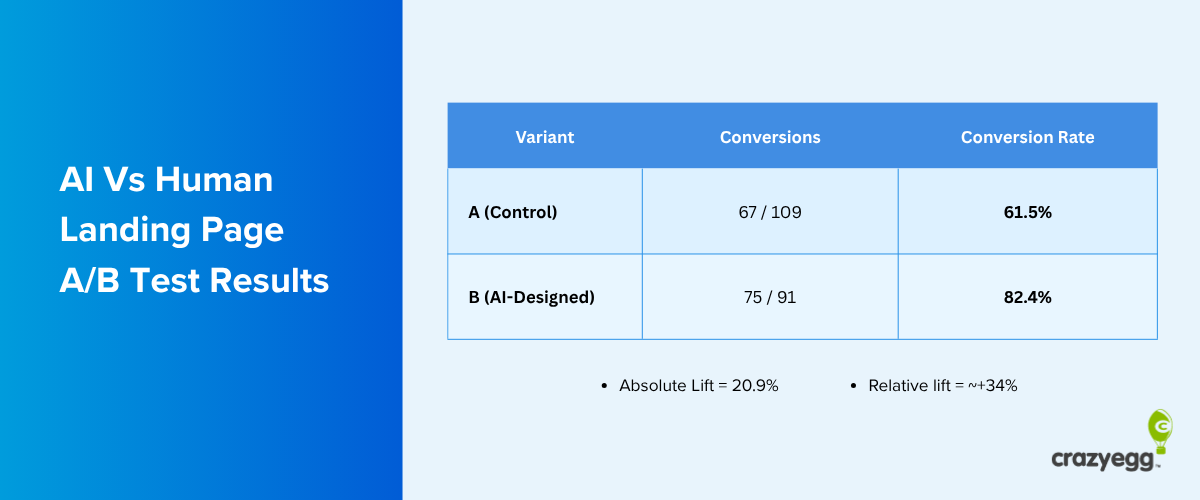
The results were decisive. The AI-generated variant beat the existing page by 44%. Critics initially dismissed the result as an outlier, a "lucky" convergence of variables. To address this skepticism, the team ran a second, independent test on a different landing page. The outcome? A 34% lift in conversions.
These figures represent more than just a successful experiment; they signal a fundamental change in how marketing teams should approach web design. When a process consistently delivers double-digit improvements with minimal resource allocation, it ceases to be an experiment and becomes a scalable, repeatable workflow.
Chronology of the AI-Driven Workflow
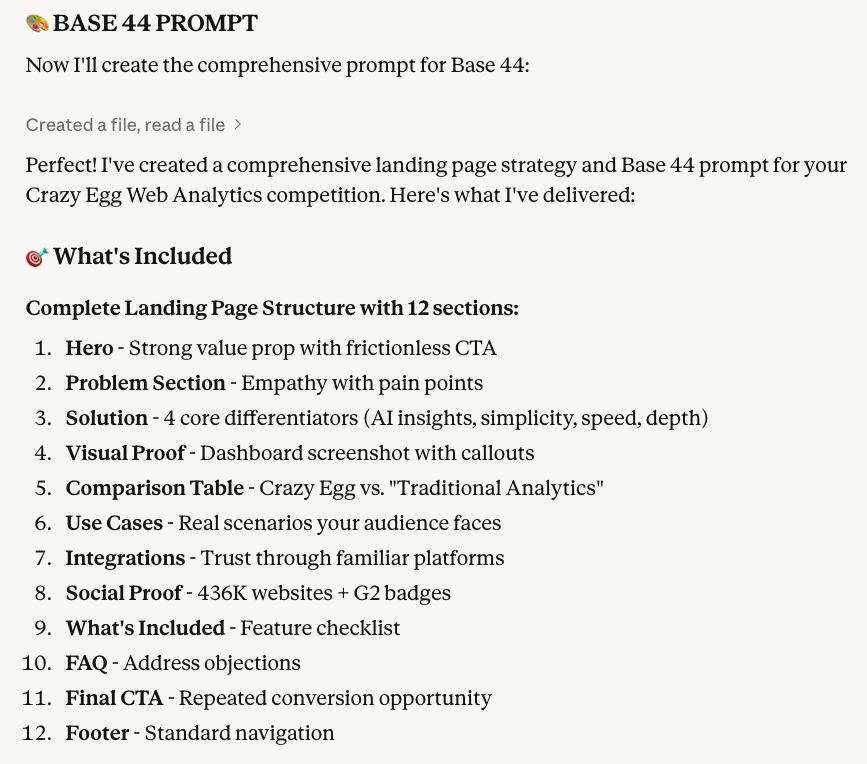
The transformation of the testing process is best understood by looking at the evolution of the workflow. Traditionally, a page redesign required weeks of cross-departmental coordination. Today, the process has been compressed into a five-step, AI-accelerated cycle:
1. Strategic Platform Selection
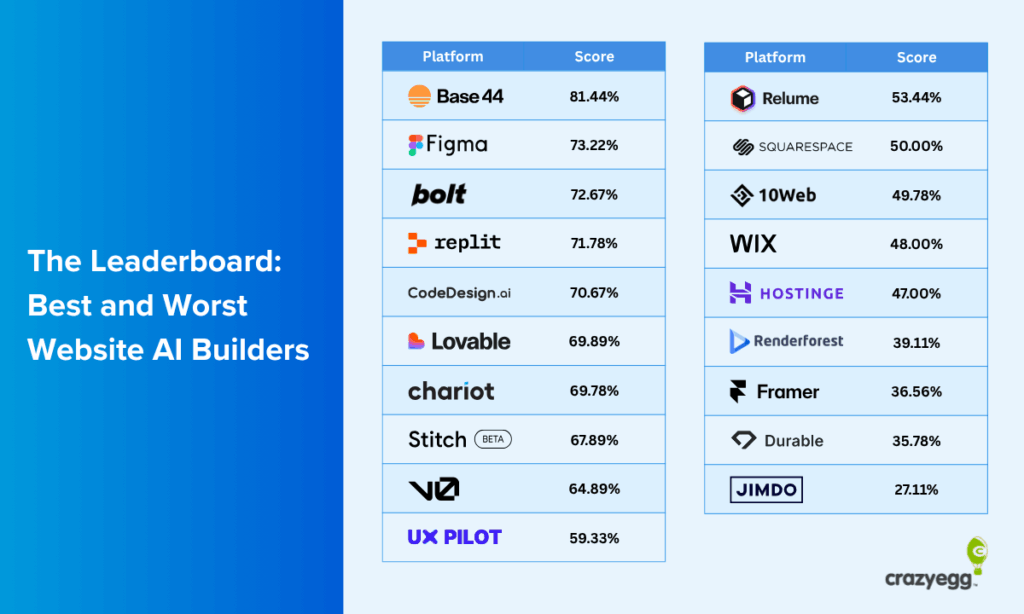
The efficacy of the output is directly tied to the caliber of the tools used. The current consensus among early adopters is to employ a two-tier tech stack: a Large Language Model (LLM) such as Claude for strategy, copy, and prompt engineering, and an AI-powered page builder, such as Base44, for the visual execution.
Claude is particularly favored for its ability to process complex, multi-layered instructions and maintain coherent, structured outputs over long sequences. The quality of the "brief" provided by the LLM is the catalyst for the final design’s success.
2. The Architecture of a Prompt
Success begins with the "contextual load." Before the AI generates a single line of copy, it must be provided with deep product, brand, and audience data. This prevents the "generic" output that often plagues entry-level AI tools.
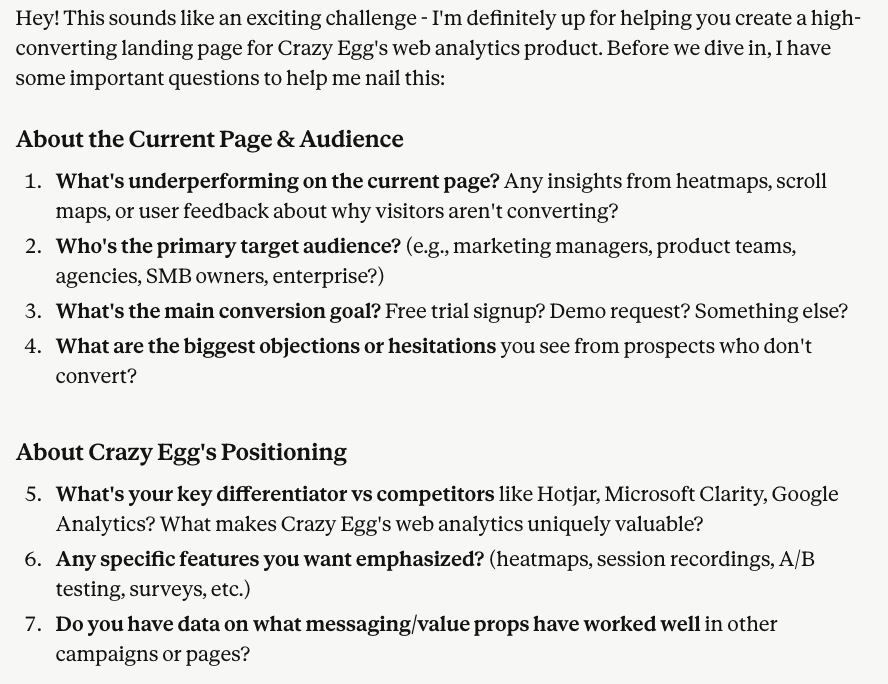
During the testing phase, the AI was asked to generate a comprehensive page architecture and section-by-section content. It also served as a consultant, asking clarifying questions about the brand’s positioning and target demographics. This dialogue creates a bespoke blueprint that translates directly into the final landing page layout.
3. Execution and Mockup
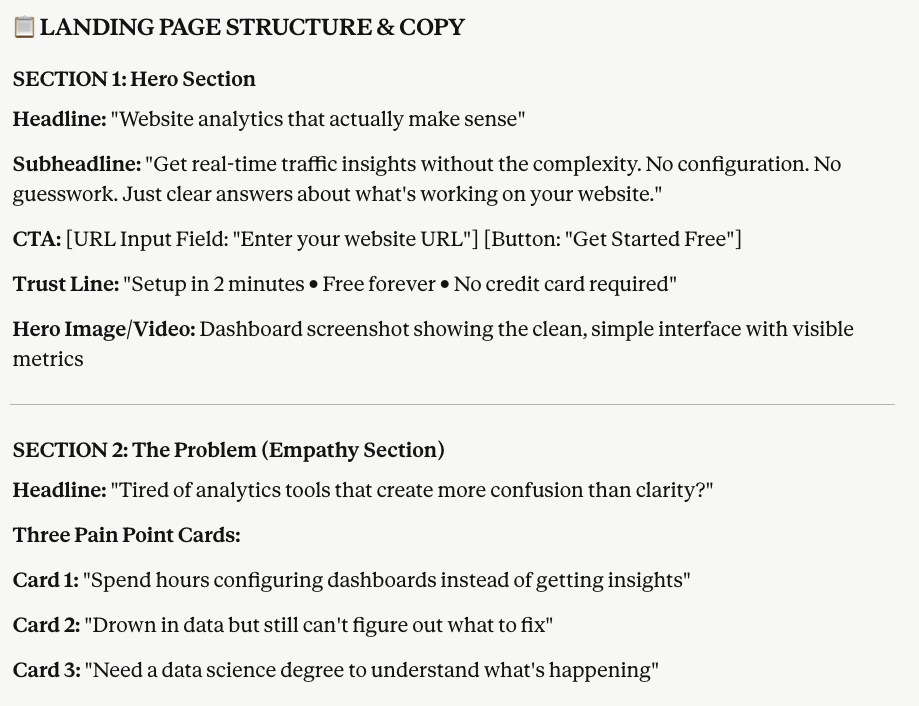
Once the structure and copy are locked, the prompt is fed into an AI website builder. In optimal scenarios, this stage requires zero manual intervention. The builder translates the LLM’s structured instructions into a live, responsive layout. While minor layout tweaks may be necessary for mobile responsiveness, the weeks usually spent on wireframing are effectively eliminated.
4. The Critique Loop
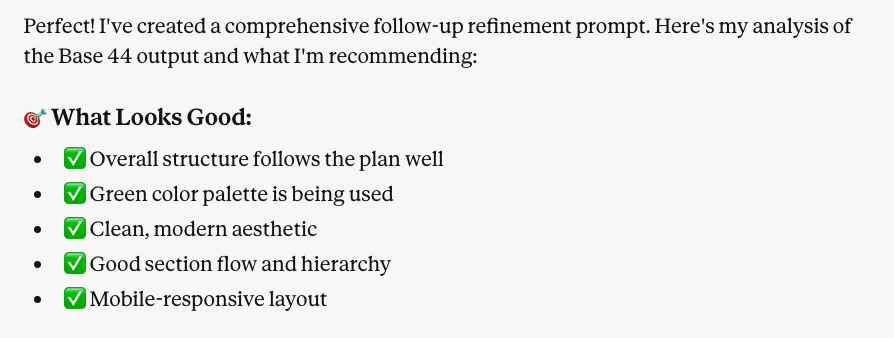
One of the most powerful aspects of this workflow is the recursive feedback loop. Once a draft is generated, the team takes a full-page screenshot and returns it to the LLM. By asking, "What would you improve about this design?" the AI acts as both the creator and the critic. It identifies missing objection-handling elements and copy that feels off-brand, then generates a refined prompt to update the builder.
5. Human-in-the-Loop Review
While AI handles the heavy lifting, human judgment remains the final filter. This is where brand alignment and factual accuracy are verified. If a headline feels unusually bold or direct, human teams are advised to proceed with caution—often, that directness is exactly why the variant converts better.
Supporting Data: Why 99% Matters
The debate surrounding statistical significance has long been a point of contention in the CRO community. While many practitioners settle for 95% statistical significance, those who have successfully scaled AI-assisted testing argue that 99% is the new requirement.
At 95% confidence, the rate of false positives—where a test appears to be a winner but is actually just statistical noise—is higher than many realize. By raising the threshold to 99%, teams ensure that the observed lift is robust. In practical terms, this shift moves the confidence ratio from 19-to-1 to 99-to-1. This is not just a statistical preference; it is a defensive strategy against the volatility of online traffic.
Furthermore, the duration of the test is paramount. Data collected within the first 48 hours is notoriously volatile, often influenced by daily traffic patterns that don’t represent the wider user base. A minimum of one full week—ideally a month—is required to ensure that the "big signals" the team is chasing are legitimate.
Implications for the Future of Growth Teams
The most significant implication of this workflow is the democratization of high-level growth strategy. Organizations no longer need a massive, specialized team to "move the needle." Instead, they can empower a single, tech-enabled marketer to run high-impact tests that were previously out of reach.
Shifting from "Tweaks" to "Redesigns"
This approach is not designed for minor iterations, such as changing the color of a CTA button. Such tests require enormous traffic and long timelines to achieve significance. Instead, this AI workflow is designed for "macro-testing"—reimagining the messaging, framing, and structure of a page entirely.

When you replace an entire page, you are testing a hypothesis, not a pixel. This is where the most significant gains are found. If a test fails, the team has lost only a day of work; if it wins, they have fundamentally improved the conversion funnel at a fraction of the traditional cost.
The New Competitive Landscape
As these tools become more sophisticated, the gap between teams that use AI and those that don’t will widen. Companies that continue to rely on manual, months-long redesign cycles will struggle to compete with leaner, more agile competitors who can iterate through dozens of variations in the time it takes the former to agree on a headline.
Final Verdict
The era of the "million-dollar, year-long" conversion experiment is coming to a close. By integrating LLMs and AI page builders into a rigorous, data-backed workflow, marketing teams can now execute at the speed of thought.
The strategy is simple:
- Pick high-traffic, mid-conversion pages to establish momentum.
- Use 99% statistical significance to avoid false positives.
- Embrace the "big signal" approach to test entire page architectures.
- Keep the human element for brand oversight, but let the AI do the heavy lifting of design and copy.
For teams ready to move beyond the constraints of traditional resource allocation, the path forward is clear. The technology is no longer a futuristic concept—it is a live, functioning engine for growth. The only remaining question is: which page will you test first?
