
Beyond the Vanity Metric: Why Audience Intelligence is the New Currency of Influencer Marketing
In the high-stakes world of digital marketing, the traditional playbook for influencer selection is undergoing a radical disruption. For years, the industry standard for success was defined by a simple, often misleading metric: reach. Brands chased high-follower counts and viral view tallies, assuming that mass exposure would inevitably translate into bottom-line revenue. However, a new paradigm is emerging. The organizations winning in today’s saturated digital economy aren’t necessarily the ones with the deepest pockets; they are the ones leveraging sophisticated audience intelligence to discern which creators are actually driving business outcomes versus those simply inflating vanity metrics.
This seismic shift in strategy serves as the foundation for the latest industry report, Redefining Influencer Value: How Audience Intelligence Transforms Reach into Revenue. The findings are definitive: across diverse sectors—from the highly regulated halls of healthcare to the fast-paced world of gaming and the competitive consumer packaged goods (CPG) landscape—the creators generating the most views are rarely the ones generating the most tangible value.
The Core Philosophy: Shifting from Reach to Relevance
To understand why this shift is occurring, one must look at the evolution of consumer behavior. Modern audiences are increasingly skeptical of broad-brush advertising. They seek authenticity, expertise, and cultural resonance. When a brand partners with an influencer based solely on a high follower count, they risk "audience dilution"—paying for a vast reach that includes significant segments of users who have zero intent to purchase.
The central thesis of the Redefining Influencer Value report is that marketers must stop treating influencer marketing as a "top-of-funnel" billboard strategy and start viewing it as a "mid-to-bottom-funnel" conversion engine. By utilizing granular data—such as search affinity, cross-platform viewing habits, and cultural alignment—brands can map the customer journey with unprecedented precision.
Healthcare on Instagram: Navigating the Clinical-Alternative Paradox
Nowhere is the necessity for precision more evident than in the healthcare sector. When marketing pharmaceuticals, skincare, or specialized supplements, the margin for error is razor-thin. Influencer marketing in this space requires a delicate balance of medical accuracy and relatable, consumer-friendly content.
The Landscape of 2025
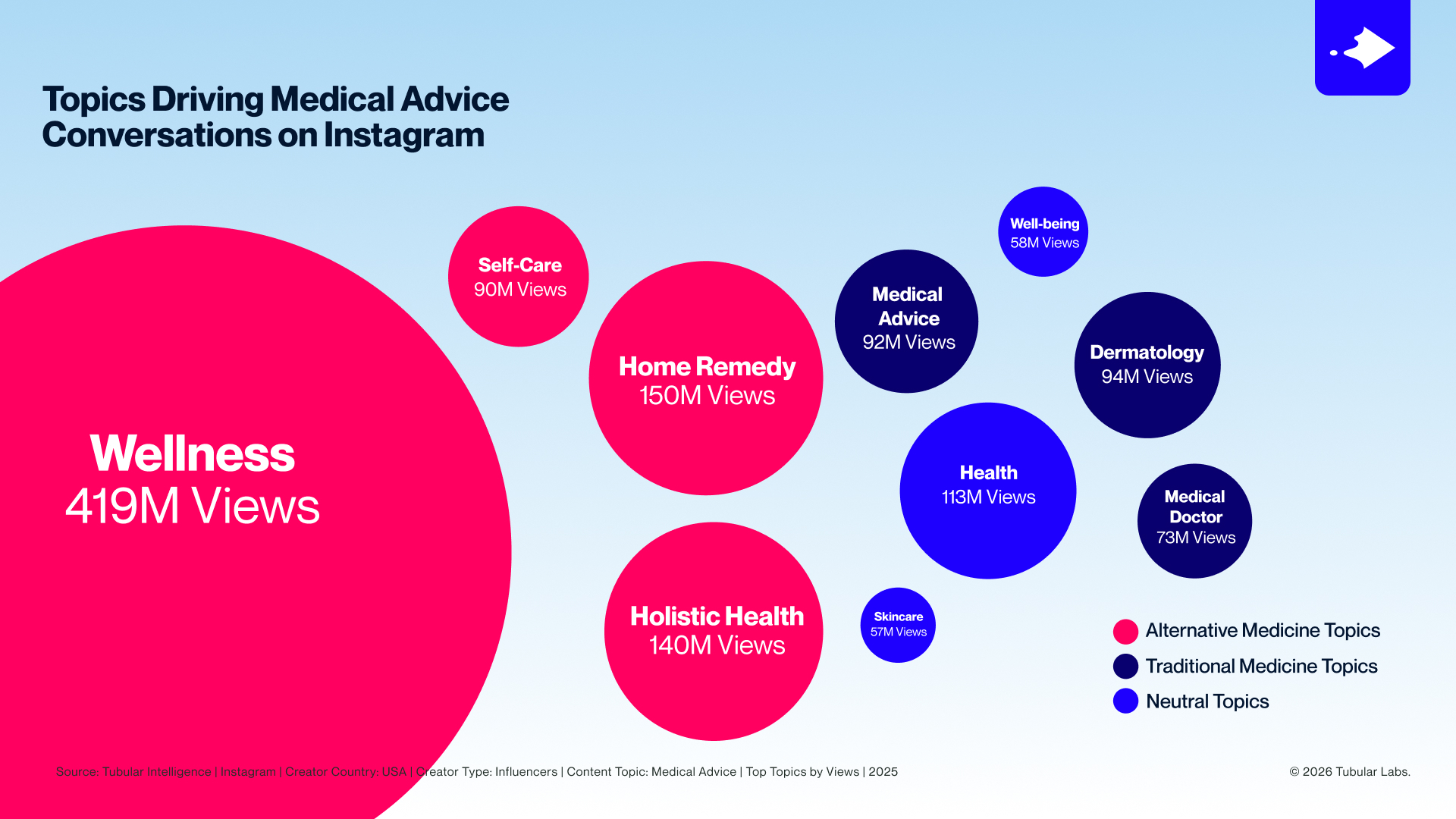
Recent data analysis of U.S. influencer content on Instagram throughout 2025 reveals a fascinating, if complex, narrative. Contrary to the belief that healthcare consumers exist in silos, the data demonstrates that they are simultaneously consuming both clinical and alternative medical content.
This creates a "clinical-alternative paradox." A consumer might follow a board-certified dermatologist for evidence-based skincare advice while simultaneously engaging with holistic wellness influencers regarding natural remedies. For brands, this indicates that an audience is not binary. They are curious, they are forming intent, and they are moving between different types of content creators to validate their health-related decisions.
The strategic implication is clear: if a brand restricts its influencer partnerships solely to clinical professionals, it misses the opportunity to engage with a massive segment of its target demographic that is actively exploring alternative viewpoints. Conversely, ignoring clinical voices risks a lack of credibility. The most effective campaigns are those that meet the audience where this curiosity is highest.
Case Study: The Science of Selection
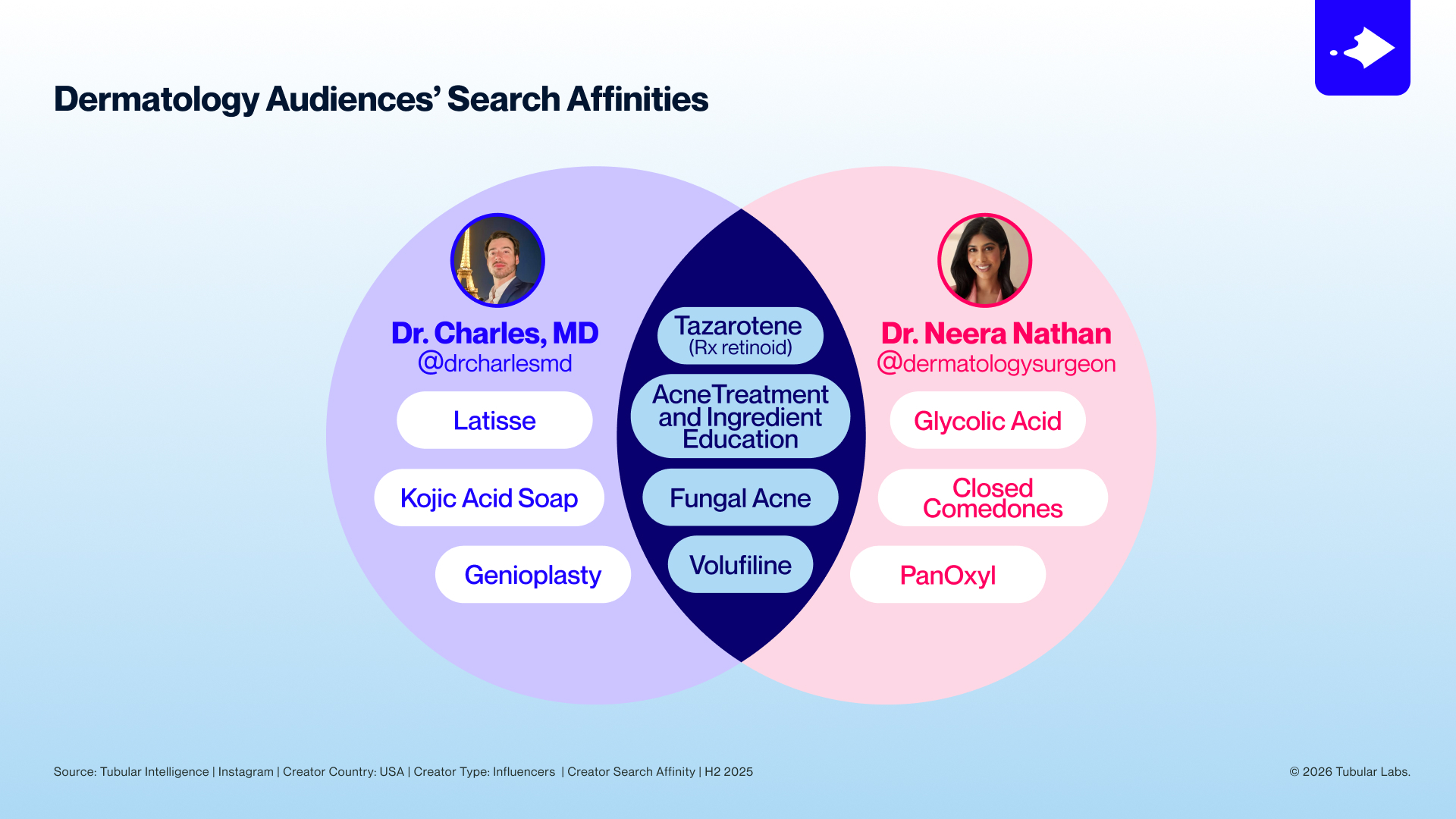
To illustrate the practical application of audience intelligence, the report highlights an analysis of two prominent dermatology creators: Dr. Charles, MD, and Dr. Neera Nathan.
Follower Count vs. Strategic Alignment
If a brand were launching a product like Latisse, a superficial analysis of "reach" would suggest a singular focus on Dr. Neera Nathan, who boasts an audience of 1.8 million. Her reach is broad and medically relevant. However, when layering in audience intelligence, a more nuanced picture emerges.
The data reveals a critical asymmetry: 17% of Dr. Charles, MD’s audience also follows Dr. Neera Nathan, but only 2% of her audience follows him. This creates a strategic advantage for a brand partnering with Dr. Charles. He acts as a high-intent bridge. Because he focuses on challenging trends and breaking down ingredient science through a rigorous clinical lens, his audience is primed for product validation. By partnering with him, a brand gains access to a highly engaged niche that provides the clinical credibility necessary to move the needle, while simultaneously reaching a segment that is already interested in the broader dermatology conversation.
Beyond Healthcare: Gaming and CPG Insights
The principles of audience intelligence are not limited to healthcare; they are universal. The Redefining Influencer Value report provides significant evidence across other major industries where data-driven selection has outperformed traditional models.
Gaming: The Myth of the "Broad Gamer"
In East and Southeast Asia, YouTube anime and gaming influencers generated a staggering 18 billion views in 2025. Yet, the report warns against the "volume trap." When brands attempt to capture the entirety of this market, they dilute their impact. The creators who actually move the needle on game sales or microtransactions represent a much smaller, highly specific slice of the landscape. Success in this sector requires identifying the specific sub-cultures—whether it’s competitive strategy enthusiasts or casual mobile players—and mapping the specific influencers who dictate their purchasing habits.
CPG: Cultural Fit Over Category Fit
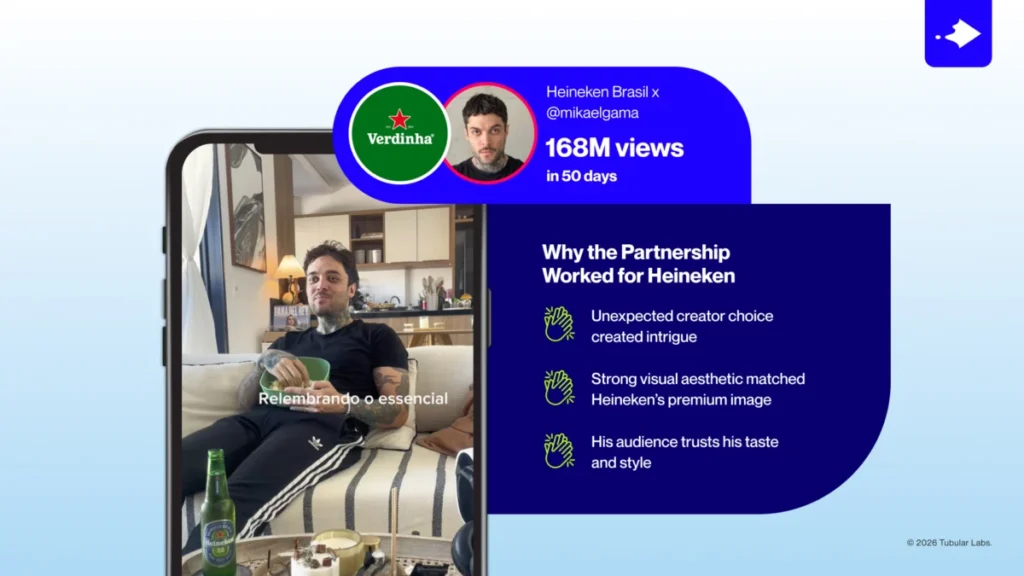
In Brazil, a market that ranked second globally in influencer TikTok engagement in 2025, the power of cultural fit was on full display. Heineken’s decision to partner with a men’s fashion creator—rather than a traditional "beer influencer"—generated 168 million views and one million engagements in just 50 days. This success story proves that when a brand aligns with a creator’s cultural identity rather than just their category, they can bypass audience fatigue and tap into the genuine enthusiasm of a loyal community.
The Evolution of the Marketing Framework
To synthesize these findings into actionable strategy, marketers should adopt a four-pillar framework for influencer identification:
- Search Affinity Analysis: Move beyond what influencers post and look at what their audiences are searching for. This reveals the "intent gap" between the influencer’s content and the audience’s actual needs.
- Cross-Platform Audience Mapping: Use data to track where an audience goes when they leave a specific creator’s channel. Understanding the overlap between different creators allows for more strategic, layered campaigns.
- Cultural Alignment Verification: Evaluate whether the influencer’s personal brand and cultural standing align with the values of the product. As seen in the Brazilian beverage market, cultural resonance often outweighs topical relevance.
- Outcome-Based Performance Metrics: Transition from measuring "vanity metrics" (views, likes) to "value metrics" (search traffic, site visits, and conversion).
Official Perspectives and Industry Implications
Industry analysts are calling this the "Age of Intelligence" in marketing. As social platforms continue to refine their algorithms, the barrier to entry for content creation is lowering, but the barrier to influence is rising.
"The era of the ‘blind buy’—where brands purchase access to a creator’s audience based on a single number—is over," notes a senior strategist at Tubular Labs. "Marketing directors are under immense pressure to show ROI. By utilizing audience intelligence, we are moving the industry toward a model where every partnership is justified by data, not by intuition."
The implications for the broader marketing ecosystem are profound. Agencies that rely on old-school procurement methods will likely find themselves losing ground to data-literate teams that can demonstrate a clear path from engagement to revenue. Furthermore, this shift favors the rise of "micro-influencers" who may have smaller, but significantly more loyal and high-intent audiences.
Conclusion: The Path Forward
As the data from Redefining Influencer Value suggests, reach is merely the starting point. It is the baseline, not the strategy. In a digital landscape defined by fragmentation and consumer skepticism, the ability to decode audience behavior is the ultimate competitive advantage.
For brands looking to survive and thrive in the coming years, the mandate is clear: Stop chasing the numbers. Start chasing the audience. By understanding the intricate web of search habits, cultural interests, and content consumption patterns that define today’s consumers, brands can finally turn the nebulous concept of "influencer reach" into a predictable, measurable engine for growth.
To gain deeper insights and access the full breakdown of data-driven influencer strategies, organizations are encouraged to review the full findings in the Redefining Influencer Value report. In an era where data is the new currency, those who understand the nuance of the audience will be the ones who define the future of the industry.
