
The Strategic Horizon: Decoding the Future of Marketing Technology in 2026
As the calendar turns toward the end of the year, the marketing industry is once again braced for the inevitable deluge of "prophecy season"—a period defined by hyperbolic trends and speculative fever dreams. However, for the past several years, the annual collaboration between industry stalwarts Frans Riemersma and Scott Brinker has served as the industry’s grounded, empirical antidote to this noise.
Their latest endeavor, Martech for 2026, moves beyond the hype cycle to offer a pragmatic, data-driven assessment of the marketing technology landscape. Scheduled for release on December 2, 2025, this report aims to provide marketing leaders with a tactical roadmap for the next 6 to 12 months, stripping away the marketing-speak to reveal what is actually happening within the engines of modern enterprise growth.
The Core Objective: Pragmatism Over Prophecy
The annual Martech report is rooted in the belief that effective planning requires an understanding of existing, real-world patterns rather than speculative crystal-ball gazing. Brinker and Riemersma’s methodology involves deep research into the actual deployment of technology within marketing stacks. By analyzing how companies are currently architecting their systems, they provide a reliable extrapolation of where the industry is heading.
"These aren’t the crazy fever-dream predictions that you’re used to reading during this eye-rolling, end-of-year prophecy season," Brinker notes. "It’s a pragmatic assessment of what’s really happening inside marketing tech stacks and the martech industry as a whole."
For 2026, the focus shifts sharply toward the integration of Artificial Intelligence (AI) and the transition from "experimentation" to "operationalization." As marketing organizations face pressure to demonstrate ROI on their AI investments, the report serves as a critical resource for separating viable, scalable infrastructure from the "science fair" projects that continue to clutter the ecosystem.
A Chronology of the 2026 Rollout
The release of Martech for 2026 is structured as a multi-stage educational event designed to provide both high-level insights and granular, technical analysis.
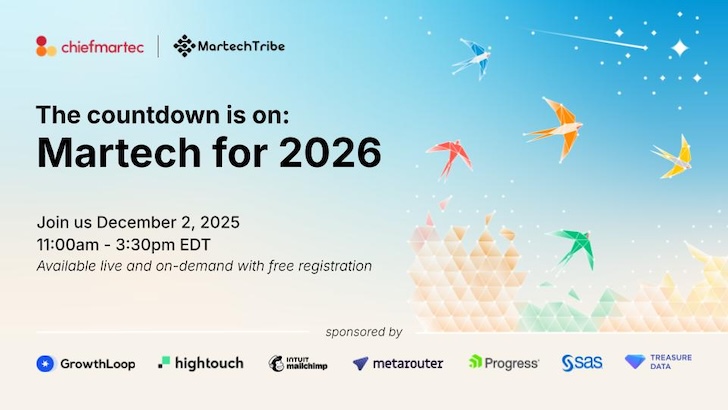
- Pre-Launch Phase: Registration is currently open for the December 2 virtual event. By signing up in advance, professionals secure early access to the 100+ page report, ensuring they can digest the findings before the year-end lull.
- December 2, 2025 (Launch Day): The primary keynote presentation will be held. This session will walk through the report’s findings, highlighting the most surprising data points and addressing the "no-holds-barred" realities of AI integration.
- December 2025 (On-Demand Period): Following the live event, the entire presentation, including the keynote and subsequent panel discussions, will be available on-demand throughout the month, allowing global teams to integrate these findings into their Q1 planning.
Supporting Data: The AI Agent Landscape
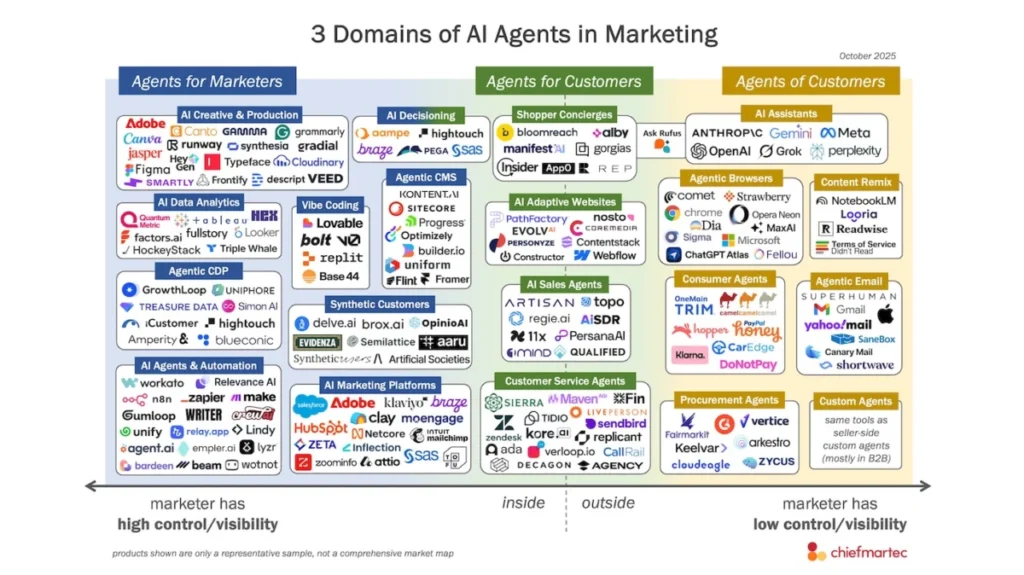
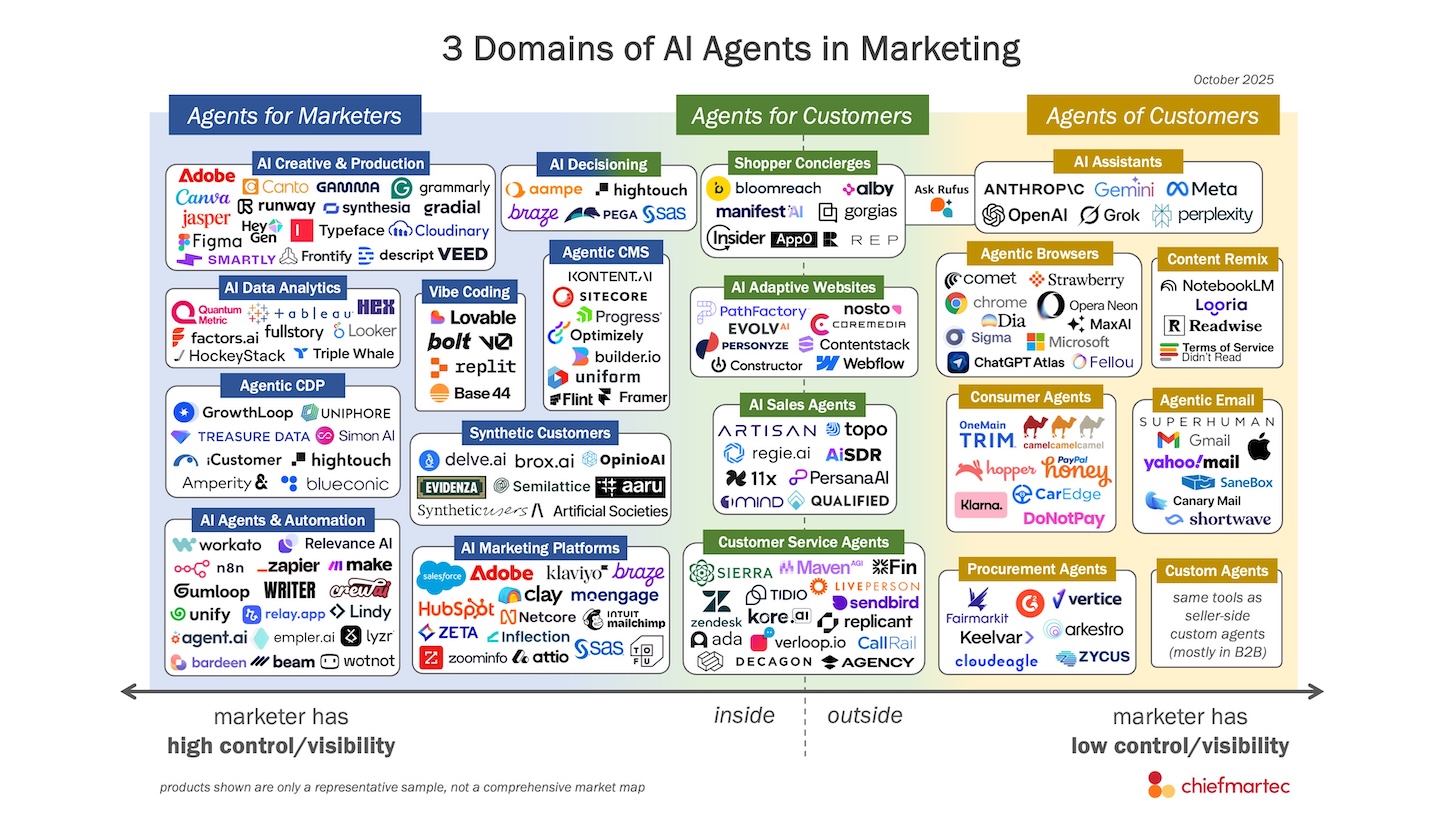
A central pillar of this year’s research is the comprehensive AI & Data in Marketing survey. The report categorizes the explosion of AI agents into three distinct domains, providing a taxonomy that helps marketers understand where their investments are being placed.
The report promises to deliver the "truth" regarding which agents are currently scaling in production environments versus those still trapped in the R&D phase. By analyzing data sources and the specific use cases driving adoption, Brinker and Riemersma provide a clear look at:
- Context Engineering: How marketers are feeding high-quality, relevant data into AI systems to ensure outputs are not just generated, but actionable and brand-aligned.
- Stack Evolution: The report tracks the critical question of the year: Are AI agents augmenting existing SaaS platforms, replacing them entirely, or carving out new, previously impossible use cases?
- The Shift from Science Fair to Production: Utilizing survey data from thousands of practitioners, the research highlights the maturity of AI deployments, offering a reality check on the actual speed of industry-wide adoption.
Official Perspectives and Industry Collaboration
One of the most anticipated components of the Martech for 2026 release is the series of interviews with senior product and marketing leaders from top-tier organizations. The sponsoring companies—GrowthLoop, Hightouch, Intuit Mailchimp, MetaRouter, Progress, SAS, and Treasure Data—represent a cross-section of the most influential players in the data and marketing stack space.
Rather than traditional sales pitches, these sessions are designed as candid, high-level discussions. Brinker and Riemersma will moderate these panels to extract real-world insights into what these leaders are seeing within their own customer bases and internal organizations. This approach ensures that the audience receives unfiltered perspectives on the challenges of AI implementation, data governance, and the evolving role of the marketing technologist.
Implications: Preparing for the 2026 Landscape
The findings of the Martech for 2026 report carry significant implications for marketing operations and strategy. As the industry moves past the initial "wow" factor of generative AI, the focus for 2026 will be on integration, compliance, and efficiency.
Strategic Shifts
The report suggests that marketing leaders must transition from a "collection of tools" mentality to an "orchestration of agents" framework. The implications for the 2026 fiscal year include:
- The Re-evaluation of Tech Stacks: Organizations will need to decide whether their existing SaaS vendors are evolving fast enough to incorporate AI, or if they represent "legacy" debt that needs to be replaced by agentic-native platforms.
- Data Quality as a Competitive Advantage: With the rise of context engineering, the role of data engineering within marketing departments will become increasingly paramount. The report will likely underscore that an AI agent is only as intelligent as the data infrastructure supporting it.
- Operational Resilience: The emphasis on "no-holds-barred" findings means that the report will not shy away from the failures and friction points currently experienced by early adopters. For the reader, this provides a "lessons learned" playbook, allowing them to avoid common pitfalls in AI implementation.
Conclusion: The Path Forward
In an era where the pace of technological change often outstrips the ability of teams to adapt, Martech for 2026 provides the clarity required to move with confidence. By combining deep-dive research, empirical survey data, and unfiltered industry dialogue, the report serves as an essential tool for any marketing professional looking to maintain their edge.
For those tasked with navigating the complexity of modern marketing operations, the opportunity to gain these insights before the holiday break is invaluable. As Brinker concludes, "Don’t miss this opportunity to get ahead of the curve for 2026."
The industry is at an inflection point. Whether AI agents will serve as the ultimate force multiplier for marketing teams or merely add another layer of complexity to an already crowded landscape will be the defining narrative of the coming year. Martech for 2026 offers the data, the analysis, and the candid perspective necessary to ensure that marketing leaders remain in control of that narrative.
To join the 42,000+ professionals who rely on these insights to navigate the evolving martech ecosystem, stakeholders are encouraged to register for the upcoming event and ensure they are prepared for the challenges and opportunities of the new year.
