
The Ultimate Showdown: Crazy Egg vs. Mouseflow for Modern Web Optimization
In the highly competitive landscape of Conversion Rate Optimization (CRO), data is the currency of growth. Marketing teams and product managers are increasingly turning to behavioral analytics to decode user intent, reduce bounce rates, and drive revenue. Two titans dominate this space: Crazy Egg and Mouseflow.
While both platforms promise to unlock the "why" behind user behavior, they cater to fundamentally different operational philosophies. Choosing between them is not merely a matter of comparing features; it is about deciding whether you need an all-in-one "command center" for experimentation or a specialized surgical tool for friction diagnostics.
Main Facts: Defining the Core Value Propositions
The choice between Crazy Egg and Mouseflow hinges on your current tech stack and your optimization goals.
- Crazy Egg positions itself as a comprehensive CRO ecosystem. It is designed for teams that want to bridge the gap between discovery and action. By integrating web analytics, heatmaps, session recordings, surveys, and—critically—native A/B testing, it eliminates the "tool sprawl" that often plagues marketing departments.
- Mouseflow acts as a high-fidelity diagnostic instrument. It excels at identifying the "where" and "how" of user friction. With its proprietary Friction Score, deep form analytics, and user journey mapping, it is the preferred choice for enterprise teams that already have a dedicated experimentation platform and need a superior layer of behavioral intelligence to inform their tests.
Chronology and Evolution of the Tools
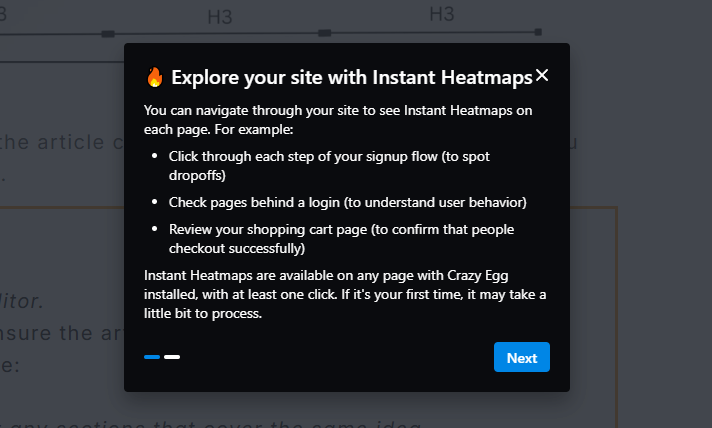
The evolution of these tools reflects the shifting needs of the web. Crazy Egg, a pioneer in the heatmap space, has transitioned from a simple visualization tool into a robust analytics suite that leverages AI to synthesize data across multiple channels. Its recent focus on "Instant Heatmaps" and AI-driven insights highlights a shift toward democratizing data, allowing even non-technical stakeholders to identify conversion hurdles.
Mouseflow has followed a parallel but distinct path. Its journey has focused on deep-dive technical diagnostics. By introducing features like the Friction Score and advanced event tracking, Mouseflow has successfully moved beyond simple "recordings" to provide quantifiable, actionable metrics that help teams prioritize technical debt and UI/UX issues.
Supporting Data: Feature-by-Feature Comparison
To understand the difference, we must look at the technical capabilities that define daily workflows.

1. Heatmaps and Visualization
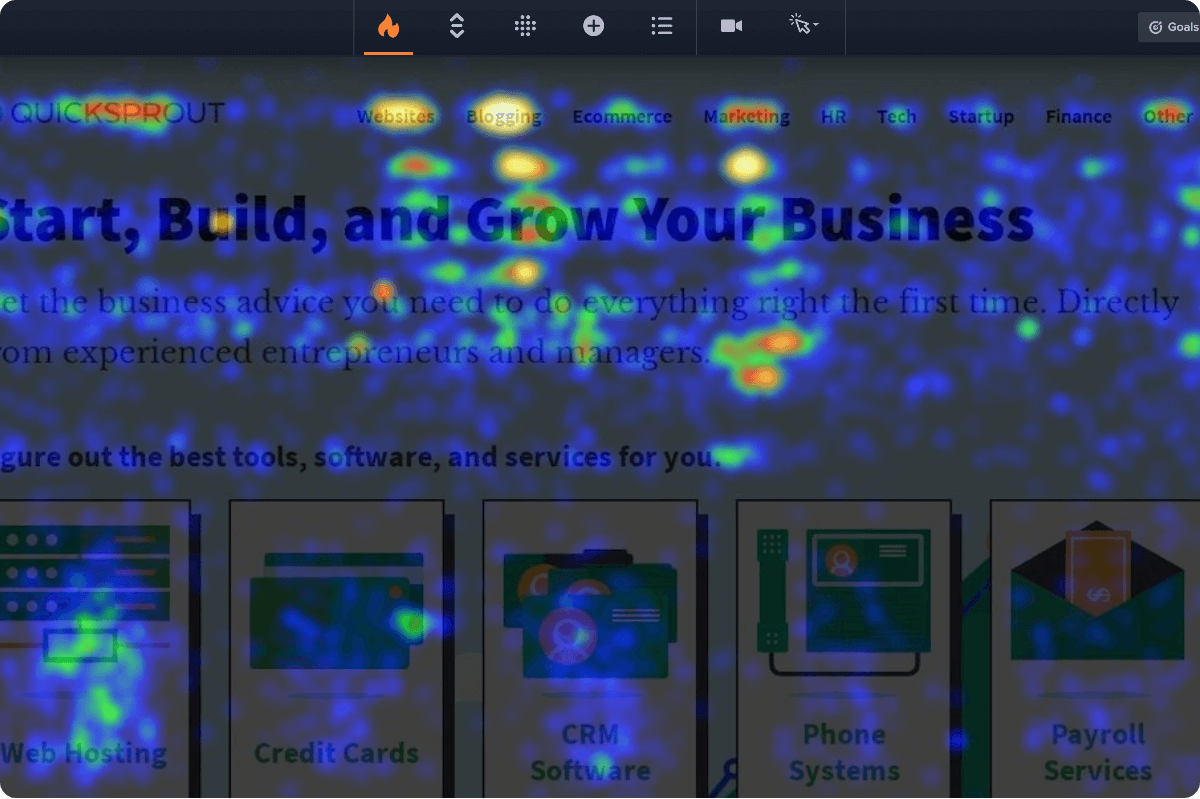
Crazy Egg provides five map types, emphasizing segmentation. Its Confetti maps allow for granular analysis using over 17 metrics, making it ideal for segmenting by traffic source or device type.
Mouseflow, conversely, offers seven map types. It provides deeper diagnostic views like "Attention" and "Geo" maps. While it offers side-by-side comparison, it lacks the multi-segment "Confetti" view, making it better for broad behavioral analysis rather than hyper-segmented cohort studies.
2. Session Recordings
Both platforms offer full HTML-based session replays. However, the difference lies in the "intelligence" of these recordings:
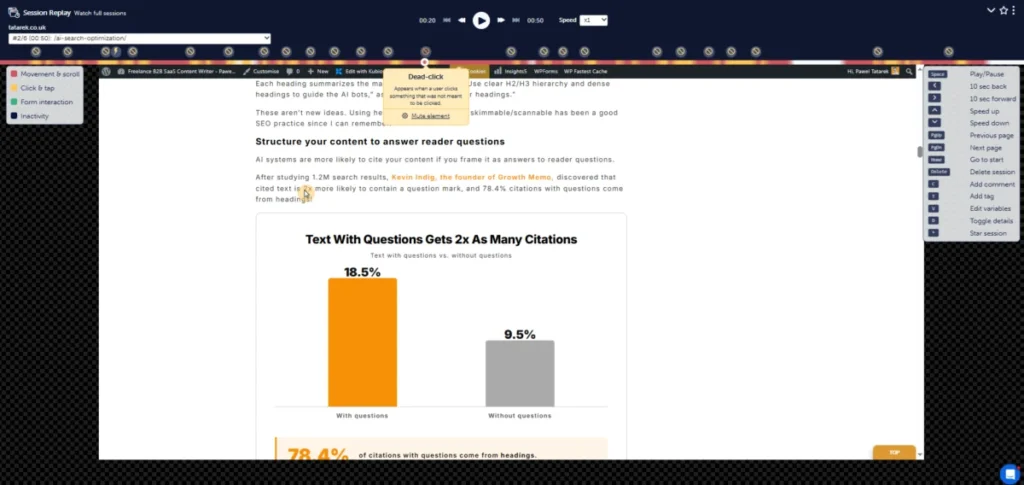
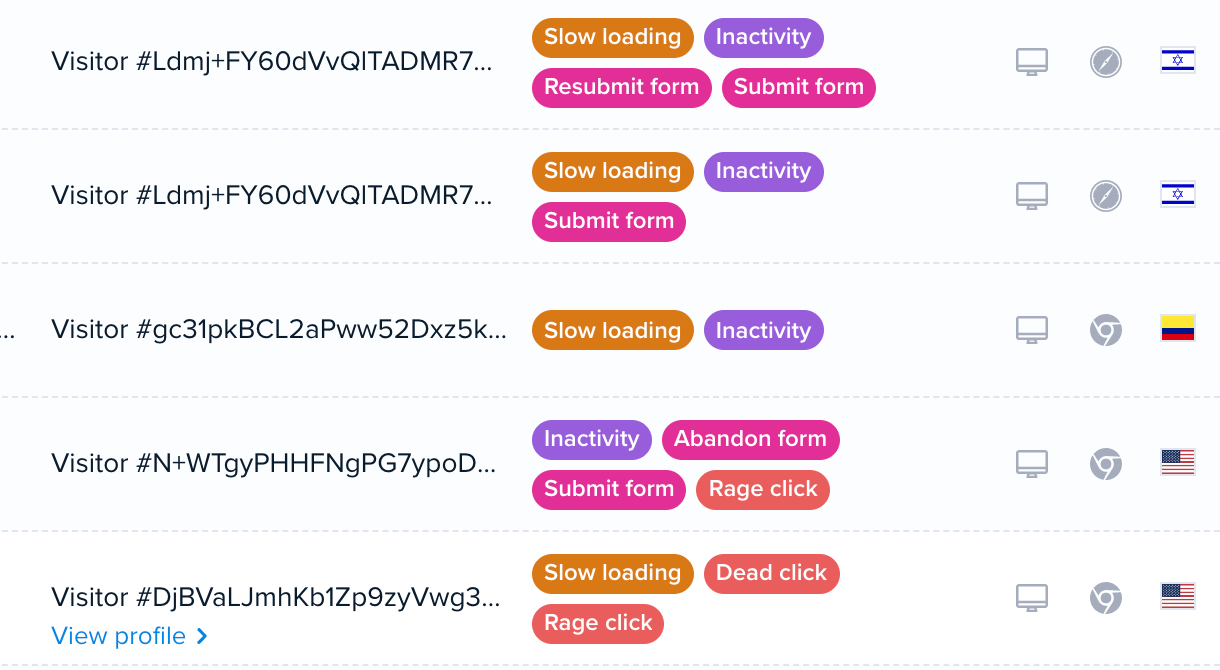
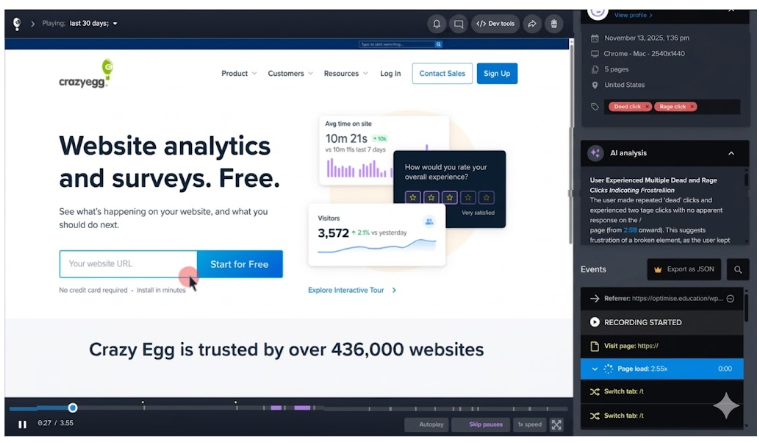
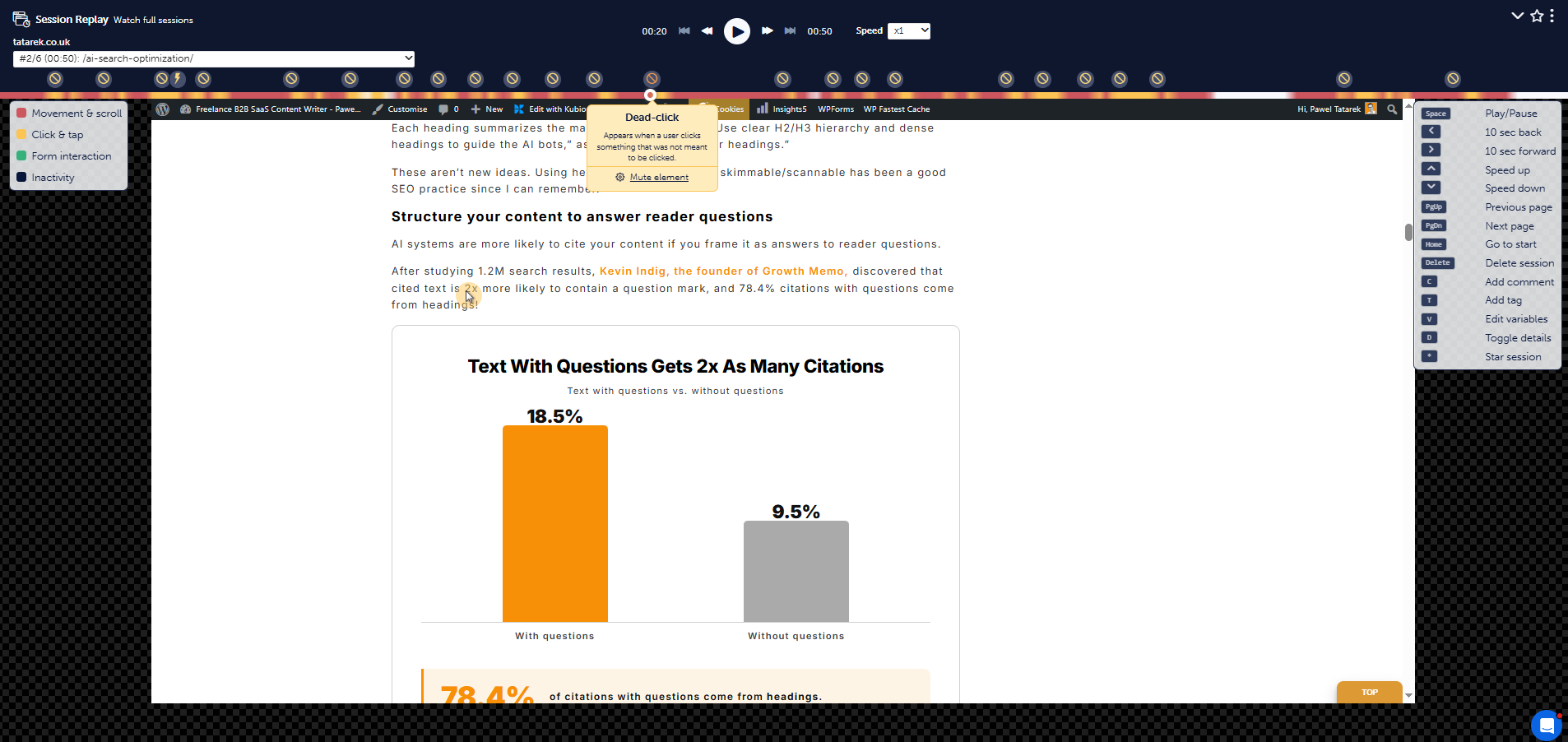
- Crazy Egg: Focuses on AI-detected patterns. It automatically tags sessions for "rage clicks," "dead clicks," and JS errors, making it easier to sift through thousands of sessions to find the needle in the haystack.
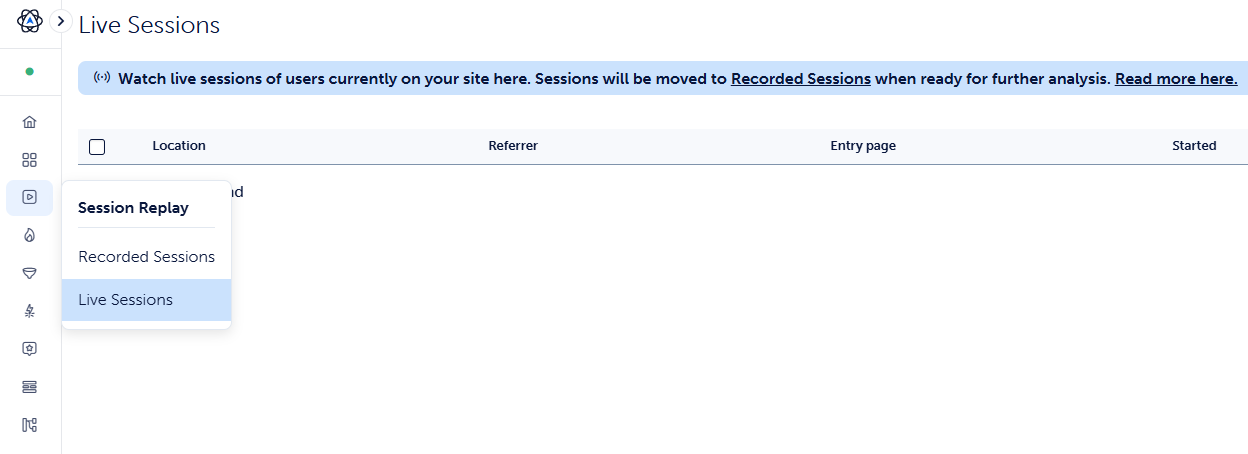
- Mouseflow: Offers "Live Session Viewing." While Crazy Egg provides a comprehensive event log, Mouseflow allows teams to watch users in real-time. This is invaluable for support teams and UX researchers who need to troubleshoot issues as they occur.
3. Conversion Funnels
Both tools offer retroactive funnels—a massive advantage, as it allows users to build a funnel today and see historical data immediately.
- Crazy Egg: Offers unlimited funnels with broad trigger options. It is built for agility.
- Mouseflow: Differentiates itself with Revenue Insights. By attaching dollar values to funnel steps, Mouseflow provides a clear ROI for every optimization effort. It is a powerful tool for finance-driven marketing leaders who need to justify their UX spend.
4. Surveys and Feedback
Crazy Egg shines in accessibility and ease of use, featuring a library of over 50 templates and WCAG AAA compliance. Mouseflow, however, offers a unique capability: the ability to trigger surveys based on "friction events" like rage clicks or error messages, and the ability to A/B test the surveys themselves.
Implications for Your Tech Stack
The decision between these two platforms has significant implications for your long-term strategy:
The Case for Consolidation (Crazy Egg):
If you are a mid-market company or an agency managing multiple domains, Crazy Egg’s "all-in-one" model is superior. You are not just observing behavior; you are running tests on the same platform. Because it includes A/B testing and web analytics (with GA4 integration), you save the subscription costs of multiple standalone tools. Furthermore, with unlimited seats and sites, it scales without the "per-domain" penalty found in many enterprise tools.
The Case for Specialization (Mouseflow):
If you operate in a high-traffic, high-stakes environment (e.g., e-commerce or SaaS) where you already utilize Optimizely or VWO for A/B testing, Mouseflow is the better diagnostic layer. Its Friction Score is an industry benchmark for identifying site-wide health issues. It is essentially a "microscope" for your developers and UX designers.
Strategic Considerations: Pricing and Value
The billing models reveal the intent of each service:
- Crazy Egg uses a "Tracked Pageviews" model. You only pay for what you monitor. This is highly efficient for teams that have a rotating focus on different site sections.
- Mouseflow uses a "Session-based" model. While its entry-level plan is marginally cheaper, it can become expensive if you have high-volume traffic, as sessions are counted regardless of whether you are actively analyzing them.
Final Assessment: Making the Choice
Choose Crazy Egg if:
- You need a central hub: You want to manage analytics, heatmaps, and A/B tests in one interface.
- You are an agency: Unlimited sites and seats provide the best scalability for managing multiple client accounts.
- You want AI-assisted insights: You prefer the tool to highlight the "Top Insights" for you rather than spending hours digging through data.
- Compliance is a priority: You need WCAG AAA-compliant survey tools for government or public-sector projects.
Choose Mouseflow if:
- You already have an experimentation platform: You don’t need A/B testing, but you do need a deep-tech forensic tool for friction.
- You need real-time monitoring: The ability to watch live sessions is a "must-have" for your support or dev team.
- Revenue attribution is critical: You need to map user behavior directly to lost or gained revenue within your funnels.
- You require industry benchmarking: You want to know how your friction levels compare to your peers.
Ultimately, the best tool is the one your team will actually use. If you want to move quickly from insight to action, Crazy Egg provides the shortest path. If you are a specialized UX team tasked with optimizing a highly complex, high-traffic product, Mouseflow provides the deepest level of diagnostic intelligence.
Both tools offer free tiers or trials, and the best advice is to run a pilot on a single page—then watch how the data informs your next design decision.
