
The Silent Revolution: How the ‘Agentic Web’ is Redefining Product Distribution
Executive Summary: The Death of the Click and the Rise of the Agent
For two decades, the North Star of the Silicon Valley startup ecosystem has been the Y Combinator motto: "Make something people want." This simple directive was predicated on a fundamental assumption—that "people" are the ones discovering, evaluating, and purchasing products. Distribution, the lifeblood of any successful venture, was a human-mediated game. It relied on the nuances of search engine optimization (SEO), the dopamine loops of social media algorithms, the precision of paid advertising, and the organic trust of word-of-mouth.
However, a tectonic shift is underway. In the first half of 2026, a series of independent but synchronous moves by six of the world’s most influential infrastructure and platform companies—Cloudflare, Shopify, Stripe, Supabase, Netlify, and Google—has signaled the end of the human-exclusive web. We are entering the era of the Agentic Web, where "making something people want" now necessitates "making something agents can use."
AI agents—autonomous software entities capable of visiting websites, parsing information, and executing complex transactions—are becoming the primary interface between products and consumers. This report examines the infrastructure being built to support this new visitor class and what it means for the future of digital commerce and development.
Main Facts: The Infrastructure Bet of the Century
The emergence of the agentic web is not a speculative trend; it is a documented pivot by the companies that own the "pipes" of the internet. Within a six-month window, six major players independently launched features designed specifically for non-human visitors.
1. Cloudflare: The Agent Gatekeeper
In April 2026, Cloudflare dedicated an entire "Launch Week" to agent infrastructure. This was not a minor update but a comprehensive overhaul of how the network perceives traffic. Key releases included:
- Web Bot Auth: A collaboration with GoDaddy to establish a verifiable identity for AI agents.
- Markdown for Agents: A protocol to serve content in machine-optimized formats.
- Agent Readiness Score: A diagnostic tool (isitagentready.com) that evaluates a website’s accessibility for AI entities.
2. Shopify and Google: The Commerce Layer
Commerce is moving from "browsing" to "execution." Shopify’s Agent Toolkit now allows AI agents to bypass traditional graphical user interfaces (GUIs) to check inventory and complete checkouts via structured APIs. Simultaneously, Google introduced the Universal Commerce Protocol (UCP) and the Agent Payments Protocol via the FIDO Alliance, creating a standardized "Universal Cart" that agents can use across the web.
3. Stripe: Agent-Transactable Infrastructure
Stripe launched Projects, a platform where AI agents can autonomously manage the financial lifecycle of a business—from buying domains to deploying infrastructure and managing recurring subscriptions—without human intervention in the payment rail.
4. Netlify and Supabase: The Development Frontier
Netlify launched netlify.ai, a dedicated entry point for agents to deploy and manage websites. Meanwhile, Supabase has become the "default" database for AI-built applications by ensuring its identity and documentation are entirely machine-readable, appealing to "vibe coders" who use agents to build entire tech stacks.
Chronology: From Human SEO to Agentic Discovery
To understand the speed of this transition, one must look at the timeline of distribution evolution.
- 2004–2014: The Search and Social Era. Distribution was defined by Google’s PageRank and the early viral mechanics of Facebook and Twitter. The goal was to capture human attention and "clicks."
- 2015–2023: The Algorithmic Era. Platforms like TikTok and Instagram refined discovery through black-box algorithms. Businesses optimized for "engagement metrics" to stay visible to human users.
- Late 2024 – Early 2025: The LLM Inflection Point. Large Language Models (LLMs) began acting as search proxies. Perplexity, OpenAI’s SearchGPT, and Google’s AI Overviews started summarizing the web, reducing the need for humans to click through to websites.
- Early 2026: The Agentic Pivot. The industry realized that summarizing content wasn’t enough. Agents needed to act.
- January 2026: Google begins testing the Universal Commerce Protocol.
- March 2026: Shopify releases the Agent Toolkit, enabling headless agent commerce.
- April 2026: Cloudflare’s "Agent Week" establishes the security and identity standards for the agentic web.
- May 2026: The FIDO Alliance adopts the Agent Payments Protocol, standardizing how AI "wallets" interact with merchants.
Supporting Data: What Defines ‘Agent-Readiness’?
The shift toward agents is driven by the technical limitations of current web design. Data suggests that a website optimized for humans is often a "black box" for an AI agent.
The JavaScript Barrier
A significant portion of the modern web relies on client-side JavaScript rendering. While humans see a rich, interactive page, many agents see a blank screen or a loading spinner.
- Data Point: Industry benchmarks suggest that server-rendered HTML with semantic structure increases agent information extraction efficiency by over 400% compared to heavy JavaScript frameworks.
The Rise of MCP and WebMCP
The Model Context Protocol (MCP) and its web-based counterpart, WebMCP, have emerged as the "USB ports" of the agentic web.
- Functionality: These protocols allow websites to expose specific "skills" or "functions" to an agent. For example, a SaaS website doesn’t just show a pricing page; it provides a WebMCP tool that allows an agent to "Calculate ROI for 500 users" directly.
The Agent Readiness Score
Cloudflare’s diagnostic data indicates that as of mid-2026, fewer than 15% of enterprise websites meet the criteria for "High Agent Readiness." The criteria include:
- Machine-Readable Identity: Clear
robots.txtinstructions for AI agents. - Structured Data: Comprehensive Schema.org implementation.
- Semantic Content: Use of Markdown or structured text over unstructured "bloat."
- Actionable Endpoints: API-based checkout or service invocation.
Official Responses: Insights from the C-Suite
The leaders of the companies driving this change emphasize that this is not about replacing humans, but about catering to a new, highly efficient "visitor class."

Matt Biilmann, CEO of Netlify, recently addressed the launch of netlify.ai:
"If agents are going to deploy websites on your platform, you have to give them a front door built for them. We realized that forcing an AI agent to navigate a dashboard designed for a human eye was adding unnecessary friction. Netlify.ai is that front door—a surface where agents can access the full power of our platform through skills rather than clicks."
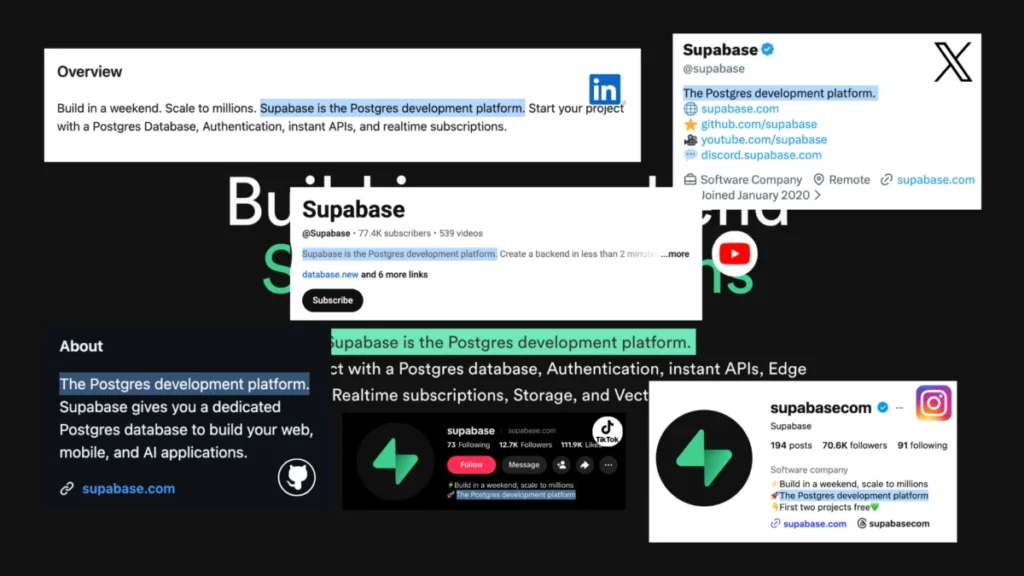
Supabase Leadership has taken a more "accidental-by-design" approach. By positioning themselves as a "Postgres development platform," they created a machine-readable tagline.
"The machine doesn’t care about ‘vibe’ or ‘disruption.’ It cares about what the tool is. By being literal and structured in our documentation and identity, we became the easiest database for an agent to integrate into a new build. We didn’t write the tagline for agents, but the agents rewarded us for it."
Shopify’s Product Team noted during the Agent Toolkit rollout:
"The merchant doesn’t need to rebuild their store. They just need to enable the agent layer. We are seeing that agents are far more decisive than humans. When an agent enters a store with a specific intent from a user, the conversion rate is nearly 100% because the ‘comparison shopping’ happened before the agent even arrived."
Implications: The New Competitive Moat
The transition to an agentic web represents a fundamental realignment of digital strategy. The implications for businesses are profound and immediate.
1. The End of "Traditional" SEO
SEO has traditionally been about gaming the system to appear high on a Search Engine Results Page (SERP). In the agentic era, "visibility" means being the most "extractable" and "trustworthy" source for an agent. If an agent cannot parse your data or verify your identity via Web Bot Auth, you effectively do not exist in its decision-making matrix.
2. The Move from Browsing to Transacting
Websites have historically been designed for "stickiness"—keeping a user on the page as long as possible. Agents represent the opposite: they value speed and execution. A website that prioritizes a "fast-path" for agents (structured APIs, Universal Cart compatibility) will capture the growing volume of agent-initiated commerce.
3. The "Agent-Only" Moat
Early adopters are already building a "moat" by becoming agent-friendly before their competitors. Shopify merchants using the Agent Toolkit are seeing a new stream of "referral" traffic that bypasses Google Search entirely. SaaS products that implement WebMCP tools are being integrated into agent workflows (like those in GitHub Copilot or Anthropic’s Claude) at a rate far higher than those relying on manual integration.
4. The Human-Agent Paradox
Businesses now face a dual-design challenge. They must maintain a high-quality GUI for the humans who still want to browse, while simultaneously maintaining a high-quality "LUI" (Language User Interface) or API for the agents. A product that fails the agent test is a product with a broken distribution channel.
Conclusion: Adapting to the New Distribution Reality
The motto "Make something people want" remains the core of entrepreneurship. However, the delivery of that "something" has changed. As Cloudflare, Google, and Stripe have demonstrated, the infrastructure for the agentic web is no longer a futuristic concept—it is a production-ready reality.
For businesses, the mandate is clear: Audit your agent-readiness. Ensure your content is semantic, your actions are discoverable, and your transactions are programmable. The window of opportunity is open, but as the web becomes increasingly automated, the cost of being "unreadable" to the world’s new visitor class will be total invisibility.
