
Unlocking Brand Resonance: The Indispensable Power of Customer Insights and Analytics
Why do some brands consistently captivate their audience, fostering unwavering loyalty and driving sustained growth? The answer lies in the masterful application of customer insights and analytics – the invisible force that transforms raw data into strategic advantage. In today’s hyper-competitive marketplace, businesses can no longer afford to operate on intuition alone. By meticulously analyzing trends, systematically gathering data, and attentively listening to feedback, companies are empowered to craft truly exceptional customer experiences and execute strategic, profit-driven moves that set them apart.
This comprehensive guide will delve into the profound world of customer insights and analytics, exploring their definitions, strategic purpose, and the diverse methodologies employed to harvest this invaluable intelligence. We will uncover how leveraging these insights allows businesses to anticipate customer needs, stay ahead of the curve, and cultivate relationships that keep customers returning for more.
Our journey will cover:
- Defining Customer Insights and Analytics: The Foundation of Understanding
- The Strategic Imperative: Why Insights Drive Business Growth
- A Toolkit for Discovery: Methods for Gathering Customer Insights
- Market Research: Unearthing Opportunity and Understanding the Landscape
- Website Data: Decoding Digital Behavior
- Social Media Intelligence: Listening to the Digital Conversation
- Direct Customer Feedback: The Voice of Your Audience
- Strategic Implications: Translating Insights into Actionable Success
Let’s dive in and unlock the secrets to building a truly customer-centric enterprise.
Defining Customer Insights and Analytics: The Foundation of Understanding
At its core, customer insights represent the profound understanding derived from the analysis and interpretation of customer data, designed to inform strategic business decisions and enhance the overall customer experience. These insights transcend mere data points; they reveal the underlying motivations, behaviors, and preferences that explain why customers act the way they do. By identifying patterns, synthesizing both quantitative (measurable) and qualitative (descriptive) data, and meticulously analyzing feedback, businesses gain a deep comprehension of their customers’ needs, pain points, and aspirations.

For instance, while sales data (quantitative) might show a dip in purchases for a specific product, customer insights (qualitative and interpretive) would seek to answer why that dip occurred. Was it a change in customer preference, a competitor’s new offering, a shift in market sentiment, or a previously unnoticed flaw in the product itself? Customer insights provide the narrative behind the numbers, transforming raw facts into actionable intelligence.
Customer analytics, often used interchangeably with customer insights, refers more specifically to the systematic process and the technological tools employed to collect, process, analyze, and interpret customer data. It encompasses the technical implementation – configuring analytics platforms, setting up tracking, and applying statistical models to vast datasets. In essence, customer analytics provides the "how" and "what" (the data, the tools, the techniques) that enable the "why" (the deep understanding) of customer insights.
While customer insights offer a broader, strategic perspective on customer behavior, motivations, and preferences, customer analytics focuses on the concrete implementation and the analytical techniques required to generate these insights. It’s the engine that powers the discovery process.
Common customer analytics techniques include:
- Customer Segmentation: Dividing customers into groups based on shared characteristics (demographics, behavior, value) to tailor marketing and product strategies.
- Predictive Modeling: Using historical data to forecast future customer behavior, such as purchase likelihood or churn risk.
- Churn Analysis: Identifying factors that lead customers to stop using a product or service, enabling proactive retention strategies.
- Customer Lifetime Value (CLTV) Calculation: Estimating the total revenue a business can expect from a single customer account over their relationship, guiding investment in high-value customers.
- Funnel Analysis: Mapping the customer journey from initial awareness to conversion to identify drop-off points and optimize pathways.
- A/B Testing: Comparing two versions of a webpage, email, or advertisement to determine which performs better in achieving a specific goal.
- Sentiment Analysis: Using natural language processing to determine the emotional tone behind customer feedback in reviews, social media, or support interactions.
In summary, customer analytics provides the sophisticated tools and methodologies to sift through complex data, while customer insights leverage the output of analytics to deliver profound understanding and strategic direction.

The Strategic Imperative: Why Insights Drive Business Growth
The primary purpose of customer insights is to empower businesses to remain agile and responsive to the rapidly evolving needs and expectations of their customer base. In an age where consumer preferences can shift overnight, understanding customer behavior is not merely advantageous; it is existential. By leveraging these insights, businesses can make profoundly informed decisions, meticulously refine their strategies, and consistently elevate the customer experience across every touchpoint.
With robust customer insights, organizations can confidently answer critical questions that underpin sustained growth and competitive advantage:
- What are the unmet needs or pain points of our target audience that we can address with new products or services?
- Which marketing channels and messages resonate most effectively with different customer segments?
- How can we personalize the customer journey to enhance satisfaction and drive repeat business?
- What specific features or improvements should be prioritized in our product development roadmap?
- Why are customers abandoning their carts at a particular stage of the purchase process, and how can we optimize it?
- What is the true lifetime value of our customers, and how can we increase it?
- How do our customer satisfaction levels compare to competitors, and where are our opportunities for differentiation?
- What emerging trends are shaping our industry, and how can we proactively adapt our offerings?
Ultimately, customer insights transform data into a strategic asset, enabling businesses to move beyond guesswork and make data-driven decisions that not only improve customer satisfaction but also accelerate long-term growth, foster innovation, and build a resilient market position.
A Toolkit for Discovery: Methods for Gathering Customer Insights
For businesses committed to gaining valuable customer insights, the first step is to identify and implement the most appropriate methods and tools for data collection. This section will explore a diverse range of approaches, from broad market analysis to direct feedback mechanisms, each offering unique perspectives on your customer base.
We will cover:

- Market Research
- Website Data
- Social Media Data
- Customer Feedback
1. Market Research: Unearthing Opportunity and Understanding the Landscape
Market research serves as the foundational pillar for understanding the broader environment in which your business operates. It’s not solely for nascent businesses; even established companies must continually conduct market research to assess the viability of new product lines, evaluate entry into new geographical markets, or simply stay abreast of evolving competitive landscapes and consumer trends. It helps answer fundamental questions critical to strategic planning:
- Who is our target audience, and what are their demographic and psychographic characteristics?
- What is the size and growth potential of our target market?
- Who are our primary competitors, and what are their strengths and weaknesses?
- What are the prevailing pricing expectations and sensitivities within the market?
- Are there emerging market niches or underserved segments we could target?
Market research fundamentally refines your understanding of your ideal customer, allowing for more precise targeting and product development. While specialized agencies offer in-depth services, numerous user-friendly tools empower businesses to conduct robust market research independently.
Statista: The Data Aggregator for Global Trends
[Image: Statista statistics example]
Statista is an internationally renowned data aggregation platform, compiling vast amounts of public third-party data and presenting it in highly accessible, visual formats. Its popularity stems from its intuitive visualizations, which enable researchers to quickly grasp complex market trends, consumer behaviors, and industry benchmarks. Beyond aggregated data, Statista actively conducts proprietary surveys and analyses, providing exclusive insights across diverse sectors from technology to consumer goods. It serves as an invaluable resource for gaining high-level overviews and detailed reports that can inform market entry strategies, identify industry growth areas, and benchmark performance.
Many of Statista’s statistics and reports are accessible without registration, offering a substantial free tier that includes over 220,000 statistics, infographics, and historical data. For businesses requiring deeper, more current market intelligence and unlimited queries, the Starter Plan (USD $1,299 per year) unlocks a wealth of premium features, making it a strategic investment for comprehensive research.
Similarweb: Your Competitive Intelligence Hub
[Image: Similarweb free website traffic checker]
Similarweb stands out as a leading tool for competitive digital market research. It provides unparalleled capabilities to analyze any website, including those of your direct competitors, revealing crucial insights into audience demographics, traffic sources, user engagement metrics, and overall digital strategy. This allows businesses to understand where their target audience congregates online, which channels drive the most effective traffic, and how users navigate different digital properties.

Beyond basic traffic insights, Similarweb offers advanced features such as competitive benchmarking, detailed industry research, and even investment-related data, providing a holistic view of the digital landscape. While its extensive capabilities warrant a paid subscription for in-depth analysis, its free website traffic checker offers a valuable glimpse into its power. Leveraging Similarweb helps identify market leaders, uncover their successful strategies, and pinpoint areas for your own digital optimization.
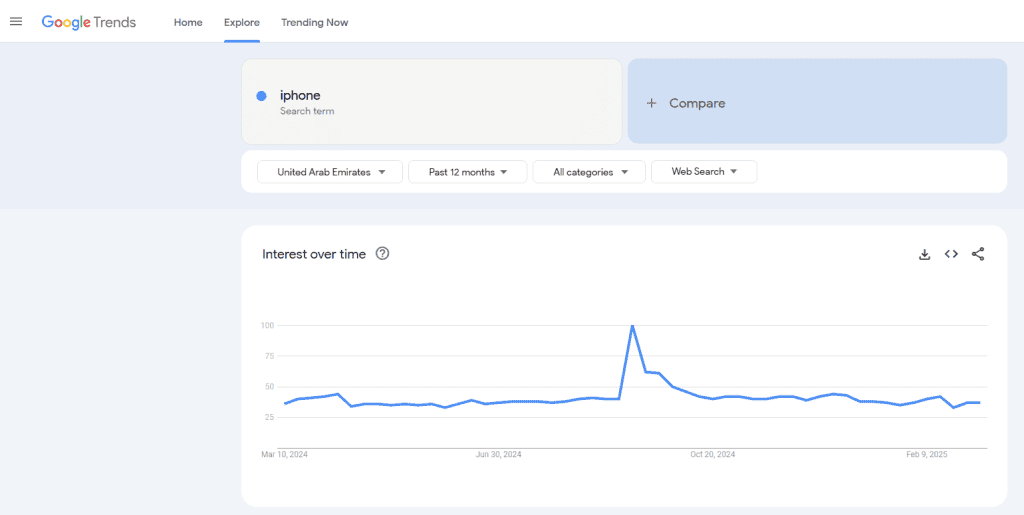
Google Trends: Spotting the Pulse of Public Interest
[Image: Google trends trendline]
Google Trends is a free, indispensable tool from Google that allows businesses to gauge public interest in specific topics, keywords, and brands over time and across different geographical regions. It is particularly effective for:
- Audience Interest Analysis: Understanding what your potential customers are searching for.
- Content Strategy Development: Identifying trending topics for blog posts, videos, and social media campaigns.
- Product Development: Discovering emerging niches or validating demand for new features.
- Seasonal Planning: Recognizing cyclical spikes and dips in interest for specific products or services.
- Competitive Monitoring: Tracking interest in competitors’ brands or products.
[Image: Google trends regions and topics]
This tool helps businesses uncover new opportunities, adapt to seasonal demand fluctuations, and stay ahead of competitors by proactively identifying shifts in market interest. Its real-time data on search queries provides a dynamic snapshot of consumer curiosity and intent.
Market Research Services: Expert Guidance for Complex Questions
While DIY tools offer accessible market research, they come with inherent limitations in terms of time investment and the specialized knowledge required for nuanced data interpretation. For businesses with larger budgets or complex research needs, engaging specialized market research firms or experienced freelancers can significantly accelerate the research process and provide invaluable strategic guidance.
These professionals bring deep industry expertise, proprietary methodologies, and an unbiased perspective to answer intricate questions related to market positioning, pricing optimization, and nuanced customer behaviors. They can conduct advanced qualitative research, such as ethnographic studies or in-depth interviews, which reveal deeper emotional connections and subconscious motivations that quantitative data might miss. Combining in-house research with expert consultation builds a robust foundation for making highly informed and impactful business decisions.
2. Website Data: Decoding Digital Behavior
For any business with an online presence, especially those selling products or services via a website, the data generated by user interactions is a direct and incredibly rich source of customer insights. This first-party data offers a granular view of how customers engage with your brand in the digital realm.
The three main ways to access this critical data are:
- Built-in analytics platforms (e.g., e-commerce platforms like Shopify, website builders like WordPress often have basic analytics).
- Dedicated web analytics tools (e.g., Google Analytics, Microsoft Clarity).
- Customer Data Platforms (CDPs) or Customer Relationship Management (CRM) systems that integrate website data with other customer touchpoints.
While built-in analytics can provide answers to basic questions like "Where are my buyers coming from?" or "What are my most popular pages?", we strongly recommend integrating more powerful, dedicated analytics tools for deeper, more actionable insights. The combination of quantitative and qualitative web analytics tools is particularly potent for identifying both problems and opportunities.
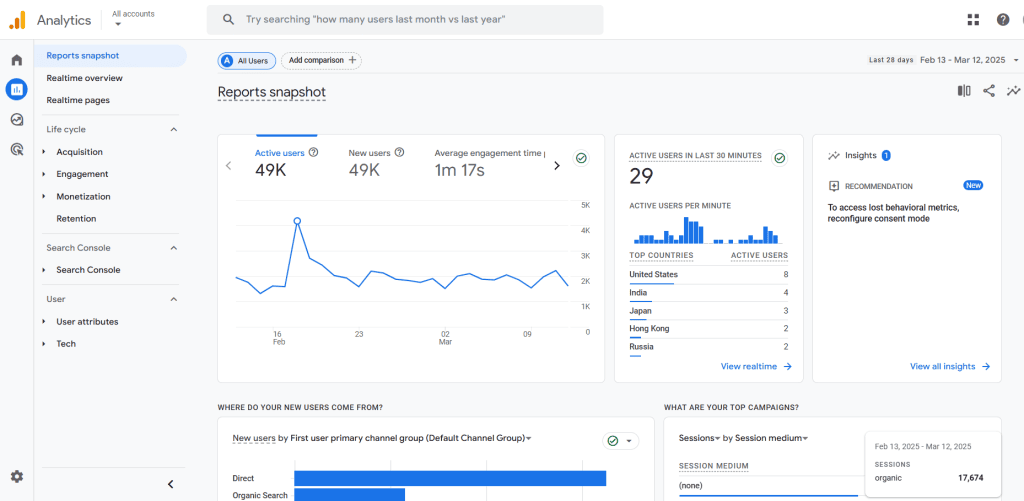
Google Analytics: The Gold Standard for Web Insights
[Image: Google Analytics reports snapshot]
Google Analytics (GA) remains one of the most widely adopted web analytics tools globally. Its latest iteration, GA4, offers an event-driven data model that provides unparalleled tracking capabilities, making it a cornerstone for understanding user behavior. GA4 helps businesses decipher how users interact with their site, including:
- Comprehensive User Journey Mapping: Tracking users across different devices and platforms to understand their entire interaction path.
- Content Performance Analysis: Identifying which pages and content pieces are most engaging, leading to longer session durations and lower bounce rates.
- Conversion Funnel Optimization: Pinpointing where users drop off in critical processes (e.g., checkout, form submission) to improve conversion rates.
- Audience Demographics and Interests: Gaining insights into who your users are, their geographical location, and their general interests, which informs targeting.
- Traffic Source Effectiveness: Determining which channels (organic search, paid ads, social media, referral) are most effective at driving high-quality traffic and conversions.
- Event Tracking: Customizing events to track specific interactions (button clicks, video plays, downloads) that are crucial to your business objectives.
- Engagement Metrics: Understanding how deeply users engage with your site, beyond simple page views, through metrics like engaged sessions and average engagement time.
GA4’s advanced capabilities enable a holistic view of user interaction, moving beyond simple website visits to understand true user intent and behavior flow.

Microsoft Clarity: Visualizing User Experience
[Image: Microsoft Clarity demo]
Complementing the quantitative data of GA4, Microsoft Clarity is an essential behavioral analysis tool renowned for its free heatmaps and session recordings. While GA4 tells you what happened, Clarity helps you see why it happened.
- Heatmaps: Visually represent where users click, scroll, and spend their time on a page, revealing areas of interest and potential confusion.
- Session Recordings: Anonymous video replays of actual user sessions, allowing businesses to observe how visitors navigate their website, click on elements, and encounter difficulties. This is invaluable for identifying UI/UX issues, broken functionalities, or confusing content.
- AI-Powered Insights: Microsoft Clarity leverages AI to rapidly analyze numerous session recordings, automatically highlighting key behavioral patterns such as "rage clicks" (repeated clicks on unresponsive elements), "dead clicks" (clicks on non-interactive elements), and excessive scrolling. This drastically reduces the manual effort traditionally required to glean insights from qualitative data.
Clarity offers a straightforward interface and, crucially, does not impact website performance. Its installation is quick and easy, often done via Google Tag Manager. Best of all, Microsoft has committed to keeping it entirely free. For any business seeking to understand the why behind user non-conversion and optimize their digital experience, Microsoft Clarity is a game-changer. You can explore its capabilities through their free live demo before integrating it.
3. Social Media Intelligence: Listening to the Digital Conversation
The vast majority of modern consumers engage with at least one social media platform, making these channels fertile ground for gathering customer insights. Social media platforms foster vibrant online communities where individuals openly share opinions, experiences, and content related to brands, products, and services.
If your business lacks an active social media presence, market research tools like Similarweb can help identify which platforms your ideal customers predominantly use. All major platforms (Meta, Instagram, TikTok, X, LinkedIn, etc.) offer built-in analytics tools to help you understand your audience’s demographics and engagement with your content.
Note: It’s crucial to recognize that each social media platform cultivates a distinct user mindset and content consumption pattern. TikTok users, for example, favor short, dynamic, snapshot-style videos, whereas Facebook users may engage more with longer-form content and community discussions. This behavioral nuance means that insights from one platform may not be directly transferable to another.
For a cohesive and comprehensive view, we recommend using an external analytics tool like Google Analytics 4 (GA4) to centralize and compare your social media traffic sources. For a detailed guide, refer to our article on How to Use Google Analytics for Social Media Tracking.
Why Use Google Analytics 4 to Analyze Social Media Traffic?
There are two paramount reasons to leverage a dedicated analytics tool like GA4 for tracking user behavior originating from social media:
1. Centralized Performance Analysis
GA4 provides a unified platform to measure and compare the performance of traffic from all your social media sources. Instead of fragmented data across various native platform analytics, GA4 allows you to aggregate all social traffic and apply its full suite of analytical features to gain a holistic understanding.
We advocate for creating a structured sales funnel within GA4 to categorize different user actions into key stages: awareness, engagement, and conversion.
For example:

- Awareness: Users landing on your blog post from a social media link.
- Engagement: Users signing up for a newsletter or downloading a free resource after arriving from social media.
- Conversions: Users making a purchase or completing a lead form initiated by a social media referral.
By meticulously setting up these objectives (known as Key Events in GA4), you can precisely determine which social media channels are most effective at each stage of the customer journey.
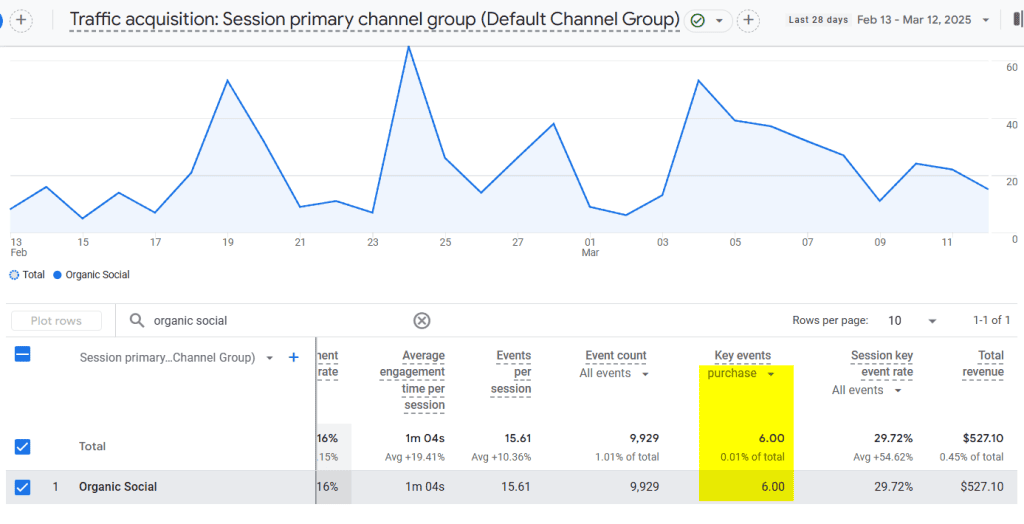
Sample Analysis (using GA4’s Traffic Acquisition report):
[Image: Google Analytics traffic acquisition report]
In the example above, if the "Organic Social" channel generated only 6 purchases in the last 28 days, while "Organic Search" generated significantly more, this insight would prompt a re-evaluation of the organic social media strategy. It might indicate a need to optimize social content for conversion, improve landing page experiences for social traffic, or reallocate resources to more effective channels.
2. Understanding User Behavior Beyond Social Media Analytics
Native social media analytics can tell you how many people clicked a link, but they often fall short in explaining what happened after those visitors landed on your website. GA4 bridges this gap by answering more profound behavioral questions, offering an unfiltered view of customer actions post-click:
- Are users from specific social platforms immediately bouncing, or are they exploring multiple pages?
- Which social channel drives the highest quality leads that engage deeply with your content?
- What is the average time spent on your site by users coming from Facebook versus Instagram?
- Are users from a particular social campaign converting more effectively than others?
- Do users from social media tend to return to your site, indicating higher loyalty?
Unlike social media analytics, which can sometimes be biased towards vanity metrics like "likes" or "shares," a dedicated analytics tool like GA4 provides unbiased insights into the actual customer behavior on your owned digital properties. This helps identify unmet needs and challenges that users might not explicitly articulate on social media but demonstrate through their actions.
Social Media Listening: The Art of Proactive Engagement
[Image: Sprout competitive analysis dashboard]
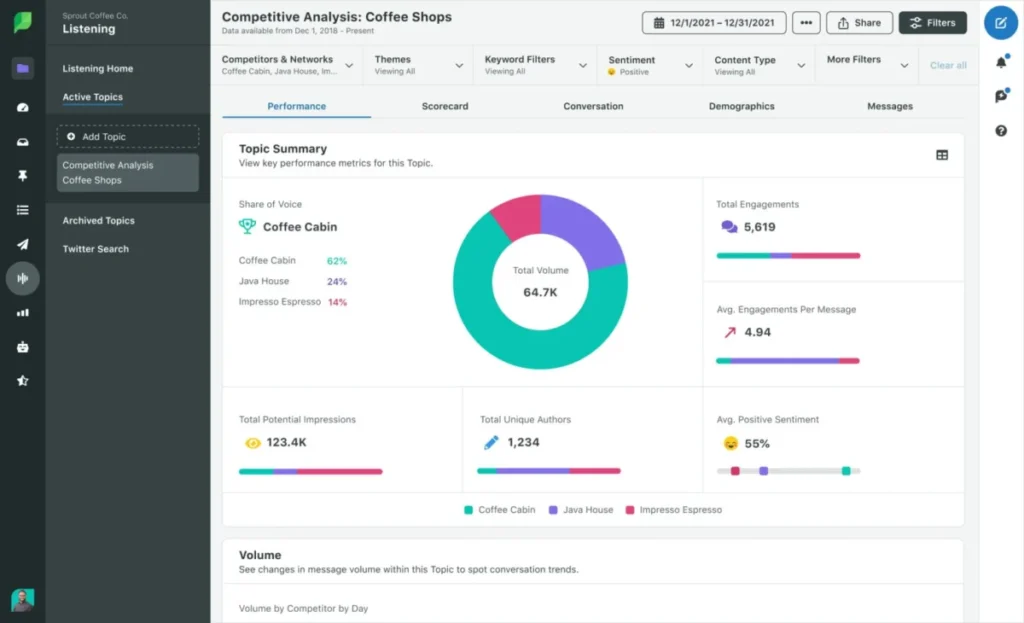
Beyond tracking your own social media performance, social media listening involves systematically monitoring brand mentions, relevant keywords, industry trends, and competitor activities across the entire digital landscape. Instead of manually sifting through countless posts, tools like Mention or Sprout Social automate this process, providing alerts and dashboards for comprehensive analysis.
Social media listening allows businesses to:
- Gauge Brand Sentiment: Understand public perception and react quickly to negative feedback or crises.
- Identify Influencers: Discover key voices and advocates within your industry.
- Uncover Product Gaps: Spot discussions about features customers wish existed or problems existing products don’t solve.
- Monitor Competitors: Track their marketing campaigns, product launches, and customer feedback.
- Identify Emerging Trends: Detect shifts in consumer language, interests, or industry buzz.
This proactive approach to social intelligence provides a rich qualitative data stream, offering invaluable insights into customer desires, market dynamics, and competitive positioning.
4. Customer Feedback: The Voice of Your Audience
Direct customer feedback is arguably the most potent source of insights, providing unfiltered perspectives into your audience’s thoughts, desires, expectations, and frustrations. By consistently collecting and analyzing this feedback, businesses can uncover critical opportunities to refine products, optimize services, and elevate the overall customer experience. Let’s explore effective methods for tapping into this vital resource.
Feedback Widgets: Real-time, Contextual Input
[Image: Feedback widget example from Appzi]
Feedback widgets are unobtrusive applications or pop-ups embedded directly into a website or application. They are designed to solicit real-time feedback from visitors, often at specific points in their journey. These widgets can ask direct questions, conduct micro-surveys, or simply allow users to rate their experience or share comments.
How it works:

- Strategic Placement: Widgets can appear on specific pages (e.g., checkout page, product page, support section) or based on user behavior (e.g., exit intent).
- Contextual Questions: Questions are tailored to the user’s current context, making the feedback highly relevant (e.g., "Was this article helpful?" on a blog post, or "How satisfied are you with your shopping experience so far?" on a cart page).
- Ease of Use: They are designed for quick and effortless participation, often requiring just a single click or a short text input.
- Immediate Insights: The real-time nature of these widgets allows for rapid identification of issues and opportunities, enabling quick iterative improvements.
Tools like Appzi offer customizable feedback widgets, allowing businesses to integrate them seamlessly into their digital properties to gather continuous, actionable input.
Focus Groups: Unearthing Deep Motivations
[Image: focus-group]
Focus groups offer an unparalleled method for gaining in-depth, qualitative insights into customer preferences, motivations, and emotional responses that no analytics tool can fully capture. These moderated discussions typically involve a small, carefully selected group of participants (usually 5 to 10 individuals) who represent a target customer segment.
Unlike structured surveys, focus groups facilitate open-ended discussions, allowing participants to express their thoughts, feelings, and experiences more freely and spontaneously. The structured methodology for conducting a focus group includes:
- Participant Selection: Identifying individuals who accurately reflect the target demographic or psychographic profile.
- Guiding Questions: Preparing a script of open-ended questions designed to stimulate conversation and explore specific topics.
- Skilled Moderation: An experienced moderator guides the discussion, ensures all participants contribute, manages group dynamics, and probes for deeper insights without leading the conversation.
One of the most significant advantages of focus groups is their ability to reveal hidden or underlying emotions customers may have about a product, service, or brand – insights that are often difficult to surface through quantitative methods. For example, participants might reveal subtle frustrations with product packaging, unexpected use cases for a service, or deep-seated brand perceptions that influence their purchasing decisions. While more time-consuming and costly than surveys, and susceptible to potential groupthink, the depth of qualitative data gleaned from focus groups is invaluable for strategic product development and brand positioning.
Surveys: Quantifying Opinions at Scale
[Image: SurveyMonkey customer satisfaction survey]
Surveys remain one of the most effective and versatile methods for collecting customer insights, allowing businesses to gather structured data from a broad audience. Modern survey tools make the process easier than ever, offering various approaches depending on your specific needs and resources.

Tools like SurveyMonkey or FreeOnlineSurveys provide extensive libraries of ready-made templates, tailored to specific markets, topics (e.g., customer satisfaction, product feedback, market research), and niches. These templates significantly streamline the survey creation process by offering expertly crafted questions that align with industry best practices, ensuring that valuable feedback is gathered efficiently and systematically.
Alternatively, businesses can create free, custom surveys using tools like Google Forms. While this requires more effort in designing the layout and structuring a logical sequence of questions, it offers complete customization. Leveraging AI tools can assist in generating initial question drafts, but human refinement is always necessary to ensure the questions are clear, unbiased, and perfectly aligned with your audience and research objectives. Key considerations for effective surveys include:
- Question Types: Utilizing a mix of multiple-choice, Likert scale, open-ended, and demographic questions.
- Avoiding Bias: Phrasing questions neutrally to prevent leading respondents.
- Optimal Length: Keeping surveys concise to maximize completion rates.
- Distribution Channels: Email, website pop-ups, social media, or in-app prompts.
Surveys are crucial for quantifying customer opinions, measuring satisfaction (e.g., NPS, CSAT), and gathering specific feedback on various aspects of your business.
Polls: Instant Validation and Quick Opinions
[Image: poll-voting]
Unlike more extensive surveys, polls are designed to be extremely short and focused, primarily used for quickly gathering opinions or validating assumptions from an audience. They are highly effective for rapid decision-making, engaging audiences, or testing knowledge on specific topics.
Content creators, for instance, frequently use polls on social media to gauge audience interest in future topics, often with simple "Yes" or "No" questions, or a choice between a few options.

A free tool like DirectPoll.com enables the creation of simple, accessible polls. The free version typically supports up to 500 voters per poll, which is sufficient for many immediate feedback needs. Participants receive a direct link to cast their vote, and results are instantly displayed in easy-to-interpret graphs and charts, providing immediate insights. Polls are excellent for capturing top-of-mind responses and quick sentiment checks.
Customer Reviews: Unsolicited Feedback Goldmines
Customer reviews, whether found on dedicated platforms like Trustpilot, industry-specific review sites, or directly on product pages (e.g., Amazon, Yelp), are a treasure trove of unsolicited, authentic customer insights. Analyzing these reviews provides a direct window into customer pain points, expectations, satisfaction levels, and the
