
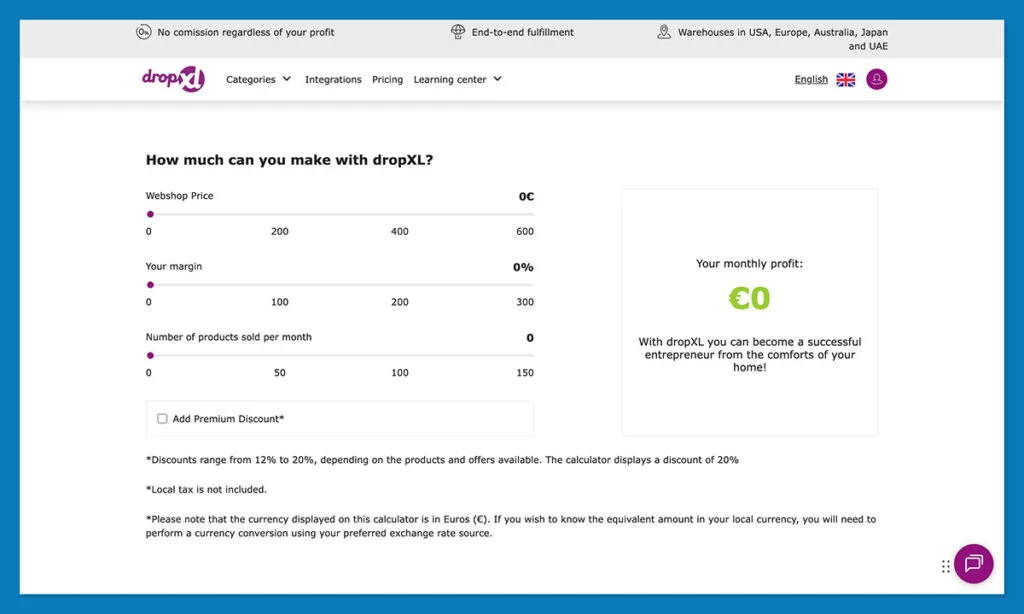
The Zero-Dollar Entrepreneur: A Definitive Blueprint for Launching a Dropshipping Empire Without Upfront Capital
GLOBAL — In the modern digital economy, dropshipping and print-on-demand models have cemented their status as the ultimate low-barrier entry points for aspiring e-commerce entrepreneurs. Promising the ability to launch an online storefront without the traditional, suffocating overhead of manufacturing, warehousing, and inventory management, these business models have attracted millions of hopeful sellers.
Yet, beneath the glossy marketing promises of starting a company with “almost nothing” lies a more nuanced economic reality. While eliminating upfront inventory costs shifts the financial burden, aspiring business owners quickly discover that running a modern digital enterprise incurs hidden entry costs. These range from domain registrations and e-commerce platform subscriptions to product samples, digital marketing, and automated supplier catalog fees.
For cash-strapped founders, however, a disciplined approach makes it entirely possible to launch, test, and scale a dropshipping enterprise with a $0 budget—delaying capital outlays until the business secures its very first profitable sale.
Main Facts: The Anatomy of a Zero-Cost Launch
Starting a dropshipping business without capital is a strategic exercise in resource allocation, digital leverage, and sweat equity. Industry data indicates that while long-term survival requires eventual investment in payment processing, premium website themes, and paid acquisition, the initial conception and validation phases can be executed entirely for free.
The core architecture of a zero-dollar launch relies on three foundational pillars:
- Zero-Inventory Suppliers: Leveraging wholesale networks that require no upfront product purchases.
- Free-Tier Infrastructure: Utilizing established marketplaces (like eBay, Etsy, or Amazon) or free-tier e-commerce plans (such as Big Cartel, Ecwid, or WooCommerce plugins) to host the storefront.
- Organic Growth Engines: Replacing paid ad spend with content marketing, social media storytelling, and search engine optimization (SEO).
However, seasoned analysts emphasize that a $0 budget is a transitional phase, not a permanent business model. Eventually, transaction fees, supplier subscriptions (such as catalog networks like dropXL, which typically run around €30 per month), and scaling costs will necessitate incoming revenue reinvestment.
Chronology: Step-by-Step Execution of the Zero-Budget Strategy
Transitioning an idea from a blank concept into a revenue-generating digital storefront requires a strict, chronological framework designed to mitigate financial risk at every turn.
Step 1: Choose a Niche You Can Validate for Free
Broad market plays are financial suicide for zero-budget entrepreneurs. Trying to appeal to everyone means competing with deep-pocketed retail giants on price and advertising volume. Instead, successful bootstrapping demands hyper-narrowing.
For instance, an entrepreneur interested in the expansive "Home and Garden" sector—which platforms like dropXL populate with over 13,000 products—should drill down into specific sub-niches. Instead of selling general outdoor furniture, a viable zero-cost niche might be “compact, modular furniture for urban apartment renters.”
Validation Methodology: Before listing a single item, entrepreneurs must utilize free validation tools. Market intelligence reports from firms like Grand View Research can confirm upward sector trends (e.g., the outdoor furniture market expanding at an estimated compound annual growth rate of 6.4%). Simultaneously, founders should analyze Google Trends, marketplace bestseller rankings, and niche Reddit communities to gauge organic consumer demand.
Step 2: Curate a High-Margin, Low-Risk Product Collection
Once a niche is validated, founders must curate a lean product collection. Relying solely on platform "best seller" lists can be a trap, as these often highlight fleeting trends rather than sustainable, long-term profit generators.
Entrepreneurs should select five to ten initial products and score them against four strict metrics:
- Market demand
- Competitive saturation
- Delivery/logistics risk
- Expected net margin after accounting for taxes, platform fees, and base wholesale costs
Catalog systems like dropXL provide daily-updated inventory feeds, stock levels, high-resolution imagery, and expected package counts. Diversification is critical; a furniture store, for example, should mix high-ticket items like sofas with lower-friction accessories such as storage boxes, shelving, and home office accents to capture buyers across various spending thresholds.
Step 3: Establish a Cost-Free Storefront Infrastructure
Selecting a home base for a zero-budget business presents the steepest initial hurdle. Entrepreneurs face a strategic choice between third-party marketplaces and dedicated e-commerce engines:
- Marketplaces: Channels like eBay, Etsy, and Amazon allow sellers to list products without upfront subscription fees, though strict platform rules and selling commissions apply.
- Free-Tier E-commerce Platforms: Platforms like Big Cartel offer a completely free "Gold" plan supporting up to five product listings and native payment processing via PayPal and Stripe. Alternatively, WordPress paired with WooCommerce enables the integration of free supplier plugins (such as dropXL’s native integration), which automatically sync inventory, update pricing, and route orders every thirty minutes.
- Low-Cost Scalers: While Shopify requires a financial commitment, introductory promotions (such as $1 per month for the first three months) offer an affordable upgrade path for founders who can scrape together minimal capital for long-term scalability.
Step 4: Secure Reliable Supply Chain Partners
The search for a dropshipping supplier should run parallel to product curation. The ideal partner must be geographically close to the target consumer base, transparent about logistics, and relentlessly reliable. Minimizing wholesale unit costs should take a backseat to fulfillment reliability; a cheap product that arrives late or damaged destroys customer lifetime value.
Established distribution networks—such as dropXL, which connects merchants to over 90,000 vidaXL products across 32 countries via an ecosystem of more than 4,000 corporate distributors—offer robust catalogs. While professional accounts eventually carry a flat monthly fee (e.g., €30/month) that unlocks API access, inventory feeds, and educational resources, they typically charge zero commission fees per transaction.
Step 5: Execute Organic Promotion and Content Marketing
Without capital for paid search or social media ads, growth depends entirely on organic visibility and content strategy.
- On-Site Optimization: Product pages must function as comprehensive FAQ documents, preemptively answering questions regarding delivery timelines, multi-package shipments, and return policies.
- Social Media Storytelling: Founders should leverage platforms like TikTok, Instagram Reels, and YouTube Shorts. Even without physical inventory samples, creators can produce educational content detailing raw material sourcing, room-measuring guides, and interior design advice.
- Community Engagement: Active participation in niche Reddit threads and e-commerce forums helps establish organic authority. Furthermore, capturing consumer emails by offering an initial discount code lays the foundation for zero-cost retargeting via email marketing.
Step 6: Pivot Using Empirical Data
As soon as the first sales materialize, entrepreneurs must resist the temptation to splurge on aesthetic website themes or expensive ad campaigns. The immediate priority is data-driven optimization:
- Identify which products generate the highest traffic and net revenue after fees.
- Analyze return logs and customer complaints to refine product descriptions or drop underperforming items.
- Trace geographic traffic origins to sharpen organic targeting strategies.
Only when consistent revenue is established should founders transition to paid advertising and expanded catalog tiers.
Supporting Data & Economic Insights
The viability of a zero-dollar dropshipping model is underscored by broader e-commerce market behaviors. According to industry analytics:
- Market Growth: Global e-commerce penetration continues to rise, with specialized home goods and direct-to-consumer lifestyle sectors showing steady annual growth rates between 5% and 8%.
- The Margin Trap: Studies show that over 70% of failed dropshipping startups attribute their collapse to poor unit economics—failing to factor in payment gateway fees (typically 2.9% + $0.30 per transaction), sales taxes, and hidden supplier handling fees.
- The Value of Integration: Utilizing automated inventory feeds (such as the 30-minute sync protocols used by advanced plugins) reduces order fulfillment errors by up to 45%, directly protecting the merchant’s profit margins from costly chargebacks and return shipping losses.
Official Industry Responses & Expert Perspectives
E-commerce strategists and platform architects maintain a pragmatic view of the "start for free" movement.
Digital retail analysts emphasize that while the barrier to entry has never been lower, the barrier to success has risen significantly due to consumer sophistication. Industry veterans point out that platforms offering zero-dollar entry tiers—such as Big Cartel, Ecwid, and WooCommerce—democratize access to retail, but they also shift the operational burden heavily onto the founder.
Representatives from major European and North American fulfillment networks stress that dropshipping is evolving past the era of low-quality arbitrage. Modern consumers demand fast, localized shipping and transparent customer service. Consequently, suppliers investing in localized warehousing infrastructure (such as multi-country distribution networks) are capturing the highest retention rates among bootstrapped entrepreneurs, as local fulfillment drastically reduces transit times and customer friction.
Implications: Navigating Pitfalls and Building Sustainable Growth
While launching a dropshipping business with $0 is entirely feasible, founders must navigate several critical operational landmines to ensure long-term viability:
- The Myth of Permanent Free Operations: Treating a $0 budget as a permanent state of being stifles growth. Transaction processing fees, legal compliance, and marketing scale eventually demand capital injection.
- Catalog Bloat: Attempting to list hundreds of products on a free-tier platform creates administrative gridlock and violates structural platform limits. Keep initial catalogs tightly curated.
- The Customer Service Imperative: Because dropshippers do not physically touch their inventory, they remain fully accountable for the customer experience. Failing to manage shipping delays, tracking visibility, or return requests will decimate brand reputation.
- Originality in Copywriting: Relying exclusively on raw manufacturer product descriptions harms search engine optimization (SEO) and fails to address unique customer pain points. Customizing product copy is essential for conversion.
Conclusion
The zero-dollar dropshipping model is not a get-rich-quick scheme, but rather a lean, highly calculated boot-strapping methodology. By selecting a tight, validated niche, partnering with dependable localized suppliers through robust infrastructure, and aggressively deploying sweat equity through organic marketing, ambitious entrepreneurs can successfully build an e-commerce enterprise from the ground up—reinvesting their very first waves of revenue to secure a profitable, scalable future.
