
The Ultimate Showdown: Crazy Egg vs. Mouseflow in 2025
In the hyper-competitive landscape of digital experience intelligence, selecting the right website optimization tool is no longer just about tracking clicks—it is about synthesizing vast amounts of behavioral data into actionable revenue growth. As businesses shift toward more data-driven decision-making, the choice between industry stalwarts Crazy Egg and Mouseflow has become a pivotal strategic decision for product managers, UX designers, and growth marketers.
Both platforms offer sophisticated heatmapping and session recording, yet they cater to fundamentally different operational philosophies. While one prioritizes an all-in-one "test and optimize" ecosystem, the other excels at granular diagnostic precision. This report examines the technical capabilities, strategic implications, and value propositions of both tools to help you determine which architecture aligns with your organization’s goals.
The Core Strategic Divide: Integrated Optimization vs. Deep Diagnostics
The fundamental difference between these two platforms lies in their scope. Crazy Egg has evolved into a comprehensive CRO (Conversion Rate Optimization) suite. It is designed for teams that want to bridge the gap between "observing" user behavior and "executing" changes. By bundling web analytics, error tracking, and native A/B testing into a single subscription, it minimizes the friction of switching between disparate software tools.
Mouseflow, conversely, is built for the diagnostic specialist. It offers a sophisticated suite of tools—including an automated "Friction Score," field-level form analytics, and user journey mapping—that provide a deeper, more technical read on on-page issues. It is the preferred choice for organizations that already utilize a dedicated experimentation platform and are seeking a specialized "microscope" to identify exactly where and why users are dropping off.
A Detailed Chronology of Feature Evolution
The history of these two platforms reflects the maturation of the digital analytics market.
- Early Days (The Heatmap Era): Both tools entered the market as specialized heatmap providers. Crazy Egg famously pioneered the "Confetti" map, allowing users to segment click data by referral source, device, and browser. Mouseflow established its identity through its commitment to session playback, focusing on the "movie" of the user experience rather than just the aggregate data.
- The Diagnostic Pivot (2018–2022): Mouseflow moved aggressively into the friction-detection space, introducing automated "Friction Scores" that leverage machine learning to flag rage clicks and technical errors. During this same period, Crazy Egg focused on the "closed-loop" cycle, integrating A/B testing and error reporting so that a user could move from identifying a broken form to testing a replacement element within minutes.
- The AI Revolution (2023–Present): Today, both companies have integrated generative AI. Crazy Egg has embedded AI-driven insights directly into its dashboards, allowing non-technical users to receive automated recommendations. Mouseflow has introduced conversational AI assistants (Mina) and advanced integration capabilities (MCP servers) that allow power users to pipe data into their own custom Large Language Models (LLMs).
Comparative Analysis: Feature-by-Feature Breakdown
1. Heatmap Versatility and Segmentation
While both tools excel at click and scroll visualization, their approaches to segmentation differ.
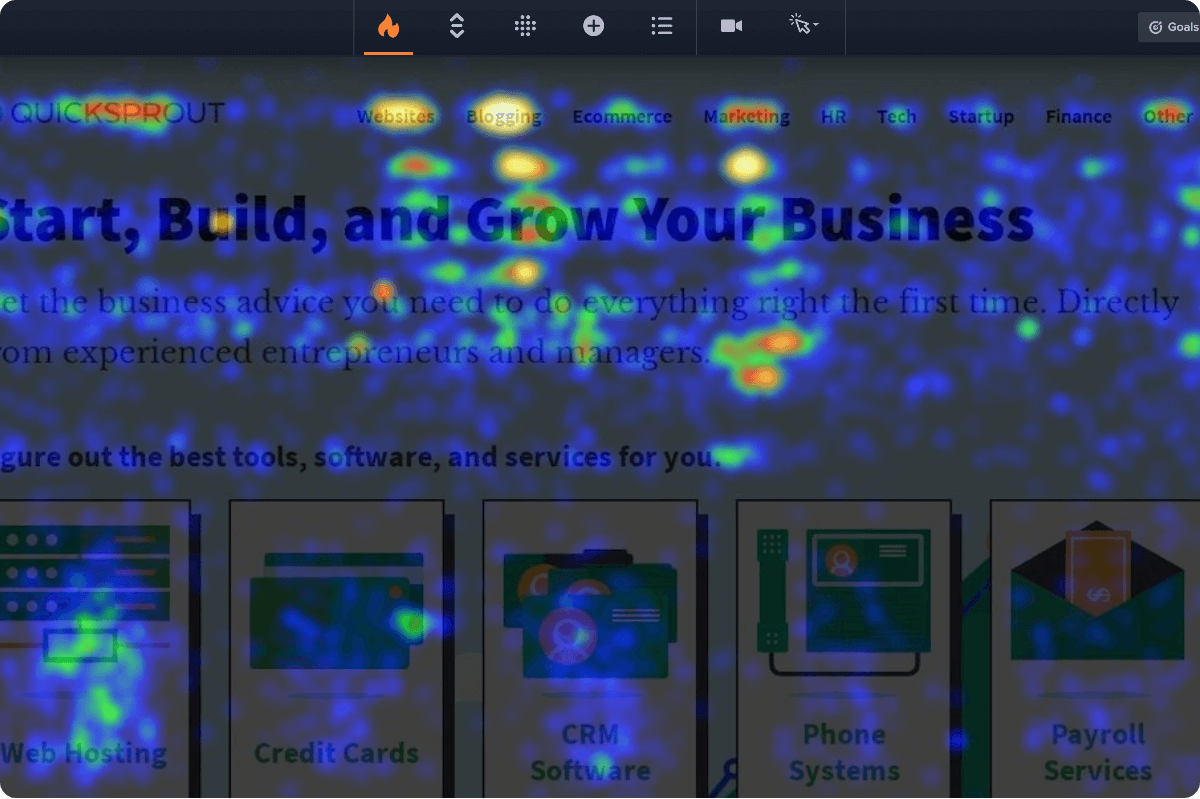
- Crazy Egg: Offers five distinct map types. Its strength lies in its Confetti maps, which provide over 17 metrics for per-click segmentation. This allows for deep analysis, such as comparing how mobile users from a specific social media campaign interact with a call-to-action compared to organic desktop traffic.
- Mouseflow: Provides seven map types, including specialized metrics like Attention and Geo-location maps. Its unique advantage is cross-type comparison, allowing teams to overlay click data against scroll data to visualize the relationship between content visibility and interaction density.
2. Session Recordings and Live Monitoring
Both tools capture full HTML-based session replays. However, the operational utility differs:
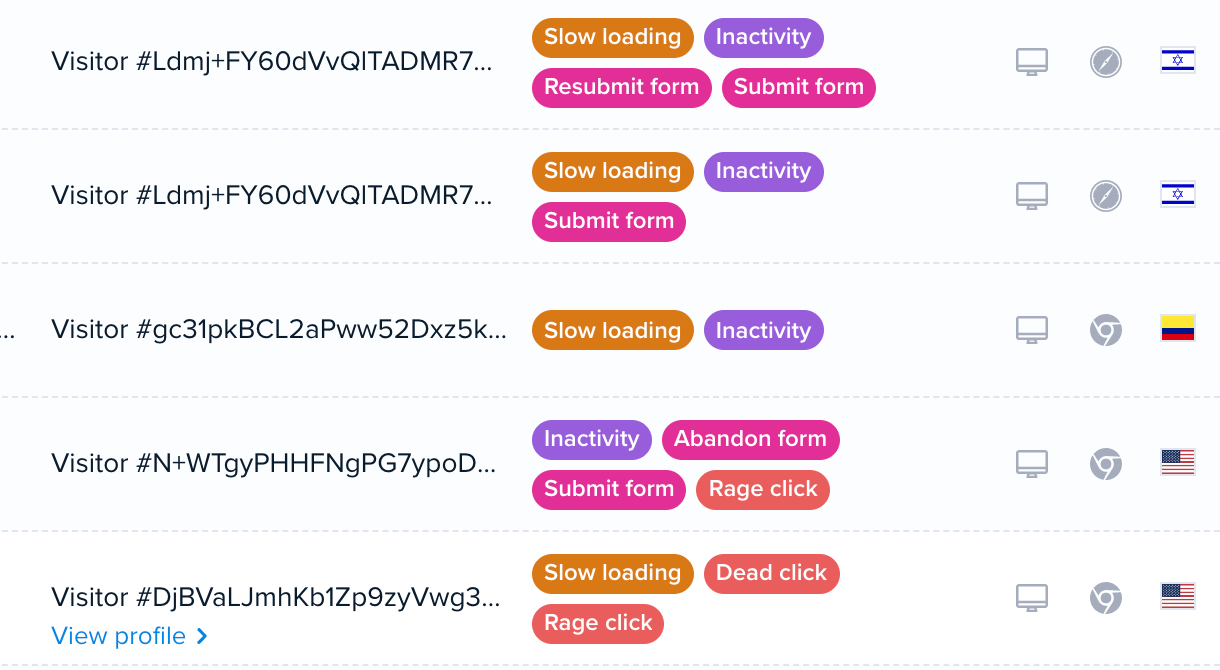
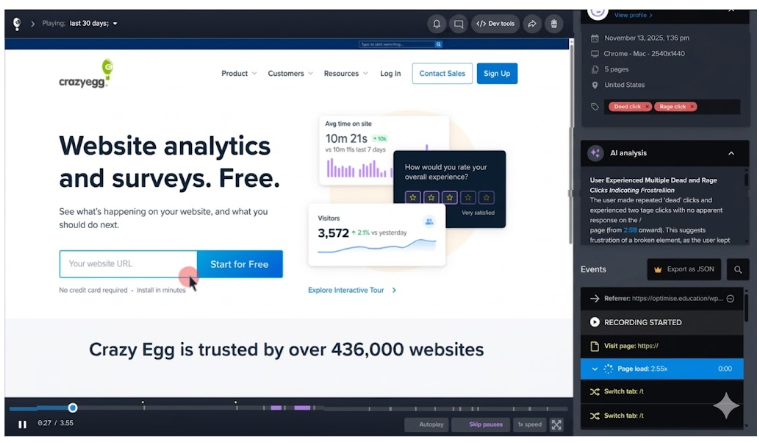
- The Crazy Egg Advantage: Their tagging system is highly automated. By using 18 distinct behavior tags—ranging from rage clicks to slow loading and specific e-commerce events—it reduces the "needle in a haystack" problem. The session replays are also linked directly to AI analysis, which provides a summary of the session’s intent and pain points.
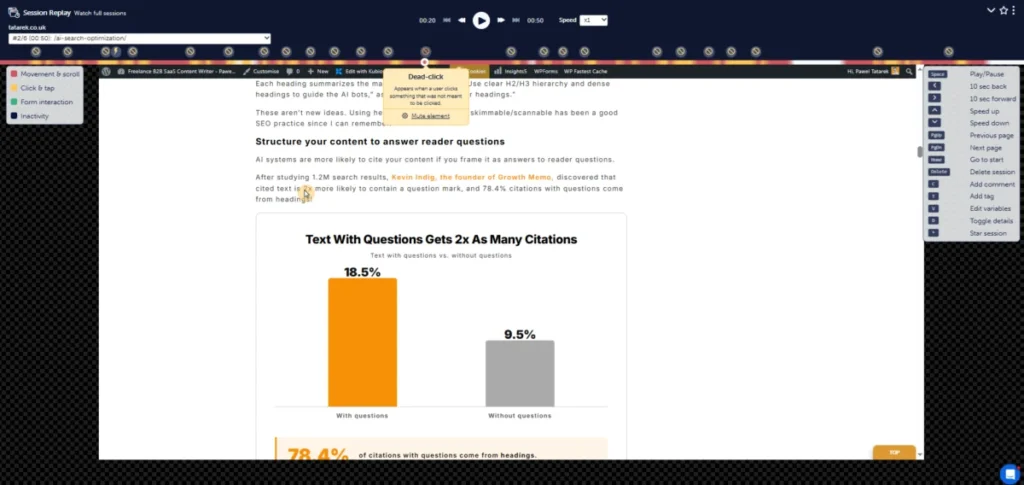
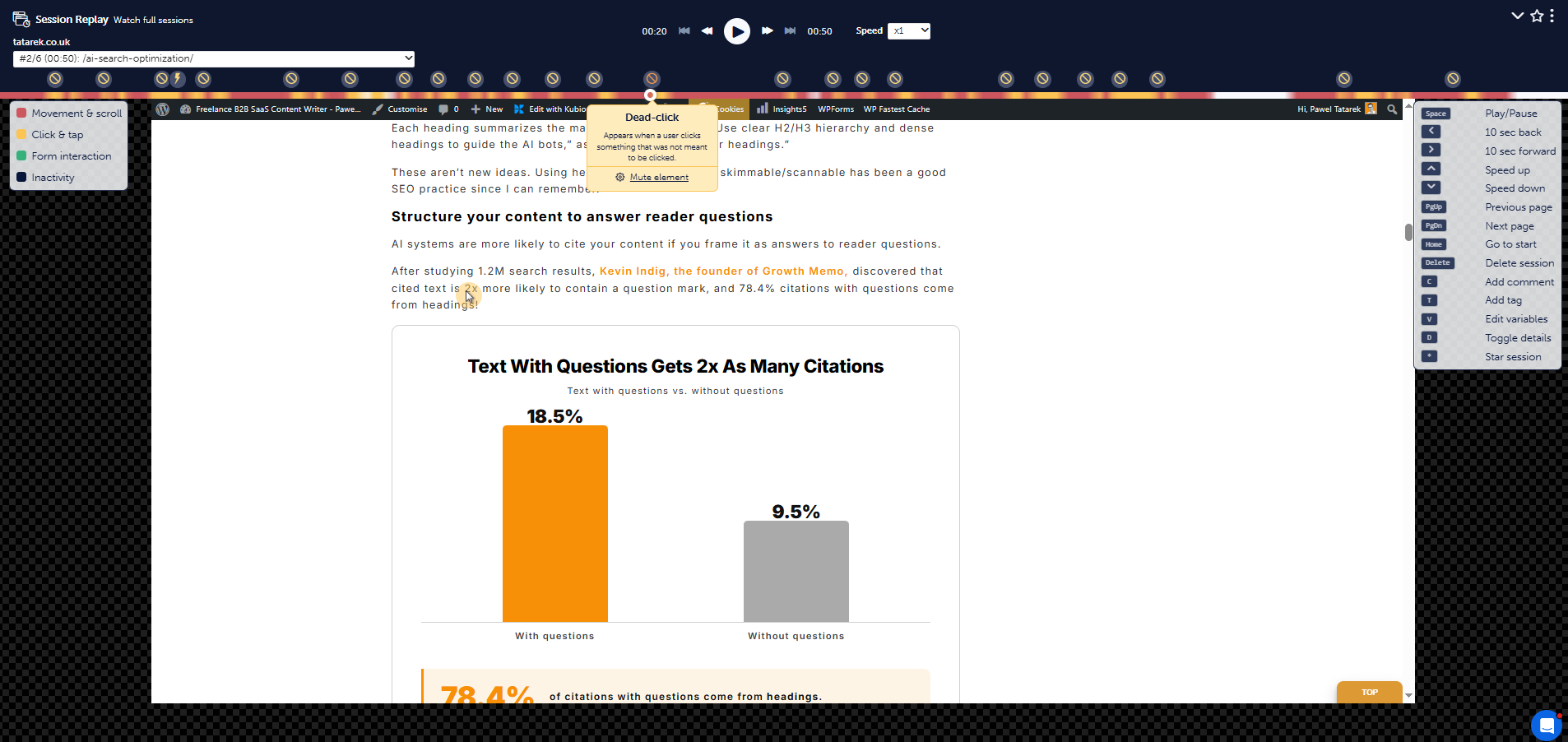
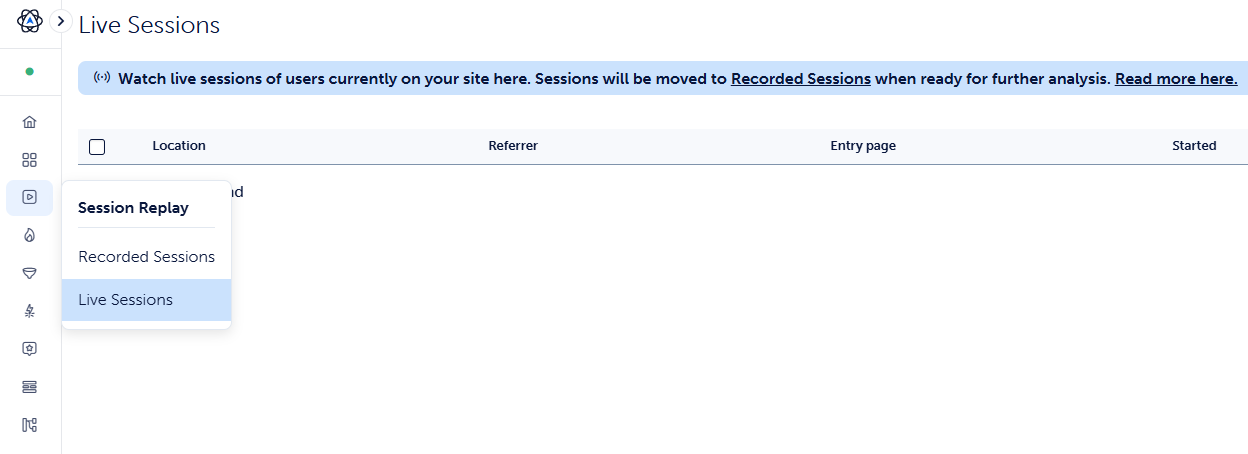
- The Mouseflow Advantage: Mouseflow provides live session viewing, a critical feature for support teams and high-stakes troubleshooting. If a user is currently struggling on your site, you can watch the session in real-time, which is a capability currently missing from the standard Crazy Egg interface.
3. Conversion Funnels and Revenue Attribution
Funnels are the lifeblood of CRO.
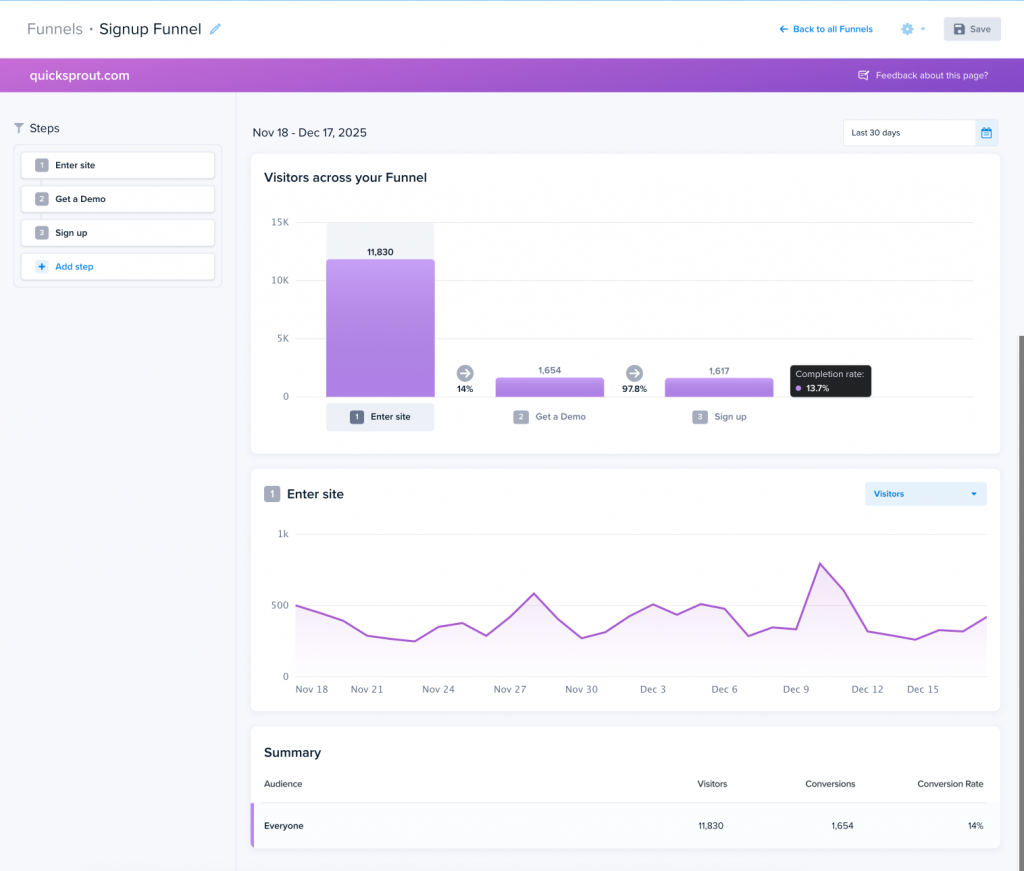
- Crazy Egg allows for unlimited retroactive funnels. If you realize you want to track a specific user path today, the data is already there, waiting to be analyzed. It excels at simplicity and speed.
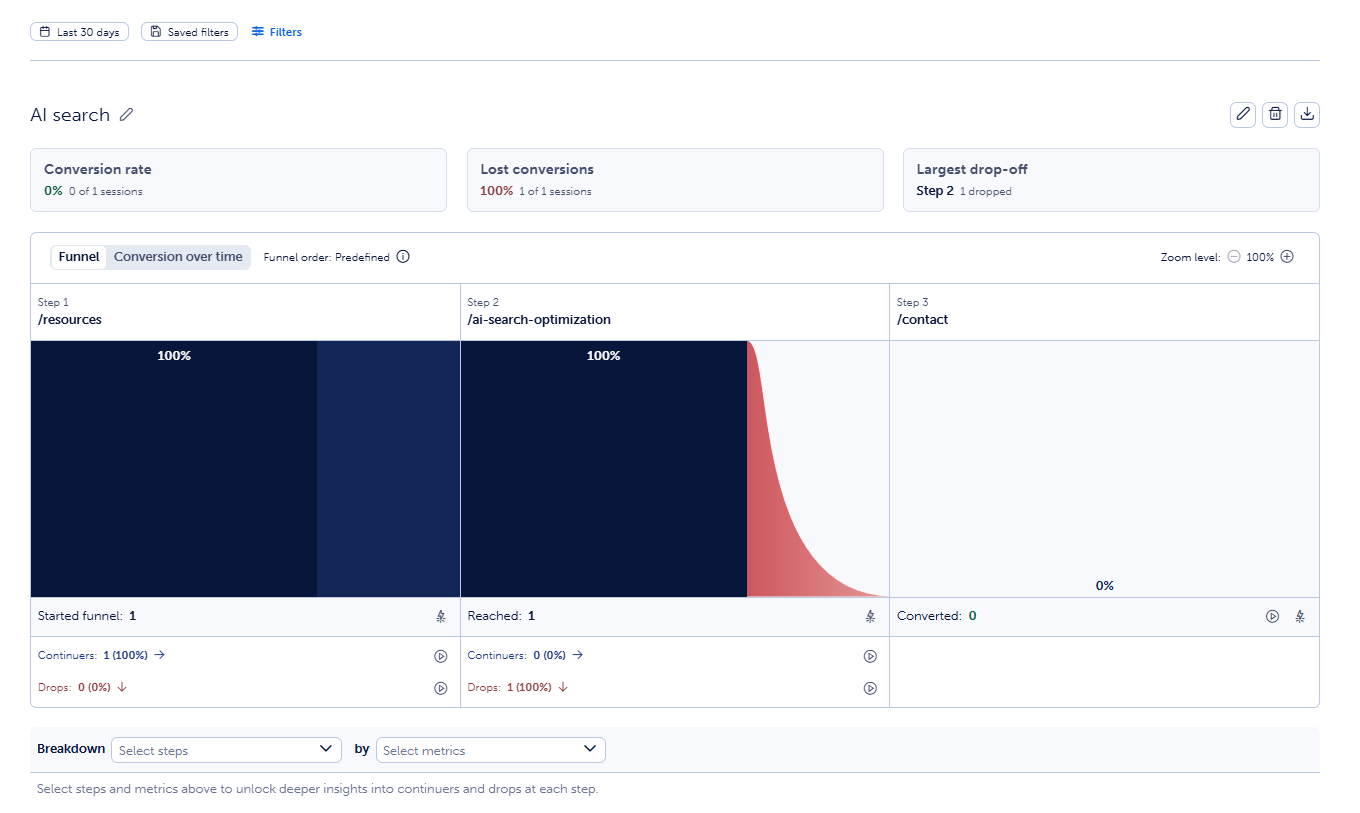
- Mouseflow provides more robust financial context. Its "Revenue Insights" feature allows teams to assign monetary values to funnel steps. This enables leadership to see the exact dollar amount lost at each stage of a checkout flow—a powerful metric for securing budget for future design improvements.
4. Surveys and Feedback Loops
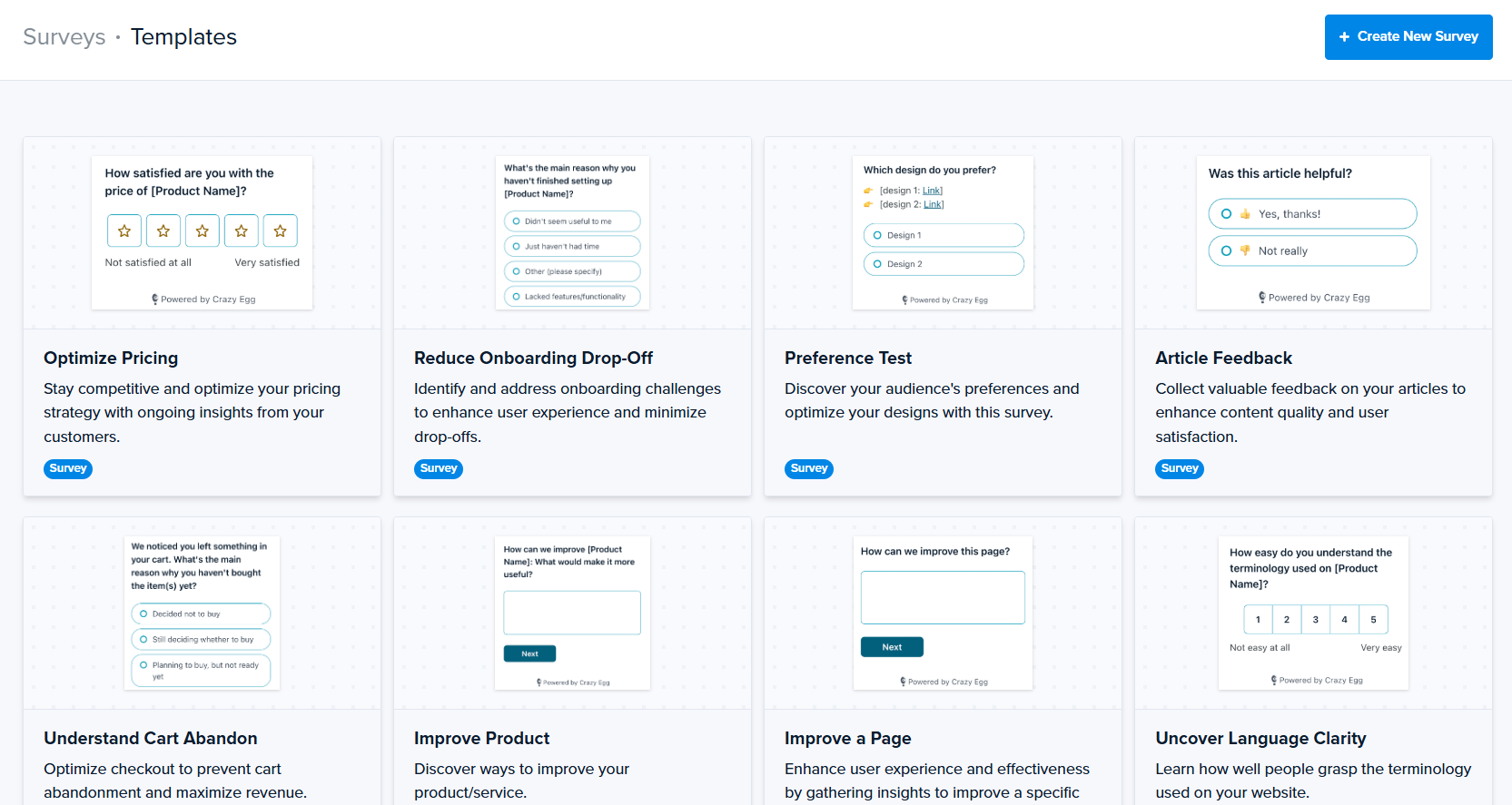
- Crazy Egg offers a library of 50+ pre-built survey templates and complies with WCAG AAA accessibility standards. For organizations in regulated sectors (like government or healthcare), this is often a non-negotiable requirement.
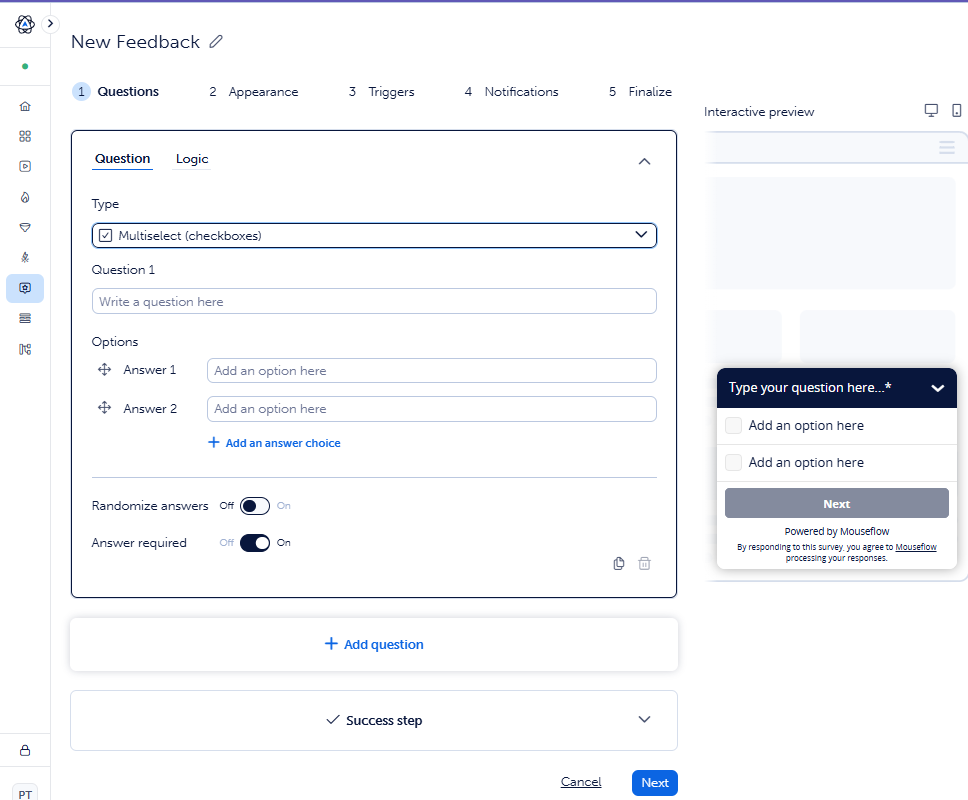
- Mouseflow allows for A/B testing of the surveys themselves. You can test two different survey questions or placements to see which yields a higher response rate, providing a layer of optimization for the research tool itself.
Supporting Data: Why the Choice Matters
The decision between these tools often comes down to the team’s existing technology stack:
| Capability | Crazy Egg | Mouseflow |
|---|---|---|
| Native A/B Testing | Included (Visual Editor) | None (Survey-only) |
| Web Analytics | Standalone Dashboard | None (Requires Integration) |
| Friction Analysis | Tag-based | Aggregate Friction Score |
| Pricing Model | Pageview-based (Monitored) | Session-based |
The "monitored page" billing model of Crazy Egg is a significant differentiator. By only charging for pages where you are actively running tests or heatmap reports, companies can track thousands of pages for "free" while focusing their budget on the high-conversion areas that matter most. Mouseflow’s session-based billing is more traditional; it scales linearly but can become expensive as site traffic increases.
Implications for Your Workflow
When to choose Crazy Egg:
- You need a "Full Stack" solution: If you are a lean team that doesn’t want to manage separate subscriptions for analytics, A/B testing, and heatmaps.
- You manage multiple sites: With unlimited sites and seats, Crazy Egg is highly scalable for agencies or multi-brand organizations.
- You require accessibility compliance: The WCAG AAA-compliant surveys are a major competitive advantage.
When to choose Mouseflow:
- You already use an A/B testing tool: If you have Optimizely or VWO, you don’t need Crazy Egg’s testing features; you need Mouseflow’s deep diagnostics.
- You require granular friction data: The "Friction Score" and "Friction Insights" dashboard are industry-leading for identifying technical bugs that impact conversion.
- You need real-time support tools: The ability to view live sessions makes Mouseflow superior for high-touch customer support environments.
Final Verdict
The "better" tool is entirely dependent on your organizational maturity. If your goal is to foster a culture of constant experimentation where testing and observing happen in one place, Crazy Egg is the superior choice. Its ability to pivot from a "dead click" observation to a "live A/B test" within the same platform is a workflow advantage that saves significant time and administrative overhead.
However, if you are a data-heavy organization with a dedicated conversion team that already has its testing infrastructure in place, Mouseflow provides the surgical precision required to move the needle on complex, high-traffic funnels. Its diagnostic capabilities—specifically the Friction Score and revenue attribution—offer a level of technical depth that justifies its place as a specialized component of your analytical toolkit.
Ultimately, the best way to determine the right fit is to test the integration. Because both tools offer trials, we recommend running them on a secondary domain to compare which interface provides the insights your specific team acts on most effectively. For those leaning toward the all-in-one approach, a 30-day trial of Crazy Egg remains the most straightforward starting point.
