
The State of Streetwear Print-on-Demand: A 2026 Industry Analysis
In the modern fashion landscape, the barrier to entry for launching a legitimate, retail-ready clothing line has effectively evaporated. However, the barrier to success remains as high as ever. After 80+ hours of rigorous testing across 15 different print-on-demand (POD) providers, it is clear that the industry has bifurcated: there are platforms for "merch" and platforms for "brands."
For the streetwear founder, the distinction is binary. A brand is defined by the weight of the fabric, the tactile nature of the branding, and the operational reliability of the fulfillment chain. This report ranks the top 9 POD platforms capable of delivering the heavyweight blanks—specifically 240+ GSM tees and 380+ GSM hoodies—and the professional branding stacks required to compete in a saturated market.
The Evolution of Apparel Fulfillment: A Chronology
The POD landscape of 2018 was dominated by basic white-labeling and Shopify-only workflows. As social commerce exploded, the industry underwent a forced evolution.
- 2018–2020: The "Golden Age of Dropshipping" saw platforms like Printful dominate by focusing on speed and generic Bella+Canvas blanks.
- 2021–2023: The rise of creator-led commerce shifted demands. Creators needed native integrations with TikTok and YouTube, not just Shopify.
- 2024–2026: We have entered the "Hyper-Premium" era. Streetwear founders now demand heavy, garment-dyed blanks, woven labels, and sophisticated logistics that handle taxes and customer service as a Merchant of Record (MoR).
Supporting Data: The Anatomy of a Streetwear Drop
To command a $50+ price point for a t-shirt, the garment must justify the cost. Our testing indicates that the "perceived value" of a garment is heavily correlated with its GSM (grams per square meter) and the presence of custom branding.
| Platform | Best Use Case | Base Tee Price | Branding Depth |
|---|---|---|---|
| Fourthwall | Creator-led / Operations | $13.25 | High |
| Apliiq | Private-Label Specialist | $9.84 | Elite |
| Tapstitch | Heavyweight / Oversized | $10.95 | Medium |
| Printful | Multi-channel scaling | $12.75 | Medium |
| Printify | Cost-optimization | $6.31 | Variable |
Official Analysis: The Top 9 Providers
1. Fourthwall: The Operational Powerhouse
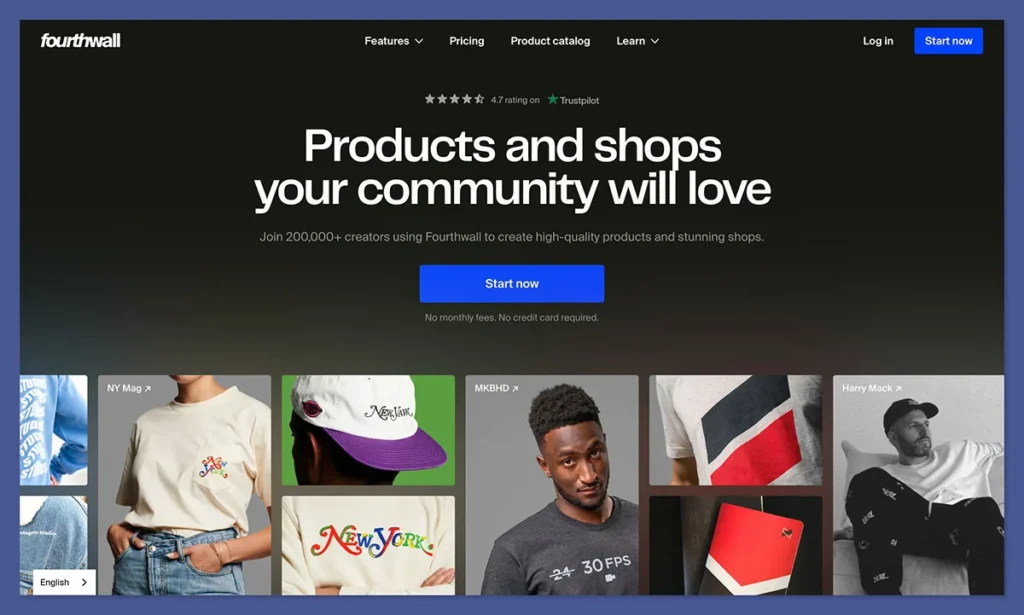
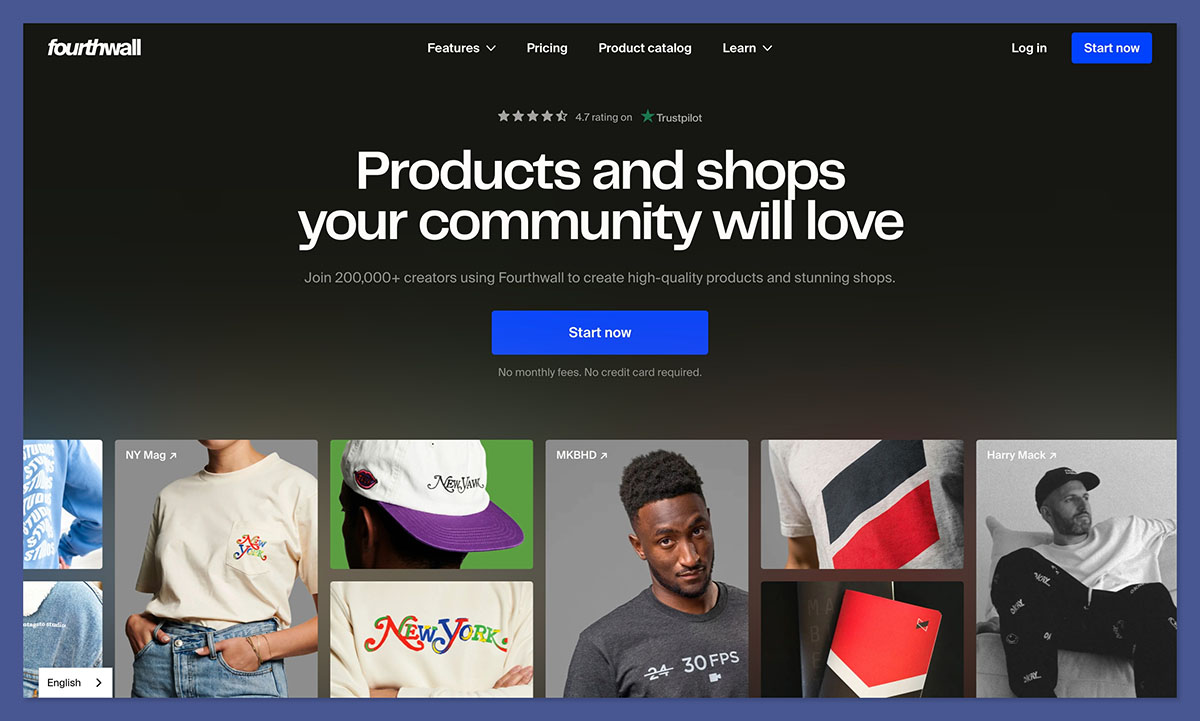
Fourthwall is currently the only platform built for the modern creator. By acting as the Merchant of Record, they handle complex global tax compliance (VAT/GST) and manage customer support tickets, allowing founders to focus on design rather than logistics.
- Implications: You aren’t just launching a store; you are offloading the "business" of retail to a partner.
- Key Advantage: Native TikTok Shop and YouTube Merch Shelf integration is seamless.
2. Apliiq: The Branding Specialist
If your goal is to build a private-label brand that looks like it came off the rack at a high-end boutique, Apliiq is unmatched. They are the only major provider offering actual sewn-in woven labels.
- The Branding Stack: From 3D puff embroidery to faux chenille, Apliiq provides the tactile elements that define streetwear culture.
3. Tapstitch: The Heavyweight Champion
Tapstitch has disrupted the market by focusing on the "heavyweight" aesthetic. Their 250 GSM snow-washed cotton tees fill a void left by platforms that rely on thin, 180 GSM basics.
- Operational Note: While their print quality is industry-leading, they lack traditional embroidery, making them a "print-first" platform.
4. Printful: The Reliable Scale-Up
Printful remains the safest choice for high-volume, multi-channel sellers. With a 99.5% order accuracy rate, they offer peace of mind. While their base blanks are standard, a diligent founder can curate their catalog to include premium options like Comfort Colors.
5. Printify: The Marketplace Network
Printify offers the lowest base pricing through a massive network of 80+ providers. The trade-off is consistency; because you are choosing the provider, you must sample-test every single SKUs. It is the best choice for those with a high level of operational oversight.
6. NovaTomato: The All-Over-Print (AOP) Specialist
For brands built on complex, edge-to-edge graphics, NovaTomato is the standard. Note, however, that this requires polyester-heavy fabrics, which may conflict with the "cotton-heavy" preference of traditional streetwear.
7. Contrado: The Luxury Tier
For high-end fashion brands, Contrado offers a white-label, luxury experience with a base cost that justifies retail pricing in the $200+ range. Their turnaround time of 1–3 days is unrivaled in the industry.
8. Gelato: The Global Logistician
Gelato’s "local-printer" routing model is a masterclass in efficiency. By printing closer to the customer, they significantly reduce shipping times and carbon footprints, making them ideal for brands with an international following.
9. Shirtee: The EU Specialist
Shirtee provides the most robust branding suite in Europe. With built-in returns management and full label customization, they are the go-to for EU-based brands looking to scale across marketplaces like Amazon and eBay.
Implications: The "Brand vs. Business" Threshold
The data suggests a clear inflection point for new entrepreneurs. If you are building a "business" that relies on high-volume, low-margin sales, platforms like Printify and Printful are your primary tools. If you are building a "brand"—where identity, tactile feel, and customer experience are the product—the investment in platforms like Apliiq or Fourthwall is not just recommended; it is mandatory.
Critical Considerations for Founders
- GSM Standards: Do not settle for anything below 220 GSM for t-shirts if you are marketing them as "premium streetwear."
- Tax Liability: If you are selling globally, the Merchant of Record model provided by Fourthwall saves hundreds of hours of accounting and legal research.
- The Embroidery Gap: Before committing to a platform, verify your design requirements. If your brand relies on 3D puff embroidery, Tapstitch is an immediate disqualification.
Frequently Asked Questions
Q: What is the ideal GSM for a premium hoodie?
A: You should target the 380–420+ GSM range. Anything under 350 GSM will feel like standard athletic wear rather than the substantial, structured fit required by streetwear enthusiasts.
Q: Is it possible to use all-over-print on heavy cotton?
A: No. AOP is a sublimation process that requires synthetic fabrics like polyester. For heavy cotton graphics, stick to Direct-to-Garment (DTG) or screen printing methods.
Q: How do I handle returns in a POD model?
A: This is the most significant "hidden" cost. Most platforms do not offer automated returns. If you are an EU-based brand, Shirtee offers the most comprehensive returns infrastructure, which is a major competitive advantage in terms of customer trust.
Q: What profit margin should I aim for?
A: For a streetwear drop, a 50–60% gross margin is the gold standard. By utilizing premium blanks and branding, you can justify higher retail prices, which offsets the higher base costs of quality POD providers.
Final Verdict
For the vast majority of new streetwear founders, Fourthwall provides the best balance of ease-of-use, operational support, and premium branding. If your specific aesthetic requires heavy, garment-dyed, private-label goods with woven tags, Apliiq is the superior choice. Choose your partner based on your brand’s specific needs—not the cheapest price tag.
