
The State of Print-on-Demand: Choosing the Best Premium Apparel Platform for 2026
The landscape of Print-on-Demand (POD) has undergone a tectonic shift over the last 18 months. As the creator economy matures, the demand for "merch" has been replaced by a demand for "brand." Creators and independent designers are no longer satisfied with standard-issue, thin-cotton tees; they are seeking luxury blanks, intricate branding stacks, and retail-grade quality that can compete with high-end streetwear labels.
Following an exhaustive six-month evaluation conducted between Q4 2025 and Q1 2026, we tested eight leading POD platforms across 200+ sample orders. By stress-testing for blank quality, branding infrastructure, and print method consistency, we have determined that Fourthwall currently stands as the definitive leader for creators who prioritize brand-building over logistics management.
The Evolution of the POD Market: A Chronology (2025–2026)
The POD industry has moved beyond the "quantity over quality" phase. Recent market developments have redefined how creators interact with their supply chains:
- Q3 2025: The industry saw significant consolidation, culminating in the merger of Printful and Printify under the parent entity "Fyul." While the consumer-facing brands remain distinct, the backend infrastructure began shifting toward unified global fulfillment.
- August 2025: Patreon adjusted its fee structure, impacting creators who stack membership tiers alongside physical product sales. This prompted many to seek more efficient, all-in-one storefront solutions that don’t rely on third-party app stacking.
- January 2026: Gumroad successfully restored PayPal functionality, signaling a stabilization in payment processor relations for independent creators.
- June 2026: Fourthwall updated its Pro pricing model to $19/month ($180/year), cementing its position as the premium, all-in-one alternative to the traditional Shopify-plus-POD-app business model.
How We Evaluated the Platforms
Our methodology was built on three uncompromising criteria designed to replicate the experience of a high-end fashion brand:
- Blank Quality: We mandated a minimum of 200 GSM from premium mills (Stanley/Stella, AS Colour, Cotton Heritage, Lane Seven).
- Branding Stack: We evaluated the availability of sewn-in woven labels, custom hangtags, branded polybags, and internal neck prints.
- Print Method Match: We tested native capabilities for DTG, DTF, screen printing, embroidery, sublimation, and cut-and-sew.
Each platform was subjected to a 30-wash durability test on both Bella+Canvas 3001 flagships and heavyweight options to identify ink washout and fabric degradation.
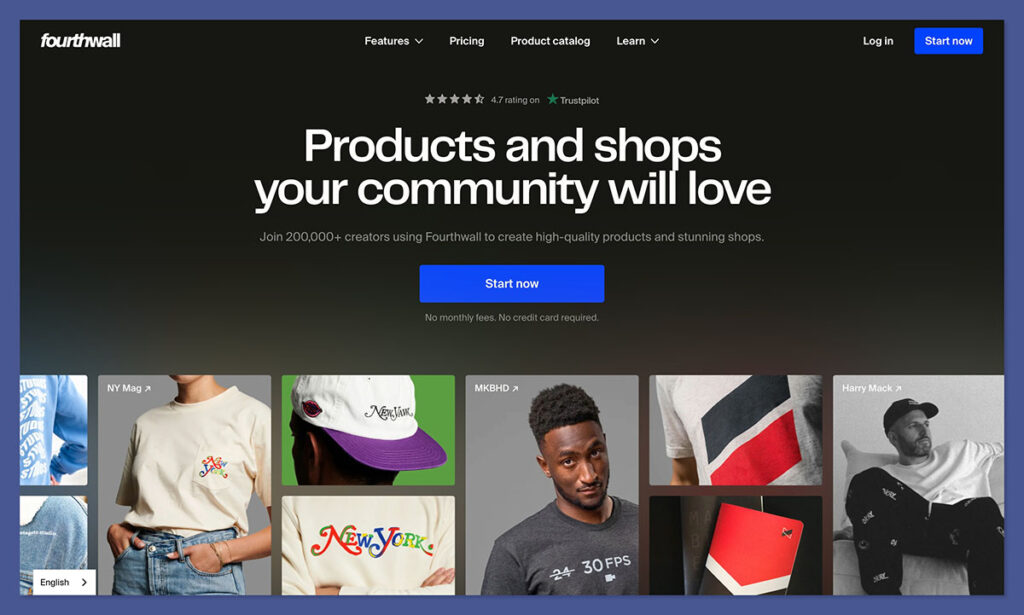
1. Fourthwall: The All-In-One Premium Choice
Fourthwall occupies the top spot because it solves the "ecommerce tax." Most creators aren’t just selling shirts; they are managing memberships, handling taxes, and answering support tickets. Fourthwall absorbs this entire operational layer.
- The Premium Advantage: It is the only platform that offers a curated roster of premium blanks (AS Colour, Stanley/Stella) while providing a fully integrated, white-labeled storefront.
- Signature Ink Technology: To address the common DTG washout issue on dark fabrics, Fourthwall’s "Signature" print process provides superior ink coverage, preventing the chalky, faded look often associated with entry-level POD.
- Operational Efficiency: By eliminating the need for a Shopify subscription and a constellation of apps for tax compliance and customer support, Fourthwall allows creators to focus on design rather than the complexities of maintaining a nexus in multiple states.
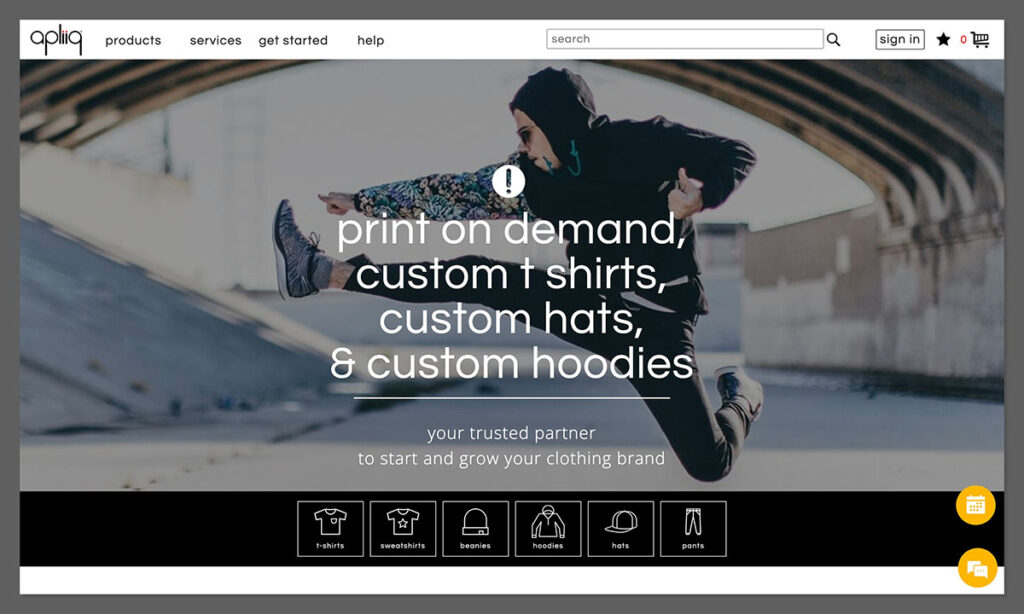
2. Apliiq: The Private-Label Specialist
For brands where the physical "neck label" is the hallmark of legitimacy, Apliiq remains the gold standard.
- Low MOQ Advantage: While most garment factories demand 500–1,000 unit minimums for custom woven labels, Apliiq allows for a 100-unit minimum. This makes high-end private labeling accessible to startups.
- Fashion-Forward Catalog: With a heavy focus on embroidery, appliqués, and custom neck prints, Apliiq is built for the streetwear market rather than general merch. It is the ideal partner for brands retailing in the $45–$65 range.
3. Tapstitch: The Heavyweight King
Streetwear culture is currently obsessed with "boxy" fits and heavy, structured fabric. Tapstitch is the only major POD platform that stocks 430 GSM heavyweight blanks, effectively bridging the gap between "merch" and "fashion-grade apparel."
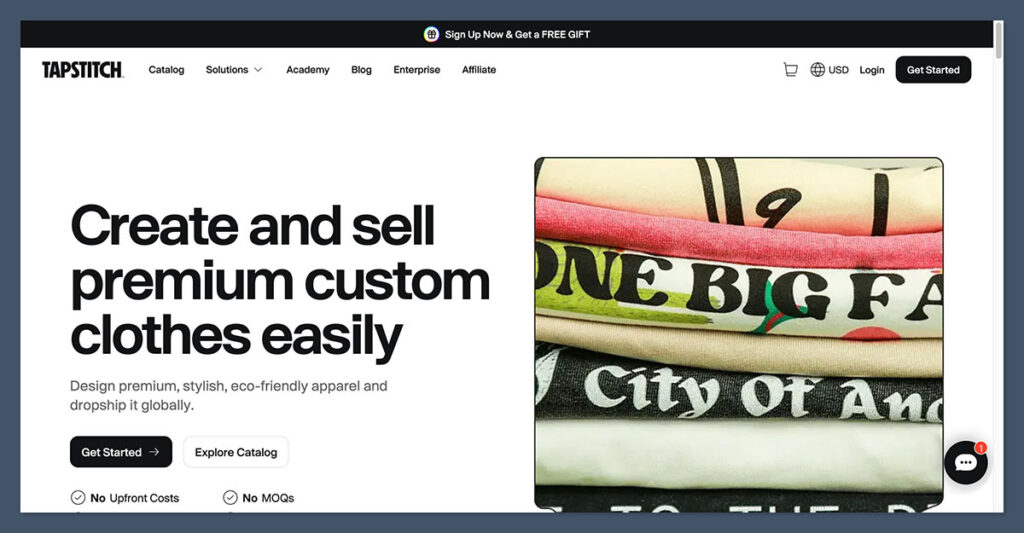
- Technical Superiority: By utilizing both DTG and DTF printing, Tapstitch ensures high-opacity graphics that don’t wash out on heavy, dark-colored fabrics. While the base cost is higher, the perceived value justifies a premium retail price point.
4. Printful and Gelato: The Global Logistics Titans
For brands scaling internationally, Printful and Gelato remain the most reliable partners.
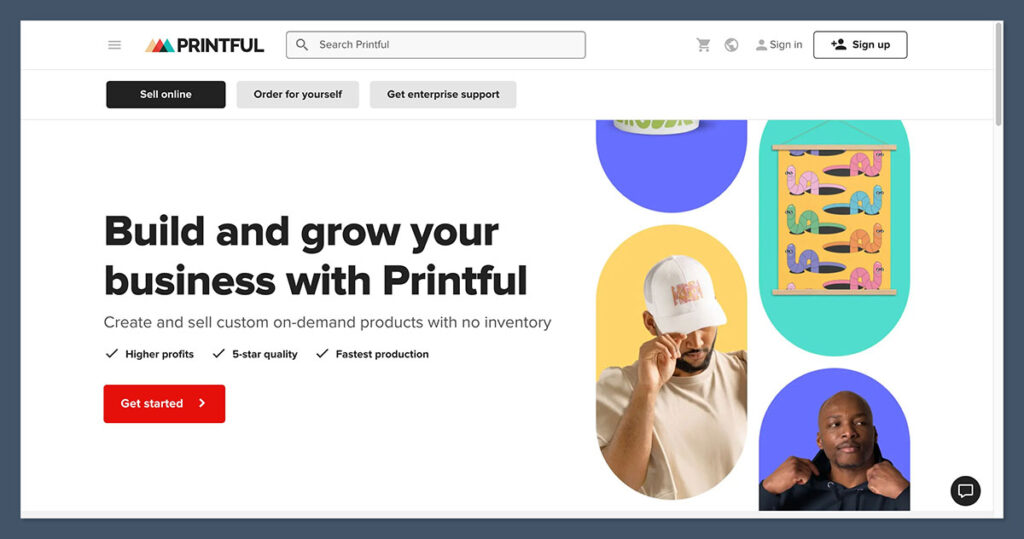
- Printful: With its extensive global network of hubs (US, Mexico, Latvia, Spain, UK, Canada), Printful is the best choice for operators who want robust integration with platforms like Amazon, Etsy, and TikTok Shop.
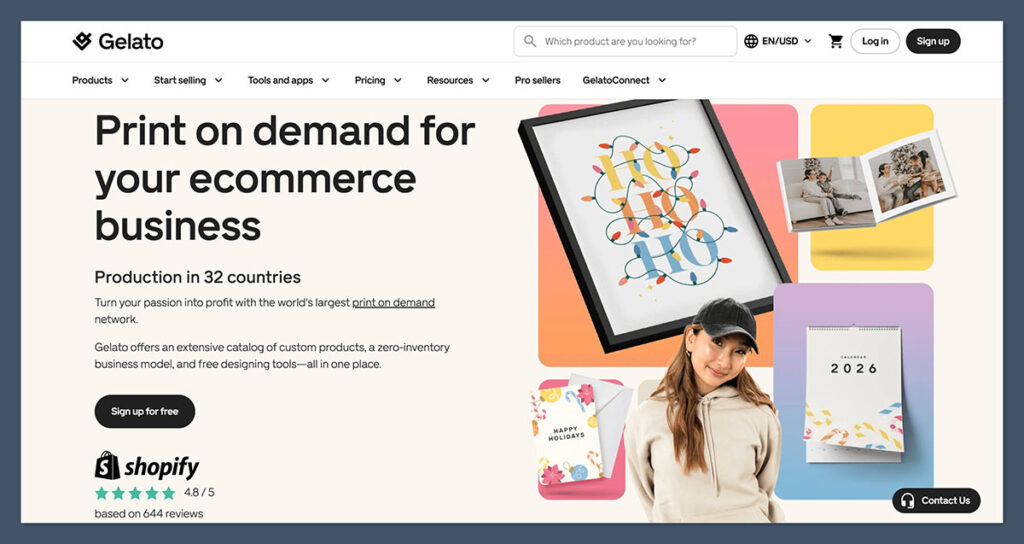
- Gelato: Gelato’s defining feature is its "local-country" fulfillment model. By fulfilling 90% of orders within the destination country, it significantly reduces transit times, a crucial factor for European and international customer satisfaction.
5. TPOP: The Sustainability Leader
Based in France, TPOP has cornered the eco-conscious market. Their entire operation is plastic-free, using water-based inks and recycled packaging. For European brands looking to lean into an ESG (Environmental, Social, and Governance) narrative, TPOP provides a fully integrated, paperless, and sustainable fulfillment solution.
6. Printify and CustomCat: The Value and Speed Options
- Printify: It functions as a marketplace of providers. While it requires the "Sample-and-Lock" workflow—where you order samples from specific print partners to ensure consistency—it remains the most cost-effective solution for margin-disciplined founders.
- CustomCat: Located in Detroit, CustomCat is the speed leader for the US market. With a 1–3 day production window, they are the go-to for time-sensitive drops, particularly for embroidered hoodies and caps.
Supporting Data: Comparative Overview
| Platform | Best For | Premium Branding | Base Tee | Production Speed |
|---|---|---|---|---|
| Fourthwall | All-in-one Brand | High (Signature ink) | ~$11.75 | 3–7 days |
| Apliiq | Private Label | Woven Labels | $7–$12 | 7–10 days |
| Tapstitch | Heavyweight | Custom Neck Print | $22.99 | Variable |
| Printful | Global Scale | Printed Labels | ~$11.75 | 2–5 days |
Implications for Future Growth
The data suggests a clear trajectory: The barrier to entry for a premium fashion brand has vanished. Previously, you needed a massive investment to secure the supply chain, custom branding, and logistics infrastructure. Today, the platform you choose is no longer just a "vendor"—it is your entire supply chain.
When to Graduate to Bulk
While POD is excellent for testing, the "100-unit rule" remains the industry benchmark. Once a specific SKU reaches 100+ sales per month, the margins shift. Moving to bulk manufacturing can reduce your costs by 40–60%. However, we advise that when you graduate, you must replicate the exact specs of your successful POD product—using the same blank and print method—to ensure the transition is invisible to your customer base.
The "Sample-and-Lock" Mandate
Regardless of the platform, the most expensive mistake a creator can make is failing to order samples. Our testing confirms that issues with print alignment, color calibration, and fabric hand-feel are only caught through physical inspection. Treat your sample costs as insurance; the $50 spent on samples today prevents the $500 in refunds you might face tomorrow.
Final Verdict
If you are a creator looking to build a brand that feels premium from the moment the customer receives the package, Fourthwall is the recommended choice for 2026. It reconciles the need for high-end blanks with the logistical realities of a one-person business. If your identity is defined by the physical hardware—the woven label or the weight of the fabric—then Apliiq or Tapstitch are the specialized tools you need. In the modern era of apparel, the goal is not just to sell a product; it is to build a consistent, high-quality unboxing experience that transforms casual followers into loyal customers.
