
The Science of Precision: A Masterclass in Email A/B Testing for Modern Marketers
In the hyper-competitive landscape of digital marketing, the "spray and pray" approach to email campaigns is a relic of the past. Today, the difference between a high-performing email strategy and a relegated one often comes down to a single, data-backed methodology: Email A/B testing. By systematically isolating variables and measuring audience response, marketers can pivot from intuition-based guesswork to evidence-based growth.
This comprehensive guide delves into the mechanics, strategic implementation, and advanced optimization of email split testing, providing a roadmap for turning your mailing list into a high-conversion engine.
What Is Email A/B Testing? The Fundamentals
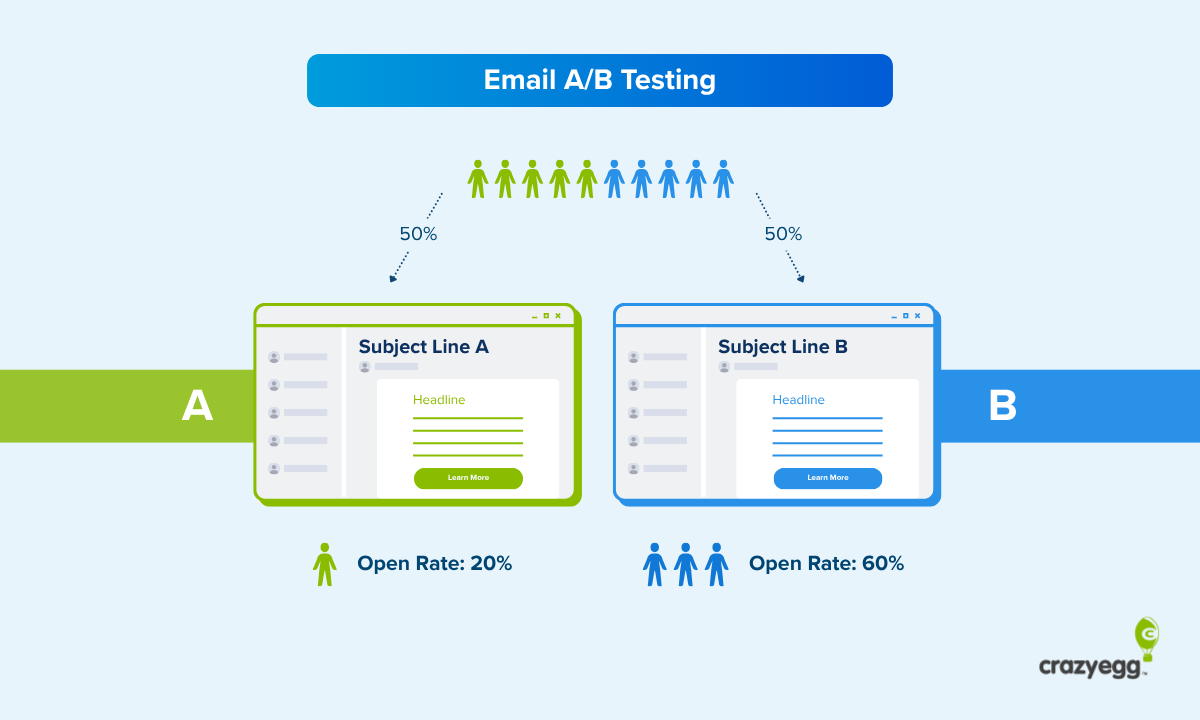
At its core, email A/B testing—often referred to as split testing—is a controlled scientific experiment. A marketer creates two versions of an email: "Version A" (the control) and "Version B" (the variant). These are sent to two randomly selected, statistically identical subsets of your mailing list.
By keeping all variables constant except for one specific element—such as the subject line, the call-to-action (CTA) button color, or the tone of the body copy—marketers can observe which version yields superior engagement metrics. Because subscriber behavior is binary (they either open or ignore, click or bounce), the feedback loop is remarkably clean, making email the perfect medium for rigorous, quantitative testing.
Chronology of a Successful A/B Test: A 9-Step Framework
Running a valid test requires discipline. Following a structured process ensures that your findings are actionable rather than accidental.
1. Define Your Hypothesis
Never test for the sake of testing. Start with a clear question: "Does a benefit-driven subject line outperform a curiosity-driven one?"
2. Isolate a Single Variable
To maintain the integrity of your data, change only one element at a time. If you alter both the subject line and the imagery, you will never know which change drove the difference in results.
3. Determine Your Sample Size
To achieve statistical significance, you need a representative audience. Most platforms recommend a minimum of 1,800 recipients per variant to avoid "noise" in your data.
4. Segment Your List
Use your ESP (Email Service Provider) to randomly assign recipients to group A or group B. Randomization is critical to ensure both groups share similar demographic and behavioral characteristics.
5. Execute the Deployment
Send both versions simultaneously to avoid external time-of-day biases.
6. Monitor and Wait
Allow the test to "breathe." Depending on your primary metric (opens, clicks, or conversions), you may need anywhere from a few hours to several days to gather enough data.
7. Evaluate Against Your Primary Metric
Analyze the performance against your initial hypothesis. If Version B achieved a 15% higher click-through rate (CTR), it is your winner.
8. Implement the Winner
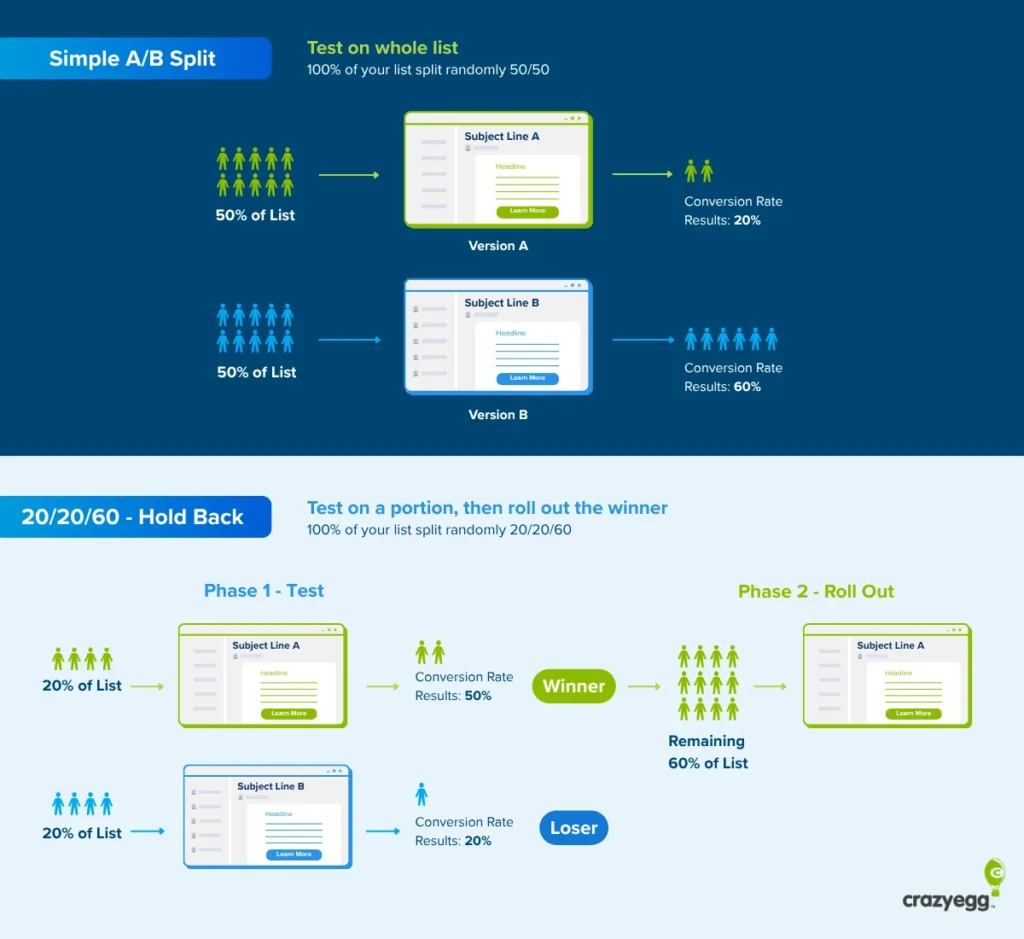
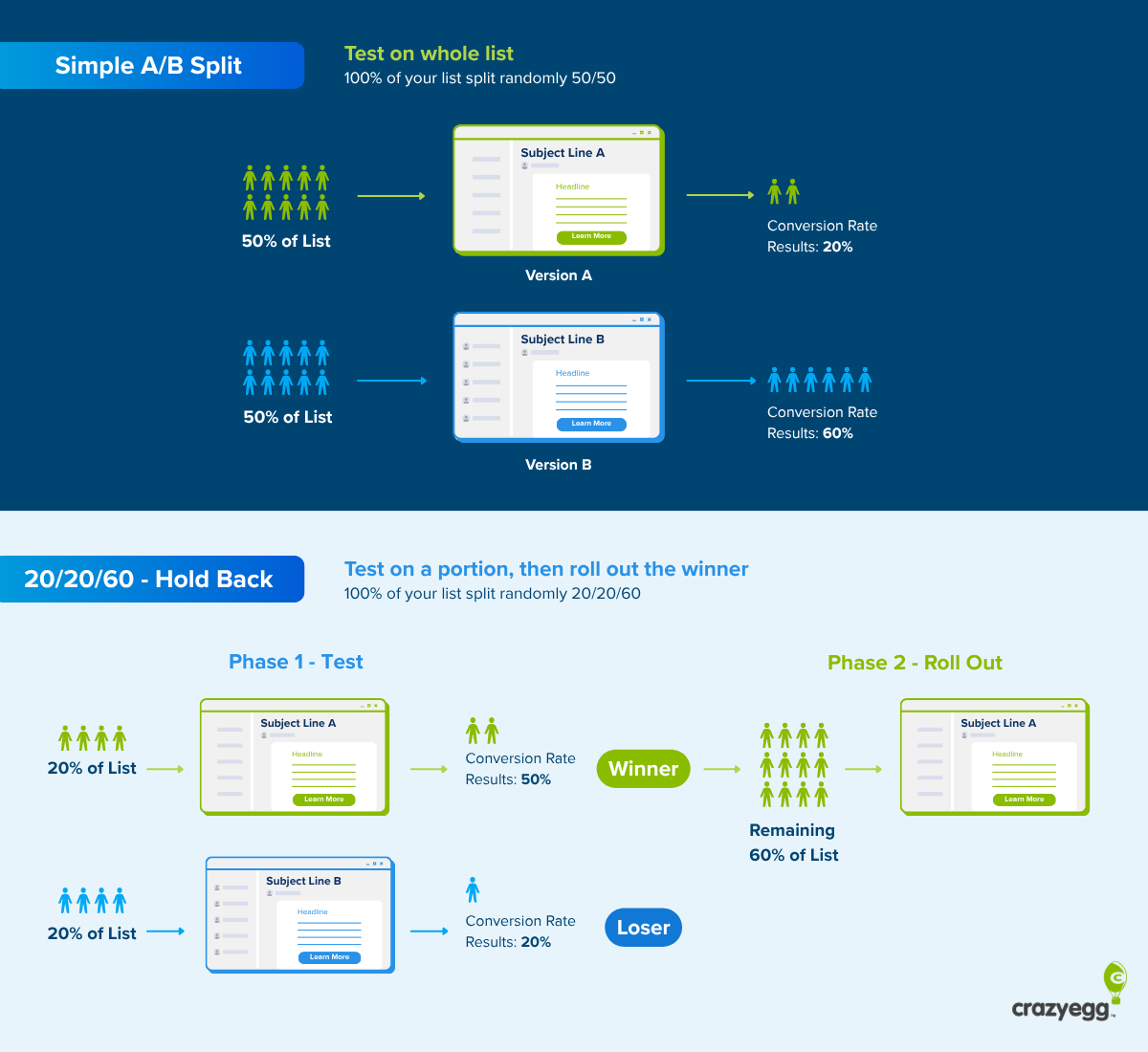
Roll out the winning version to the remainder of your list (the "hold-back" group).
9. Document and Iterate
Archive the results. Even "failed" tests are valuable because they provide insight into what your audience ignores, preventing future resource waste.
High-Impact Levers: What to Test First
Not all elements are created equal. When resources are finite, prioritize the components that have the greatest influence on the user journey.
The Powerhouse Elements
- Subject Lines: The gatekeeper of your email. If they don’t open, they don’t convert. Test length, emojis, personalization, and urgency.
- Call-to-Action (CTA): This is the bridge to your website. Test the phrasing (e.g., "Get My Guide" vs. "Download Now") and the visual prominence.
- Offer/Value Proposition: Does a 20% discount perform better than a "Free Shipping" incentive? This is the most significant driver of direct revenue.
The Low-Impact Tweaks
Cosmetic changes—such as font choice, header colors, or minor image adjustments—should only be prioritized if you have a massive list (50,000+ subscribers) where even a 0.1% lift in conversion translates to meaningful revenue. Otherwise, these are often considered "vanity tests."
Supporting Data: Metrics That Matter
To ensure your tests are not just "successful" on paper but profitable in practice, you must track the correct metrics:
- Open Rate: The primary indicator of subject line and sender-name efficacy.
- Click-Through Rate (CTR): The definitive measure of content resonance and CTA effectiveness.
- Conversion Rate: The ultimate goal. Does the email lead to a sale, sign-up, or demo request?
- Unsubscribe and Spam Complaint Rates: The "warning lights." If a test shows a high open rate but a simultaneous spike in unsubscribes, your subject line may be misleading or "clickbaity," damaging your long-term sender reputation.
Statistical Significance and Methodology
The most common pitfall in A/B testing is declaring a winner prematurely.
The 95% Confidence Threshold
In professional research, a result is only considered significant if there is a 95% probability that the result did not occur by chance (a p-value of less than 0.05). If your testing tool shows a 70% confidence level, you are essentially gambling. Always use an online A/B significance calculator to verify your results before declaring a victory.
The A/A Test Validation
To ensure your testing platform isn’t introducing bias (e.g., if your software accidentally puts all "early adopters" in Group A), run an "A/A test." Send the exact same email to both groups. If the results differ significantly, your testing protocol is flawed.
Implications of AI in Modern Testing
Artificial Intelligence has transformed A/B testing from a manual, labor-intensive chore into an automated, high-velocity process.
Generative AI for Asset Creation
Generative tools can produce dozens of subject line variations, tone shifts, and CTA iterations in seconds. This allows marketers to test a broader range of psychological triggers without burning out their creative teams.
Predictive AI and Personalization
Modern platforms (like Klaviyo or HubSpot) now use predictive modeling to score subscribers. AI can analyze past behavior to determine the optimal time to send, effectively automating the "send time" variable of your A/B test. This ensures each user receives content when they are statistically most likely to engage, creating a personalized experience at scale.
Expert Best Practices: Dos and Don’ts
- DO set your hypothesis before the test.
- DO watch your negative metrics (unsubscribes) as closely as your positive ones.
- DO ensure your segments are large enough to be statistically relevant.
- DON’T test too many variables at once; this is known as multivariate testing and requires significantly larger data sets.
- DON’T let a test run too long. A stale test can be influenced by external events, such as weekend versus weekday behavior.
- DON’T change the test mid-stream. If you alter the email after the test has launched, you invalidate all collected data.
Frequently Asked Questions (FAQ)
What if my list is too small for statistical significance?
If you have fewer than 1,000 subscribers, stop worrying about p-values. Focus on "directional testing." Use sequential testing—send Version A this week and Version B next week. While not statistically perfect, it provides valuable insights into what your specific audience prefers.
What is the difference between A/B and Multivariate testing?
A/B testing is surgical; it compares one change. Multivariate testing compares multiple combinations (e.g., Header A + Button A vs. Header B + Button B). Multivariate testing is powerful but requires a massive, high-traffic list to be effective.
How do I run tests without a formal ESP?
For smaller operations, tools like GMass for Gmail allow for split testing. Alternatively, you can manually split your list using spreadsheet formulas (=IF(RAND()<0.5,"A","B")) and utilize unique UTM tracking parameters in Google Analytics to measure performance.
Final Thought: The Iterative Loop
Email A/B testing is not a destination; it is a cycle. By treating every campaign as an opportunity to learn, you accumulate institutional knowledge that compounds over time. The marketers who win are not those who guess correctly, but those who test, analyze, and relentlessly iterate.
