
The Rise of the Agentic Lovemark: Redefining Brand Equity in the Age of AI
In an era where artificial intelligence is fundamentally restructuring the consumer decision journey, a provocative new manifesto is challenging the advertising industry to rethink its most sacred concepts. Thomas Marzano’s Brand Constitutions: The Legible—Lovable Standard for Building Equity in an Agentic Economy has arrived at a critical juncture, providing a blueprint for how brands can survive and thrive in a world where intelligent agents—not humans—increasingly act as the gatekeepers of choice.
For decades, the concept of the "Lovemark"—popularized by Kevin Roberts at Saatchi & Saatchi—has served as the gold standard for brand building. It posits that while brands provide utility, Lovemarks earn "loyalty beyond reason" through emotional resonance. However, as autonomous agents begin to mediate discovery and consideration, the industry faces an existential question: Can a brand remain a Lovemark when its primary audience is no longer a human, but a machine?
The Core Transformation: From Human Choice to Agentic Mediation
The traditional "Lovemarks" model was built on the binary axis of respect and love. Respect provided the rational, functional foundation, while love added the irrational, emotional layer. In a human-led world, this logic was intuitive: people compared experiences, remembered behavioral cues, and made judgments based on context.
However, the "Agentic Age" shifts this paradigm. Intelligent systems are compressing the consumer decision journey, collapsing once-temporal, interpretive stages into system-driven filters. These agents do not "feel" respect; they evaluate it. They recognize patterns, verify provenance, and assess structural consistency. As McKinsey & Company has noted, the modern marketing operating logic is moving from persuasion to qualification. Before a brand can even reach a human heart, it must first survive the "system-side shortlist."
The Chronology of an Evolving Philosophy
The evolution of brand theory has tracked closely with technological advancement, leading us to our current inflection point:
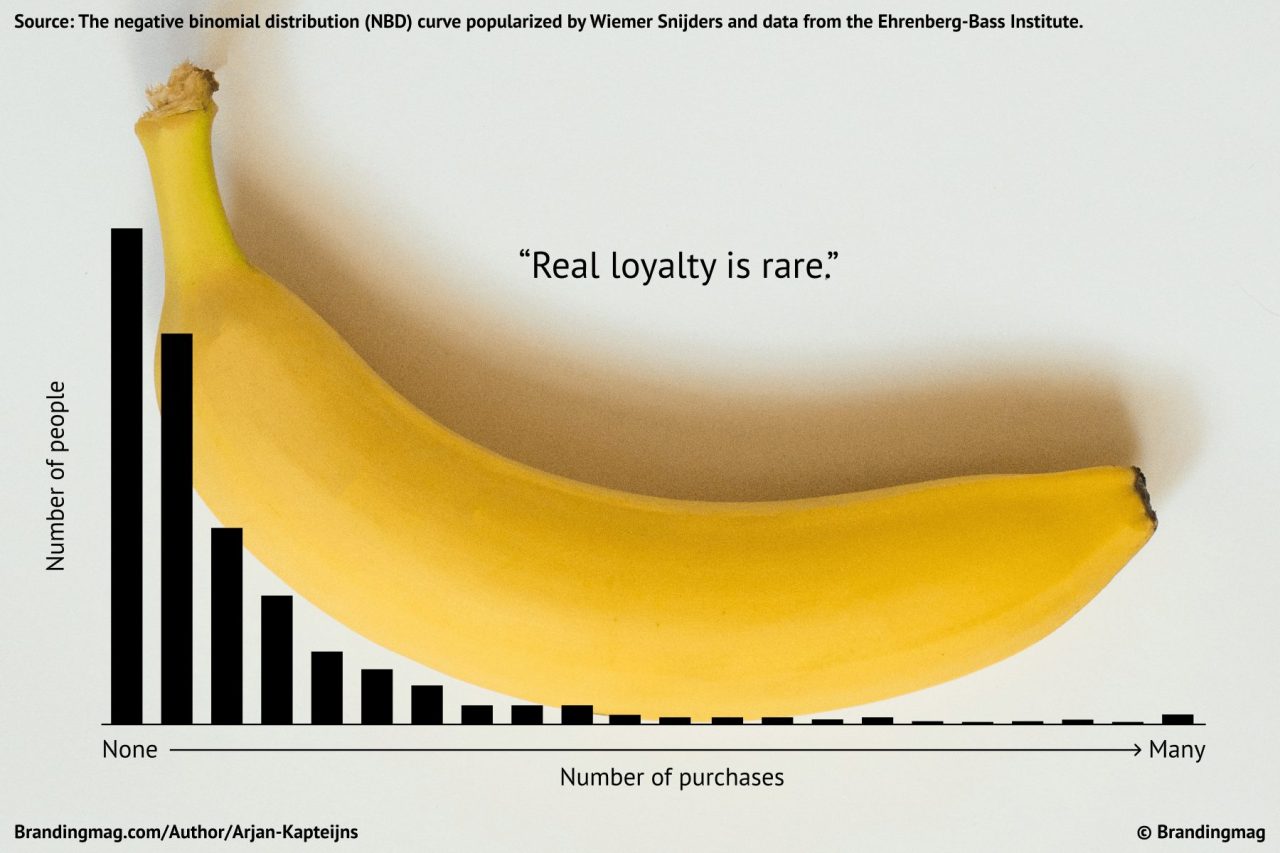
- The Rational Era (Pre-2000s): Brands were defined by functional superiority and distribution. The "Banana Principle"—the statistical reality that loyalty is a byproduct of availability—dominated the discourse, championed by Byron Sharp.
- The Lovemarks Era (2004–2020): Kevin Roberts disrupted the status quo by introducing "loyalty beyond reason," arguing that emotional depth could transcend functional commoditization.
- The Agentic Transition (2025–Present): With the proliferation of generative AI and autonomous shopping agents, we are entering a new phase. Brands are no longer just competing for "share of mind" among humans; they are competing for "structural legibility" within AI ecosystems.
Building the "Agentic Lovemark": The New Gold Standard
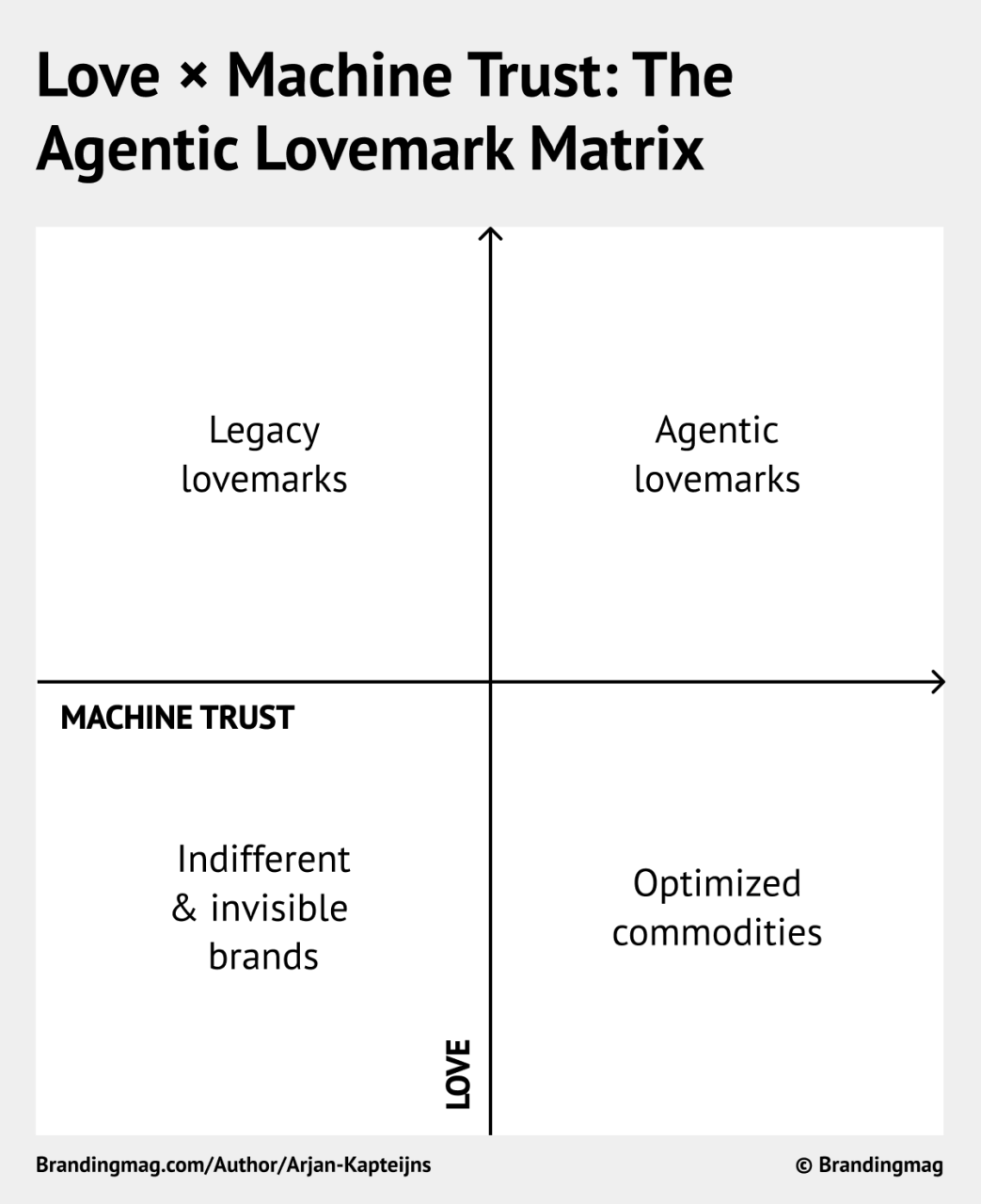
The emerging consensus among industry thinkers is the concept of the Agentic Lovemark. This is a brand that fosters both human love and machine trust. It is not a binary choice between emotion and utility; rather, it is a self-reinforcing cycle.
The Anatomy of Machine Trust
Legibility is the key to machine trust. Unlike human trust, which relies on story and brand promise, machine trust relies on coherence, metadata, and behavioral predictability. A brand may be beloved by millions, but if its structure is ambiguous—if its digital footprint is fragmented or its data provenance is unclear—an AI agent may deem it "high risk" and exclude it from the consideration set.
The Persistence of Human Love
Despite the rise of automation, human emotion remains the ultimate differentiator. Systems can advise, rank, and filter, but they cannot manufacture the "irrational" bond that drives a consumer to reject a cheaper, more efficient alternative because they have a deeper affinity for a specific brand, such as a BMW or an Apple device. The challenge for modern marketers is to ensure that this emotional bond is not just a marketing claim, but a codified reality.
Supporting Data: Why "Meaning" is Now a Competitive Necessity
Research from McKinsey suggests that as GenAI compresses the sales funnel and content becomes increasingly commoditized, emotional distinction is no longer a luxury—it is a competitive necessity.
- System-Side Filtering: Modern AI agents favor brands that demonstrate "behavioral signatures." Brands with consistent, long-term organizing ideas exhibit lower volatility, which agents interpret as a signal of reliability.
- The Decline of the "Banana": In a world of agentic mediation, the random switching behavior described by the Banana Principle is expected to decline. Because agents stabilize preferences, loyalty becomes more "dependable." We are likely to see a shift toward a "reversed banana" diagram: fewer light, fickle buyers and more stable, long-term brand adherents.
Official Industry Responses: The Creative Tension
The transition to an agentic economy has sparked a visceral debate within the creative community. Dutch creative legend Aad Kuijper has voiced concerns that the obsession with AI-driven optimization might "smooth out" the very imperfections that make brands feel human.
The industry response, however, is nuanced:
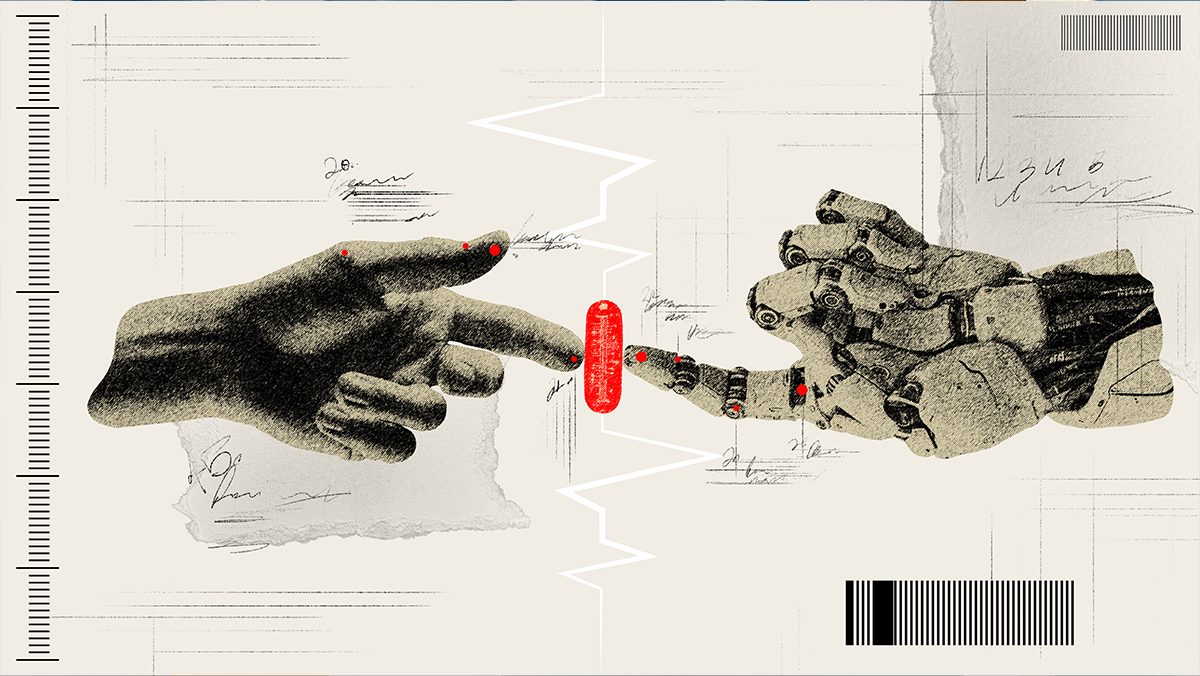
- Separation of Concerns: Experts argue that creativity must remain a human domain. AI is the "Formula 1 car," but the human is the "driver." AI can accelerate iteration and improve legibility, but it cannot invent the "soul" of a brand.
- Codification vs. Creation: The consensus is that AI should not create emotion, but rather reveal the emotion that already exists. By codifying a brand’s purpose into its data structures and service logic, companies can ensure that their emotional core is "visible" to the machines that guide human choice.
Implications: The Rise of the Brand Constitution
If the "Agentic Lovemark" is the goal, the "Brand Constitution" is the tool. Thomas Marzano’s framework suggests that brands need a central organizing principle that acts as a bridge between the two audiences:
- For Humans: The constitution articulates the emotional territory and the "why" behind the brand, ensuring it remains culturally resonant and distinctive.
- For Machines: The constitution acts as an architectural guide, ensuring that every touchpoint—from service logic to digital interfaces—is coherent, predictable, and structurally legible.
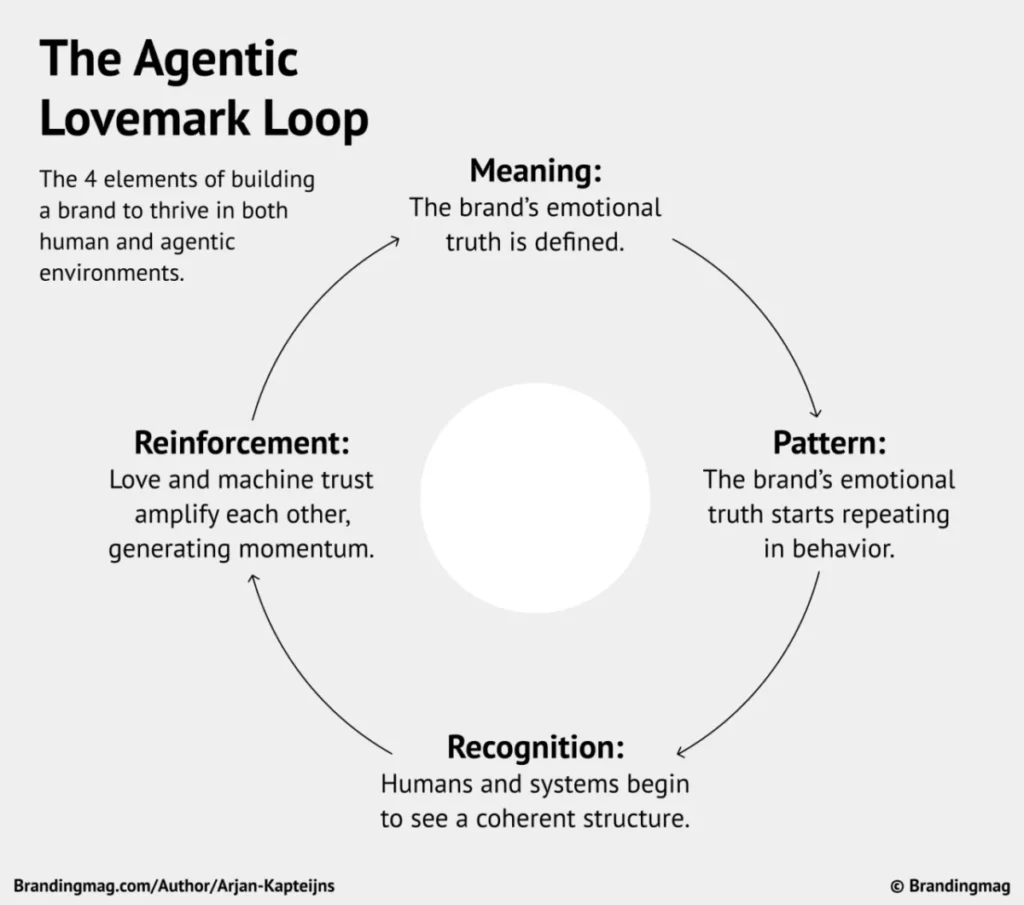
When a brand operates under this dual mandate, it creates a "flywheel effect." Stronger signatures lead to clearer machine recognition, which leads to increased visibility, which creates more opportunities for human emotional connection. This is the "Agentic Lovemark Loop."
Conclusion: A Historic Opportunity
We are witnessing a fundamental shift in how value is created and captured. For a quarter-century, the Lovemarks philosophy taught us that emotion is the ultimate currency. In the agentic age, that currency remains valid, but it requires a new backing: structural integrity.
Brands that succeed in the coming decade will be those that reconcile the "soul" of their identity with the "system" of the modern digital marketplace. They will be brands that are loved because they matter, and recommended because they are understood.
As we move further into this era of autonomous agents, the challenge for CMOs and brand architects is clear: Stop choosing between being "loved" and being "found." Build a brand that is both. The future belongs to the Agentic Lovemark—a brand with a human heart and a machine-readable pulse.
In this new landscape, clarity is the new creativity, and legibility is the new loyalty. The brands that master this synthesis will not only survive the transition—they will define the next generation of global commerce.
