
The Print-on-Demand Face-Off: Is Tapstitch the New King of Streetwear or Should You Stick With Printful?
In the rapidly evolving landscape of e-commerce, print-on-demand (POD) has transitioned from a niche hobbyist pursuit to the backbone of multi-million dollar direct-to-consumer fashion brands. For entrepreneurs, the choice of a fulfillment partner is perhaps the most critical decision in the supply chain. Today, two names dominate the conversation: the industry titan, Printful, and the agile, fashion-forward challenger, Tapstitch.
We have spent weeks conducting deep-dive testing on both platforms, analyzing print fidelity, supply chain logistics, and integration capabilities. While Printful remains the gold standard for versatility and global reach, Tapstitch has emerged as a disruptive force for creators obsessed with high-end garment aesthetics. This report dissects the two, helping you determine which engine will best power your brand.
The Core Conflict: Breadth vs. Specialization
To understand the difference between Printful and Tapstitch, one must understand their business philosophies.
Printful operates as a massive, infrastructure-heavy ecosystem. With over 479 SKUs, it is the "department store" of the POD world. Whether you are selling coffee mugs, embroidered beanies, or sustainable wall art, Printful has a solution. It is built for the entrepreneur who wants to experiment with product lines and scale across multiple marketplaces.
Tapstitch, conversely, is an "apparel studio." By limiting its catalog to approximately 400+ fashion-focused blanks—specifically targeting heavyweight tees, oversized hoodies, and high-GSM streetwear cuts—it avoids the distractions of the generalist model. It isn’t trying to sell you a mousepad; it is trying to provide the best possible canvas for a clothing label.
A Chronology of the POD Landscape
The evolution of these platforms mirrors the maturation of the creator economy:
- 2013 (The Printful Genesis): Printful launched, revolutionizing the industry by internalizing fulfillment. It moved away from the "broker" model, bringing print operations in-house to ensure quality control. This set the industry standard for reliability.
- 2020-2022 (The Post-Pandemic Boom): As digital storefronts exploded, Printful scaled its global footprint to 12+ facilities. This was the era of "anywhere, anytime" fulfillment.
- 2023-Present (The Rise of the Niche): As consumer tastes shifted toward "premium basics" and "streetwear drops," platforms like Tapstitch entered the fray. These platforms recognized that while Printful was great for variety, it struggled to replicate the specific, heavy-weight feel of a boutique retail garment. Tapstitch filled this void by focusing on the "streetwear aesthetic"—large print zones, garment-dyed textures, and luxury-grade blanks.
Supporting Data: The Financial and Operational Breakdown
When analyzing the costs, the surface-level numbers are deceiving. Both platforms are free to join, making the barrier to entry non-existent. However, as your brand scales, the underlying cost structures diverge significantly.
Pricing Comparison Table
| Metric | Tapstitch | Printful |
|---|---|---|
| Subscription | Free (Pay-per-order) | Free / $24.99 "Growth" Plan |
| Typical Tee (US) | ~$22.95 | ~$21.73 |
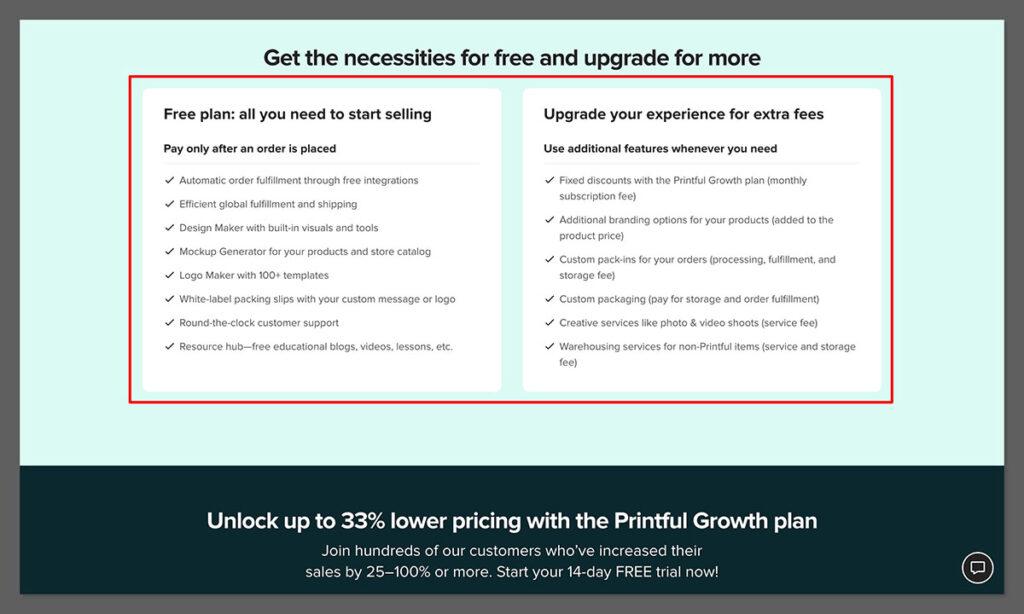
| Volume Discounts | N/A | Up to 33% off |
| Primary Markets | US, China | Global (12+ hubs) |
For a startup, the difference of $1.22 per shirt is negligible. However, for a brand moving 500 units a month, Printful’s "Growth" plan—which unlocks significant bulk discounts—can save thousands of dollars annually. Tapstitch, by comparison, offers no volume-based subscription incentives, betting instead on the higher perceived value of its premium apparel to justify the price point.
Quality Analysis: Where Tapstitch Gains Ground
The most frequent criticism of large-scale POD platforms is the "standardization trap." Because Printful prints millions of items, they prioritize speed and consistency across diverse surfaces. This can sometimes result in minor placement variances (0.5 to 1 inch).
Tapstitch, utilizing a vertically integrated production model, excels in what we call "Fashion Precision." Because they focus exclusively on apparel, their DTG (Direct-to-Garment) and DTF (Direct-to-Film) machinery is calibrated for the specific fabrics they offer. Users consistently report that Tapstitch’s white ink coverage on dark, heavyweight fabrics—a notoriously difficult task—is superior. For a brand where the hand-feel of the fabric is the primary selling point, Tapstitch is the objectively stronger choice.
Official Stance and Market Positioning
Both companies have clear target audiences.
Printful’s official stance centers on the "Growth Ecosystem." Their marketing emphasizes their API, their massive list of integrations (Amazon, TikTok Shop, eBay, etc.), and their "Quick Stores" feature. They are positioning themselves as the operating system for e-commerce. If your goal is to be a multi-channel seller, Printful is essentially the only choice that won’t require a custom-built, expensive backend.
Tapstitch’s strategy is "Brand-First." Their focus on custom neck labels and brand-forward packaging suggests they are courting the influencer-led clothing line. They don’t want you to feel like you are using a POD service; they want your customers to feel like they are buying from a boutique warehouse.
Strategic Implications: How to Choose
Choose Printful if:
- You are a Multi-Channel Seller: If you plan to sell on Amazon, TikTok, and your own Shopify site, Printful is mandatory.
- Global Reach is Priority #1: If you have customers in the EU, UK, or Australia, Printful’s distributed network is a massive advantage in terms of shipping speed and customs clearance.
- You Want Diversification: You want to test selling art prints, mugs, and embroidered hats alongside your apparel.
- You are Scaling: You intend to move high volumes and want to leverage their Growth Plan to minimize per-unit costs.
Choose Tapstitch if:
- You are a Fashion Purist: Your brand identity is built on the quality of the hoodie or tee. You want the heaviest, most premium blanks available.
- You Focus on "Drops": You are building a brand based on limited-edition fashion releases where the product finish is more important than the catalog size.
- Your Audience is Domestic: If your primary customer base is within the United States, you can leverage Tapstitch’s LA facility to provide fast, high-quality, domestic fulfillment.
- Branding is Your Key Differentiator: You need custom neck labels and professional, retail-ready packaging to justify a higher price point for your customers.
Final Verdict: The Scalability vs. Aesthetic Dilemma
Ultimately, the choice between Printful and Tapstitch is a choice between Logistics and Luxury.
Printful is the safer bet. It is the seasoned professional that will not let you down as you grow, providing the tools and integrations necessary to turn a side hustle into a global brand. It is the platform for the entrepreneur who views fashion as a data-driven business.
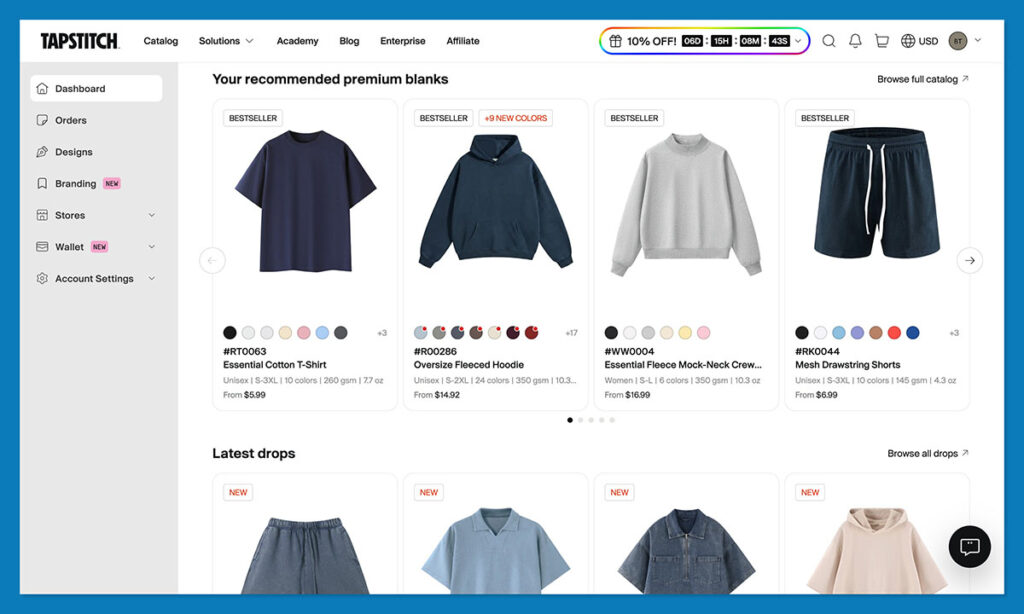
Tapstitch is the artisan’s choice. It is for the creator who is building a legacy brand and refuses to compromise on the physical quality of the product. While it lacks the wide-reaching integrations of its competitor, it provides a superior "in-hand" experience that can help a brand establish a premium reputation in a crowded market.
Our recommendation: If you are unsure, start with a sample from both. Order a heavy-weight hoodie from Tapstitch and an equivalent item from Printful. Feel the print, test the wash, and inspect the packaging. For many, the decision will be made the moment the package arrives on their doorstep. The data is clear: Printful wins on utility, but Tapstitch wins on identity.
