

The Pinterest Playbook: Essential Statistics and Strategy Insights for 2026
For years, Pinterest was dismissed as a mere "digital scrapbook"—a place for wedding planning and home decor inspiration. However, as of early 2026, that perception has shifted entirely. Today, Pinterest stands as a powerhouse of consumer intent, acting as a sophisticated, high-conversion visual search engine that brands can no longer afford to ignore.
With over 631 million monthly active users and an ecosystem built on discovery rather than social validation, Pinterest has carved out a unique space in the digital marketing landscape. This report breaks down the essential data, user trends, and strategic implications for brands looking to master the platform in 2026.

Main Facts: The State of Pinterest in 2026
The platform’s growth trajectory is undeniable. As of the first quarter of 2026, Pinterest hit a milestone of 631 million monthly active users (MAUs). This represents an 11% year-over-year increase, marking the tenth consecutive quarter of double-digit user growth. Unlike platforms struggling with saturation or declining engagement, Pinterest is steadily expanding its footprint.
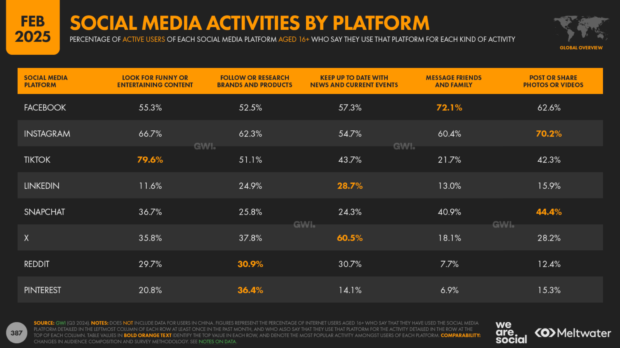
The platform is not merely growing in size; it is maturing in its utility. It has firmly established itself as a "discovery engine." Recent data reveals that brand and product research is the #1 use case for Pinterest users, significantly outperforming entertainment, news consumption, or casual messaging. When a user logs onto Pinterest, they are in a "doing" mindset—they are there to plan, research, and ultimately purchase.

A Chronological Look at Pinterest’s Evolution
To understand where Pinterest is going, we must look at how it has evolved from a niche hobbyist site into a commercial powerhouse:
- The Early Years (Foundation): Initially, Pinterest focused on "pinning" images, creating a static library of inspiration.
- The Pivot to Search (2020–2024): The platform began prioritizing search intent, introducing visual search capabilities and "Shop the Look" features. This period solidified the platform’s reputation as a safe, calm, and high-trust environment.
- The Commerce Era (2025–2026): Pinterest has successfully transitioned into a full-funnel marketing channel. With revenue crossing the $1 billion mark in Q1 2026 and a total annual revenue of $4.2 billion in 2025, the platform has proven that its "inspiring" nature translates directly to bottom-line results.
Supporting Data: Understanding the Audience
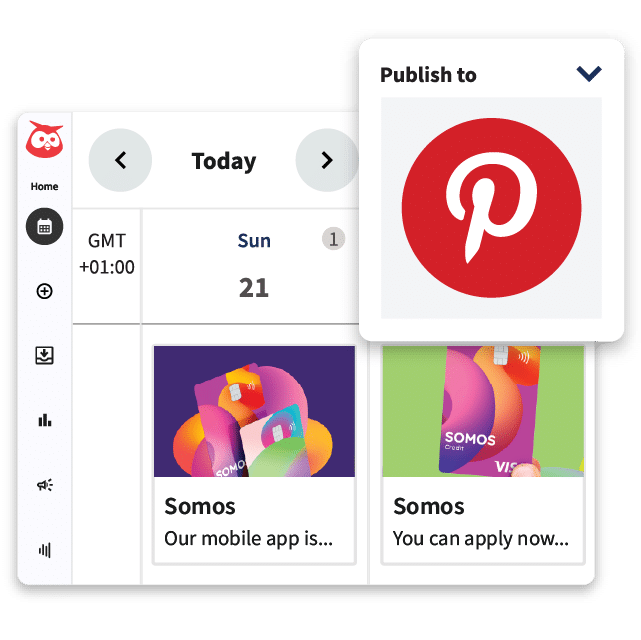
The demographic breakdown of Pinterest offers a distinct advantage for specific industries. While the platform is 70% female, its reach is broad, and its engagement is deep.
Demographic Breakdown
The gender skew is consistent across all age groups, with women leading in every bracket. However, the most significant trend is the rise of Gen Z. As the platform’s fastest-growing demographic, Gen Z is using Pinterest to "do their homework" on brands.
Global Reach and Penetration
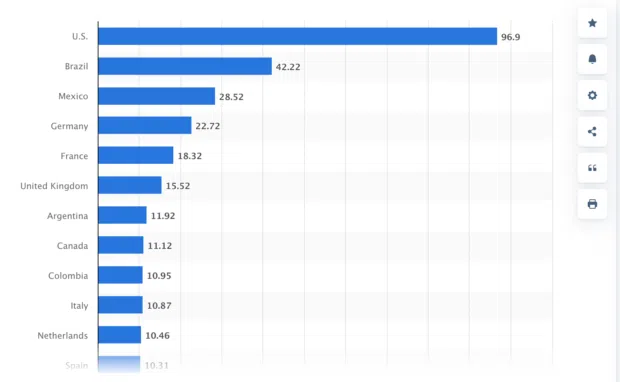
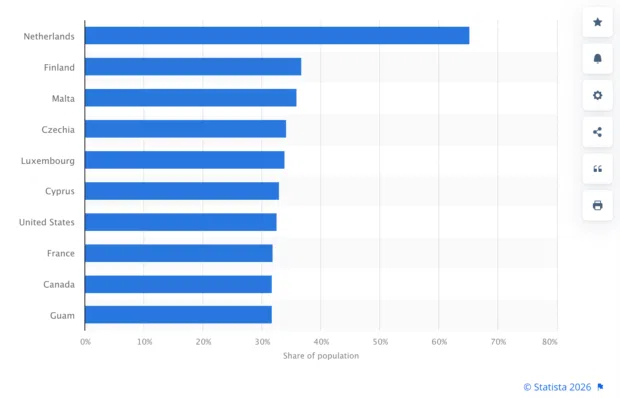
While the United States remains the largest market with 96.9 million users, the platform is seeing explosive growth internationally. The Netherlands currently leads the world in population penetration at 65.3%, followed by other European nations and Canada. Interestingly, Pinterest’s fastest ad revenue growth is now occurring outside of North America—specifically, a 59% jump in the "Rest of the World" category in Q1 2026.
Behavioral Benchmarks
The "Pinterest behavior" is distinct from the "scrolling behavior" seen on TikTok or Instagram:
- Purposeful Sessions: Users open the app an average of 2.8 times per day, but their time spent (10 minutes on average) is characterized by high intent.
- Search Engine Behavior: Users conduct over 80 billion searches every month.
- The "Save" Economy: Users save 1.5 billion Pins every week. Each "save" is a bookmark for a future purchase or project, giving branded content an exceptionally long shelf life compared to the ephemeral nature of a tweet or a story.
Official Perspectives and Market Position
Market analysts and the company itself emphasize that Pinterest is an "anti-interruption" platform. While other social networks rely on aggressive ad formats that disrupt the user experience, Pinterest integrates commercial content into the user’s discovery journey.
The "Unbranded" Advantage:
One of the most compelling statistics for marketers is that 96% of top searches on Pinterest are unbranded. This creates a level playing field. A small or midsize business (SMB) is not fighting for space against massive, pre-existing brand recognition; they are fighting to be the best answer to a user’s search query. This is why 25% of SMBs now utilize Pinterest for marketing, compared to only 20% of large enterprises.
Customer Satisfaction:
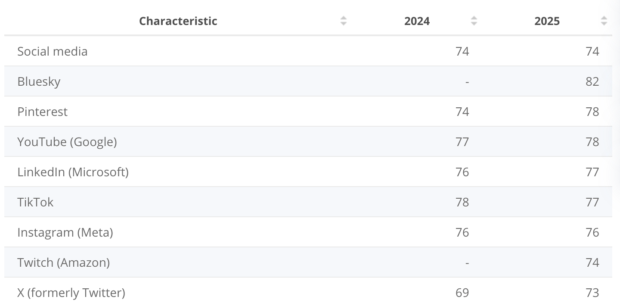
Pinterest consistently ranks higher in user satisfaction than its peers. According to the American Customer Satisfaction Index (ACSI), Pinterest scored a 78 in 2025, outperforming TikTok, Facebook, and Instagram. This high level of "goodwill" means that users are more receptive to brand content, viewing it as helpful rather than intrusive.

Strategic Implications for Marketers
If your brand is looking to capitalize on these trends, the following strategies are essential for 2026:
1. Optimize for Search, Not Just Aesthetics
Because Pinterest functions as a search engine, your SEO strategy must extend to your Pins. Use high-intent keywords in your pin titles, descriptions, and board names. When a user searches for "summer outfit ideas" or "living room renovation," your content should be the one that provides the answer.
2. Embrace the "Always-On" Posting Schedule
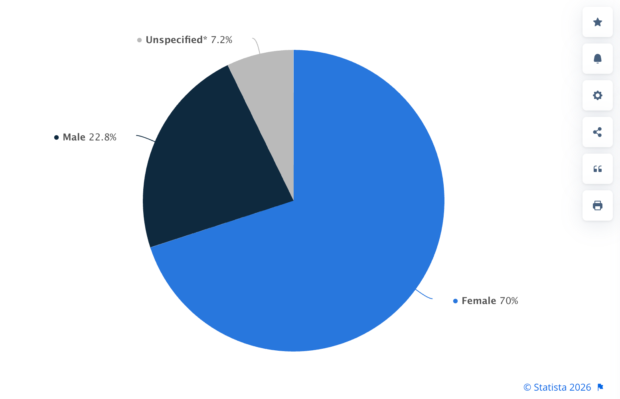
Consistency is rewarded by the Pinterest algorithm. Brands are now publishing an average of 10 posts per week—a 43% increase over 2024 levels. For optimal engagement, data suggests targeting 12 PM on Tuesdays and Fridays, though testing your specific audience’s habits is recommended.
3. Capitalize on the "Ready-to-Shop" Mindset
Pinterest users are 90% more likely to express readiness to shop compared to users on other platforms. Your strategy should move beyond brand awareness and include clear paths to purchase. Use "Product Pins" and ensure that your links take users directly to a seamless checkout experience. The 50% increase in clicks and saves on shoppable formats since 2025 suggests that the audience is increasingly comfortable with in-platform social commerce.
4. Leverage Low Costs for High ROAS
With an average cost-per-click (CPC) of $0.50 to $1.50, Pinterest remains one of the most cost-effective platforms for paid advertising. When compared to the rising costs of Meta and X, Pinterest offers a higher potential for Return on Ad Spend (ROAS), especially for luxury, home, and fashion brands.
Conclusion: The Path Forward
Pinterest has successfully transitioned from a quiet corner of the internet into a robust, high-intent marketplace. The data for 2026 is clear: the platform is growing, its users are ready to spend, and the competition for organic discovery remains manageable for brands that understand the nuances of visual search.
For marketers, the mandate is simple: stop treating Pinterest as an afterthought. Start treating it as a primary search engine. By aligning your brand with the "planning" mindset of the Pinners, you can tap into a highly engaged, affluent, and ready-to-buy audience that is actively looking for the products you provide.
As we move through 2026, those who prioritize high-quality, searchable content and a frictionless shopping experience will undoubtedly lead the pack in capturing this unique, high-intent traffic.
