
The New SEO Currency: Why Branded Search is the Ultimate Metric in the Age of AI
Originally published on the GrowthRocks blog by our Chief Strategist.
In the digital marketing landscape, not all search terms are created equal. For years, the industry obsession has been focused on the granular optimization of non-branded keywords—the generic terms that drive "cold" traffic to websites. However, a seismic shift in how search engines operate, accelerated by the rise of Large Language Models (LLMs) and AI Overviews, has fundamentally changed the value proposition of search traffic. To truly understand brand awareness and digital growth, marketers must stop viewing search as a monolith and start separating their data into two distinct buckets: branded and non-branded keywords.
The Google Curiosity Index: Measuring Brand Gravity
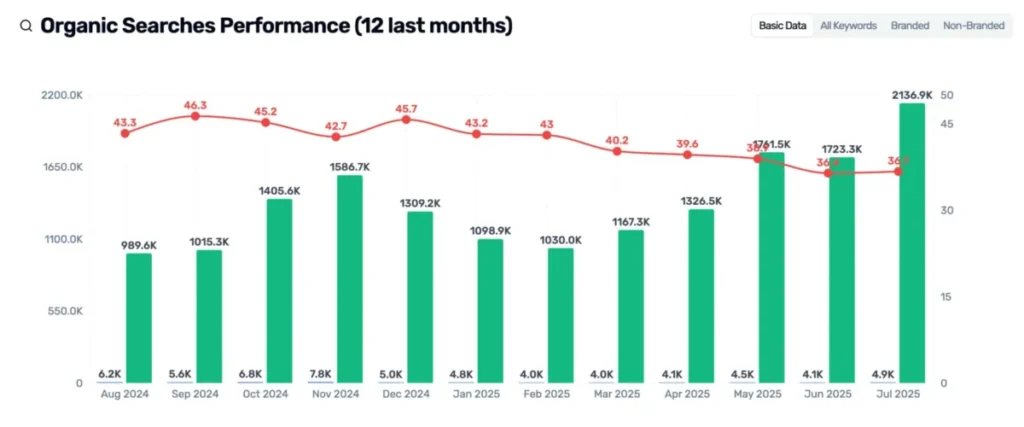
Before navigating the complexities of keyword attribution, it is essential to revisit a concept we have pioneered at GrowthRocks: the Google Curiosity Index. While not an official Google metric, it serves as a critical barometer for measuring brand health. By tracking the frequency with which users search for a brand name over time, the Curiosity Index acts as the missing link between traditional SEO performance and genuine brand impact.
This index is uniquely powerful because it captures the ripple effects of offline and non-SEO activities. When a company invests in high-level PR, industry events, or strategic partnerships, those efforts don’t always result in direct links, but they do manifest in the search bar. The Curiosity Index quantifies how these intangible investments transform into digital demand.
Defining the Battlefield: Branded vs. Non-Branded
To manage a modern SEO strategy, one must first understand the distinction between the two primary search categories.
Branded Keywords: The "High-Intent" Cohort
Branded keywords are those that include your company name, product names, or unique variations of your trademarked identity. These users are rarely "browsing"; they are searching with high intent. They have either encountered your brand through social media, heard about you from a colleague, or been influenced by your offline marketing efforts. These users are already in your orbit, and branded search is the metric that confirms you have successfully established "brand gravity."
Non-Branded Keywords: The "Discovery" Engine
Non-branded keywords are generic, category-level terms. If you sell project management software, your non-branded keywords are "best project management tools" or "agile software for teams." These are the terms where the SEO battle is truly fought. They represent the early stages of the buyer’s journey, capturing users who are looking for solutions rather than specific brands. Ranking for these terms is the primary objective of technical SEO and content marketing.
Attribution: Defining Accountability
The separation of these metrics is not merely a data-cleansing exercise; it is a necessity for corporate accountability. In many organizations, SEO teams are tempted to include branded traffic in their monthly reports to inflate performance metrics. This is a strategic error that obscures the truth.
- The Brand & PR Team’s Responsibility: Their mandate is to increase brand awareness. Their success should be measured by the growth of branded search volume—the Curiosity Index.
- The SEO Team’s Responsibility: Their mandate is to drive "net-new" traffic. Their success is measured by the growth of non-branded, intent-based keywords that bring fresh prospects into the funnel.
By blurring these lines, companies risk misallocating budgets. If an SEO team claims credit for branded searches, the company may fail to recognize that a recent PR campaign or a viral social media post—not the SEO team’s link-building efforts—is what actually drove the traffic.
The Post-AI Era: Why Branded Keywords are Now Paramount
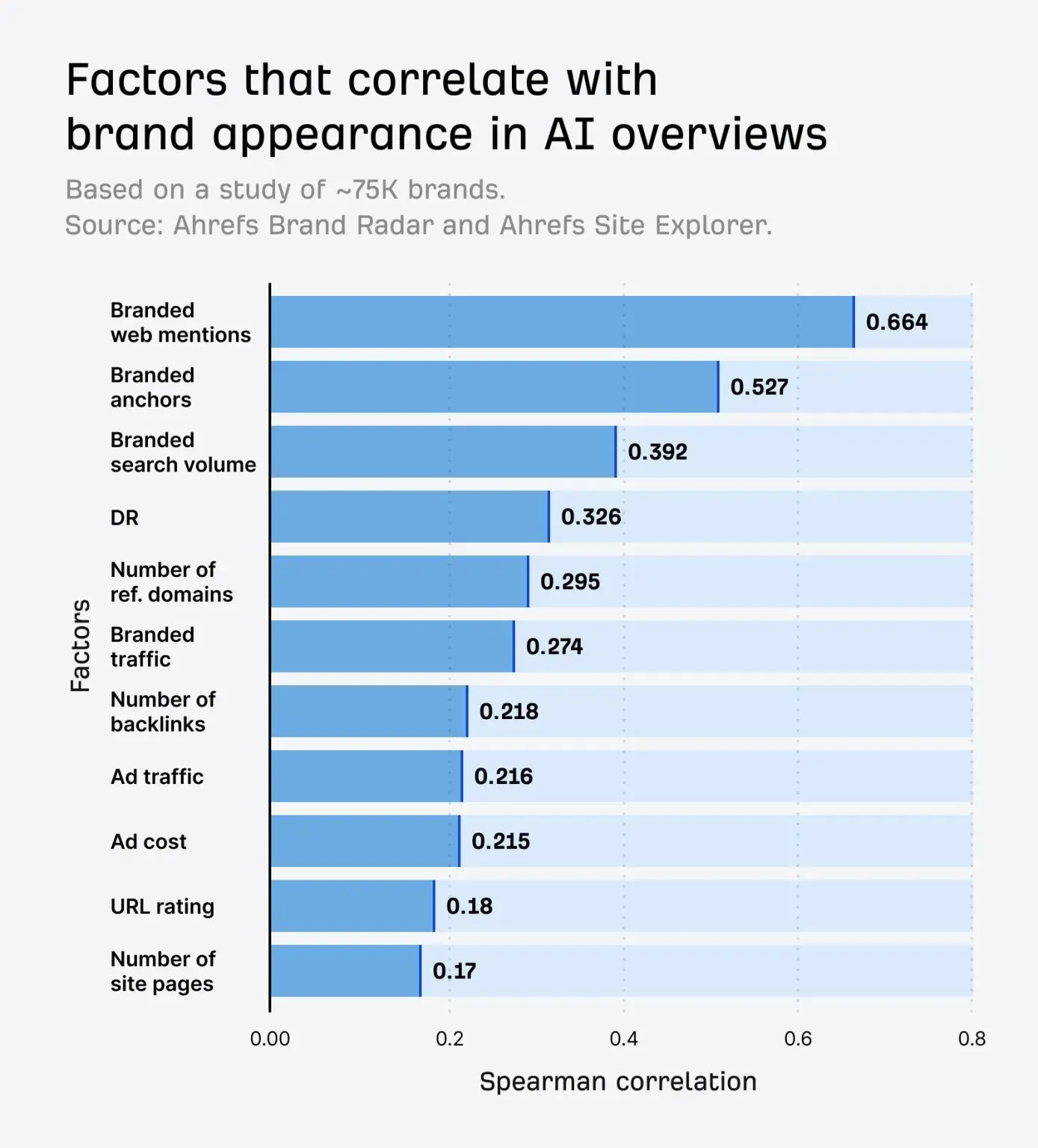
The most compelling argument for prioritizing branded search comes from the rise of AI-driven search experiences, such as Google’s AI Overviews, Perplexity, and ChatGPT. Recent studies, including research from Ahrefs, indicate that traditional SEO metrics like backlink counts and keyword density are becoming secondary to "brand signals" when it comes to appearing in AI-generated summaries.
Why LLMs Favor Known Entities
Large Language Models function like super-intelligent librarians who prefer "popular" sources. When an LLM generates an answer, it prioritizes entities with:
- High Search Volume: The algorithm assumes that if many people are searching for a specific brand, that brand is likely an authority.
- Consistent Contextual Association: The LLM looks for patterns where the brand is consistently mentioned alongside relevant industry terms.
- High Domain Authority: The model favors established, trusted domains that have a long history of being cited by other reputable sources.
In this context, branded keywords are not just a vanity metric; they are a shortcut to becoming an "AI-cited" authority. By building your brand, you are essentially training the model to trust your entity. You aren’t "gaming" the system; you are providing the AI with the consistent, high-trust data it was designed to prioritize.
Chronology of Search Evolution
- The Early 2000s: The "Wild West" era of SEO, where keyword stuffing and basic meta tags could secure top rankings.
- The 2010s: The era of content quality and backlinks. Google’s algorithms became sophisticated enough to penalize spam and reward high-quality, long-form content.
- 2023–Present: The AI Era. Search is no longer just a list of links; it is a summarized answer. In this phase, "Entity Authority"—driven by brand recognition—is the primary ranking signal.
Implications for Modern Strategy
This shift has immediate implications for how businesses should structure their marketing:
- Brand Awareness as an SEO Tactic: You can no longer separate brand marketing from SEO. Every dollar spent on awareness is, in effect, an investment in your search ranking.
- Domain Name Synergy: There is a powerful semantic tie between your brand name and your domain. If your brand is "GrowthRocks," your search traffic is naturally tied to your URL. This consistency creates a positive feedback loop for LLMs.
- The "URL Bar" Effect: Monitor Google Search Console for users typing your domain name into the search bar. This is a massive indicator of brand strength—it shows users perceive your brand as the primary way to navigate the internet.
Practical Implementation: Visualizing the Data
The primary obstacle for most teams is that Google Search Console (GSC) does not natively segment branded versus non-branded traffic. This creates a manual burden: marketers must export data, categorize thousands of keywords, and re-visualize them.
To address this, we have developed specialized frameworks and tools. Whether through custom Data Studio templates or our proprietary intelligence tool, os.growthrocks.com, the goal is to provide a clean, automated view of the brand-versus-intent split. By automating this, teams can move away from manual spreadsheets and toward real-time strategic decision-making.
Final Reflections: The Era of Brand Gravity
SEO is no longer just about ranking higher; it is about being remembered. In an ecosystem where AI provides the answers, the brands that achieve "gravity"—the ability to pull users toward their name without prompting—will be the only ones that thrive.
When a user types your name into Google, you have won the most important battle in marketing. You have converted a generic searcher into a loyal follower. That is not just SEO; that is the foundation of long-term business survival. If you are not tracking your brand awareness as closely as your keyword rankings, you are only seeing half the picture. The future belongs to those who recognize that while algorithms change, brand equity remains the ultimate competitive advantage.
