
The New Intelligence: How AI is Redefining Social Listening in 2026
In the hyper-accelerated digital landscape of 2026, the traditional act of "monitoring" social media—manually tracking mentions and reacting to tags—has become a relic of a bygone era. As the volume of global social data continues to explode, businesses are pivoting toward AI-powered social listening. This evolution represents a fundamental shift: moving from merely watching the conversation to deeply understanding the intent, emotion, and future trajectory of consumer sentiment.

The Evolution of Brand Perception
For decades, social listening was synonymous with keyword tracking. Marketing teams would set alerts for their brand name or product line, hoping to catch mentions before they spiraled into PR crises. However, this approach was reactive and inherently limited by human bandwidth.

Today, AI social listening functions as a proactive, high-speed analytical engine. By leveraging sophisticated Natural Language Processing (NLP), these systems scan millions of data points—not just text, but images, video, and audio—to identify patterns that would be invisible to the human eye. This is no longer just about tracking "what" is being said; it is about uncovering "why" it is being said and predicting what will be said next.
Chronology of a Data Revolution
The shift toward AI-integrated social intelligence did not happen overnight. The progression follows a clear technological timeline:
- Pre-2020: The Manual Era. Dominated by basic keyword tracking and manual sentiment analysis. Marketing teams spent hours reading through spreadsheets of comments.
- 2020–2023: The NLP Breakthrough. The rise of accessible Natural Language Processing allowed tools to move beyond exact matches. Machines began to understand basic sentiment (positive, negative, neutral) and account for misspellings.
- 2024–2025: The Multimodal Shift. The integration of "Visual Listening" changed the game. AI gained the ability to recognize logos, products, and even specific activities within images and video, capturing "un-tagged" brand mentions.
- 2026 and Beyond: The Predictive Frontier. We are currently in the era of generative and predictive intelligence. Systems now utilize historical data to forecast trends, anticipate crisis risks, and suggest strategic pivots before a trend even hits its peak.
The Data-Driven Advantage: Why AI Wins
The superiority of AI-powered listening over traditional methods is statistically significant. According to recent industry reports, 83% of B2C marketing executives are now prioritizing the consolidation of these insights into centralized dashboards.

The differences are stark:
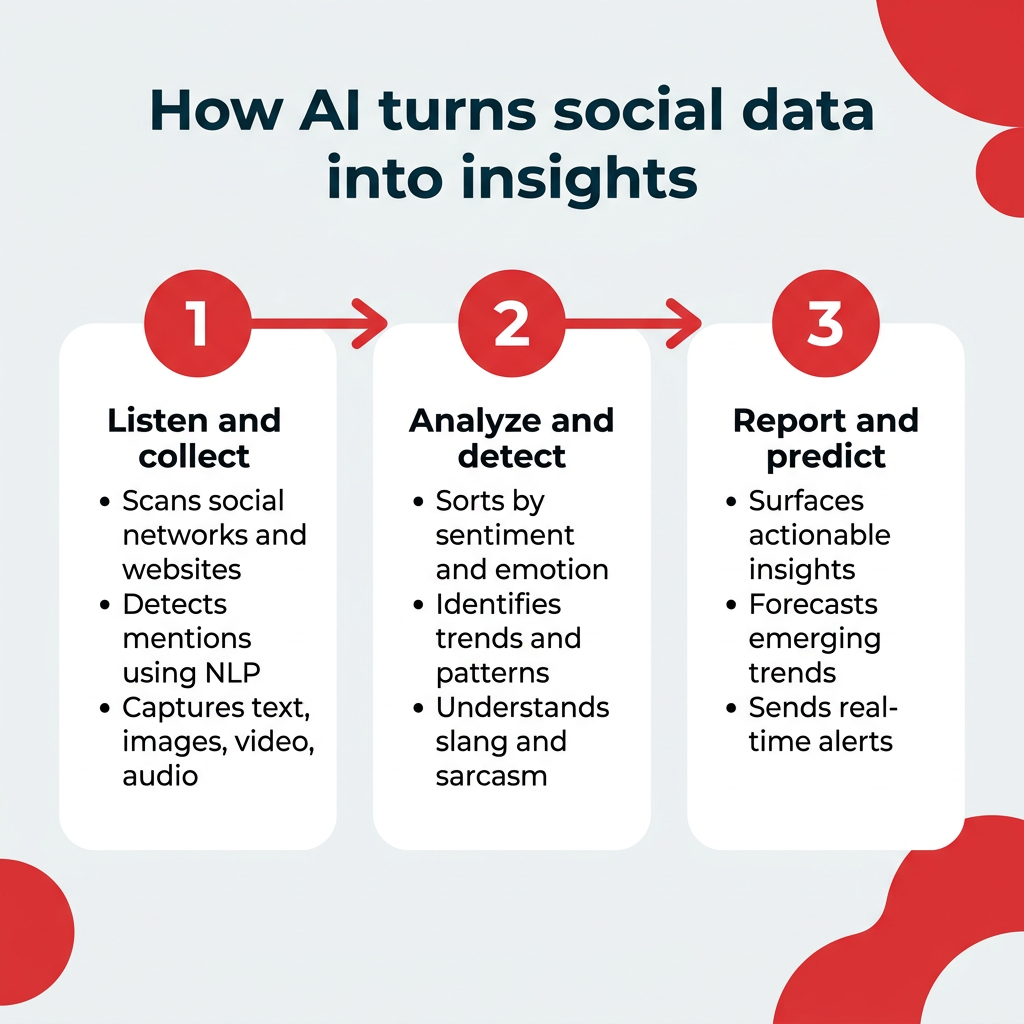
- Contextual Nuance: Traditional tools struggle with sarcasm and slang. AI models are trained on billions of conversational data points, allowing them to detect the difference between a user calling a product "sick" (slang for excellent) versus a technical complaint.
- Multimedia Intelligence: While legacy systems were "text-blind" to images, modern platforms like Talkwalker and YouScan can identify a company logo appearing in the background of a viral TikTok, even if the brand is never mentioned in the caption or text.
- Proactive vs. Reactive: Where old tools alerted teams to a crisis after the damage was done, predictive analytics now flag "anomalies"—unusual spikes in negative sentiment or sudden shifts in keyword associations—giving brands a window to intervene before a situation escalates.
Case Study: The NBA’s Strategic Pivot
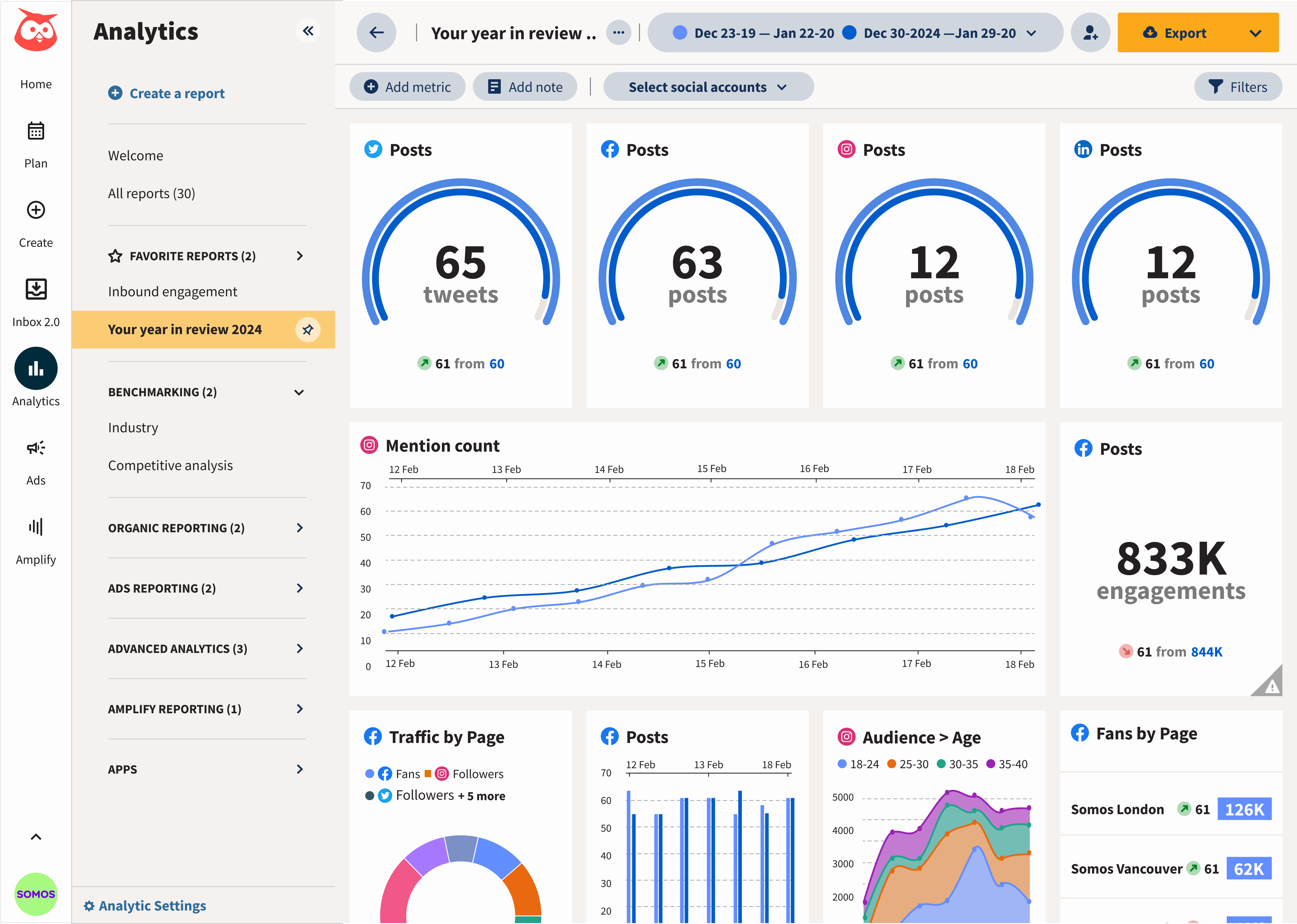
The real-world implications of these tools are best illustrated by their impact on large-scale organizations. An NBA team recently utilized AI-powered reporting to revitalize their fan engagement strategy. By analyzing years of historical data, the organization’s social team discovered that fans were growing fatigued by repurposed game clips.

The AI surfaced a clear demand for "authentic, behind-the-scenes" content. Following these insights, the team shifted its content strategy to focus 50-80% on original, unpolished footage. The result was a 352% increase in video views season-over-season and a 46% growth in total impressions. This demonstrates that AI is not just a defensive tool for crisis management; it is a creative engine for growth.
The Six Pillars of AI-Enhanced Marketing
For the modern marketer, AI social listening serves six critical functions that directly impact the bottom line:
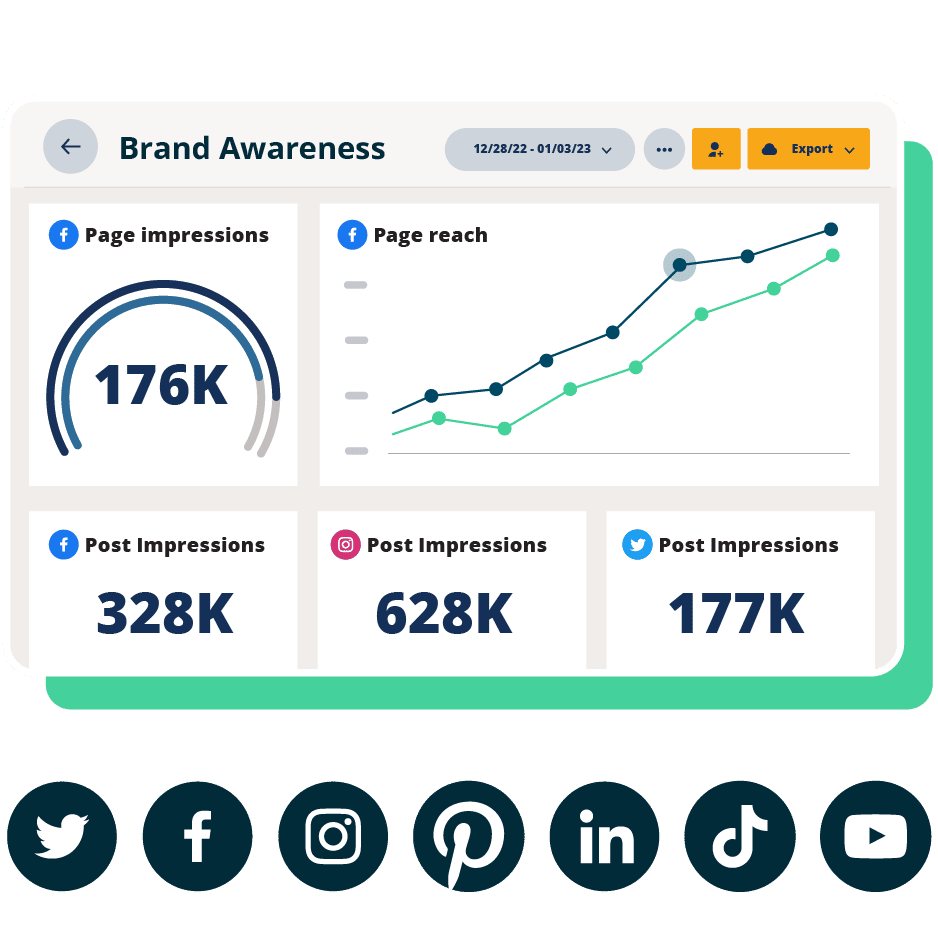
1. Brand Awareness and Visual Detection
AI identifies brand presence in places where the brand hasn’t been explicitly tagged. This ensures that every mention—whether in a meme, a podcast, or a video—is accounted for, providing a holistic view of brand health.

2. Crisis Mitigation
By monitoring real-time sentiment shifts, brands can identify a potential PR storm in its infancy. Real-time alerts allow for immediate, calculated responses, turning potential liabilities into opportunities for transparent communication.

3. Market Opportunity Discovery
AI scans niche communities and emerging forums to spot trends early. Whether it is a growing interest in sustainable packaging or a sudden demand for a specific product feature, these tools act as a radar for future market shifts.
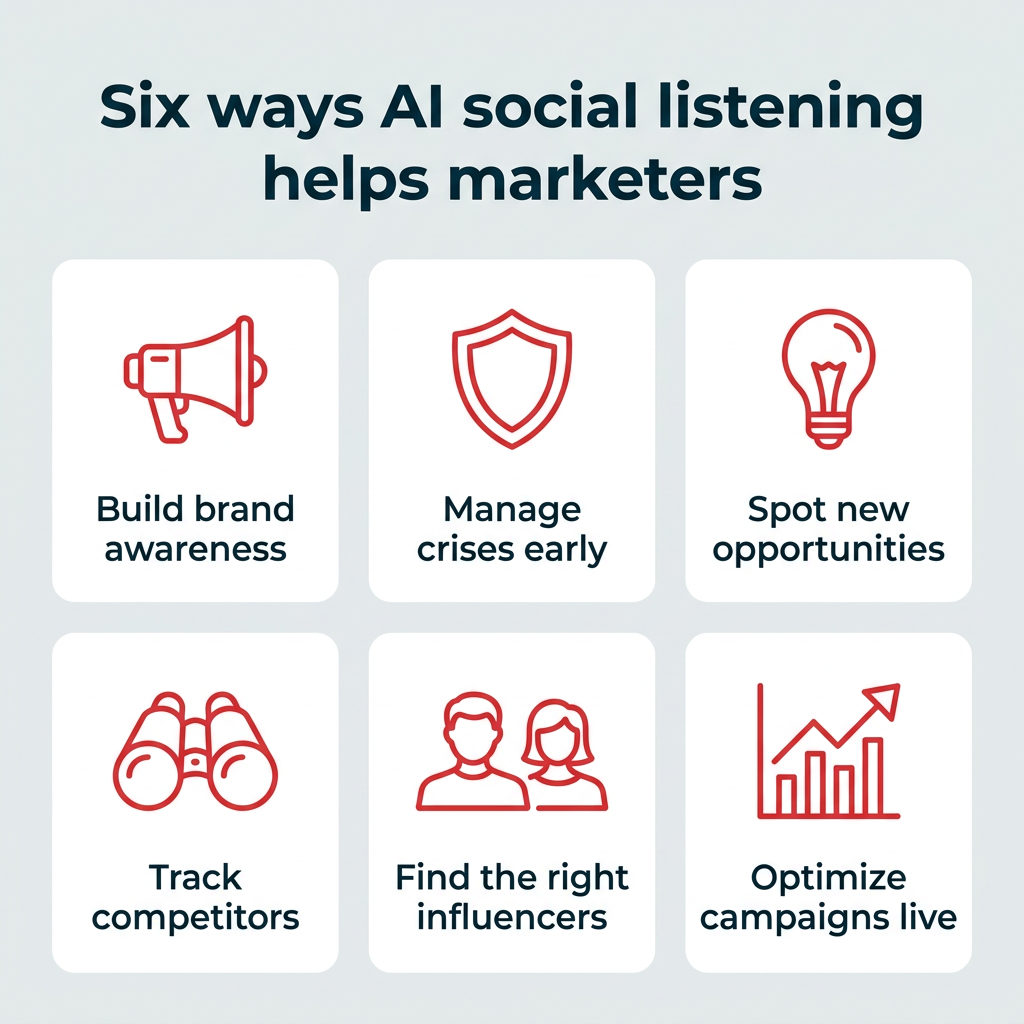
4. Competitive Intelligence
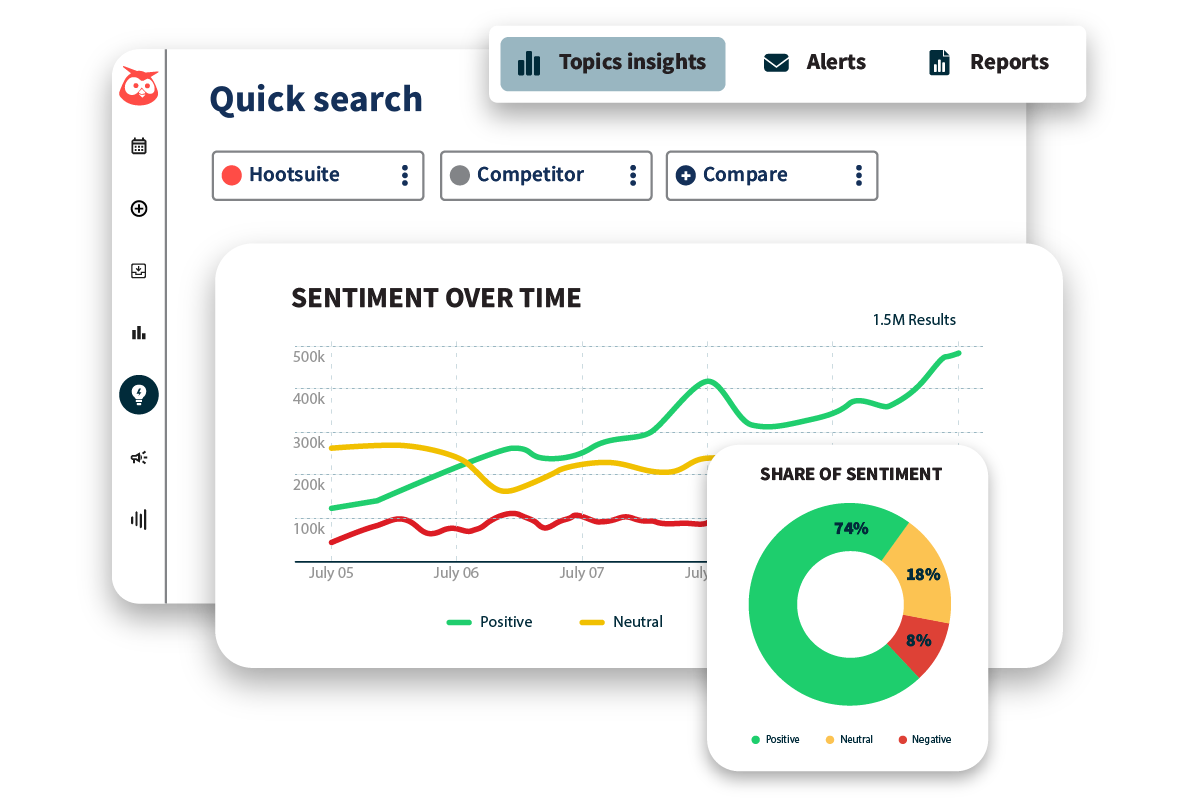
Understanding your share of voice is crucial. AI tools benchmark your brand’s performance against competitors in real-time, analyzing messaging strategies and flagging when a rival launches a campaign that is gaining traction.

5. Precision Influencer Marketing
Instead of relying on vanity metrics like follower count, AI analyzes engagement, reach, and audience relevance. This ensures that influencer partnerships are built on data-backed compatibility, significantly increasing ROI.

6. Real-Time Campaign Optimization
Marketing campaigns are no longer static. With AI, teams can tweak hashtag usage, messaging, or creative elements while a campaign is live, based on immediate feedback loops from the target audience.

Addressing the Challenges of Big Data
Despite the clear benefits, the implementation of AI listening is not without its hurdles. The "Firehose Problem"—where systems are overwhelmed by irrelevant noise—remains a concern.

Modern platforms address this through sophisticated AI Query Builders. By using machine learning to refine search parameters, these tools filter out the noise and prioritize high-signal conversations. Furthermore, the challenge of interpreting human emotion is being met with advanced NLP models that continue to improve as they are trained on increasingly diverse linguistic datasets.

Evaluating Your Tech Stack: A Buyer’s Guide
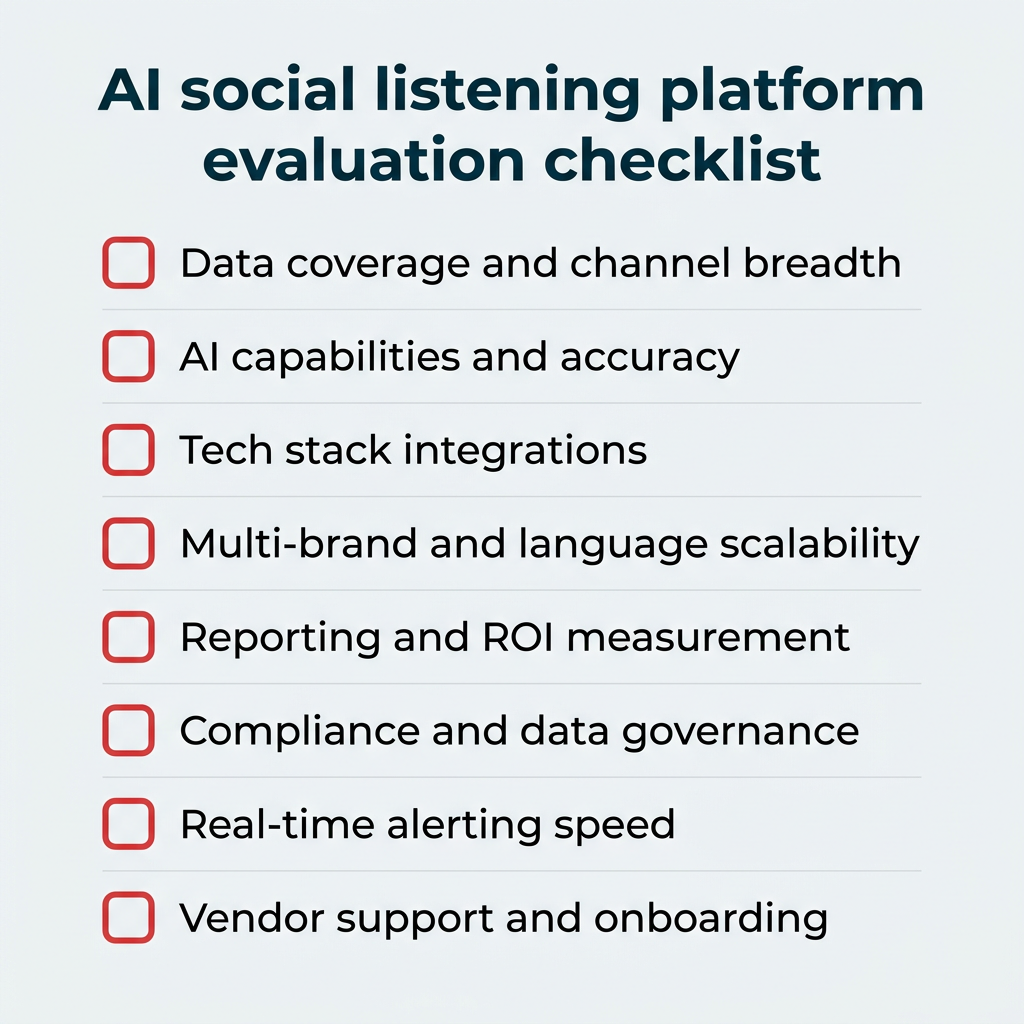
As organizations look to invest in AI-powered listening, the marketplace is crowded. For enterprise-level buyers, the evaluation should focus on three primary criteria:

- Data Breadth: Does the tool monitor not just major social networks, but also forums, podcasts, and global news sites?
- Integrations: Can the insights be exported into your existing CRM or customer support systems to create a unified view of the customer journey?
- Customization: Can the AI be trained on your brand’s specific vernacular, industry jargon, and unique business goals?
The Future: From Listening to Acting
The transition to AI-powered social listening is essentially a transition toward better decision-making. In a world where budgets are tightening and marketing efficiency is paramount, the ability to replace guesswork with concrete, real-time intelligence is the ultimate competitive advantage.
As we look toward the remainder of 2026, the question is no longer whether a brand should use AI for social listening, but how quickly they can integrate these insights into their broader business strategy. By listening to the "room" rather than just one person, brands can transform the chaos of the internet into a clear, actionable roadmap for long-term growth.

For marketing teams ready to scale, the tools are already here. The challenge lies in how effectively your team can translate these automated insights into human-centric, resonant brand experiences.
