
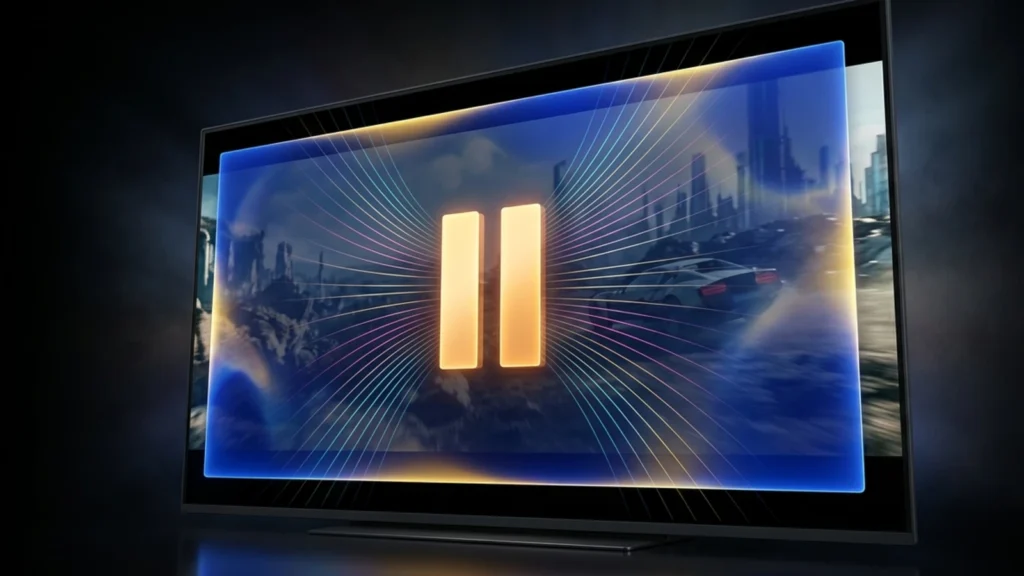
The Attention Revolution: New Benchmarks Validate Programmatic CTV Pause Ads as a Performance Powerhouse
Byline: Industry Insights Desk
Date: June 17, 2026
In the rapidly evolving landscape of Connected Television (CTV), the battle for the viewer’s focus has reached a new inflection point. As traditional interruptive ad models face mounting pressure from ad-skipping behaviors and viewer fatigue, a new, non-intrusive format is gaining significant momentum: the CTV pause ad.
On June 17, 2026, WunderKIND Ads released a landmark study—the first of its kind—establishing comprehensive measurement benchmarks for programmatic CTV pause ads. Leveraging second-by-second attention data from TVision, the analysis reveals that pause-triggered advertising captures nearly twice the viewer attention of standard 60-second CTV video spots across 15 diverse industry verticals.
This data arrives at a critical juncture for media planners, offering the first large-scale, cross-vertical validation of a format that promises to redefine how brands engage with audiences in the living room.
The Core Finding: Moving Beyond "Served" to "Seen"
For years, the advertising industry has relied on "ad delivery" as the primary currency of success. However, in the fragmented world of streaming, a served ad does not guarantee a viewed ad. By partnering with TVision—a leader in person-level, second-by-second attention measurement—WunderKIND Ads has bridged this gap.
The study, which analyzed millions of programmatic impressions across premium publishers such as Dish, Philo, and Plex, utilizes TVision’s passive, in-home panel technology. This system captures "eyes-on-screen" attention, co-viewership, and in-room presence, moving the conversation from technical delivery to actual human engagement.
The results are stark: across all 15 verticals tested, pause ads delivered nearly double the attention time of standard 60-second CTV video spots. In an era where attention is the most scarce resource in marketing, these findings suggest that the "pause" moment—a self-initiated break by the viewer—represents a high-value window of receptivity that traditional, content-interruptive ads simply cannot replicate.
Chronology of an Industry Shift
The rise of the programmatic pause ad did not happen overnight. It is the result of a coordinated effort to standardize a format that was once relegated to niche, direct-sold deals.
- July 2025: WunderKIND Ads launches its programmatic CTV pause ad product, pioneering a new way to access premium inventory via Private Marketplaces (PMPs). This launch, supported by PubMatic as the exclusive SSP, marked the transition of the format from manual insertion orders to automated, addressable buying.
- September 2025: A high-profile Zales campaign on Xumo Play demonstrates the format’s potential for direct response, achieving a 276% increase in QR code scans compared to traditional CTV benchmarks.
- December 2025: The IAB Tech Lab releases a comprehensive CTV ad format portfolio for public comment, officially formalizing technical standards for pause ads, screensavers, and in-scene overlays, signaling their maturation as industry-standard assets.
- March – May 2026: The broader attention economy accelerates. OpenX and TVision launch pre-bid attention targeting; xpln.ai and TVision partner to scale cross-channel attention data; and in May, Viant Technology closes its acquisition of TVision, integrating granular attention signals directly into the buy-side workflow.
- June 17, 2026: WunderKIND Ads publishes its multi-vertical benchmark study, providing the foundational data needed for planners to confidently integrate pause ads into omnichannel strategies.
Category-Level Breakdown: Data at Scale
The WunderKIND Ads study provides a granular look at how different industries benefit from the pause format. By comparing these figures to the standard 60-second CTV spot, the disparity in performance becomes clear.
The Top Performers
- Automotive: Generating 34.2 seconds of Attention Time compared to 12.2 seconds for standard video (+180.3%).
- Technology: Achieving 33.3 seconds versus 12.8 seconds (+160.2%).
- Restaurants: Delivering 34.0 seconds versus 13.5 seconds (+151.9%).
These figures are not statistical anomalies. The consistency across 15 verticals indicates that the format’s success is rooted in the user experience. Because the ad appears only when the user voluntarily pauses their content, the advertising is viewed as a natural accompaniment to the viewer’s break, rather than an intrusive interruption to their narrative flow.
Official Perspectives: The "User-First" Philosophy
Industry leaders view this development as a move toward a more sustainable and effective advertising ecosystem.
Adam Gendelman, VP and Head of Sales, Supply and Operations at WunderKIND Ads, emphasizes the significance of the shift. "We’re moving into the next phase of CTV advertising," Gendelman noted. "User-first formats are undoubtedly more effective than the historical foundation of interruptive fifteen- and thirty-second video spots. This scale of measurement analysis makes it incredibly valuable to the industry at large."
Yan Liu, CEO of TVision, highlighted the methodological rigor behind the study: "Attention is an important signal for understanding the quality of CTV ad experiences. This study utilizes our industry-leading, second-by-second attention data to better understand how viewers engage with Wunderkind’s custom pause ad formats."
Implications for Media Planning and Strategy
The availability of these benchmarks changes the calculus for media buyers and brand teams in several meaningful ways.
1. Re-evaluating Frequency and CPMs
If a 30-second pause ad captures three times the attention of a 60-second standard spot, the traditional CPM-based evaluation of "cost per impression" is insufficient. Planners must now consider "cost per second of attention." This allows for more precise frequency planning and smarter budget allocation.
2. Creative Strategy
The format demands a shift in creative execution. As pause ads often utilize static or lightly animated imagery—frequently incorporating QR codes for direct action—creative teams must prioritize clear, high-impact visuals that resonate within the pause window. The Zales campaign proved that when paired with a clear call to action, the pause ad acts as a bridge between brand awareness and lower-funnel conversion.
3. The End of the "Interruptive" Era
The IAB Tech Lab’s move to standardize pause ads, alongside the proliferation of the format across major platforms like The Trade Desk, Magnite, and YouTube, indicates that the industry is moving away from the "captive audience" model. In this new paradigm, the viewer’s voluntary interaction with the content—pausing to grab a drink or check a phone—is where the brand makes its connection.
The Road Ahead: Limitations and Future Growth
While the WunderKIND Ads study is a watershed moment, it is important to contextualize its scope. The data is derived from campaigns executed within the WunderKIND Ads ecosystem. As the format matures, the industry will require broader, cross-SSP benchmarking to determine how variations in publisher mix, creative quality, and platform UI affect attention metrics.
Furthermore, the integration of TVision into the Viant DSP ecosystem raises questions about how "attention data" will be accessed in the future. Will independent, third-party studies continue to define these benchmarks, or will attention metrics become an embedded, proprietary layer of the buying process?
Despite these questions, the trajectory is clear. The pause ad has graduated from an experimental tactic to a core component of the modern CTV toolkit. As media planners look toward the second half of 2026, the data provided by WunderKIND Ads offers a roadmap for moving beyond the noise, helping brands secure that most elusive of all digital commodities: the focused, voluntary attention of the consumer.
As the industry continues to refine these benchmarks, one thing remains certain: the "pause" is no longer just a break in the action—it is the most important moment in the commercial break.
