

The New Frontier of Social Commerce: How TikTok Shop is Redefining Affiliate Marketing in Asia
In the rapidly evolving landscape of digital commerce, the intersection of entertainment and purchasing power has created a new gold rush for affiliate marketers. TikTok Shop, the integrated e-commerce arm of the short-form video giant, has emerged as a powerhouse, particularly within Asian markets. By collapsing the sales funnel—allowing users to discover products via content and complete transactions without ever leaving the application—TikTok Shop is fundamentally altering consumer behavior.
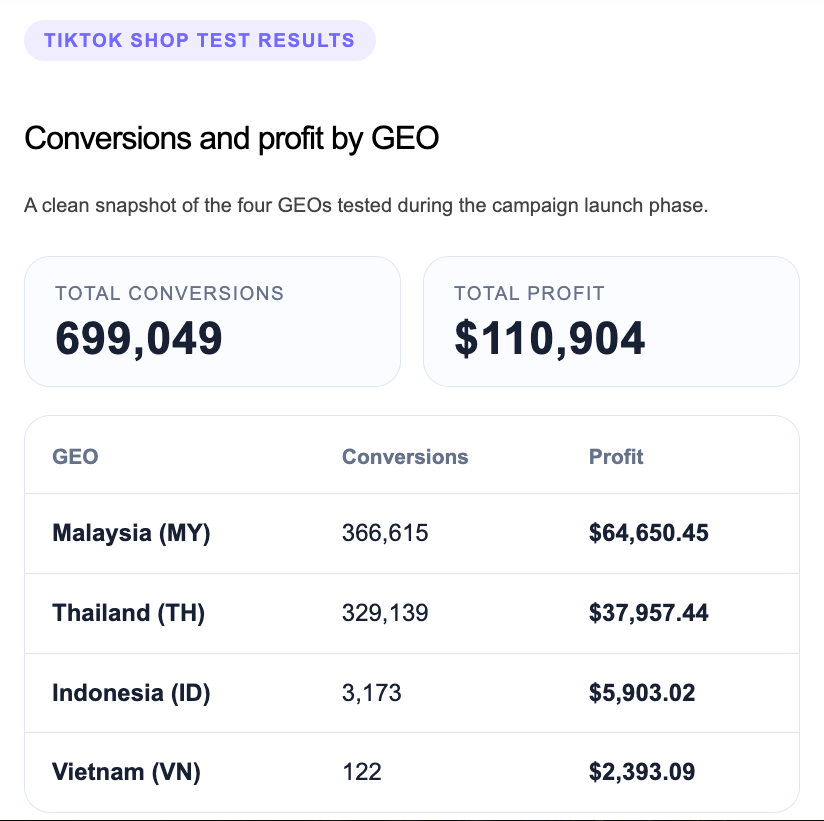
A groundbreaking case study recently published by PropellerAds highlights the immense potential of this ecosystem, revealing how one savvy advertiser leveraged non-traditional traffic sources to generate over 699,000 conversions and $110,000 in profit during the first quarter of 2026. This success story serves as a masterclass for performance marketers looking to bridge the gap between high-intent social traffic and scalable e-commerce offers.
The Genesis of a High-Conversion Campaign
The campaign in question was not a product of luck, but rather a meticulously structured experiment in audience acquisition. By targeting specific Asian markets—namely Malaysia, Thailand, Indonesia, and Vietnam—the advertiser aimed to tap into regions where social commerce is not just an alternative, but the primary method of digital consumption.
The campaign utilized a sophisticated blend of traffic acquisition methods available through the PropellerAds platform. By diversifying their approach, the advertiser was able to capture a wide net of potential customers while simultaneously refining their strategy through data-driven bidding.
Strategic Infrastructure
- Target GEOs: Malaysia, Thailand, Indonesia, and Vietnam.
- Traffic Formats: Popunder traffic, CPA Goal bidding, SmartCPM, and High Intent CPM.
The methodology prioritized a broad-testing phase before scaling. Rather than attempting to optimize for granular metrics on day one, the team employed "Run-On-Network" (RON) campaigns. This initial stage acted as a data-collection engine, gathering critical insights into which devices, traffic sources, and demographics were showing the highest affinity for TikTok Shop products.
Chronology of Execution: From Broad Testing to Optimization
The success of this campaign was rooted in a disciplined, phased approach. Understanding the flow of these operations provides a blueprint for any affiliate marketer aiming to scale in the social commerce sector.
Phase 1: The Discovery Period (Weeks 1–3)
The campaign began with a "broad net" strategy. The objective was not immediate profitability, but rather the accumulation of conversion signals. By casting a wide net across the four target GEOs, the advertiser identified patterns in user behavior. They observed which product categories resonated most strongly with specific populations—gadgets in Malaysia, for instance, versus beauty products in Indonesia.

Phase 2: Signal Identification (Weeks 4–6)
Once the data pool reached statistical significance, the campaign shifted. The team identified the "High Intent" traffic pockets. They began pruning underperforming zones and devices, focusing the budget on the traffic sources that demonstrated the highest conversion propensity. This phase was characterized by the transition from broad CPM bidding to more targeted CPA (Cost Per Acquisition) goals, ensuring that every dollar spent was tied directly to a tangible conversion.
Phase 3: The Scaling Phase (Weeks 7–12)
With the optimization rules firmly in place, the advertiser began to scale. By automating the bidding process through PropellerAds’ SmartCPM technology, the campaign could automatically adjust to market fluctuations, ensuring the advertiser remained competitive in real-time auctions without overpaying for ad inventory. This phase resulted in the peak performance that saw conversion rates hitting as high as 10% in top-performing regions.
Supporting Data: By the Numbers
The metrics derived from the PropellerAds case study provide a compelling argument for the efficacy of integrating alternative traffic sources with social commerce platforms.
The financial performance was anchored by an exceptionally lean acquisition cost. Throughout the quarter, the advertiser maintained a Cost Per Acquisition (CPA) range between $0.04 and $0.20. When combined with a conversion rate peaking at 10%, the resulting Return on Ad Spend (ROAS) proved highly sustainable.
| Metric | Performance Range |
|---|---|
| Total Conversions | 699,000+ |
| Total Profit | $110,000+ |
| CPA (Cost Per Acquisition) | $0.04 – $0.20 |
| Conversion Rate | Up to 10% |
The performance in Malaysia and Thailand stood out as particularly robust. These regions benefitted from a high concentration of mobile-first users who were already conditioned to the TikTok Shop interface, thereby reducing the "friction to checkout" that often plagues traditional e-commerce funnels.
Implications for the Affiliate Marketing Industry
The broader implications of this success story are significant. For years, the affiliate marketing industry has relied heavily on traditional social media advertising (Meta, Google). However, the rising costs and saturated environments of these platforms have pushed marketers to seek alternative pathways.
The Death of Friction
The primary driver of this success is the "in-app" purchase capability. In traditional affiliate marketing, a user is redirected from an ad to a landing page, then to a checkout page. Each "redirect" represents a drop-off point where potential revenue is lost. TikTok Shop eliminates these barriers. When a user clicks a product tag, they remain in the ecosystem they trust. For categories like fashion, impulse gadgets, and lifestyle products, this seamless flow is the difference between a "browse" and a "buy."
The Resurgence of Alternative Traffic
The study also validates the role of non-standard traffic sources like Popunders and Push notifications. While often dismissed by brand-conscious advertisers, these formats—when executed with precision and high-intent targeting—provide a cost-effective way to scale traffic that would be prohibitively expensive on primary social networks.
Expert Analysis: Why This Strategy Works
Bogdan Rancea, a seasoned veteran with over 12 years in the digital commerce space, notes that the success of this campaign is a reflection of a shift in consumer psychology.
"We are moving away from ‘search-based’ intent and toward ‘discovery-based’ intent," says Rancea. "When a user is on TikTok, they are in a discovery mindset. If the product is presented organically within their feed, the friction is almost zero. The PropellerAds case study proves that when you pair this high-intent environment with data-optimized traffic, you can achieve scale that was previously impossible for smaller affiliate operations."
Rancea emphasizes that for the modern affiliate, the strategy is no longer just about picking the right offer. It is about "environment orchestration"—ensuring the traffic source matches the psychological state of the user.
Future Outlook: Navigating the Social Commerce Wave
As TikTok Shop continues to expand into new territories, the lessons learned from the Asian markets will be invaluable for global affiliates. The ability to pivot between broad, data-gathering campaigns and hyper-optimized, high-intent targeting is the new standard for digital success.
For those looking to replicate these results, the path forward involves three clear steps:
- Audience Segmentation: Utilize broad testing to understand the cultural nuances of your target GEOs.
- Friction Reduction: Prioritize offers that allow for in-app or simplified checkout processes.
- Technological Integration: Leverage automated bidding tools (such as SmartCPM or CPA Goal) to manage the volatility of real-time bidding markets.
As the lines between content consumption and retail continue to blur, the affiliates who succeed will be those who view their campaigns not as advertisements, but as part of the content experience itself. The data from the first quarter of 2026 is clear: the future of affiliate marketing is social, it is mobile, and it is happening inside the shop.
