
The MapQuest Renaissance: How Bold Values-Driven Strategy Revived a Forgotten Giant
By Global Tech & Business Correspondent
Published: October 2026
Main Facts: The Unlikely Resurgence of MapQuest
In a digital navigation landscape long dominated by tech behemoths like Google Maps, Apple Maps, and Waze, a relic of the early internet era has executed a stunning, improbable comeback. MapQuest, once an afterthought for modern smartphone users, has rocketed to the top of the app store charts, pulling in millions of new downloads in a matter of weeks.
This dramatic reversal of fortune was not fueled by a breakthrough in routing algorithms, satellite imagery, or artificial intelligence. Instead, MapQuest’s sudden resurgence is the result of a high-stakes, values-driven corporate strategy. By taking firm, public stances on contentious cultural and geopolitical issues—specifically, mass surveillance and national identity—the brand tapped into a powerful undercurrent of consumer sentiment.
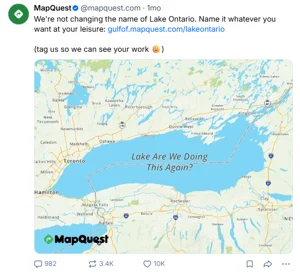
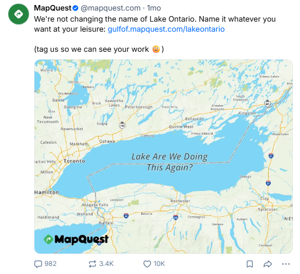
The strategy crystalized in two major moves. First, MapQuest announced a novel map layer designed to track and display the exact locations of mass surveillance devices, such as Flock automated license plate reader cameras, within local neighborhoods. This followed a high-profile September decision in which MapQuest resisted political pressure, refusing to comply with a U.S. presidential executive order that demanded the renaming of Lake Ontario to "Lake America"—a capitulation made by several rival map applications.
These calculated stances struck a chord with a public increasingly wary of corporate compliance, government overreach, and data privacy erosion. According to recent data from Forrester’s Total Experience benchmark study, value alignment is one of the most potent conversion drivers in the modern marketplace. Consumers are no longer looking merely for functional utility; they are demanding that the brands they patronize reflect their personal ethical frameworks.
Yet, as MapQuest basks in its newfound viral popularity, industry analysts are raising a critical question: Can a brand built on a wave of temporary outrage and values-driven conversion sustain its momentum over the long term?
Chronology of a Comeback: How MapQuest Climbed the Charts
To understand MapQuest’s sudden return to the cultural zeitgeist, it is necessary to retrace the timeline of the events that transformed a dormant application into a viral sensation.
September 2026: The Lake Ontario Stand
The turning point for MapQuest began in early September, following an executive order issued by U.S. President Trump that mandated federal agencies—and strongly encouraged domestic entities—to refer to Lake Ontario as "Lake America." While several mainstream digital mapping and navigation services quickly updated their interfaces to align with the administrative directive, MapQuest publicly announced it would maintain the historical designation of Lake Ontario.
The decision made MapQuest an immediate outlier. Industry watchers predicted backlash, but the opposite occurred. Rather than alienating its user base, the company’s defiance resonated deeply with consumers opposed to government-mandated rebranding and geopolitical posturing. Public polling later revealed that 63% of Americans opposed renaming the lake, placing MapQuest’s corporate stance squarely in line with the majority of the population. The controversy generated intense media coverage, introducing MapQuest to a younger generation of consumers who may have only known the service as an archaic punchline.
Late September 2026: Exposing the Watchful Eye
Capitalizing on its newly minted reputation as an independent-minded alternative, MapQuest doubled down on its anti-surveillance positioning a few weeks later. The platform rolled out a specialized map layer designed to highlight the locations of known mass surveillance apparatuses, most notably Flock safety cameras, in neighborhoods across the country.
The feature addressed a mounting anxiety over automated surveillance, tracking, and the steady erosion of public privacy. By providing transparent, actionable data on where citizens are being monitored, MapQuest positioned itself not just as a mapping tool, but as a privacy-first advocate for the everyday driver. This feature release sent shockwaves through the tech sector, triggering a massive surge in app store downloads that propelled MapQuest past its multi-billion-dollar competitors on both iOS and Android charts.
Supporting Data: Why Consumers Chose MapQuest
MapQuest’s viral growth is not an isolated marketing anomaly; it is a textbook illustration of modern consumer behavior quantified by extensive empirical research.
According to insights extracted from Forrester’s Total Experience (TX) benchmark study, one of the most powerful drivers of conversion across diverse industries and geographic regions is the consumer perception that a brand "represents values that are aligned with my own."
The quantitative reality of this driver is staggering:
- In the United States: Consumers are 8.4 times more likely to purchase from or engage with a brand if they perceive that its corporate values align with their personal beliefs.
- In Canada: The effect is even more pronounced, with Canadian consumers being 11.6 times more likely to convert when values alignment is present.
These statistics explain why MapQuest’s gamble paid off so handsomely. The brand chose to plant its flag on issues that matter deeply to the contemporary public:
- Surveillance Concerns: Data from Navigator Research (September 2026) indicates that an overwhelming 62% of Americans harbor significant concerns regarding the proliferation of Flock cameras and automated mass surveillance in their communities.
- Geopolitical Independence: Polling from Ipsos demonstrated that 63% of Americans opposed the trade-dispute-driven renaming of Lake Ontario.
By aligning its product roadmap with the majority consensus on these high-profile issues, MapQuest bridged the empathy gap. It transformed a utilitarian, commodity-level service into an ideological badge of honor. Consumers downloading MapQuest were not merely seeking driving directions; they were casting a vote against corporate compliance and unchecked surveillance.
Official Responses and Industry Reactions
The audacity of MapQuest’s strategy has elicited varied reactions across the technology, privacy advocacy, and corporate governance sectors.
Civil liberties and digital privacy groups have largely lauded the introduction of the surveillance-tracking map layer. Representatives from privacy-first advocacy organizations noted that transparency regarding public surveillance infrastructure is a crucial step toward democratic accountability. By mapping the deployment of automated license plate readers, MapQuest has empowered citizens to make informed choices about their physical movements and digital footprints.
Conversely, manufacturers and operators of automated surveillance tech, such as Flock Safety, have defended their systems as vital tools for law enforcement, neighborhood security, and crime reduction. While declining to issue direct ultimatums to MapQuest, industry defenders have argued that public mapping of security infrastructure could inadvertently compromise community safety initiatives.
Within the corporate landscape, traditional tech giants have remained publicly silent regarding MapQuest’s sudden surge. However, behind closed doors, product managers at Google, Apple, and Waze are undoubtedly reviewing their own risk-assessment frameworks. The MapQuest phenomenon has exposed a vulnerability in major mapping platforms: their hyper-neutral, corporate-compliant posture leaves them structurally incapable of taking bold, populist stances that appeal to privacy-conscious or anti-establishment users.
Implications: Can MapQuest Retain Its New Audience?
While MapQuest’s acquisition strategy has been an undeniable masterclass in viral marketing and values-driven positioning, the company now faces an even steeper challenge: customer retention.
Acquiring millions of curious or ideologically motivated users through a high-profile publicity stunt is one thing; keeping them engaged after the novelty wears off is entirely another. According to Forrester’s framework, values alignment—while exceptionally effective at driving initial conversion—is rarely a top driver of long-term customer retention, enrichment, or advocacy.
Once the initial excitement of tracking surveillance cameras or supporting an underdog brand fades, users will evaluate MapQuest on the functional realities of its core product. To prevent a mass churn event, MapQuest must measure up against the foundational expectations of digital navigation. Forrester’s loyalty driver data highlights that long-term retention relies heavily on practical, operational excellence, specifically:
- Plain Language Communication: Does the app communicate updates, route changes, and interface navigation clearly and without confusing technical jargon?
- Rapid Problem Resolution: When bugs occur, routing errors happen, or user data is questioned, how quickly and effectively does the company respond?
- Data Security and Trust: Having positioned itself as a defender of privacy against surveillance, MapQuest faces an unyielding standard. Any misstep regarding the handling or protection of user location data would prove catastrophic to the brand’s newly established credibility.
The Broader Lesson for Modern Brands
The MapQuest case study serves as a vital strategic bellwether for businesses navigating the complex intersections of technology, politics, and consumer psychology. In an era where consumers are increasingly skeptical of institutional neutrality, brands that successfully identify and champion the authentic concerns of their audience can achieve exponential growth—even against entrenched monopolies.
However, operational competence must match ideological courage. Values alignment can open the door and drive record-breaking conversion, but it is everyday user experience, unflinching data security, and seamless problem-solving that will ultimately determine whether MapQuest’s renaissance is a historic comeback or merely a fleeting digital flash in the pan.
About the Analysis Framework
Forrester’s Total Experience (TX) benchmark study evaluates how brand, customer, employee, and user experiences intersect to drive business growth. Utilizing driver data spanning hundreds of brands and dozens of industries globally, the framework helps organizations identify the specific levers required to maximize conversion, retention, and long-term customer loyalty.
