
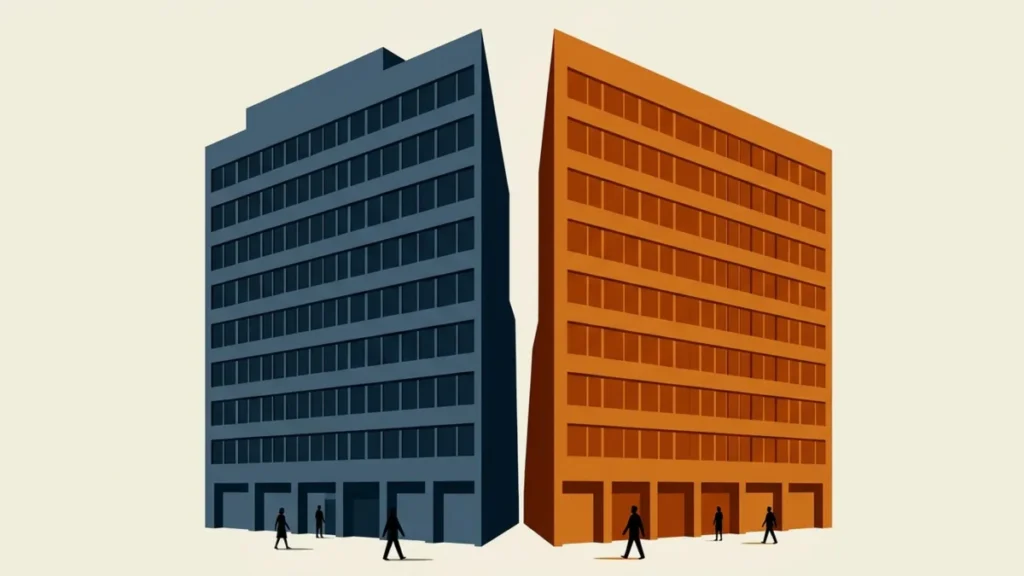
The Great Unbundling: How the Comcast-NBCUniversal Split and the Rise of AI Are Reshaping the Advertising Industry
The morning of June 29, 2026, will be remembered as the moment the tectonic plates of the American media landscape shifted. Comcast’s announcement that it will spin off NBCUniversal and Sky into an independent, publicly traded entity represents the most significant structural realignment in broadcasting in two decades. This divorce, expected to finalize over the next 12 months, marks the end of a 15-year experiment in vertical integration, leaving the programmatic advertising and Connected TV (CTV) markets in a state of profound transition.
Main Facts: The Anatomy of the Split
Comcast is executing a tax-free spin-off designed to separate its core infrastructure—broadband, wireless, and ad-serving technology—from its content-heavy media empire.
- Comcast (The Infrastructure Giant): Retains its vast broadband and wireless platform, which services over 65 million homes and businesses. Crucially, it keeps FreeWheel, the foundational ad-serving infrastructure that facilitates premium video monetization across the global media ecosystem.
- NBCUniversal (The Content Powerhouse): Becomes an independent entity housing Peacock, NBC, Universal film and television studios, the theme parks division, and the entirety of Sky’s UK-based broadcasting and technology assets.
The split is more than a corporate divestiture; it is a strategic retreat from the "bundled" era. By separating, Comcast aims to focus on the high-margin, stable capital returns of its connectivity infrastructure, while NBCUniversal will gain the agility to compete as a standalone media pure-play in an increasingly fragmented streaming world.
Chronology of a Corporate Divorce
The timing of the announcement—coming at the close of Cannes Lions week—was widely interpreted as a deliberate signaling move to the advertising industry.
- Late June 2026: Throughout the Cannes Lions festival, industry leaders signaled that the "traffic-referral" model of the last two decades was dead.
- June 26, 2026: Sky and ITV finalized a £1.6 billion merger of their broadcast and streaming assets, setting the stage for a new British challenger to Netflix and Amazon.
- June 29, 2026: Comcast formally announced the spin-off. On the same day, industry analysts and holding company leads began dissecting the immediate impact on programmatic supply chains.
- Post-Close (Next 12 Months): Both entities will retain a 19.9% cross-stake to ensure stability during the transition. Mike Cavanagh will lead the new NBCUniversal, while Michael Angelakis, formerly Comcast’s CFO, will helm the newly streamlined Comcast.
Supporting Data: The Measurement Gap
The separation of Comcast and NBCUniversal occurs against a backdrop of conflicting data regarding CTV engagement.
Recent analysis from Lake highlights a "completion rate trap": CTV completion rates frequently hover at 98%, but this is an artifact of non-skippable ad formats, not necessarily an indicator of consumer attention. In contrast, VAB data suggests that Netflix and Hulu viewers are 49% more engaged than those on YouTube, proving that premium video content delivers demonstrably higher attention.
Furthermore, a TiVo report covering Q4 2025 found that daily viewing time has surged to 5.2 hours, with sports viewers now juggling an average of 2.7 subscription services. This fragmentation complicates reach planning, as advertisers can no longer rely on a single streaming platform to capture an entire sports-loving demographic.
Official Responses and Strategic Rationale
Comcast Chairman Brian Roberts has framed the rationale for the split as a move to unlock "entrepreneurial management" and provide sharper capital allocation. By decoupling the media assets, both boards gain the autonomy to pursue strategies that were previously stifled by corporate bloat.
However, analysts such as Brian Wieser of Madison and Wall have questioned the logic. Wieser noted that even after 15 years of common ownership, synergies between Comcast’s distribution and NBCUniversal’s content were rarely realized. The most pressing concern remains the future of FreeWheel. As an ad-serving layer, FreeWheel’s dominance was built on the stability provided by its position as a "captive" infrastructure for NBCUniversal. Now, as they move to separate boards and shareholder bases, the commercial roadmap for FreeWheel—and its ability to remain competitive against Google, Magnite, and Xandr—is currently unmoored.
Implications for the Programmatic Ecosystem
1. The "Agentic" Advertising Dilemma
The industry is currently grappling with the emergence of AI agents. As reported at Cannes, the shift is moving away from winning human attention to "influencing the AI model." This is creating a new layer of intermediaries. Just as the promise of programmatic in 2012 was to compress the supply chain, only to lead to a proliferation of SSPs, the rise of AI agents risks recreating the same "extraction" model. Every agent requires governance and commercial incentives, leading to potential complexity rather than efficiency.
2. The Future of FreeWheel
FreeWheel is at a crossroads. Its integration with NBCUniversal’s "One Platform" and various data clean rooms was bolstered by internal corporate alignment. Post-separation, the industry is watching closely for a commercial agreement. If Comcast and NBCUniversal do not formalize a long-term service-level agreement similar to the one NBCU has for selling "Versant" (the former cable networks) inventory, FreeWheel may struggle to maintain its perception of neutrality and investment stability.
3. Regulatory and Consent Chaos
The European regulatory environment is adding further pressure. With the EU Council blocking the automated cookie consent signal (Article 88b), 450 million users remain subject to fragmented, manual consent banners. This creates a data governance nightmare for advertisers. Simultaneously, incidents like Meta’s auto-enrollment of brands into AI creative tools have exposed a widening gap between what platforms claim to offer and what brands have authorized. As Usercentrics’ data shows, consumers are increasingly willing to pay a premium for brands that respect their data privacy, making "trust infrastructure" a critical business requirement.
4. Commerce Media Expansion
Walmart’s acquisition of Vibe.co, a self-serve CTV ad platform, signals a broader trend: the convergence of retail data and premium video inventory. By bringing small and medium-sized businesses into the CTV auction with purchase-grounded data, Walmart is challenging the dominance of traditional broadcasters and streaming giants.
Conclusion: A Year of Re-evaluation
The convergence of the Comcast split, the death of the referral traffic model, and the rise of autonomous AI media buying creates a volatile, high-stakes environment. Positions that seemed settled in early 2026—such as the value of completion rates or the stability of media conglomerates—are now undergoing a fundamental audit.
For brands and agencies, the next 12 months will not be about maintaining the status quo, but about navigating a fundamental renegotiation of the digital advertising rulebook. The "compute" inside the pipes is now more valuable than the pipes themselves, and the entity that best governs that compute—and the data that informs it—will emerge as the true winner of this realignment. Whether it is a broadcaster, a tech infrastructure provider, or an AI platform, the market is no longer rewarding scale alone; it is rewarding the ability to prove effectiveness in a world where humans and bots are browsing, shopping, and consuming content simultaneously.
