
The Great Optimization Divide: A Comprehensive Analysis of Crazy Egg vs. AB Tasty
In the high-stakes world of digital growth, the difference between a successful conversion and a lost lead often boils down to a single button color, a headline, or a friction-filled user journey. For marketing teams and product managers, the choice of an experimentation platform is arguably the most critical technical decision they will make. As organizations look to optimize their web presence, the debate between Crazy Egg and AB Tasty—two prominent, yet fundamentally different, solutions—has moved to the forefront.
While both platforms promise to increase conversion rates and improve user experience, they approach the challenge from distinct philosophies. Crazy Egg positions itself as an all-in-one, "all-the-tools-you-need" suite for small-to-mid-market businesses (SMBs). Conversely, AB Tasty functions as a high-octane engine for large-scale enterprise experimentation programs. Deciding between them requires a deep dive into your team’s maturity, budget, and existing technical stack.
Main Facts: Two Philosophies of Optimization
The core divergence between these two platforms is the scope of their utility.
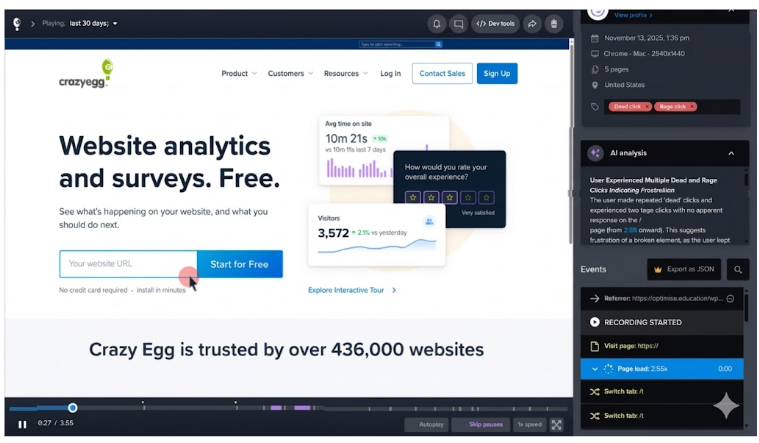
Crazy Egg operates on the principle that to run a successful A/B test, you must first understand the "why" behind user behavior. It is designed as a cohesive ecosystem that combines quantitative analytics with qualitative behavioral insights. By integrating heatmaps, session recordings, surveys, and A/B testing into a single interface, Crazy Egg provides a closed-loop system where you can identify a bottleneck, hypothesize a solution, test it, and verify the results—all within one login.
AB Tasty, conversely, is built for scale and specialization. It does not attempt to be a general-purpose analytics tool. Instead, it assumes that an enterprise team already possesses a robust stack (such as Google Analytics 4, Adobe Analytics, or specialized product analytics tools). It focuses exclusively on the "experimentation layer," offering sophisticated server-side testing, complex multivariate experimentation, and advanced personalization modules. It is the tool of choice for teams that have outgrown simple visual editors and are now managing hundreds of experiments concurrently across global properties.
Chronology and Market Positioning
The evolution of these tools reflects the broader shift in the CRO (Conversion Rate Optimization) industry.
- The Early Days (The Heatmap Era): Crazy Egg entered the market by democratizing user behavior tracking. Before its introduction, heatmapping was an expensive, enterprise-only luxury. By making "Click" and "Scroll" maps accessible to the average business owner, they changed how people viewed their own websites.
- The Shift to Experimentation: As the industry matured, both companies moved toward full-suite experimentation. Crazy Egg integrated native A/B testing, while AB Tasty solidified its place in the market by moving beyond simple client-side testing into the realm of "Feature Experimentation" (feature flags and server-side deployment).
- The Integration Era: Recent years have seen AB Tasty merge with VWO, a strategic move to consolidate market share and enhance their competitive positioning against other enterprise giants like Optimizely. This has allowed them to double down on AI-driven personalization and "agentic" assistants.
- The Accessibility Focus: Crazy Egg has remained steadfast in its commitment to transparency. While the enterprise space has moved toward opaque, custom-quoted pricing, Crazy Egg has maintained a self-serve model that caters to teams that need to start testing today without a six-month procurement cycle.
Supporting Data: Feature-by-Feature Comparison
The following table highlights the functional divide between the two solutions:
| Feature | Crazy Egg | AB Tasty |
|---|---|---|
| A/B Testing | Native A/B & Split URL | Advanced (Multi-page, Multivariate) |
| Heatmaps | Included (Native) | Not included |
| Session Replay | Native | Via 3rd-party integration |
| Web Analytics | Native Dashboard | None (Integration-reliant) |
| JS Error Tracking | Native + Triage Workflow | None (Integration-reliant) |
| Surveys | Unlimited (Included) | Limited (NPS/CSAT focus) |
| AI Capabilities | Insight analysis / Export | EmotionsAI / Evi Assistant |
The A/B Testing Engine
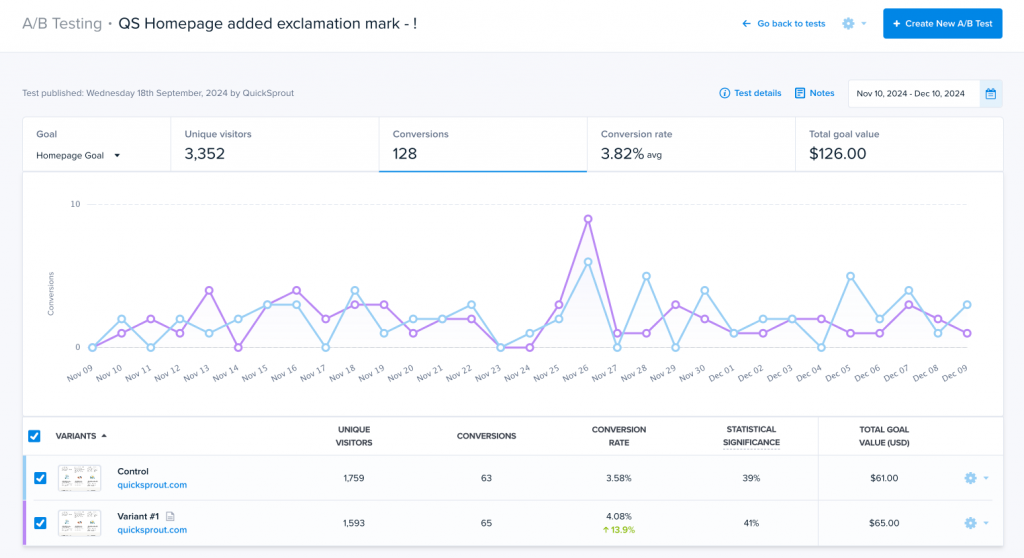
For most, the primary utility is the A/B test itself. AB Tasty wins on raw power. It supports complex multivariate testing, which allows for testing multiple variables at once to see which combination yields the highest uplift. It also offers "mutually exclusive experiments," a critical feature for large sites where running two tests on the same page might otherwise skew the data.
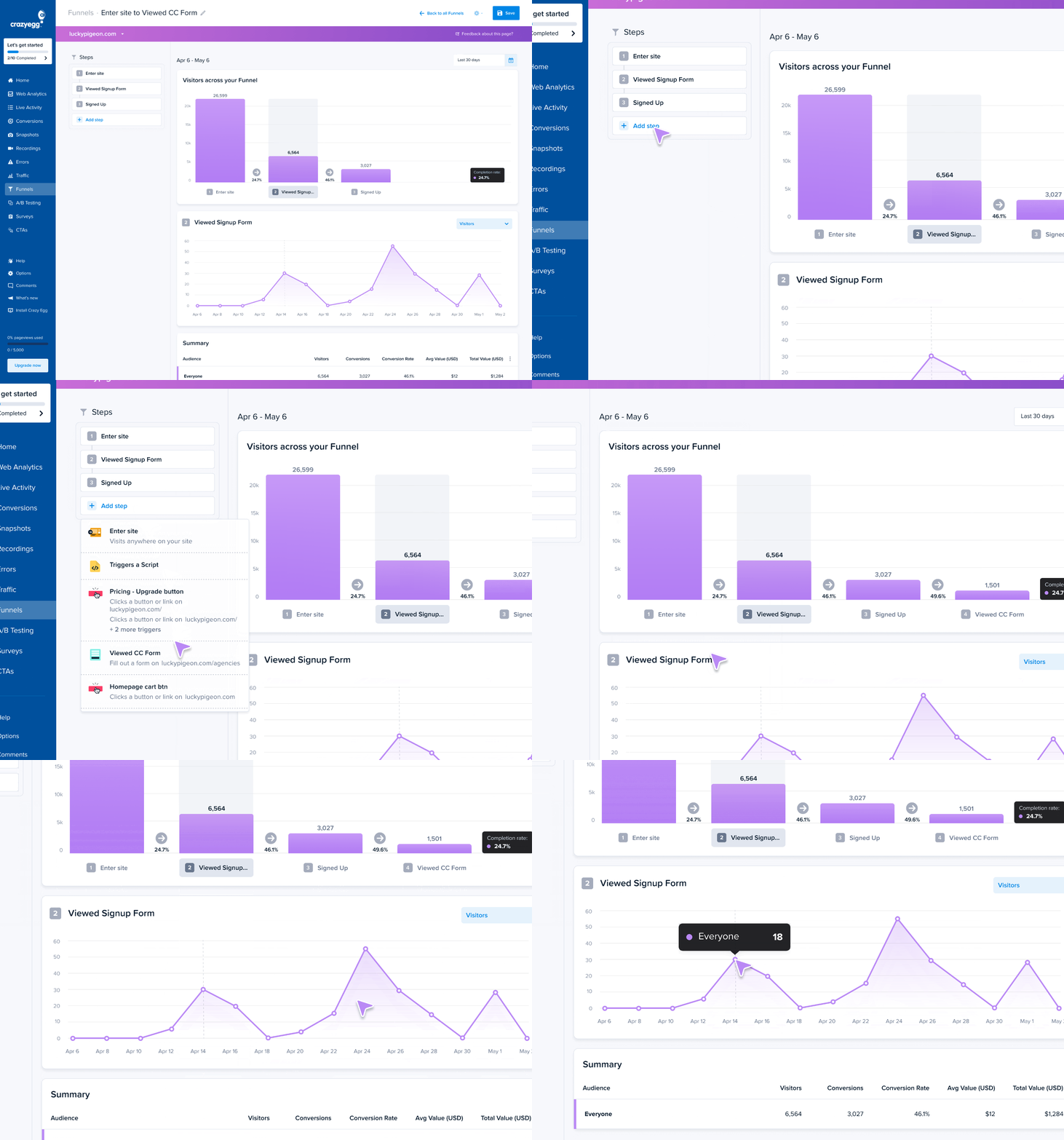
Crazy Egg, however, wins on "time-to-insight." Because every test variant in Crazy Egg is automatically linked to its own heatmap and session recording, you don’t just see that a variant is winning; you can see how users are interacting with it. For an SMB, this is invaluable. You aren’t just reading a statistical significance report; you are watching the behavior that drove it.
Analytics and Behavioral Insights
The lack of a native analytics module in AB Tasty is a feature, not a bug, for enterprise users. They expect to use tools like Mixpanel or Amplitude. However, for a mid-market marketing team, the absence of an integrated analytics dashboard in AB Tasty creates a significant "tooling gap."
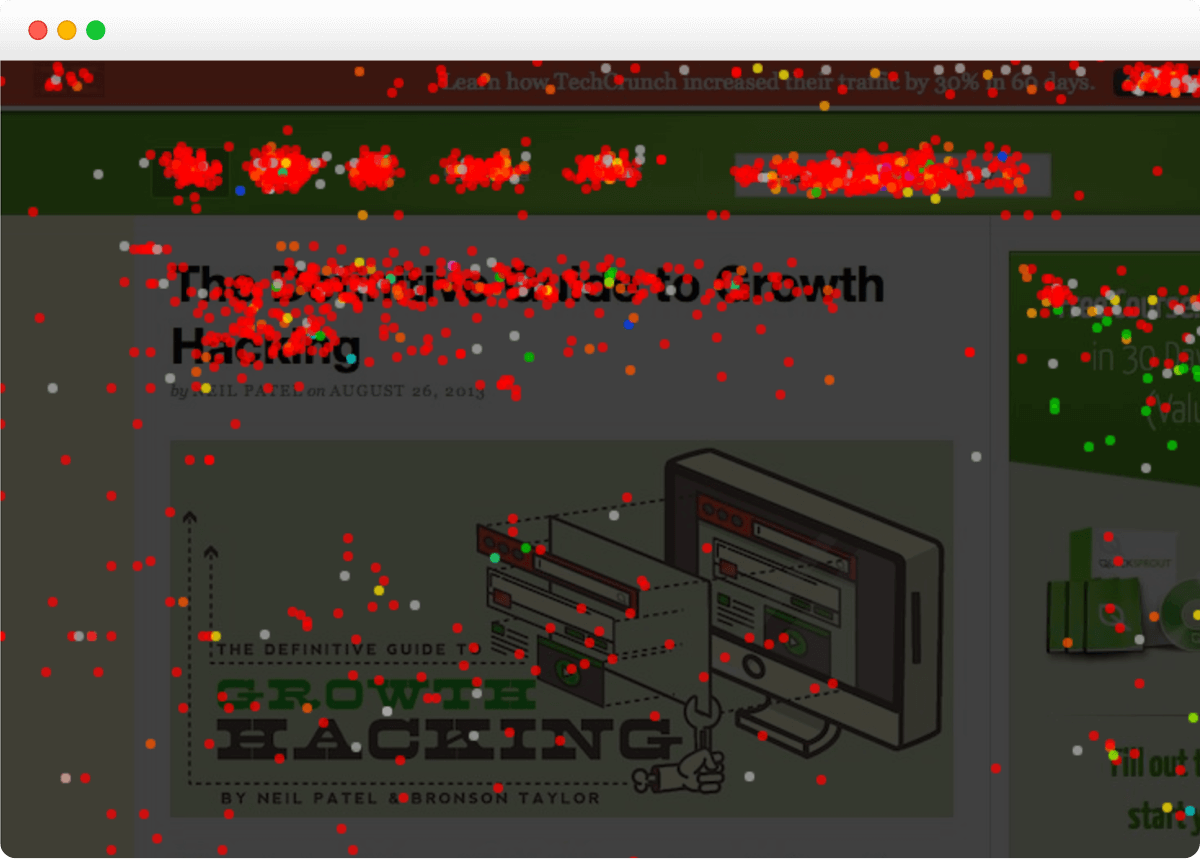
Crazy Egg fills this gap by providing a "Web Analytics" dashboard that is designed to be cleaner and more actionable than the often-overwhelming interface of GA4. By visualizing user journeys through funnels and allowing for immediate "drill-down" into session replays, it drastically lowers the barrier to entry for non-data scientists.
Official Stances and Strategic Direction
In recent interviews and press releases, both organizations have signaled their future trajectories.
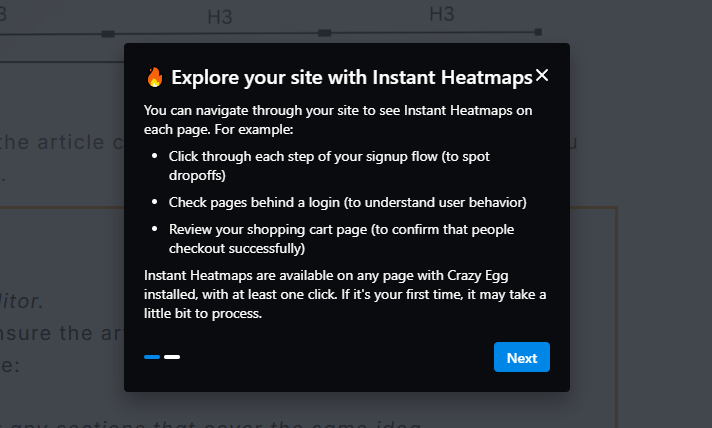
AB Tasty’s leadership has been vocal about the "Age of AI-Driven Personalization." Their "EmotionsAI" and "Evi" assistant represent a shift toward removing the human from the hypothesis-generation phase. By using AI to predict visitor intent in real-time and automatically adjust the content, they are positioning themselves as an "Autonomous Experience" platform. They want to be the tool that does the optimizing for you.
Crazy Egg’s strategy remains rooted in "Augmented Intelligence." They focus on empowering the human user. Their AI features are designed to summarize heatmaps and suggest insights that a human marketer can then validate through a test. They advocate for a culture of experimentation where the team is in the driver’s seat, using AI as a co-pilot rather than an autopilot.
Implications for Your Business
The decision to choose one over the other carries significant operational implications.
The Case for Crazy Egg
If you choose Crazy Egg, you are opting for speed and consolidation.
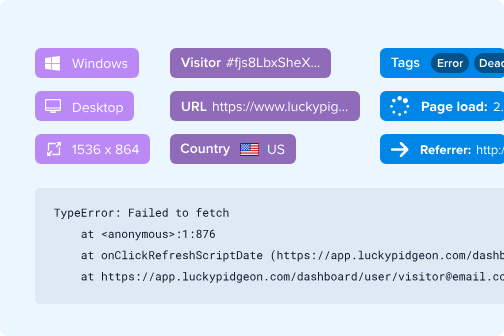
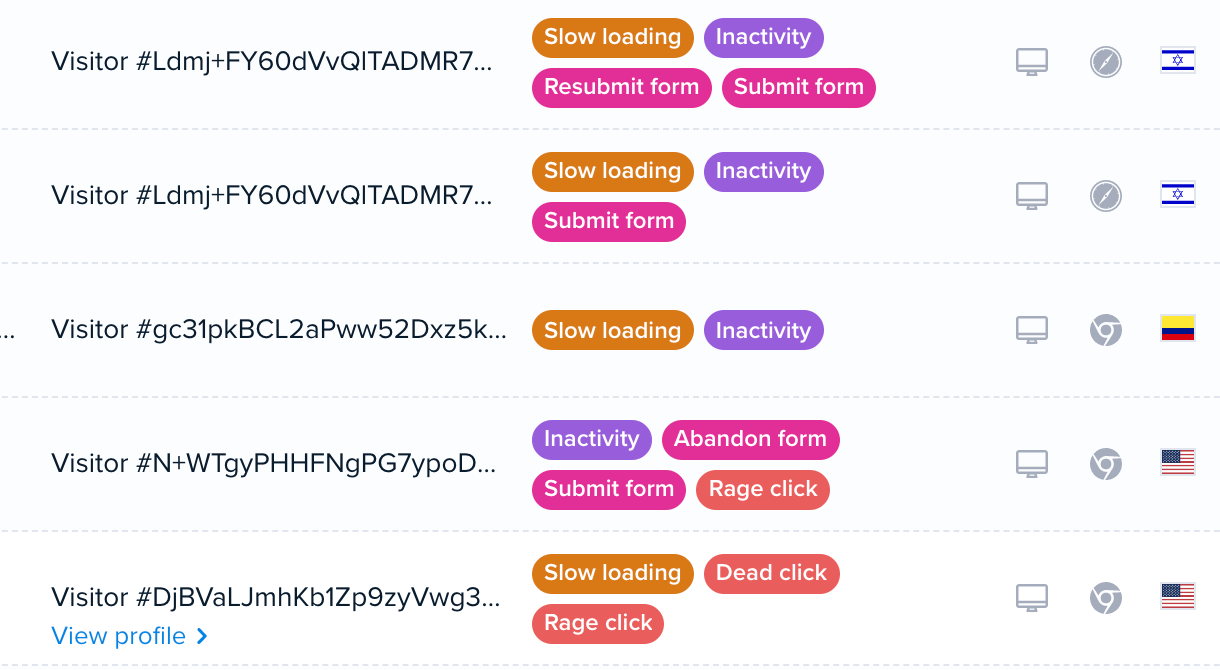
- Reduced Overhead: You save thousands of dollars annually by not needing to subscribe to separate tools for heatmaps, session recording, survey management, and error tracking.
- Faster Onboarding: Because the tool is self-serve, your team can be up and running in an afternoon.
- SMB-Friendly Pricing: With a transparent, tier-based subscription model starting at $29/mo, you can scale as your traffic grows without negotiating a yearly contract.
The Case for AB Tasty
If you choose AB Tasty, you are opting for scale and technical rigor.
- Engineering Integration: If you need to manage feature flags across a mobile app and a web platform, AB Tasty’s server-side capabilities are the industry standard.
- Enterprise Compliance: For companies with stringent SSO, SAML, and data governance requirements, AB Tasty provides the infrastructure that large-scale organizations demand.
- Advanced Personalization: If your business model relies on highly specific, data-rich audience segmentation (e.g., e-commerce sites with complex customer profiles), AB Tasty’s integration with CDPs (Customer Data Platforms) is superior.
Conclusion: Making the Right Call
Choosing between Crazy Egg and AB Tasty is less about which tool is "better" and more about identifying the stage of your business’s lifecycle.
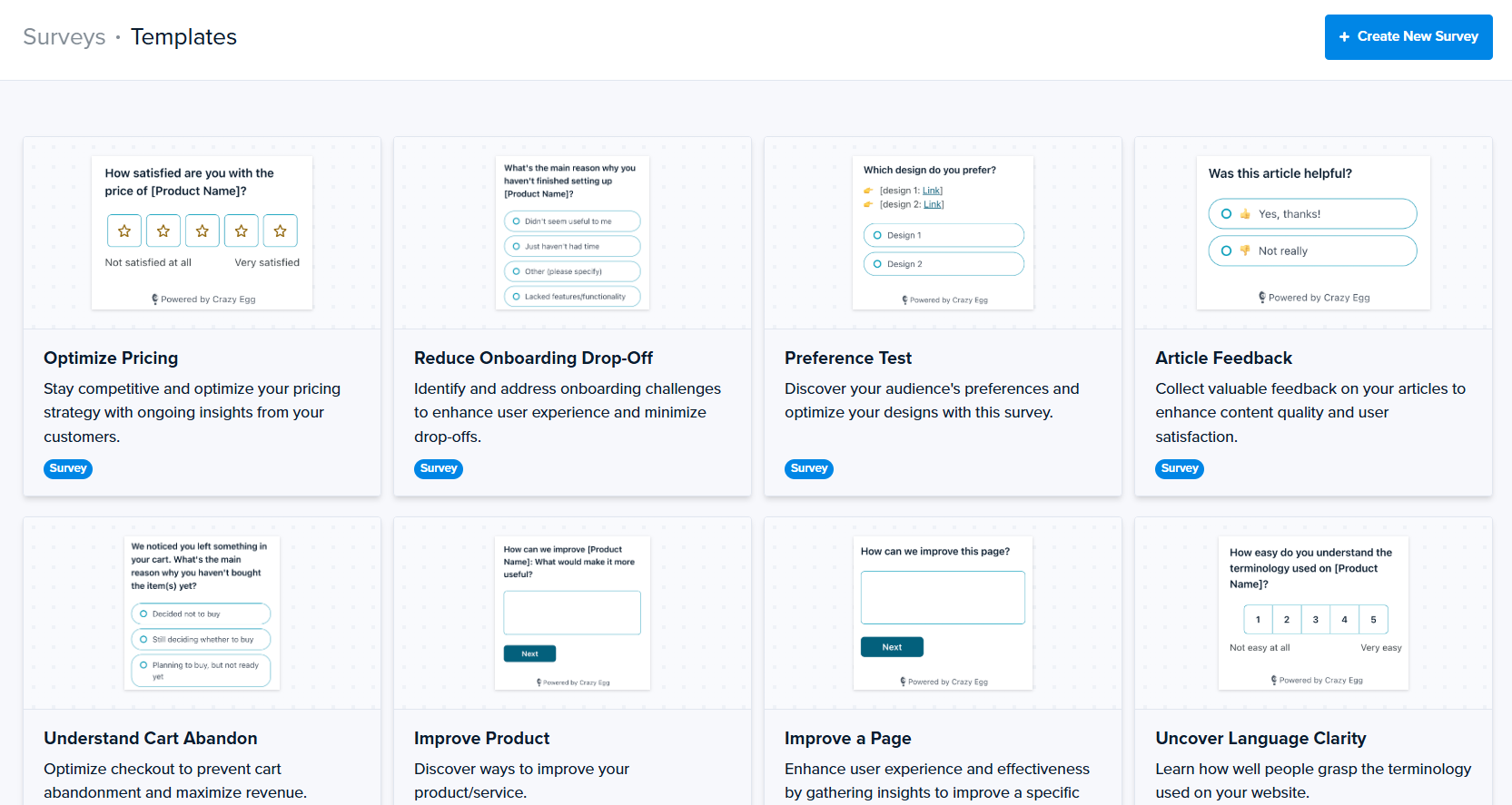
If you are a growth team, a founder, or a marketing manager at a mid-market company looking to drive immediate, measurable improvements without a complex procurement process, Crazy Egg is the logical choice. Its integrated approach turns raw data into actionable insights, and its transparent pricing ensures you know exactly what your budget is from day one.
If you are an enterprise-level organization with dedicated engineering resources, a mature data stack, and a need for highly complex, server-side experimentation, AB Tasty provides the depth and technical infrastructure required to manage global, multi-departmental optimization programs.
The bottom line? Stop waiting for the perfect "enterprise" solution if you aren’t an enterprise. Start testing where you are today. If you are leaning toward the all-in-one efficiency of Crazy Egg, their 30-day free trial is the best way to determine if your team can turn those insights into revenue, without the need for a credit card or a sales pitch.
