
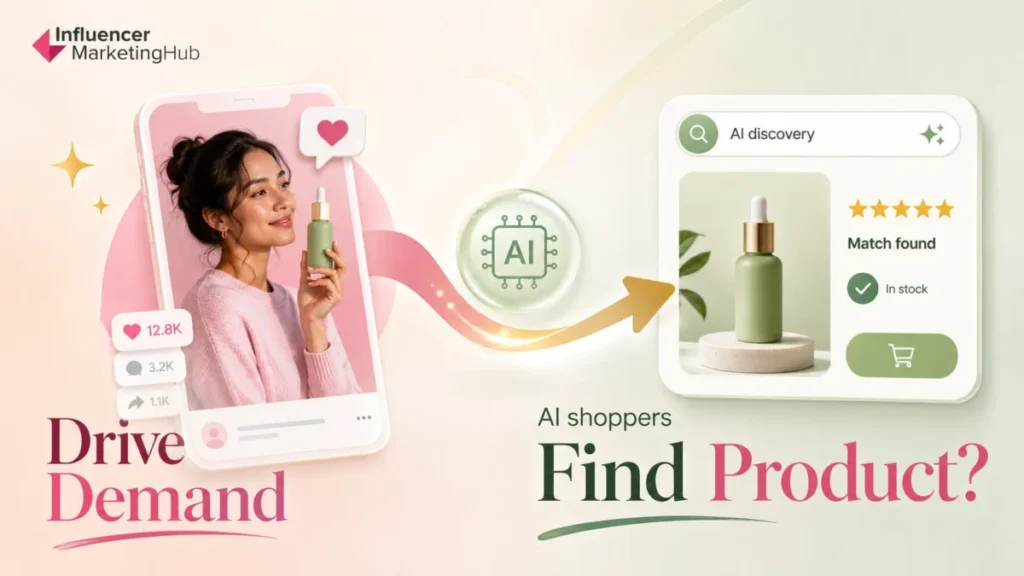
The Great Disconnect: Why Your Creator-Led Campaigns Are Losing Sales to AI Shopping Assistants
In the modern digital bazaar, a curious phenomenon is unfolding. A high-profile creator takes to the screen, holding up a compact carry-on suitcase. They don’t just show the product; they validate it. "I’ve dragged this through six airports; it fits every overhead bin, and the front pocket actually holds my laptop," they declare. The comment section lights up instantly: “Where is the link?” “Does it come in black?” “How much is it?”
But then, a secondary behavior emerges. Instead of clicking the creator’s direct link, a segment of the audience navigates away to ChatGPT, Gemini, or a specialized shopping assistant. They type a natural language query: "Find me a carry-on with a laptop pocket that fits in overhead bins."
Herein lies the multi-billion-dollar friction point of the creator economy. Often, that second group of shoppers never finds the product they just watched a creator endorse. Why? Because the brand’s internal product catalog calls the item a "22-inch polycarbonate spinner," omits the laptop compartment from the metadata, and labels the color "stone" while the entire internet calls it "beige."
The creator has done the hardest part of the marketing funnel: they have created preference. Yet, the product data architecture failed to bridge that preference into the shopping interfaces of tomorrow.
The Language Gap: Creators vs. Catalogs
The fundamental problem is one of linguistics. Creators speak in "human," while product catalogs speak in "inventory."
Creators sell through context. They are masters of the "use-case scenario." They explain that a specific frying pan is effortless to clean after cooking eggs, that a particular jacket is roomy enough to wear over a chunky sweater, or that a desk lamp doesn’t create a glare during Zoom calls. This is the information that drives purchasing decisions.
Conversely, legacy product catalogs tend to be rigid. They rely on internal SKUs, generic category names, rigid dimensions, and antiquated color labels—often carried over from the original product launch copy written months or years ago.
The Skincare Example
Consider a skincare creator who frames a moisturizer as the perfect solution for someone who "hates heavy creams." It is a vital piece of information for the consumer. However, the official product page likely lists the item as "barrier-supporting hydration," focusing on clinical ingredients while ignoring texture, finish, absorption time, or makeup compatibility.
A human viewer understands the creator’s recommendation, but an AI shopping assistant trying to match the query "lightweight moisturizer for under makeup" will likely skip this product entirely. The data simply isn’t there to support the search intent.
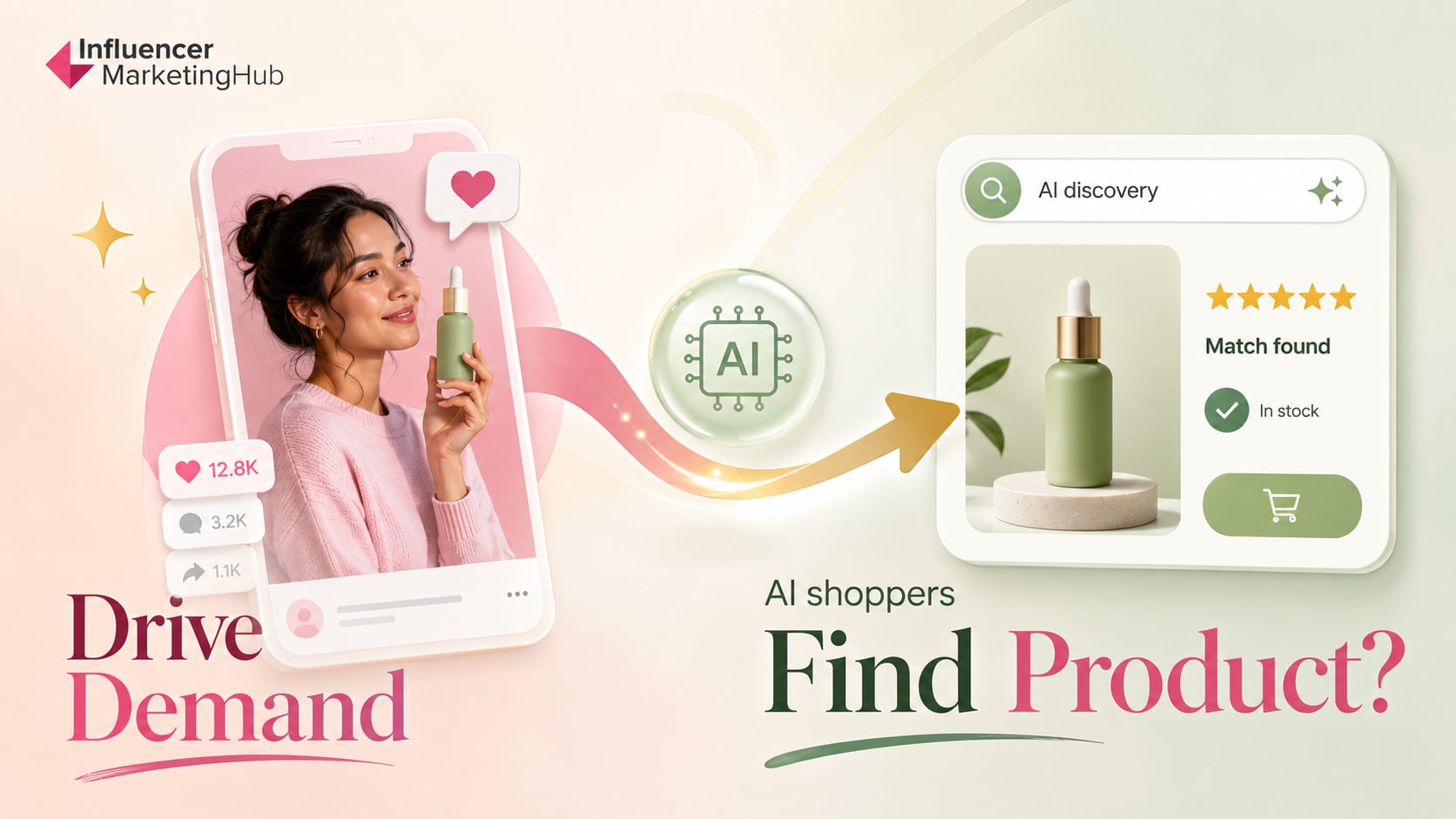
Chronology of a Failed Sale: How Friction Occurs
To understand how this disconnect manifests, one must look at the timeline of a modern influencer campaign:
- The Briefing Phase: The brand provides the creator with technical specs and high-level talking points. The product data team is rarely involved here.
- The Content Creation Phase: The creator tests the product, finds the "human" pain points (the "glasses don’t press against the ear cups" moment), and creates a viral clip.
- The Engagement Phase: Consumers ask questions in the comments. The creator answers them, but these answers remain trapped in the social platform’s walled garden.
- The Retrieval Phase (The Breakdown): A shopper, wanting to verify the purchase or compare prices, asks an AI assistant for the product based on the creator’s description.
- The Mismatch: The AI, unable to map "comfortable with glasses" to the product’s sterile metadata, suggests a competitor’s product that does mention "ergonomic fit" in its description.
This chronology reveals that the most valuable information—the "why" of the purchase—is being generated in the comments section but is never being harvested to improve the core product data.
Supporting Data: The Rise of AI-Assisted Discovery
The shift toward AI-assisted shopping is not a trend; it is a fundamental architectural change in how consumers interact with the web. According to recent industry shifts, shoppers rarely use technical search strings like "women’s footwear, category 184." They use long-tail, descriptive, and emotive language.
The integration of commerce into platforms like ChatGPT is accelerating this. OpenAI allows merchants to share product data so their items can appear in conversational results. However, this is a "garbage in, garbage out" system. If a brand’s merchant feed is missing descriptive attributes—such as whether a sneaker is "too sporty for a dress" or "wide-fit friendly"—the AI will inevitably favor a competitor that provides that granularity.
Google’s own documentation for developers emphasizes that structured data is no longer just for SEO; it is the prerequisite for eligibility in "richer" shopping results. This includes price, availability, review ratings, and, crucially, specific product attributes. Without these, the AI system is forced to guess, and in the world of conversion, a guess is a lost sale.
Implications: Bridging the Divide
The disconnect between creator sentiment and merchant data has profound implications for brand growth.
1. The Freshness Problem
Influencer content has a "long tail." A video can circulate for months or even years. If a product’s metadata is stale—reflecting an old price, a discontinued variant, or a lack of clear description—the conversion rate will plummet, regardless of how popular the creator’s video remains.
2. The Operational Silo
In most organizations, the influencer marketing team and the ecommerce/merchandising team work in different silos. The campaign brief rarely reaches the product data manager. This is a "small, expensive miss." When a campaign generates specific questions or objections in the comments, that data is essentially free market research. Brands that fail to integrate this into their product pages are leaving money on the table.
3. The Measurement Challenge
Measuring the ROI of an influencer campaign is becoming increasingly complex. Traditional metrics like tracked links and affiliate codes only capture the "direct" path. They fail to track the "indirect" path where a user watches a video on Monday, uses AI to research on Wednesday, and buys from a search result on Friday. To adapt, brands must shift from tracking clicks to tracking "search lift" and "conversational referral traffic."
Strategic Recommendations: How to Close the Gap
Brands that wish to thrive in this new landscape must adopt a more holistic approach to product data management.
I. Implement a "Feedback Loop" Process:
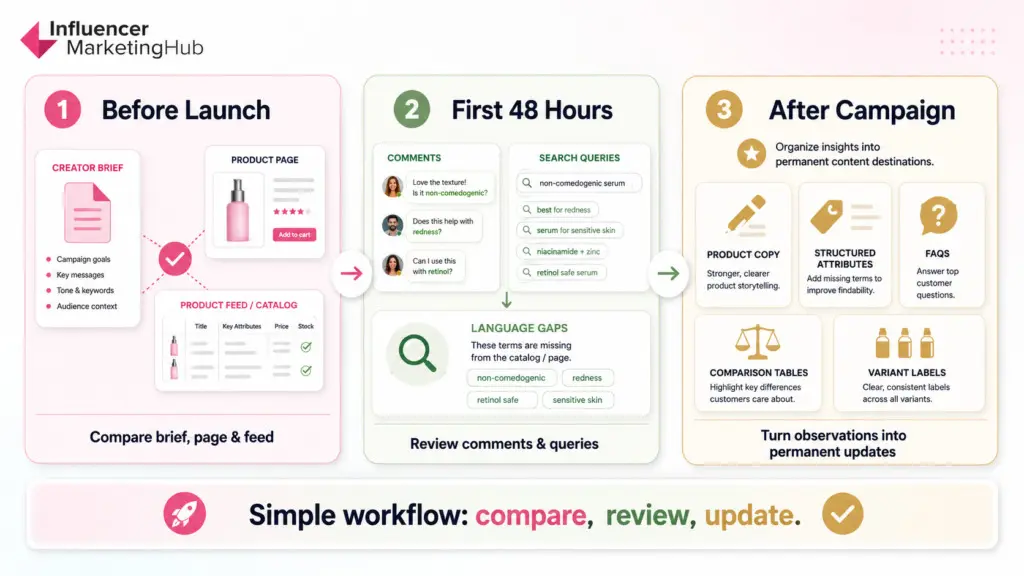
Before a campaign launches, compare the creator brief with the current product page. During the first 48 hours of a campaign, designate a team member to monitor the comments specifically for language that the product catalog lacks. If shoppers keep calling a "stone" suitcase "beige," update the search keywords and metadata to include both.
II. Treat Product Pages as Dynamic Content:
A product page should not be a static, "set-it-and-forget-it" asset. It should be a living document that incorporates findings from creator campaigns, including common objections (e.g., "does this work with iPhone 15?"), comparisons, and usage scenarios.
III. Audit Your Merchant Feeds:
Ensure that your merchant feeds for platforms like Google and OpenAI are exhaustive. Do not just list the bare minimum. Include attributes that address common consumer questions: weight, material feel, ease of cleaning, compatibility, and fit.
IV. Measure the "Correction Rate":
Track how often your team has to update product titles, descriptions, or attributes in response to customer service tickets or campaign feedback. A high correction rate is a sign that your catalog is not properly prepared for the market.
Conclusion: The New Commerce Reality
The creator economy has changed the way consumers discover products, but the underlying commerce systems are still catching up. Creators have become the world’s most effective, human-centric search engines. They hear the questions buyers ask before, during, and after the sale.
The brands that will win in the age of AI-assisted shopping are those that can effectively "translate" creator insight into machine-readable, searchable, and accurate product data. The goal is to ensure that when a shopper asks an AI assistant about the "beige suitcase with the laptop pocket," your product is the one that appears at the top of the list.
The task is simple but requires institutional cooperation: pick one product from your most recent creator campaign. Compare the language used in the video, the comments, and your own product page. If they don’t match, you have work to do. By aligning the creator’s human voice with the catalog’s structured data, you ensure that demand generated by influence is successfully converted into revenue.
