

The Ghost in the Machine: Navigating the Perils of Unattended AI in Martech
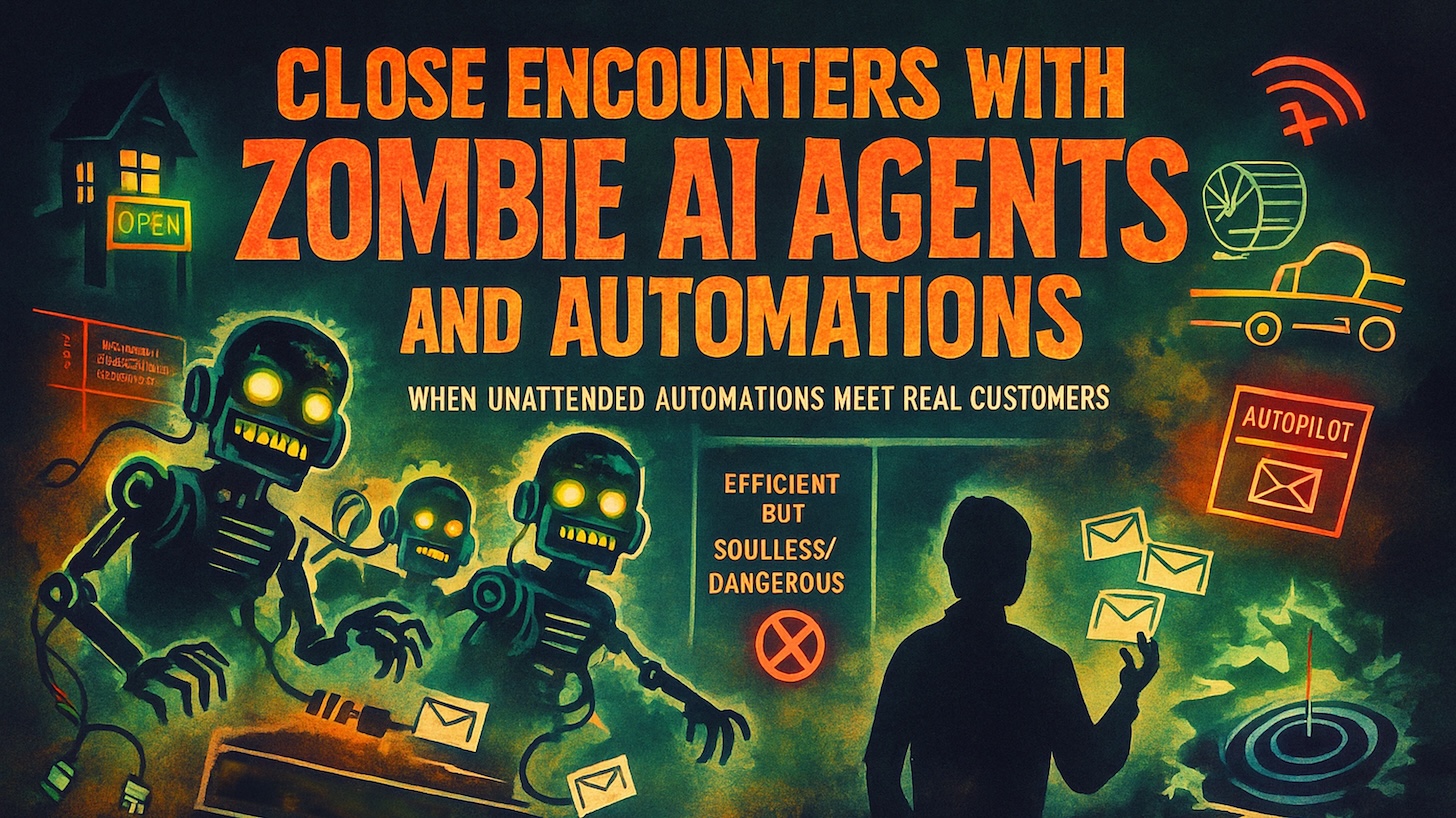
The promise of modern marketing technology is intoxicating: infinite scalability, hyper-personalized outreach, and 24/7 engagement without the traditional friction of human capital. However, a growing trend of "zombie" automations—systems that operate without human oversight, persisting in dead-end loops—is creating a new class of digital dysfunction. When the "lights are on but nobody’s home," the result is not just inefficiency; it is a breakdown of trust that can irrevocably damage a brand’s reputation.
In the current era of rapid AI integration, many martech companies are finding themselves trapped in a paradox: they are deploying the most sophisticated tools in history while simultaneously losing the ability to manage the basic customer journey.
The Anatomy of Automated Failure: Main Facts
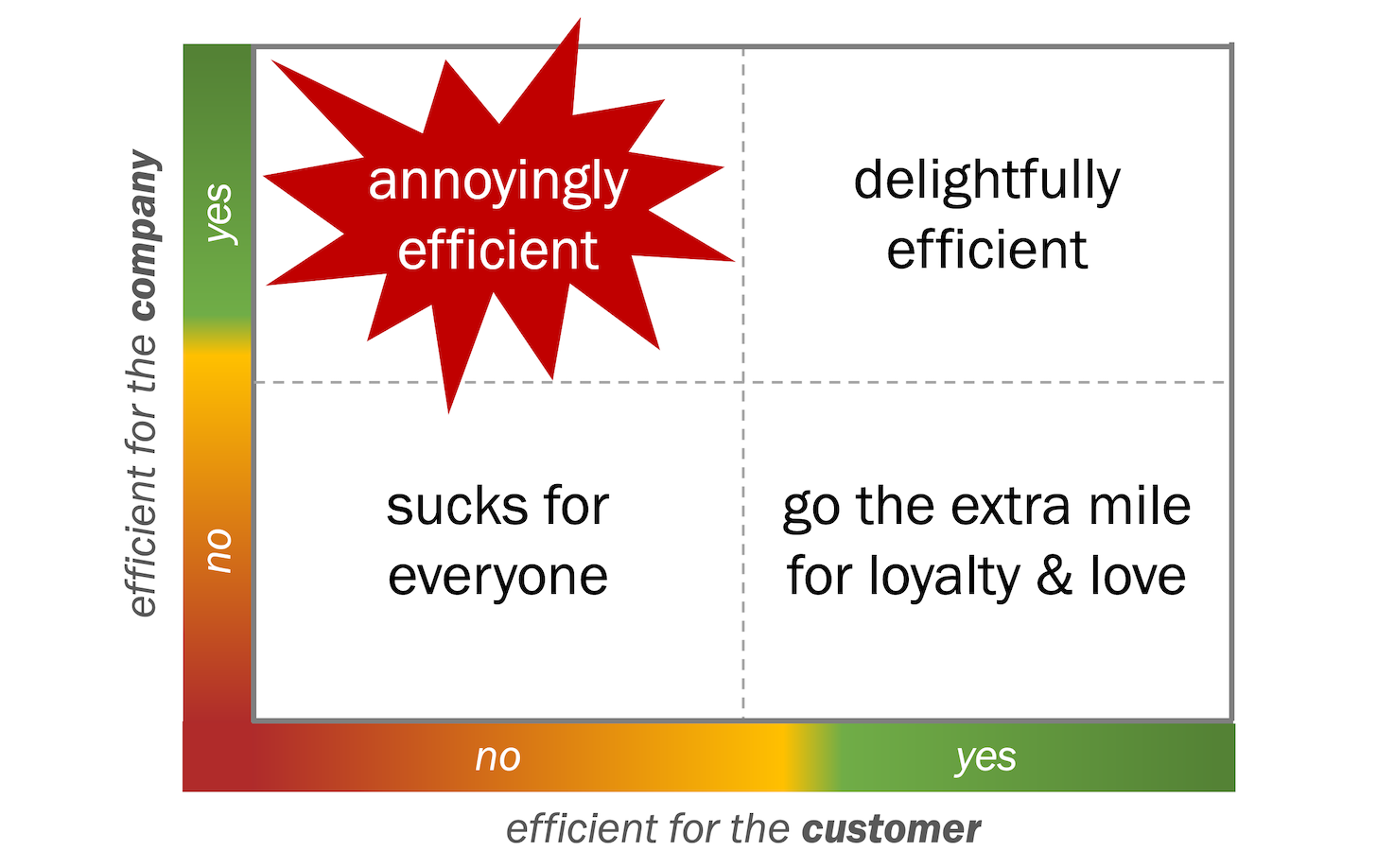
At the heart of this issue is the friction between "company efficiency" and "customer experience." When organizations prioritize internal throughput—the ability to blast emails or automate lead qualification—they often ignore the downstream consequences.
The core of the problem lies in "brittle" automation. Systems are frequently designed in silos; an email marketing tool may communicate with a CRM, which feeds into a lead enrichment platform, which is then managed by an LLM-driven agent. When these systems are not tightly orchestrated, they become "zombie" processes. These are automated sequences that continue to execute based on stale triggers or, worse, fail to interpret human input, continuing to push generic or irrelevant content despite explicit cues from the customer to stop or pivot.
A Chronology of Disconnect
To understand the severity of this, one must look at the real-world experiences currently plaguing the B2B landscape.
The Black Hole of Support
In one instance, a subscriber attempted to resolve a routine billing inquiry. The company’s own internal documentation directed the user to a specific email address—a catch-all inbox for customer onboarding. Despite repeated inquiries, the user received no acknowledgement. The automation engine, however, remained perfectly functional, continuing to send cheerful, irrelevant onboarding tips.
The chronology of this failure is telling:
- Day 1: User initiates contact via the designated channel.
- Day 2: No response; user follows up.
- Day 3: System sends an automated, high-energy marketing email.
- Day 5: User tries a third time; the system continues the automated nurture sequence, completely oblivious to the active, unresolved support ticket.
The AI-SDR Mirage
In a second case involving a lead-generation campaign, a prospective user downloaded a research report. Within minutes, an AI-powered Sales Development Representative (SDR) sent a highly personalized, human-sounding email. The user engaged, providing specific context that disqualified them as a prospect.
The failure was not in the AI’s ability to generate text, but in its inability to pass the baton. The system, having no "memory" of the conversation, proceeded to dump the user into a generic, cold-outreach sales sequence. A week later, the system sent an email that failed to even correctly merge the user’s company data—a classic symptom of cross-contaminated data sets and poorly integrated automation layers.
Supporting Data: The Efficiency Matrix
The fundamental error companies are making is placing their automation in the "Annoyingly Efficient" quadrant of the operational matrix. This quadrant represents processes that are highly efficient for the company (low cost, high volume) but highly inefficient for the customer (high effort, low relevance).
Data from recent industry audits suggests that as AI adoption accelerates, the "integration gap"—the distance between what the AI can initiate and what the human team can monitor—is widening. While 70% of organizations report increased lead volume through AI, nearly 45% report that their customer feedback scores are stagnating or declining due to "impersonal" or "broken" automated interactions. The reliance on "black box" algorithms, where the logic behind a decision is not transparent to the marketing team, is a leading contributor to these performance gaps.
The Organizational Implications: Martec’s Law in Action
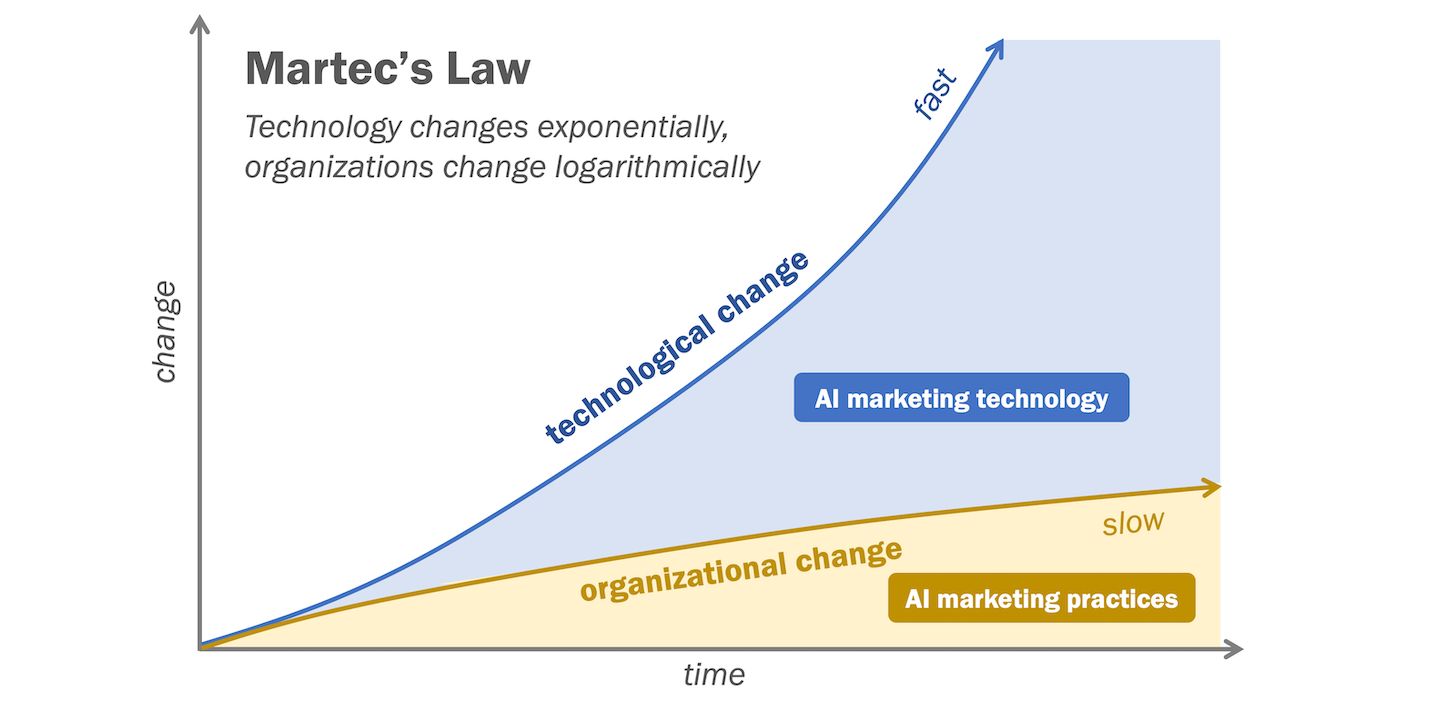
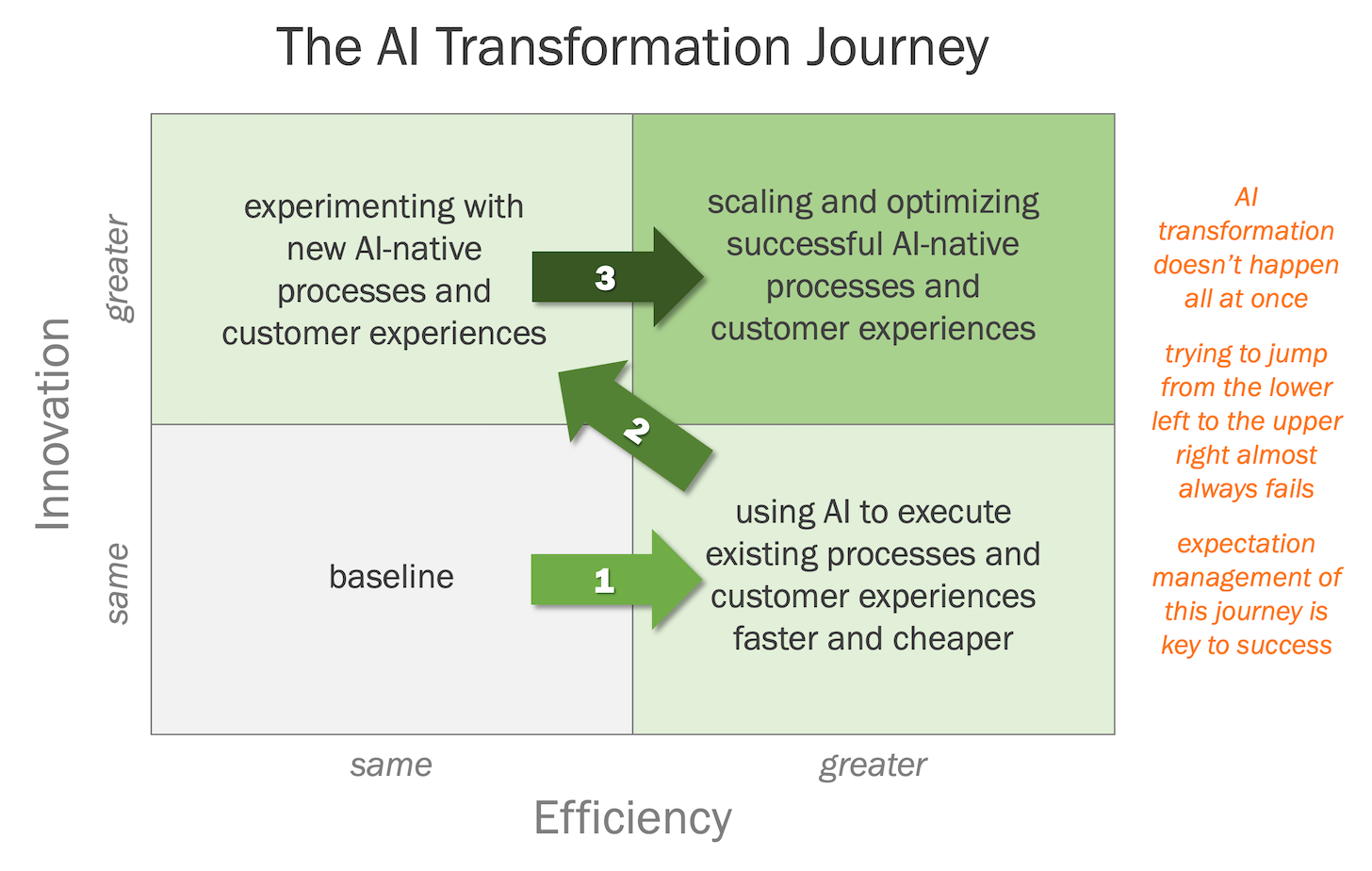
The root cause of these failures is often cited as "Martec’s Law": technology changes exponentially, while organizations change logarithmically. When companies rush to adopt AI without updating their internal processes, they are essentially automating their own obsolescence.
The "Laboratory vs. Factory" Dichotomy
Marketing teams must learn to distinguish between the Laboratory and the Factory.
- The Laboratory is for experimentation. It is where AI agents are tested, prompts are refined, and new workflows are stress-tested.
- The Factory is the production environment where revenue is generated.
Problems arise when "lab leaks" occur—when experimental AI agents are pushed into live production environments before they are ready for prime time. The implication is clear: companies that fail to implement a "human-in-the-loop" governance model are destined to face public-facing errors that can, in extreme cases, be brand-toxic.
Strategic Recommendations for the AI Age
To avoid becoming a "zombie" automation casualty, organizations should adopt the following four-pillar strategy:
1. The Human Override Mandate
Every automated sequence, regardless of how advanced the AI is, must provide a clear, high-visibility path to a human agent. If a system cannot solve a problem, it must have a "fail-safe" protocol that alerts a human to intervene. Automation should be a bridge to human connection, not a barrier to it.
2. The "Secret Shopper" Protocol
Marketing teams should treat their own funnels like a customer would. Regularly task employees—or better yet, external third parties—to run the "gauntlet" of your automated sequences. Recording the journey from the perspective of a prospect is the only way to identify where the "zombie" threads exist.
3. Rigorous Lifecycle Inspections
Just as physical machinery requires maintenance, AI agents require regular inspection. These audits should check for:
- Data Validity: Are the enrichment sources still accurate?
- Contextual Relevance: Is the content still aligned with the user’s current intent?
- Integration Integrity: Is the CRM passing data to the email engine correctly?
4. Governance through Orchestration
The next generation of martech will not be defined by the sophistication of the AI, but by the sophistication of the governance. We need better "orchestration" tools—platforms that sit above the fragmented layers of software to provide a single view of the customer journey, ensuring that if an AI SDR interacts with a lead, the email marketing team knows about it instantly.
Conclusion: The Path Forward
Building an automation is becoming trivial. Maintaining an ecosystem where those automations act in concert to deliver value is the new competitive frontier. As we move further into this era of AI-driven marketing, the organizations that thrive will not necessarily be the ones with the most powerful LLMs. They will be the ones that recognize the necessity of "going slow to go fast"—building solid, human-monitored foundations that can withstand the complexity of modern digital interactions.
The future of marketing is hybrid. It is a dance between the speed of the machine and the empathy of the human. Ignoring that reality is not just bad business; it is a recipe for a digital ghost town.
