
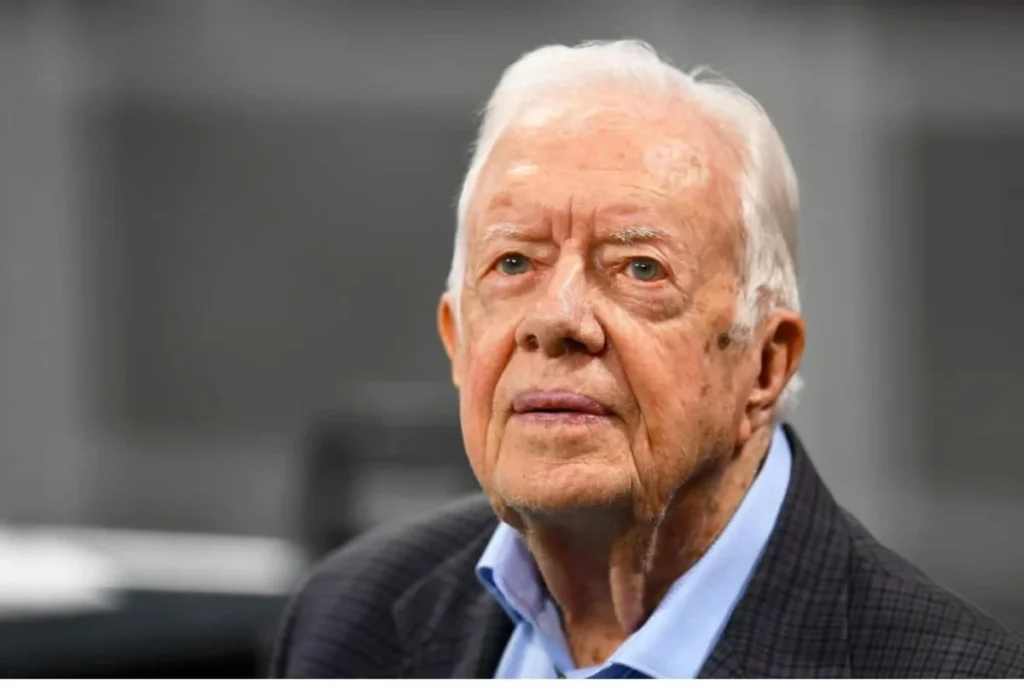
A Legacy of Compassion: Remembering the Life and Impact of President Jimmy Carter
The passing of Jimmy Carter, the 39th President of the United States, marks the end of an era defined by unwavering moral integrity, a lifelong commitment to humanitarian service, and a post-presidency that redefined what it means to be a public servant. As the nation reflects on his departure, we are reminded not only of his political tenure but of the profound, personal connections he forged with ordinary citizens. Carter was a man of quiet grace—a leader who prioritized the dignity of the individual over the theater of political power.
The Man Behind the Office: A Personal Reflection
To understand the essence of Jimmy Carter, one must look beyond the legislative records and diplomatic summits. A poignant memory from 1988 captures the humility that defined his character. During a speaking engagement in a local community, an attendee was selected to join a small group on stage to ask the former President a question.
When the attendee stepped to the microphone and admitted, "I really do not have a question," most public figures might have been dismissive or awkward. Instead, Carter leaned in with a warm smile and replied, "I like those kind of questions." The attendee used the moment to express gratitude for Carter’s tireless work with Habitat for Humanity, a cause that became synonymous with his retirement.
While the other questioners in the queue approached the microphone with the typical combative queries—"Why didn’t you…?" or "What should be done about…?"—Carter remained composed and thoughtful. As he exited the stage, he paused, locked eyes with the individual who had offered him simple thanks, and gave a subtle, knowing wink. It was a fleeting interaction, yet it encapsulated the essence of a man who never lost sight of the human connection, regardless of the office he once held.
Chronology: A Life of Service
James Earl Carter Jr. was born on October 1, 1924, in Plains, Georgia. His journey took him from the quiet fields of the rural South to the United States Naval Academy, and eventually to the pinnacle of American politics.
- 1946–1953: Served as a naval officer, gaining an appreciation for engineering and global strategy.
- 1962–1966: Elected to the Georgia State Senate, where he began his career as a champion for civil rights and education.
- 1971–1975: Served as the 76th Governor of Georgia, focusing on government reorganization and equality.
- 1977–1981: Served as the 39th President of the United States. His term was marked by the Camp David Accords, the Panama Canal Treaties, and a focus on human rights.
- 1982–Present: Founded the Carter Center with his wife, Rosalynn, dedicating his life to peace, health, and democracy worldwide.
Supporting Data: The Impact of the Carter Center
While his presidency faced significant challenges, including the Iran Hostage Crisis and a difficult economic period, historians increasingly point to the sheer scale of his post-presidential impact. The Carter Center, established in 1982, serves as the primary vessel for his legacy.

Through the Center, Carter participated in the monitoring of over 110 elections in 39 countries, helping to legitimize democratic transitions in volatile regions. Perhaps his most significant achievement in public health has been the near-eradication of Guinea worm disease. When the Carter Center began its work in 1986, there were an estimated 3.5 million cases annually across 21 countries. By 2023, that number had been reduced to fewer than 20 cases worldwide. This data illustrates a central tenet of the Carter philosophy: that persistent, quiet, and science-based intervention can solve the most stubborn problems facing humanity.
Official Responses and Global Recognition
The news of President Carter’s passing has triggered a global outpouring of grief and respect. Leaders from across the political spectrum have issued statements acknowledging his unique role in American life.
"Jimmy Carter was a man of the highest integrity," noted one former colleague. "He walked the walk. He didn’t just talk about the principles of the Gospel or the tenets of democracy; he lived them by swinging a hammer for Habitat for Humanity and mediating peace in the most dangerous corners of the globe."
The White House released a statement describing him as a "moral compass for the nation." Internationally, the UN Secretary-General praised his dedication to conflict resolution, noting that the world is a safer place because of his interventions in Haiti, Bosnia, and North Korea.
Implications: The Carter Standard
What does the passing of Jimmy Carter mean for the future of the American presidency? In an era often defined by hyper-partisanship and 24-hour news cycles, Carter’s life serves as a stark reminder of the "Citizen-President" model.
1. The Power of Post-Presidency
Carter set the "gold standard" for how a former president should conduct himself. Rather than seeking board seats or massive speaking fees, he chose the path of the humanitarian. His life implies that the presidency is not a career culmination, but a foundation upon which a lifetime of service should be built.
2. The Diplomacy of Listening
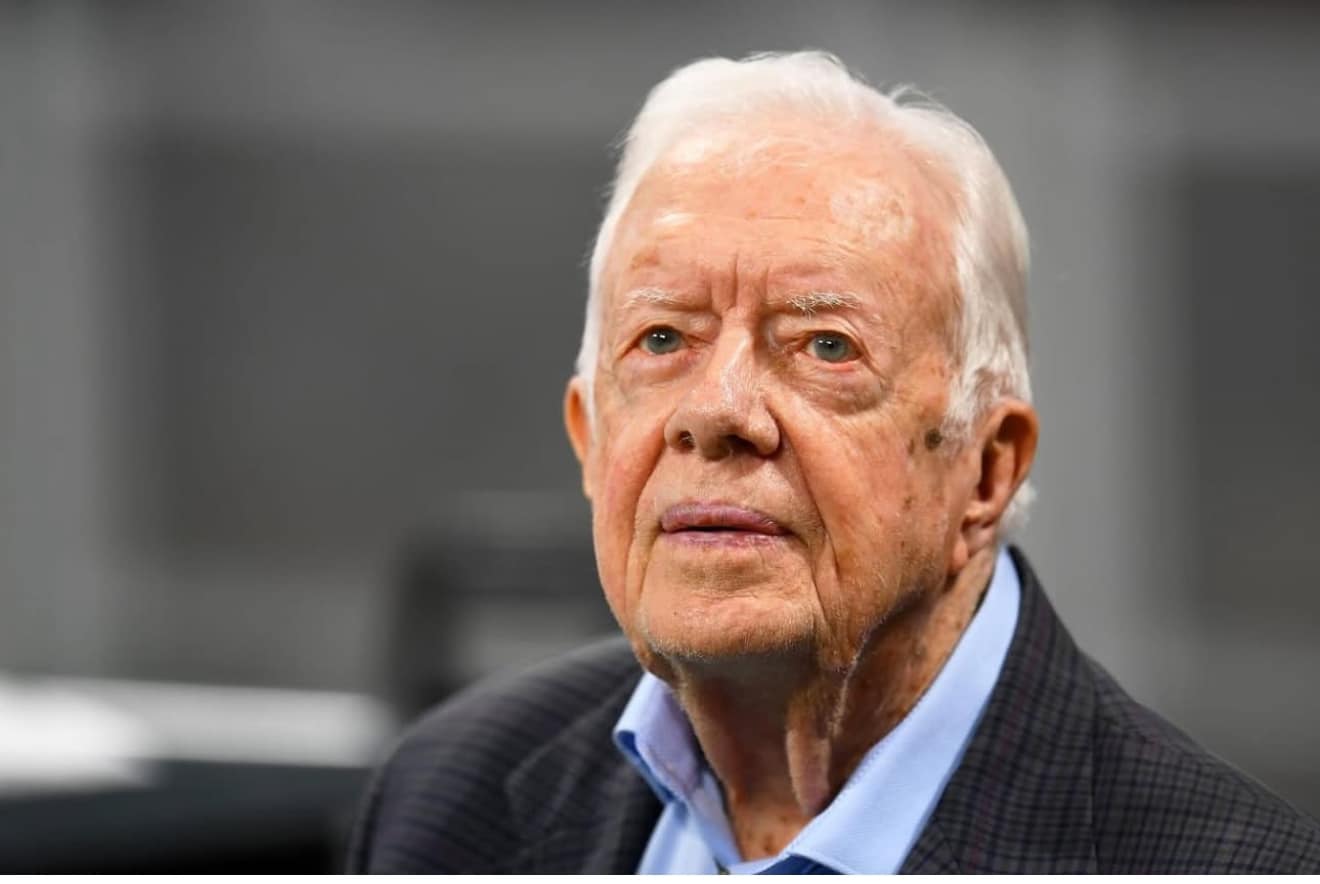
Throughout his life, Carter demonstrated that diplomacy is not just about the exchange of high-level treaties; it is about the willingness to listen. Whether engaging with world leaders or responding to a nervous citizen at a microphone, he practiced a form of active listening that made others feel valued. This is a lesson that modern political discourse, characterized by polarization, desperately needs to reclaim.
3. Grace Under Pressure
Carter faced intense criticism during his time in office. Yet, he never retreated into bitterness. His ability to remain focused on his objectives, even when public opinion was against him, highlights the importance of resilience. His life proves that true success is not measured by polls, but by the tangible impact one leaves on the lives of the vulnerable.
Conclusion: A Legacy of Kindness
As we mourn the loss of Jimmy Carter, we are left with the image of a man who, even in his final years, remained committed to the ideals of peace and compassion. He was an engineer, a farmer, a statesman, and a teacher. But above all, he was a servant.
The story of his interaction in 1988 serves as a micro-lesson in his macro-philosophy: greatness is not found in the grandiosity of one’s position, but in the sincerity of one’s acknowledgement of others. America has lost a giant of moral clarity. As the nation reflects on his life, the challenge remains for those who follow to emulate the grace, the kindness, and the love of country that Jimmy Carter embodied every single day.
Rest in peace, Mr. President. Your work is done, but your influence will continue to resonate for generations to come. The world is undeniably better for the time you spent in it, and the seeds of service you planted will continue to grow long after the headlines fade.
