

The Ghost in the Machine: Navigating the Perils of Unattended AI Automation in Martech
In the modern marketing technology stack, the mantra has long been "efficiency at scale." Yet, as we lean deeper into the era of generative AI and autonomous agents, a troubling phenomenon is emerging: the "zombie automation." These are systems that remain active and operational—the server lights are blinking, the workflows are firing, and the emails are landing—but the human intent behind them has long since evaporated, or worse, never existed in the first place.
When marketing operations prioritize internal efficiency over the customer experience, they risk creating a digital graveyard where meaningful engagement goes to die. Recent experiences with prominent martech vendors suggest that while we have mastered the art of deployment, we are failing the test of stewardship.
The Chronology of Disconnect: Two Tales of Automated Failure
To understand the scope of the problem, we must look at how these systems, when left unmonitored, degrade the very relationships they were designed to cultivate.
The Black Hole of Customer Service
In the first instance, a SaaS provider—one that provides a generally high-quality product—fell into a classic routing trap. The company’s onboarding email series, delivered with a perfect, helpful cadence, directed all inquiries to a central address: [email protected].
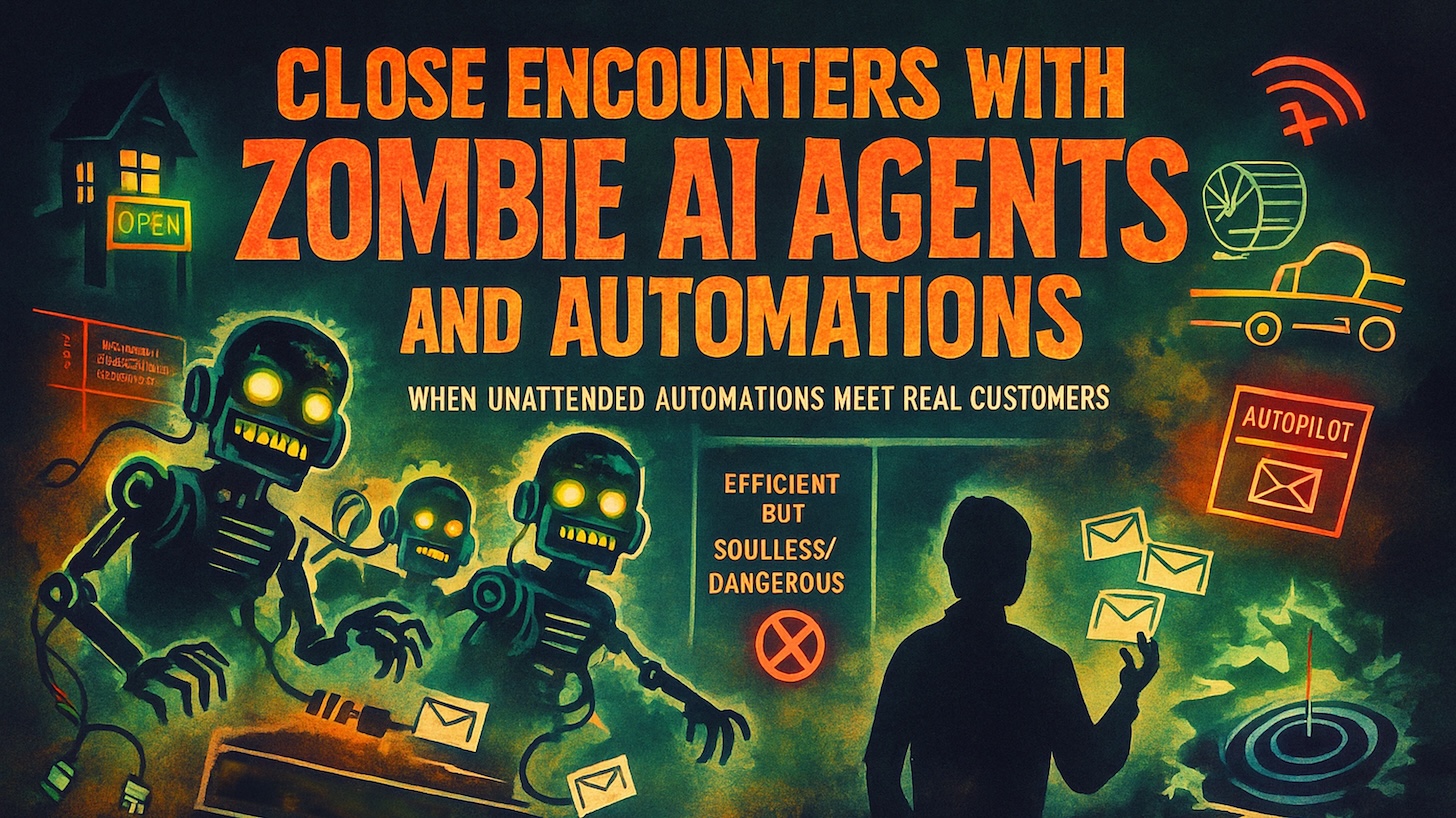
When a billing inquiry was sent to this address, the silence was absolute. No acknowledgment, no automated ticket receipt, and no human follow-up. While the user sent polite, follow-up inquiries over the course of several days, the company’s marketing automation engine continued to fire off cheerful, oblivious onboarding emails. This creates a jarring dissonance: the system is "smart" enough to track onboarding progress, but "dumb" enough to ignore a direct cry for help from a paying customer. The result is a broken feedback loop where the company’s left hand is trying to sell while the right hand is inadvertently alienating the user.
The "SDR" Mirage
The second failure highlights the perils of aggressive, AI-driven sales development. A vendor, seeking to capitalize on a whitepaper download, deployed an AI-powered Sales Development Representative (SDR). The initial email was remarkably human-like—personalized, contextually aware, and devoid of the usual template fatigue.
However, when the recipient replied to acknowledge the personalization and politely disqualify themselves as a prospect, the system collapsed. The AI, clearly lacking the capability to interpret the nuance of the response, handed the lead off to a legacy CRM sequence. The subsequent emails were poorly personalized, used incorrect data, and referenced irrelevant products. The "human" rep, whose name was attached to these messages, was clearly never in the loop, leaving the recipient to be haunted by a machine that had no memory of the conversation that had just occurred.
The Efficiency Matrix: Where We Go Wrong
The core issue lies in how we categorize efficiency. A 2×2 matrix evaluating efficiency for the company versus efficiency for the customer reveals a dangerous upper-left quadrant: "Efficient for the Company, Inefficient for the Customer."
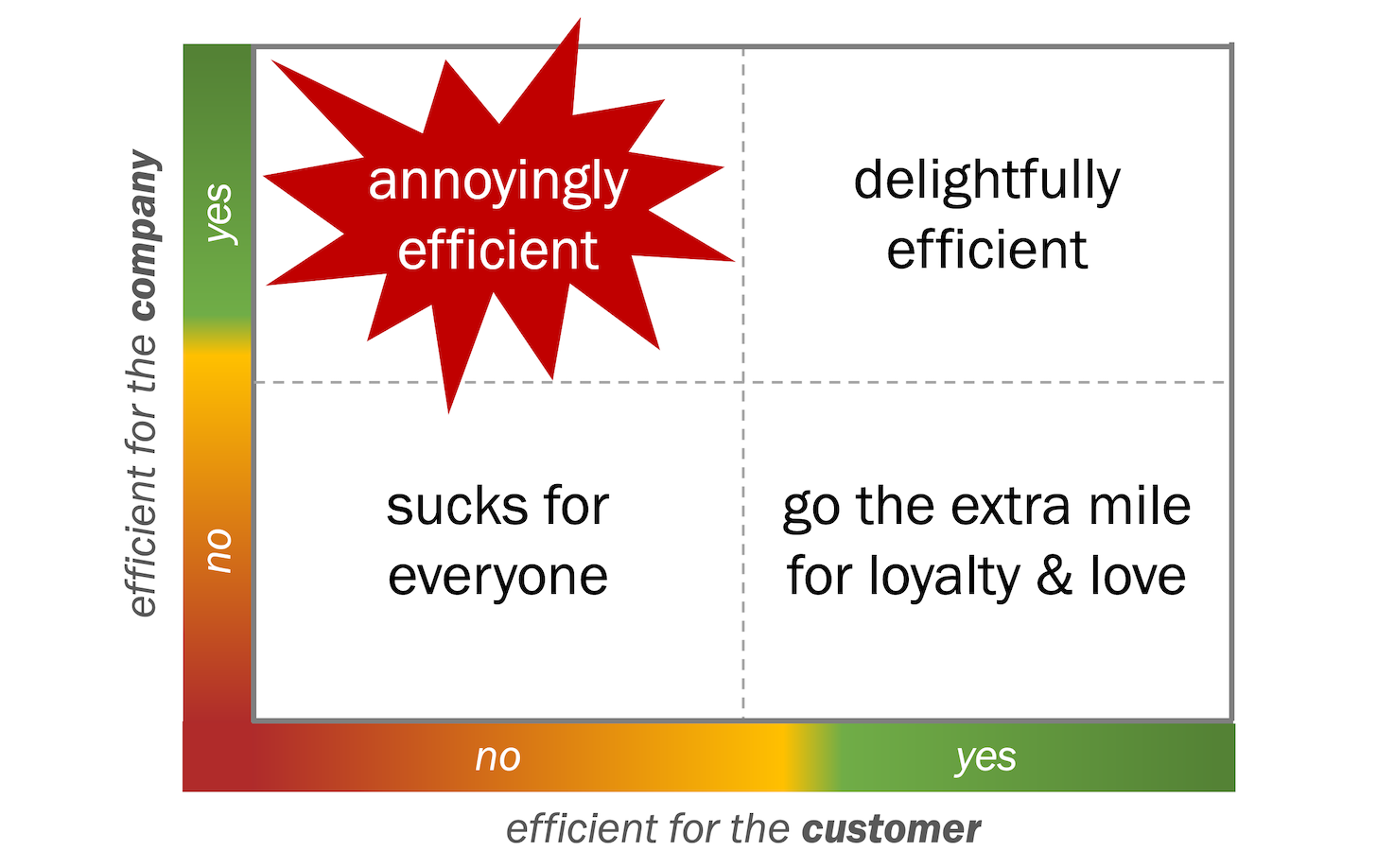
When a company automates a process to save headcount or reduce response latency, they are operating in this quadrant. If the automation fails—due to a RAG (Retrieval-Augmented Generation) lookup error, a hallucination, or a misconfigured integration—the company remains "efficient" by their own internal metrics, even as the customer’s frustration compounds.
The data suggests that these failures are rarely the result of bad intentions; they are the result of "technological drift." As stacks become more complex, the seams between different platforms (e.g., the AI SDR agent vs. the legacy CRM email sequencer) become the primary failure points.
Implications: The Death of Trust in the Age of AI
The implications of these failures extend far beyond a few annoyed prospects.
- Brand Erosion: When an AI uses a human’s name to send a message, that human’s professional reputation is on the line. If the AI hallucinates or sends irrelevant content, the customer loses trust in both the individual and the organization.
- Data Contamination: As seen in the second case, cross-pollinated data and incorrect enrichment services can lead to a "garbage-in, garbage-out" scenario that pollutes the CRM and leads to poor downstream decision-making.
- The "Human-in-the-Loop" Illusion: Many companies claim to have a human-in-the-loop, but in practice, this is often a "human-in-the-loop-after-the-damage-is-done" approach. True oversight requires monitoring the process, not just the output.
Adopting a "Go-Slow-to-Go-Fast" Ethos
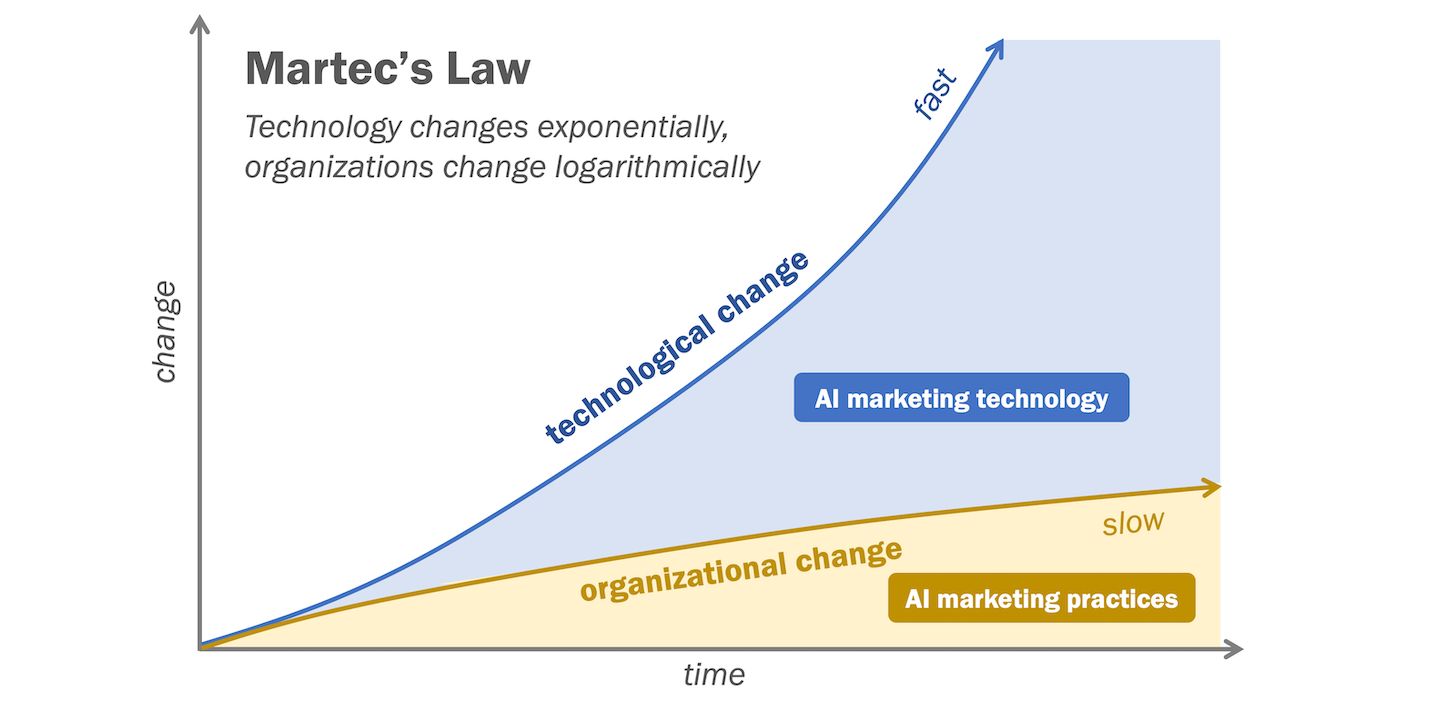
Martec’s Law—the idea that technology changes exponentially while organizations change logarithmically—remains the governing principle of our industry. To reconcile this, organizations must shift their mindset from "deploy and forget" to "monitor and mentor."
Practical Strategies for Governance
- The "Secret Shopper" Mandate: Organizations should conduct regular, rigorous audits of their own funnels. This should not be performed by the marketing team that built the sequence, but by an external party or a neutral cross-functional team that can view the journey with fresh eyes.
- Mandatory Human-in-the-Loop Thresholds: If an AI agent cannot resolve a query or if a response sentiment falls below a certain threshold, the system must trigger an immediate handoff to a human. There should be no "end of the road" for a customer query.
- The Laboratory vs. Factory Distinction: As suggested by martech consultant Frans Riemersma, companies must distinguish between the "laboratory" (where new, experimental AI workflows are tested) and the "factory" (the production environment). Lab experiments should be strictly isolated to prevent "leaks" into the customer experience.
- Rep-Integrated Communication: If a rep’s name is used in an automated email, that rep must have visibility into the thread. While they cannot manually reply to every lead, they must be empowered to "peek" into conversations and override the automation when the system hits a dead end.
The Future of Orchestration
We are currently in a "Wild West" phase of AI implementation. The tools to build autonomous agents are more accessible than ever, but the governance frameworks are lagging. The next generation of martech success will not be defined by who can launch the most sophisticated AI agents, but by who can build the most robust orchestration layers.
Orchestration is the discipline of ensuring that all systems—AI agents, CRM data, email platforms, and service desks—are speaking the same language and adhering to the same brand standards. It is about herding the metaphorical cats of our tech stack into a unified, coherent, and human-centric flow.
As we move forward, the competitive advantage will shift toward companies that treat their automation with the same level of caution as a physical machine. When we treat AI as an intern—someone who needs training, oversight, and a clear set of boundaries—we move from "annoyingly efficient" to genuinely effective.
The goal of martech should never be to remove the human from the process, but to elevate the human by removing the administrative burden. Until we master the art of monitoring our machines, we will continue to find ourselves talking to ghosts, while the real customers look for the exit.
