
The Digital Snowball: How 2025 Social Video Data Predicts the Breakout Stars of the Milano-Cortina 2026 Winter Olympics
As the global sporting community sets its sights on the picturesque peaks and ice rinks of Milano-Cortina, Italy, for the 2026 Olympic Winter Games, a familiar phenomenon is taking shape. Olympic years invariably ignite a fierce, globally shared passion for athletic competition, thrusting lesser-known disciplines into the international spotlight and temporarily transforming niche sports into household conversations.
However, the path to Olympic fever has evolved dramatically in the digital age. Long before the Opening Ceremony torch is lit, digital platforms, streaming archives, and social video ecosystems serve as the ultimate barometer for fan interest. By analyzing comprehensive viewership data from 2025—a decidedly non-Olympic year—industry analysts can map out precisely which sports, creators, and narratives are capturing the public imagination.
According to cross-platform insights from video intelligence firm Tubular Labs, the data offers striking clues about which competitions will emerge as the undisputed breakout winners of the upcoming Winter Games. From the glittering aesthetics of figure skating to the gravity-defying velocity of alpine skiing and the cinematic storytelling of bobsledding, digital audiences are already voting with their views.
Main Facts: The Digital Landscape of Winter Sports Ahead of 2026
The appetite for winter sports content on digital and social platforms is remarkably robust, defying the seasonal limitations traditionally associated with snow and ice. Far from lying dormant during the warmer months, winter sports content generated billions of interactions throughout 2025, laying a high-octane foundation for the Milano-Cortina Games.
At the center of this digital phenomenon are two massive content pillars: ice skating and skiing. Together, these disciplines command staggering view counts that outpace nearly every other category of winter sports entertainment.
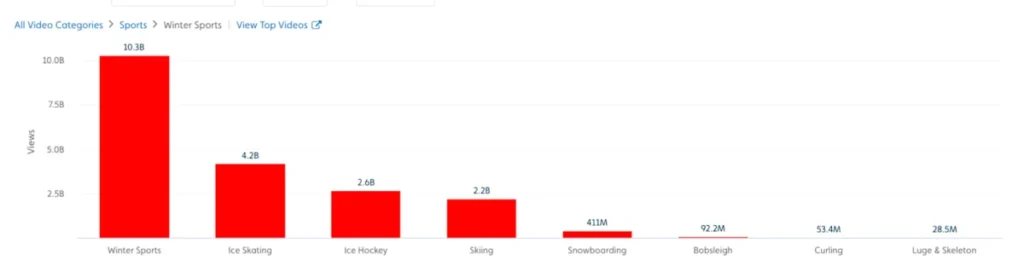
- Ice Skating Dominance: Across all major digital platforms, ice skating content drove a staggering 4.2 billion views in 2025. Figure skating alone accounted for 2.2 billion of those views, accompanied by an impressive 36.8 million total engagements.
- The Skiing Ecosystem: On YouTube alone, skiing videos amassed 2.2 billion views over the course of 2025. Freestyle and alpine skiing led the charge, combining for roughly a third of that total across more than 6,000 individual uploads.
- Niche Momentum: Specialized sports like bobsleigh—despite occupying a narrower slice of the overall sports market—punched well above their weight class, averaging 317,000 views per video during a non-Olympic year.
These figures illustrate a fundamental shift in sports media consumption. While exclusive broadcast rights holder NBC commands traditional television coverage during the Games themselves, the runway leading up to the Olympics is entirely democratized. Content creators, niche athletes, and lifestyle influencers are claiming a massive stake in the winter sports narrative, proving that the audience for these events extends far beyond traditional sports fans.
Chronology: The Evolution of Olympic Hype and Digital Consumption
Understanding how we arrived at the digital fervor surrounding the 2026 Winter Games requires examining the timeline of how winter sports content has transformed over the past three decades, culminating in the data-driven landscape of 2025 and early 2026.
The 1990s–2010s: Cinematic Storytelling and Traditional Media
For decades, winter sports viewership was strictly tethered to the triennial and quadrennial cycles of the Olympic Games. Broadcasters held a monopoly on winter sports content, with rare exceptions carved out by pop culture milestones. For instance, the 1993 Disney film Cool Runnings—inspired by the true story of the Jamaican bobsled team at the 1988 Calgary Olympics—permanently altered public perception of bobsleigh, proving that narrative-driven storytelling could turn a niche sport into an enduring pop-culture touchstone.
The 2020–2024 Cycle: The Rise of Short-Form Video
As digital platforms like TikTok, YouTube Shorts, and Instagram Reels matured, the consumption of sports content shifted from live, multi-hour broadcasts to snackable, high-impact clips. Athletes began bypassing traditional media gatekeepers, utilizing social video to document grueling training regimens, behind-the-scenes village life, and personality-driven content.
2025: The Non-Olympic Baseline Year
Throughout 2025, winter sports content experienced an unprecedented boom even in the absence of an Olympic catalyst.
- Q1–Q2 2025: Ice skating content maintained a steady baseline of billions of views, driven not only by competitive highlights but by technical tutorials, aesthetic breakdowns, and beauty content integration. Surprisingly, creators like France’s Anthony Robert saw their skiing-focused channels peak in viewership during the summer months, proving that seasonal boundaries no longer restrict winter sports fandom.
- Q3–Q4 2025: As athletes entered their final pre-Olympic training blocks, team accounts—such as the official Great Britain bobsled team YouTube channel—ramped up documentary-style content, pulling back the curtain on the physical toll and psychological preparation required for elite competition.
- Late 2025 / Early 2026: Brands and publishers began finalizing their marketing strategies for Milano-Cortina, heavily relying on 2025 engagement data to identify which athletes and disciplines commanded the most loyal and active digital communities.
Supporting Data: Deep Dive into the 2025 Metrics
A closer examination of the Tubular Labs metrics reveals distinct patterns in how audiences consume different winter sports disciplines. The data not only highlights absolute viewership volumes but also reveals audience retention, upload frequency, and engagement efficiency.

1. Ice Skating: Aesthetic Appeal and Mass Engagement
With 4.2 billion total views across platforms in 2025, ice skating proved to be the undisputed heavyweight of winter sports digital content. Figure skating captured the lion’s share with 2.2 billion views and 36.8 million engagements.
What drives these numbers? Beyond the athletic prowess on display, figure skating possesses a unique intersection of sport, fashion, and theatrical performance. This duality opens the floodgates for non-sports creators. Hair, beauty, and fashion influencers frequently analyze Olympic routines for aesthetic inspiration, while "how-to" and beginner-focused skating accounts attract massive audiences looking to demystify the sport—a crucial engagement hook for fans living in regions without immediate access to ice rinks.
2. Skiing: Volume, Variety, and Out-of-Season Surges
With over 20 distinct skiing disciplines featured at the Milano-Cortina Games, skiing represents one of the most content-rich sectors of the Winter Olympics. In 2025, skiing videos on YouTube alone pulled in 2.2 billion views.
- Freestyle and Alpine Dominance: These two disciplines combined for roughly 733 million views (one-third of the total skiing pool) across more than 6,000 uploads, averaging a solid 128,000 views per video.
- The Ski Jumping Outlier: While ski jumping featured a significantly lower volume of total video uploads, it punched far above its weight class in efficiency, averaging an extraordinary 426,000 views per video.
- The Creator Factor: Prolific creators like France’s Anthony Robert demonstrated the power of niche dedication, capturing sustained interest that defied seasonal expectations by engaging audiences with freeride and alpine content well into the summer months.
3. Niche Disciplines: Bobsleigh, Curling, and Snowboarding
While sports like bobsleigh may not match the daily broadcast numbers of alpine skiing, their digital footprint is fueled by compelling human narratives. In 2025, bobsleigh content averaged 317,000 views per video. This success was driven not just by entertainment aggregators like Rome Music, but by primary sources—most notably the Great Britain bobsled team, whose behind-the-scenes vlogs capitalize on the perennial storytelling trope of "sprinters turned bobsledders."
Similarly, curling and snowboarding continue to perform exceptionally well on social video. Their digital vitality serves as a direct preview of what audiences will prioritize during the February competitions, providing brands with a clear roadmap for athlete partnerships and targeted sponsorships.
Official Responses and Industry Perspectives
The convergence of data analytics and sports marketing has forced major networks, independent publishers, and brands to rethink their strategies heading into Milano-Cortina 2026.
Industry analysts point out that while broadcast networks retain exclusive rights to live event coverage, the broader digital ecosystem dictates the cultural conversation. Publishers who fail to capitalize on the pre-game momentum risk missing out on billions of potential impressions.
"Even in a non-Olympic year, ice skating videos alone drove 4.2 billion views across platforms in 2025—well outpacing other winter sports categorized by Tubular Labs," industry research notes. "While NBC owns the exclusive rights around the Games themselves, increased interest in figure skating and ice skating is a cue to other publishers to lean into related content as audiences get ready for the Olympics."
Sports marketing experts emphasize that the commercial viability of winter sports athletes is no longer measured solely by Olympic podium finishes, but by their digital share of voice. Brands are increasingly pivoting away from traditional blanket sponsorships toward micro-targeted collaborations with creators and athletes who command hyper-engaged, niche communities—such as the ski jumping and bobsled digital ecosystems.
Implications: What This Means for Creators, Brands, and Publishers
The 2025 viewership data serves as more than a retrospective look at past consumption; it is a strategic playbook for anyone operating in the digital media, sports marketing, or content creation spaces as the Milano-Cortina 2026 Olympic Winter Games approach.
Key Takeaways for Industry Stakeholders:
- Diversify Beyond Traditional Sports Audiences: Ice skating’s crossover appeal into fashion, beauty, and lifestyle content proves that publishers can attract non-traditional sports fans by highlighting the aesthetic and cultural elements of athletic disciplines.
- Capitalize on "How-To" and Educational Content: With millions of viewers fascinated by sports they may never actively practice, instructional videos and beginner guides bridge the gap between passive viewing and active community participation.
- Embrace Off-Season and Niche Longevity: Creators like Anthony Robert and institutional accounts like the Great Britain bobsled team have proven that winter sports content does not need to hibernate in the summer. Consistent, personality-driven, behind-the-scenes storytelling builds loyal audiences year-round.
- Strategic Brand Partnerships: Advertisers looking to make an impact during the 2026 Games should look beyond marquee events and invest in the digital communities surrounding high-engagement niche sports like ski jumping, bobsleigh, and snowboarding, where audience loyalty is exceptionally strong.
As the countdown to Milano-Cortina 2026 continues, the digital arena is already ablaze. For creators, publishers, and brands striving to get ahead of the competition and measure the next breakout content trends, understanding these underlying data streams is no longer optional—it is the difference between leading the pack and getting left out in the cold.
