

The Economics of Content: Decoding YouTube’s Revenue Model in 2026
For many, the dream of becoming a full-time creator is synonymous with the allure of YouTube’s massive reach. Yet, the leap from a viral video to a sustainable income is often obscured by industry jargon like CPM, RPM, and the shifting mechanics of the YouTube Partner Program (YPP). As of 2026, YouTube remains the dominant force in creator monetization, having distributed over $100 billion to creators since 2021. However, understanding how that capital flows from advertisers to your bank account requires a granular look at the platform’s fiscal engine.
The Myth of "Pay-Per-View"
A common misconception among aspiring creators is that YouTube pays a flat fee for every video view. In reality, YouTube operates an ad-view model, not a view-count model.

When a viewer watches your content, they aren’t necessarily contributing to your revenue unless an advertisement is successfully served and viewed. If a video garners one million views but carries no ads—or if viewers employ ad-blockers—the creator generates zero revenue from that traffic. Conversely, if a single long-form video contains multiple mid-roll ad breaks, a single viewer might trigger two or three ad impressions, effectively making the "ad view" count higher than the total video view count.
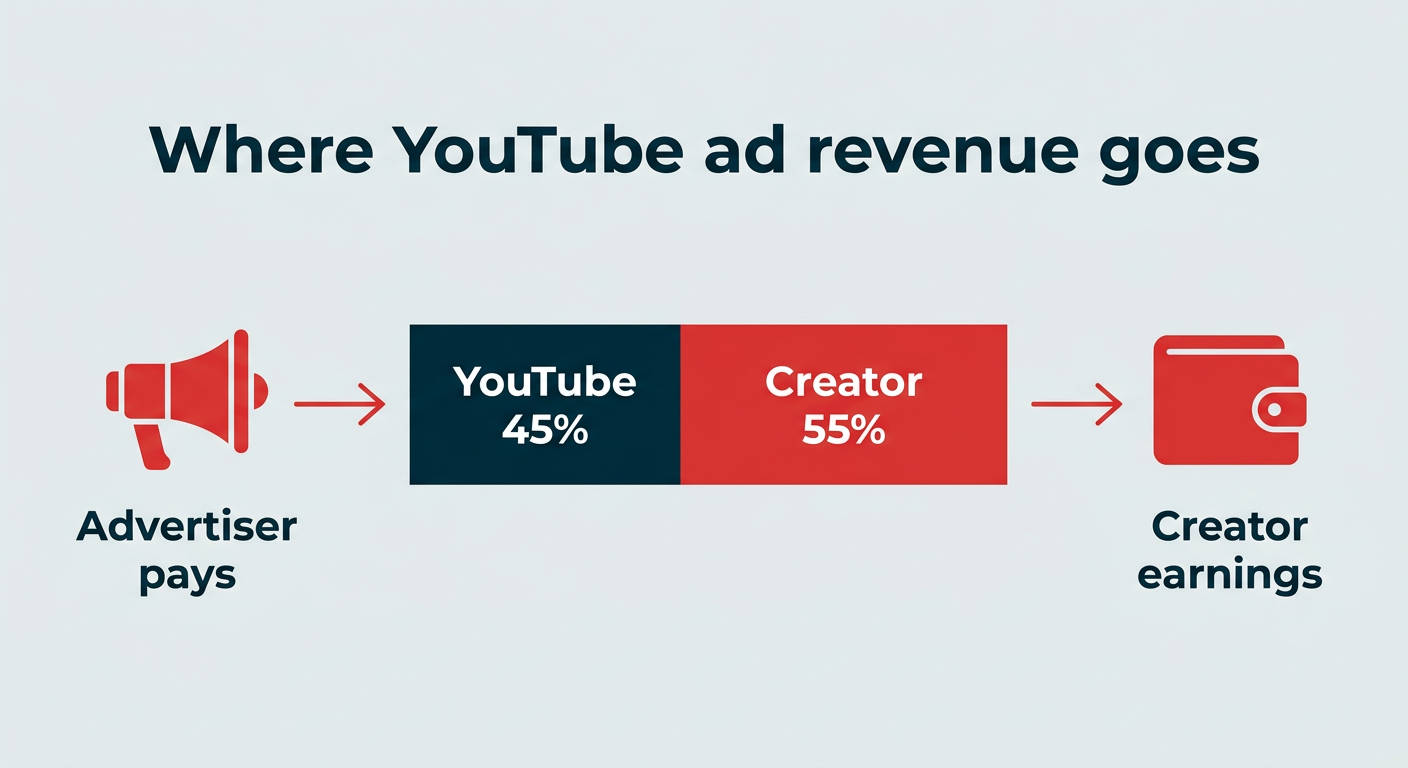
YouTube acts as the intermediary, facilitating the marketplace. When an advertiser pays for space, YouTube retains 45% of the revenue, while the creator receives 55%. This split is the bedrock of the platform’s stability and its ability to scale global creator careers.

Decoding the Financial Metrics: CPM, RPM, and CPC
To manage a channel like a business, creators must master three fundamental metrics found within the YouTube Studio dashboard:
- CPM (Cost Per Mille): This represents the cost advertisers pay for every 1,000 ad impressions. It is a measure of advertiser demand for your specific niche.
- RPM (Revenue Per Mille): This is the "take-home" metric. It calculates your earnings per 1,000 total video views, accounting for both the ad revenue share and the volume of views that were not monetized.
- CPC (Cost Per Click): While less common as a primary payout driver today, this measures what an advertiser pays when a user actively clicks on an ad.
Why RPM matters more than CPM: Creators often inflate their perceived success by quoting high CPM figures. However, because RPM accounts for the "leaky bucket" of non-monetized views, it is the only accurate reflection of a channel’s financial health. A high CPM in a competitive niche is useless if your content doesn’t maintain enough watch time to trigger ads for the majority of your audience.
The 2026 Earnings Landscape: What to Expect
Industry benchmarks for 2026 suggest that creators can expect to earn between $5 and $15 per 1,000 ad views. Because the average ad view rate (the percentage of video views that result in an ad being shown) typically fluctuates between 49% and 68%, your earnings per total view will consistently land lower than that $5–$15 range.
Comparative Revenue Estimates (Annualized Trends)
| Total Video Views | Est. Ad Views (50-65%) | Estimated Earnings |
|---|---|---|
| 10,000 | 5,000 – 6,500 | $25 – $97.50 |
| 100,000 | 50,000 – 65,000 | $250 – $975 |
| 1,000,000 | 500,000 – 650,000 | $2,500 – $9,750 |
These figures are not guarantees; they are fluid estimates. A creator focusing on high-intent niches—such as personal finance or B2B software—will consistently command higher rates than those in entertainment or gaming, where the audience demographic may be younger or less valuable to advertisers.
The Path to Eligibility: The YouTube Partner Program (YPP)
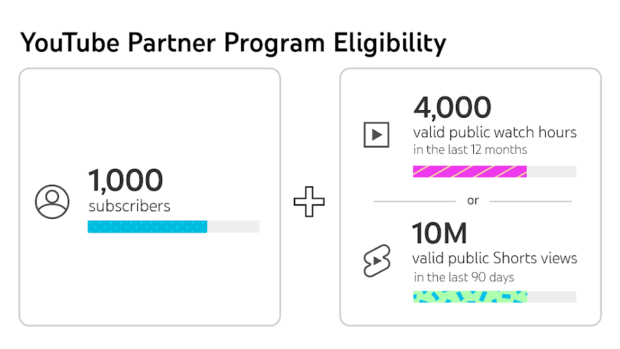
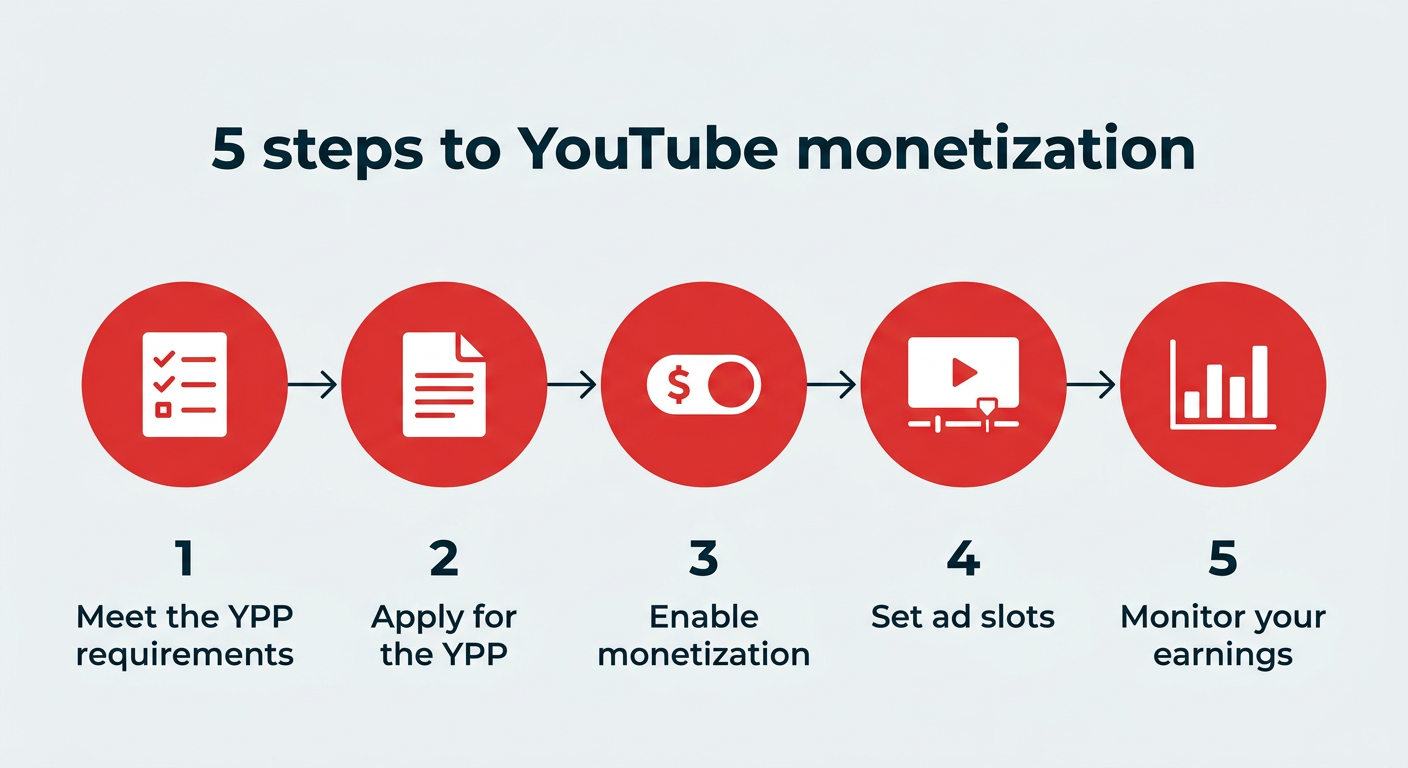
Before a creator can earn a single cent from ad revenue, they must qualify for the YouTube Partner Program. The barrier to entry is designed to ensure that only creators providing "ad-safe" and consistent content are monetized.
The Two-Fold Eligibility Path
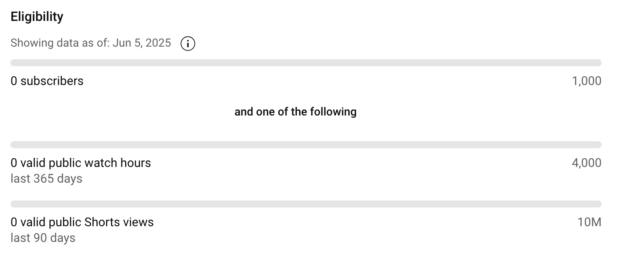
- The Long-Form Path: Creators must secure 1,000 subscribers and 4,000 qualified public watch hours within a rolling 12-month window.
- The Shorts Path: Creators must secure 1,000 subscribers and 10 million qualified public Shorts views within the last 90 days.
Once these thresholds are met, creators must undergo a rigorous review process. It is vital to note that even after acceptance, every individual video is subject to "ad-friendly" guidelines. Content featuring excessive profanity, violence, or controversial topics may be "yellow-iconed," meaning it is either partially or entirely demonetized.
Factors Influencing Your Bottom Line
Why do two channels with identical view counts often have vastly different payouts? The answer lies in the following nine variables:
1. Niche Authority
Advertisers pay more to reach audiences with specific purchasing power. Finance, tech reviews, and entrepreneurship niches command higher CPMs because the viewers are often in a "buying mindset." Comedy and gaming, while high-traffic, often command lower CPMs because the audience is broader and less targeted for high-ticket sales.
2. Geographic Audience
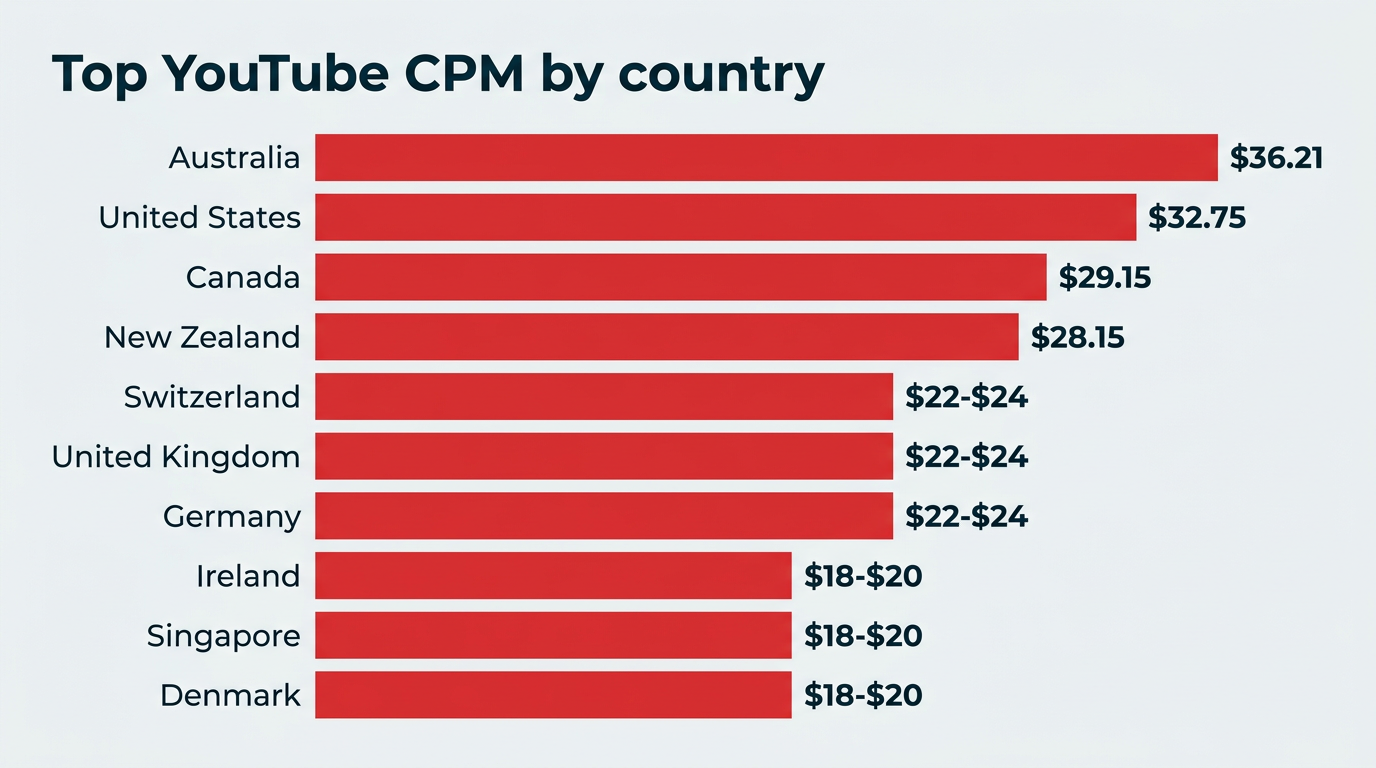
YouTube ad rates are localized. Advertisers pay significantly more to reach audiences in Australia, the United States, Canada, and Western Europe. A creator with 100,000 views from the U.S. will almost always out-earn a creator with 100,000 views from regions with lower purchasing power.
3. Seasonality
The advertising calendar is cyclical. "Q4" (October through December) is the "Golden Quarter," where retail brands dump their remaining annual budgets into holiday advertising. RPMs often spike during this period, only to drop sharply in January and February when budgets reset. Successful creators plan their major content launches around these seasonal peaks.

4. Video Length and Retention
The "8-minute rule" is a staple of modern YouTube strategy. By producing videos longer than eight minutes, creators unlock the ability to place manual mid-roll ads. The longer a viewer stays, the more ads they are exposed to, and the higher the aggregate revenue for that video.
The "Shorts" Conundrum
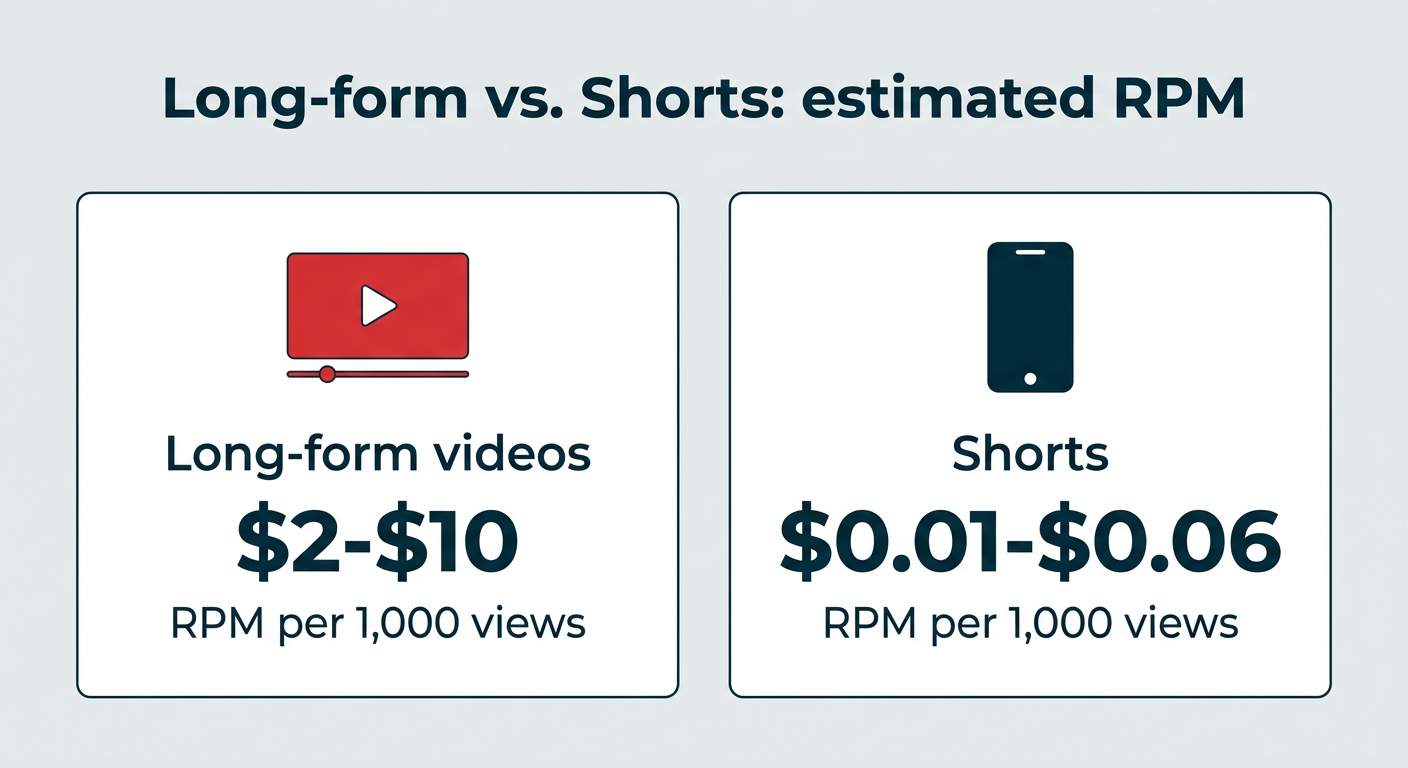
Shorts have transformed the platform, generating over 200 billion daily views. However, they are not a substitute for long-form revenue. Shorts monetization uses a pooled revenue system rather than a per-video ad-placement model, resulting in an RPM typically ranging from $0.01 to $0.06 per 1,000 views.
While Shorts offer a meager direct return, their value lies in top-of-funnel growth. They are the most efficient tool for gaining subscribers, who can then be converted into loyal viewers of your long-form, high-RPM content.
Strategic Implications for the Future
For the modern creator, relying solely on AdSense is a precarious strategy. The most successful YouTubers treat their channel as a media company, diversifying their income through:
- Affiliate Marketing: Earning commissions on products linked in descriptions.
- Brand Sponsorships: Negotiating direct deals that bypass the YouTube ad-split entirely.
- Digital Products/Courses: Monetizing expertise directly to a niche audience.
- Memberships and Super Chats: Building a community-funded model that is independent of advertiser trends.
Conclusion
YouTube’s monetization system is a sophisticated marketplace that rewards consistency, audience quality, and strategic planning. While the $5–$15 per 1,000 ad views estimate serves as a helpful baseline, the reality of the creator economy is that your income is a reflection of the value you provide to advertisers. By focusing on long-form content, optimizing for high-value demographics, and diversifying revenue streams, creators can move beyond the volatility of ad rates and build a sustainable, scalable business.
As we look toward the remainder of 2026, the creators who thrive will be those who view their analytics not just as a scoreboard, but as a roadmap for optimization. The math is clear: volume matters, but value dictates the bottom line.
