
The Digital News Revolution: How Latin American Publishers Can Dominate the Social Video Era
In the rapidly evolving media landscape of Latin America (LATAM), the traditional newsroom is no longer defined by the morning newspaper or the evening television broadcast. Instead, the epicenter of public discourse has migrated to the palm of the viewer’s hand. As social platforms become the primary gateway for information discovery, debate, and consumption, publishers across Argentina, Chile, Colombia, Mexico, and Peru are facing a defining moment: adapt to the social video revolution or risk obsolescence.
According to the Reuters Institute Digital News Report 2025, between 58% and 64% of respondents in these key LATAM markets now identify social media as their primary source of news. This shift presents a paradoxical challenge for legacy media organizations. While established publishers possess the journalistic rigor and brand authority to inform the public, they are increasingly being outpaced by "social-first" creators who intuitively understand the cadence of algorithmic engagement. To remain competitive in 2026, publishers must pivot from intuition-based content creation to a strategy rooted in granular audience data.
The State of Play: A Landscape of Massive Consumption
Data provided by Tubular Labs for the period between January 1, 2025, and July 31, 2025, paints a picture of a region obsessed with digital video. Across all content categories and social platforms, LATAM audiences generated a staggering 4.05 trillion views. Within this digital deluge, the "News & Politics" category emerged as a powerhouse, accounting for 27.1 billion views across 293,000 individual uploads.

However, a closer look at these figures reveals a significant "whitespace" opportunity. Despite the high volume of interest, News & Politics content accounted for only 0.67% of total uploads in the region. This discrepancy suggests that while the audience appetite for news is voracious, the current supply of high-quality, platform-native content is not yet meeting demand. For publishers, this is a clear invitation to capture a larger share of the audience by scaling production and optimizing distribution.
Chronology of Consumption: Understanding the Platform Shifts
The evolution of news consumption in LATAM has not been uniform across all channels. We have seen a distinct transition from passive long-form viewing to active, short-form interaction.
The YouTube Paradigm Shift
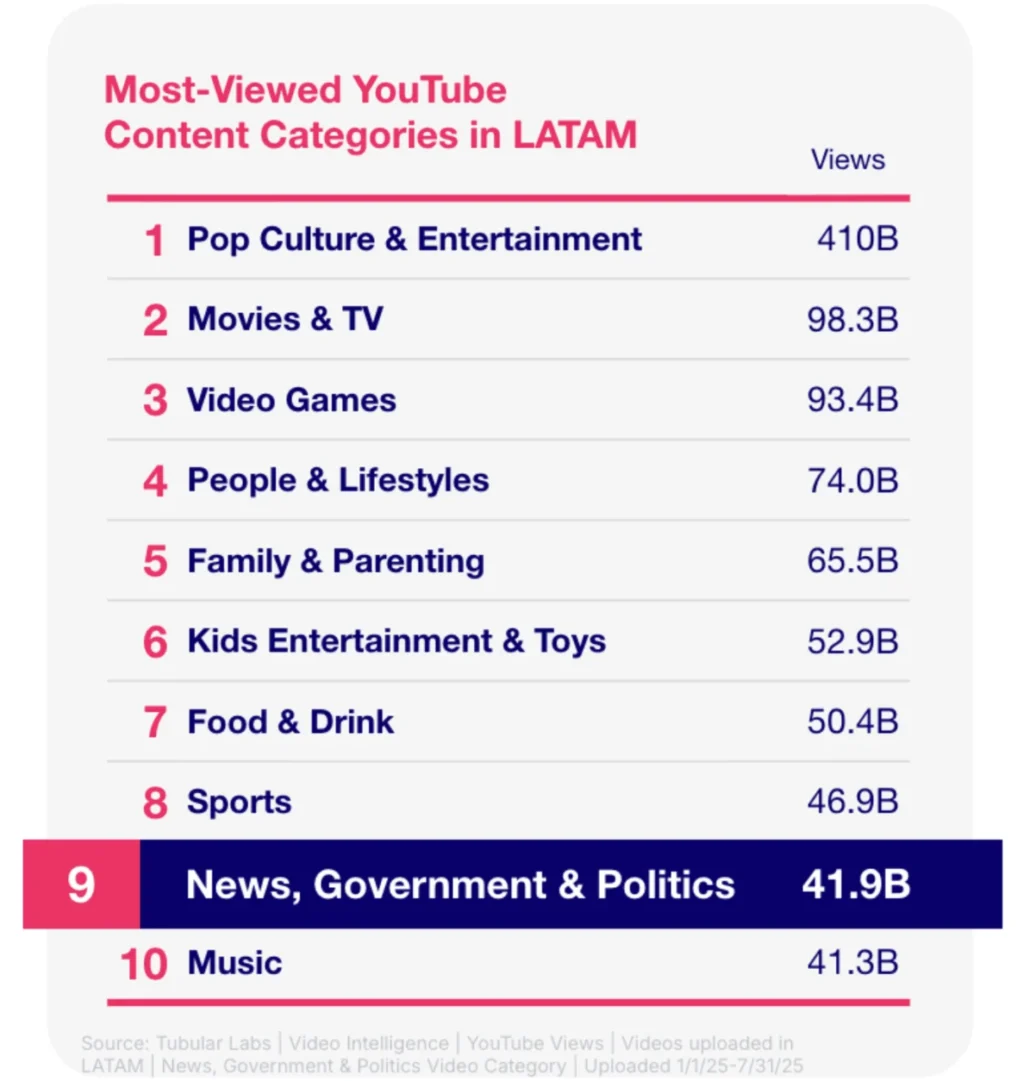
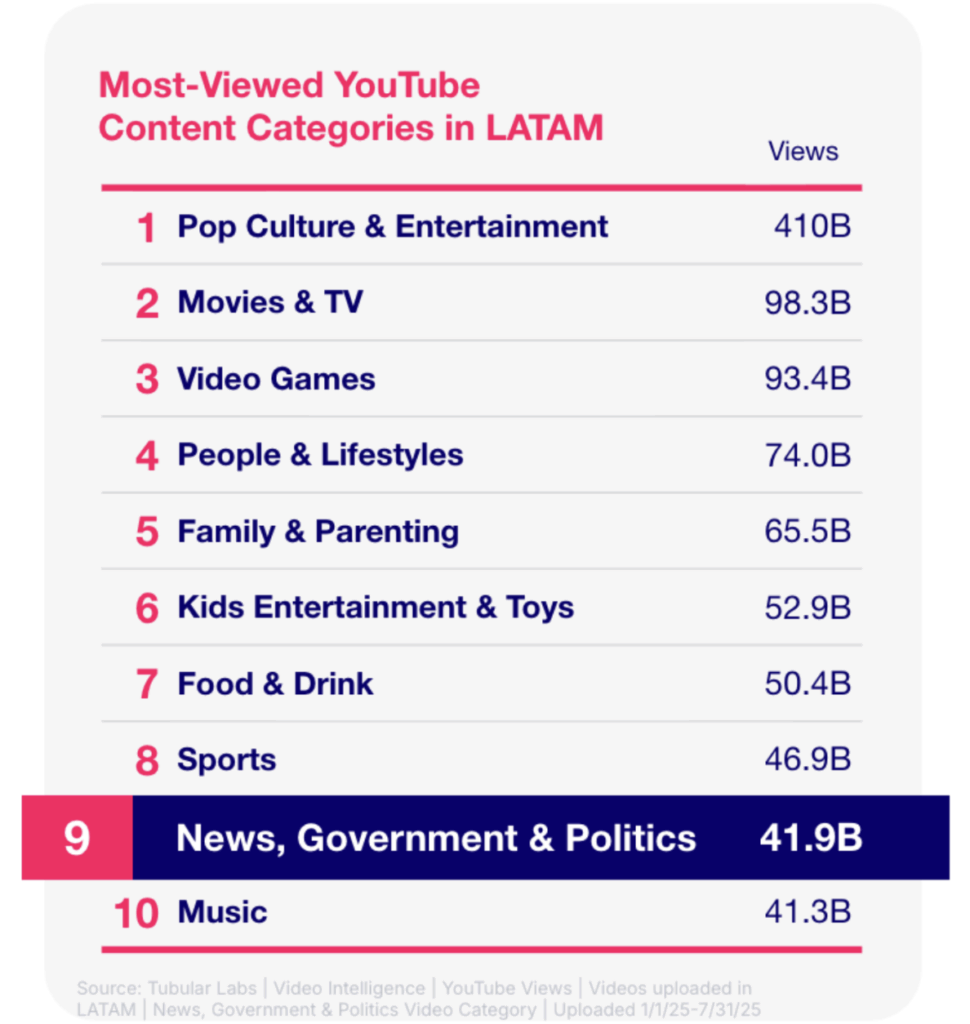
YouTube remains a critical pillar for news, ranking as the ninth most-viewed category in the region with 41.9 billion views. Surprisingly, this category outperformed the "Music" category in terms of impact, despite having fewer uploads. Yet, the method of consumption is undergoing a structural change:
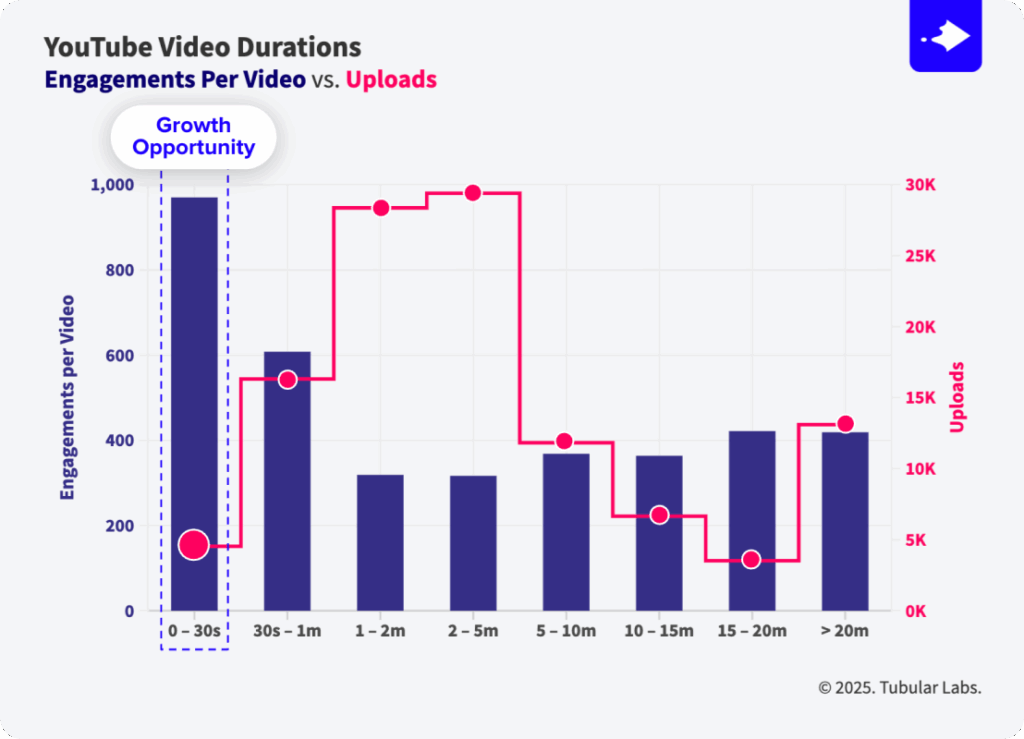
- The Duration Trap: Current data indicates that many publishers are misaligned with viewer habits. Most uploads currently fall within the 1-to-5-minute range—a duration that, statistically, generates the lowest engagement per video.
- The Short-Form Surge: Conversely, videos under 30 seconds are delivering the highest engagement per video. This suggests that the industry is still lagging in its transition to bite-sized, high-impact storytelling.
- The Weekend Effect: Surprisingly, engagement peaks on Sundays. This challenges the traditional "work-week" publishing mindset and suggests that audiences are turning to their favorite news channels to digest the week’s events during their downtime.
The TikTok Acceleration
If YouTube is the established hub, TikTok is the growth engine. Despite representing a smaller share of total content uploads, TikTok drives 71% of all cross-platform social interactions for LATAM news media. With 92 billion views, News & Politics has cemented itself as a top-six category on the platform. The growth is undeniable: the top 10 LATAM news publishers on TikTok saw a 55% year-over-year increase in viewership.
Supporting Data: Dissecting Audience Behavior
To build a successful strategy for 2026, publishers must understand the intersection of device preference and content format.
Device Fragmentation
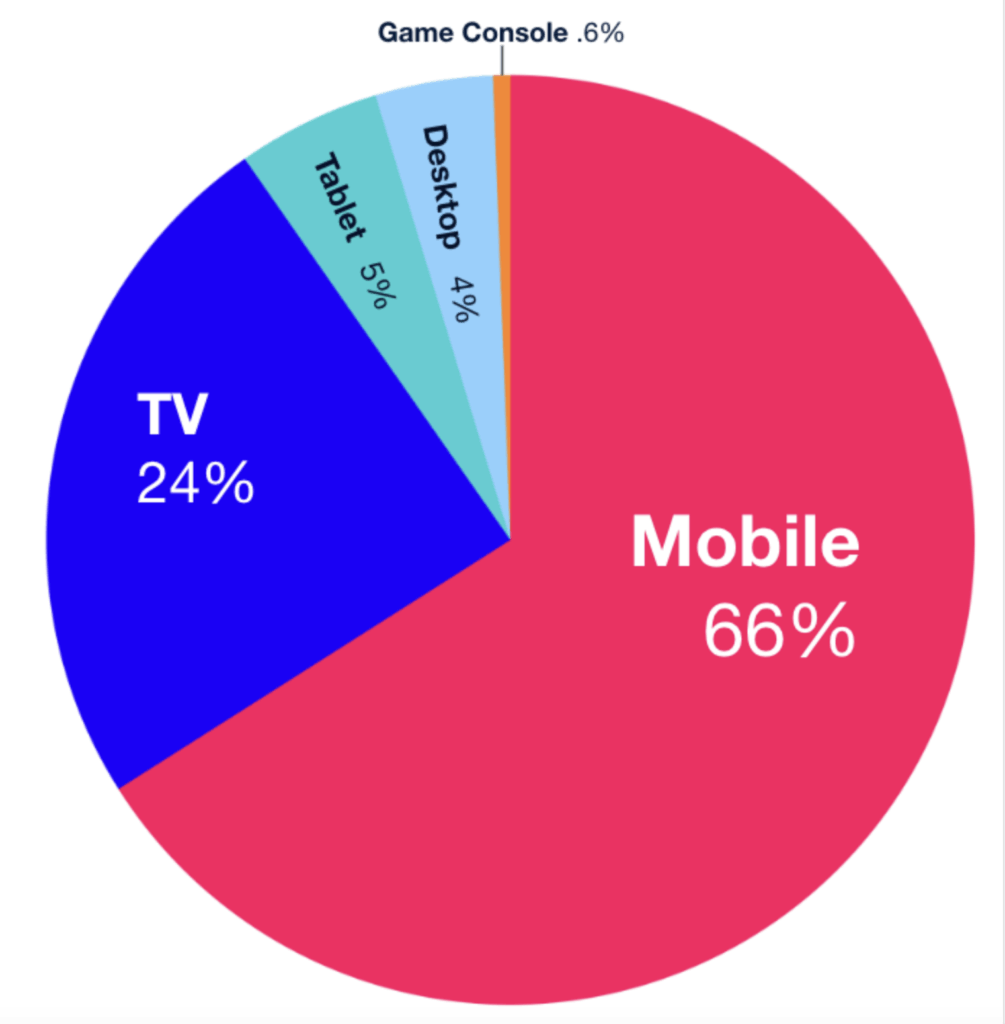
The medium is indeed the message. Research shows that 66% of YouTube news views in LATAM occur on mobile devices, compared to just 24% on television. This hardware preference dictates the creative format: long-form, landscape-oriented videos are increasingly at odds with the mobile-first habits of the modern reader.
Collaboration with Chartbeat further clarifies this divide. When viewing content on televisions, tablets, or gaming consoles, audiences are more inclined to watch videos exceeding 20 minutes. However, when using mobile devices or desktops, the preference shifts dramatically toward videos under one minute. Publishers failing to tailor their output to these specific devices are effectively alienating their own audience.
Case Studies in Success
The data confirms that those who embrace short-form video reap immediate rewards:
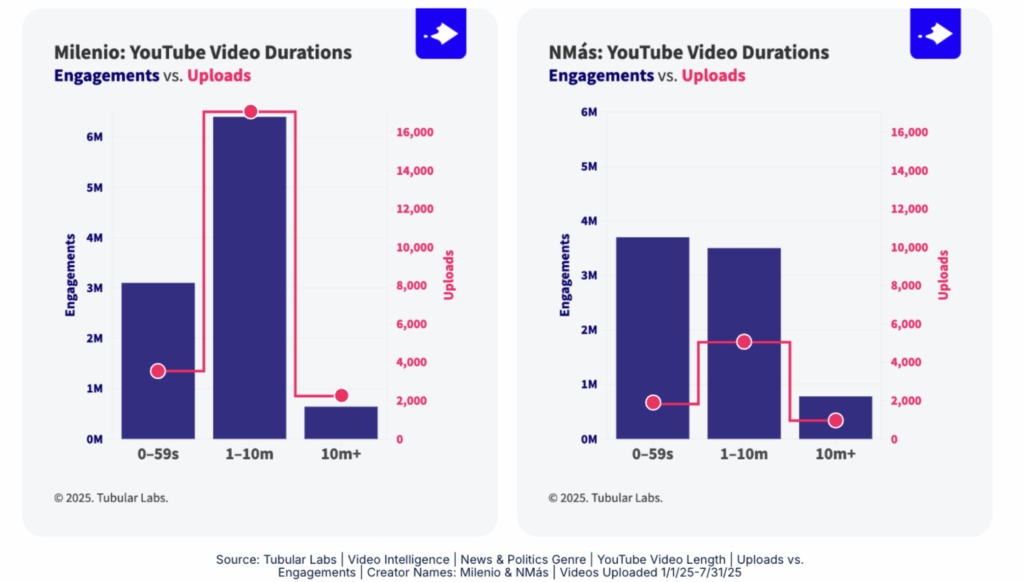
- Milenio: A prime example of effective transition, where YouTube Shorts comprised only 15% of their total uploads but accounted for 31% of their total cross-platform engagements.
- NMás: By leveraging a dual-track strategy, they found that even while posting significantly more mid-length content, nearly half of their total engagement was generated by Shorts.
- C5N: This publisher demonstrates the power of the TikTok engine, where their TikTok content accounted for only a quarter of their uploads but drove a massive 71% of their total cross-platform engagement.
Official Perspectives: The Strategic Mandate
Industry experts and media strategists are unanimous in their assessment: the era of "one-size-fits-all" publishing is over. According to insights from the 2025 digital landscape, the most successful newsrooms are those that treat each social platform as a distinct ecosystem rather than a repository for repurposed television clips.
"We are seeing a clear divergence in audience intent based on the topic," notes one lead strategist. "Our analysis suggests that audiences are looking for specific types of information on specific platforms. For instance, topics involving human rights or social advocacy perform exceptionally well on TikTok and Instagram, while content related to governance and law enforcement finds a more receptive, analytical audience on Facebook."
This level of nuance is the new benchmark for professional journalism. Publishers are no longer just news aggregators; they are content strategists who must analyze, test, and pivot based on the feedback loops provided by platform algorithms.
Implications for 2026 and Beyond
As we move deeper into 2026, the implications for LATAM news publishers are twofold:
- Optimization Over Volume: It is no longer enough to be the most prolific publisher. Success will belong to those who optimize for duration and format. Splicing long-form investigative reports into shorter, high-engagement clips is no longer an "option"—it is a necessity for survival.
- Strategic Scheduling: The "Sunday phenomenon" and the success of off-peak posting highlight that digital newsrooms must operate on a 24/7 cycle. Automating distribution to match peak audience engagement—rather than editorial office hours—is a low-cost, high-reward lever for growth.
- Platform-Specific Content Strategy: Publishers must move away from the "spray and pray" method. By identifying which topics resonate with specific platform demographics, newsrooms can curate a bespoke content experience that builds deeper trust and loyalty.
The data provided by Tubular Labs and the behavioral insights from Chartbeat offer a roadmap for the future. The "News & Politics" category in LATAM is under-served and over-demanded. For the publisher willing to abandon old assumptions and lean into the reality of mobile-first, short-form, and platform-native consumption, the opportunity to define the next generation of Latin American media is wide open.
The question is no longer whether social video is the future of news, but which publishers will act fast enough to lead that future. By aligning editorial strategy with real audience behavior, news organizations can secure their legacy in an increasingly crowded, competitive, and digital-centric world.
