
The Culture of Experimentation: How Global Giants Gamify Innovation to Drive Growth
In the modern corporate landscape, the transition from a traditional enterprise to a data-driven "growth engine" is rarely a simple procedural shift. It is a fundamental cultural metamorphosis. When successfully implemented, a growth operation democratizes innovation, allowing ideas to bubble up from the base of the organizational pyramid. While the "growth team" acts as the engine—operationalizing these ideas through rigorous testing—the C-suite remains the navigator. However, with a robust growth culture, those leadership decisions are no longer speculative; they are backed by the empirical clarity of data and real-world experiments.
Yet, bridging the gap between a company that merely discusses growth and one that has growth baked into its DNA is a chasm that few organizations successfully cross. Achieving this requires more than just methodology; it requires company-wide engagement. To bridge this divide, some of the world’s most successful corporations have turned to "gamification"—the art of incentivizing risk, rewarding failure, and institutionalizing curiosity.
The Anatomy of a Growth Operation
A successful growth operation functions as a feedback loop. At the foundation, employees are empowered to propose hypotheses based on their direct interactions with customers or products. The growth team then subjects these hypotheses to the scientific method: testing, measuring, and learning.
Most successful implementations follow a top-down mandate. Executives must first be educated on the methodology, middle management must build the strategic framework, and the front-line teams must execute the tests. When these layers align, the results are transformative. However, the biggest hurdle is often human psychology: the fear of failure and the inertia of "the way we’ve always done things." To overcome this, organizations must gamify the process, turning the act of innovation into a celebrated institutional value.
Chronology: From Employee Ideas to Corporate Mandates
The history of formalized corporate innovation is a timeline of structured freedom.

- 1948: 3M formalizes its "15% rule," allowing employees to dedicate time to pet projects.
- 1998: Amazon’s customer service team experiences a breakthrough, leading to the birth of the "Just Do It" Award.
- 2004: Google launches its "20% Project," famously leading to the birth of Gmail and Google News.
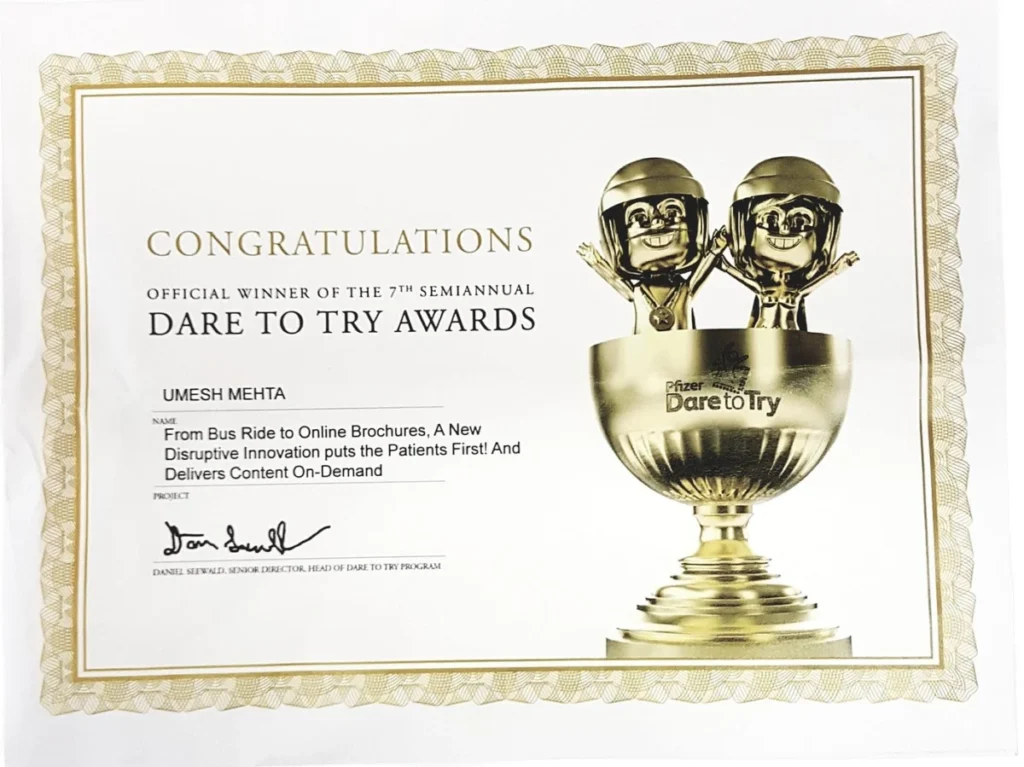
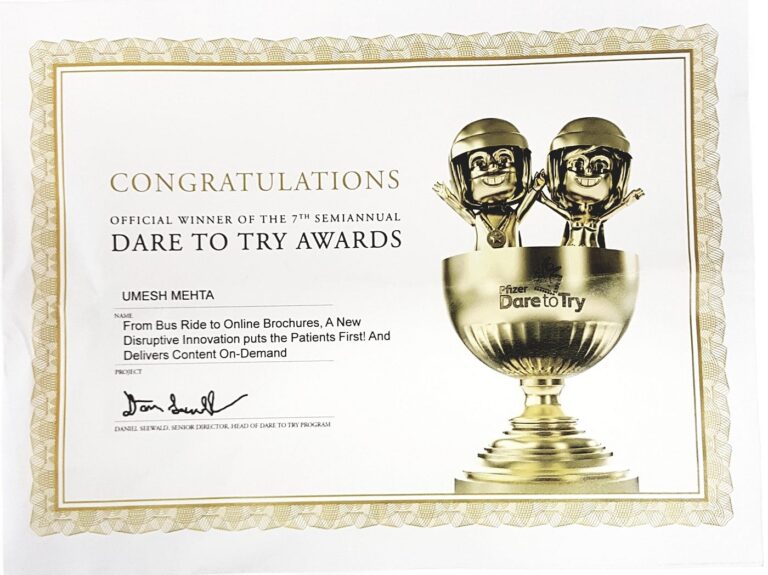
- 2013: Pfizer introduces "Dare to Try," acknowledging that even in highly regulated, risk-averse industries, innovation is the only path to survival.
Each of these milestones represents an evolution in how leadership views the employee: no longer as a cog in a machine, but as an autonomous researcher capable of driving the company forward.
Case Studies in Institutionalized Innovation
Amazon: The "Just Do It" Award
In 1998, Amazon’s customer service department was overwhelmed by a backlog of 250 open tickets. Rather than simply throwing more hours at the problem, an associate proposed a challenge: whoever could resolve 250 inquiries in 24 hours would receive a $200 bonus. The tickets were cleared in record time.
Jeff Bezos, observing this, recognized the power of incentivizing speed and bias for action. The "Just Do It" Award was born. It is a rare honor, bestowed only twice a year across an organization of over 600,000 employees. By making it a scarce, highly visible, and top-level award, Bezos transformed a simple act of efficiency into a pillar of Amazon’s culture: the idea that any employee, at any level, can take initiative to solve a critical problem.
Pfizer: "Dare to Try"
In the pharmaceutical industry, the cost of failure is astronomical. Yet, Pfizer recognized that the cost of stagnation was even higher. Ten years ago, the company launched "Dare to Try," a program designed to make failure "cheap and frequent."
The program utilizes a network of internal "champions"—self-nominated employees who act as evangelists for experimentation. These champions facilitate training and provide the psychological safety net required for teams to test hypotheses without the fear of career-ending repercussions. "Dare to Try" has evolved from a program into a brand, helping the company navigate the complex, high-stakes puzzles of global health.
3M: The "15% Rule" and Revenue Discipline
3M’s success is built on a simple premise: stay relevant or disappear. To ensure they remain at the top of the "Most Admired Companies" lists, they enforce a rigorous revenue discipline: 30% of each division’s revenue must come from products introduced within the last four years.
This creates a "hunger" for innovation. By pairing this mandate with the "15% rule"—where employees are encouraged to spend a portion of their work time on side projects—3M ensures a steady pipeline of new products. They don’t just hope for innovation; they measure it, mandate it, and reward it.
Google: The 20% Project
Google famously expanded on the 3M model, allowing engineers to dedicate 20% of their time to projects outside their core job descriptions. The results speak for themselves: Gmail, Google News, and AdSense all originated from this policy. It proves that when top-tier talent is given the "creative space" to explore, the ROI often far exceeds the cost of lost productivity on core tasks.
Supporting Data: Why Gamification Works
Research into organizational psychology suggests that intrinsic motivation is bolstered by autonomy and recognition. Data from these firms show a direct correlation between these "innovation programs" and long-term market dominance:
- Retention: Companies that allow "side projects" report higher levels of employee engagement and lower turnover rates.
- Speed-to-Market: By democratizing the ability to run experiments, these firms reduce the "decision latency" that kills traditional companies.
- Risk Mitigation: By encouraging small, inexpensive failures (the "fail fast" mentality), firms avoid the "catastrophic failure" of a major product launch that hasn’t been tested.
Official Perspectives and Leadership Stance
Leaders at these organizations consistently frame innovation not as a "special task," but as a "standard operating procedure."

At Pfizer, the leadership stance is that "failure is a data point." By framing it this way, they strip the stigma away from unsuccessful experiments. Similarly, at 3M, the executive team treats the 30% revenue-from-new-products rule as a vital sign of company health, much like gross margin or EBITDA. The implication is clear: if you are not innovating, you are actively losing ground.
Implications: The Cultural Shift
What can smaller businesses learn from these giants? The most significant implication is that culture is a measurable asset.
- Low-Stakes Testing: Create environments where employees can test ideas without the fear of failure.
- Clear Rewards: Whether it is an award, public recognition, or internal funding for a project, innovation must be rewarded in a way that is visible to the entire organization.
- The "Champion" Network: Identify the early adopters in your company. Empower them to teach others. Innovation is infectious; it spreads when people see their peers succeeding by trying new things.
- Data-Driven Decision Making: A culture of experimentation is only useful if you have the systems to capture and analyze the data. If you don’t track the results of your "experiments," you are just wasting time.
Conclusion
The "growth" methodology is, at its heart, simple. It is the application of the scientific method to business. However, the "soft" side of growth—the culture, the behavior, and the psychology—is what determines whether a company succeeds or fails.
By gamifying innovation, companies like Amazon, Pfizer, 3M, and Google have solved the "innovation dilemma." They have turned the act of taking risks into a game that everyone wants to play. For any organization looking to scale, the lesson is clear: don’t just build a team of growth hackers; build a company of experimenters. When every employee feels empowered to "dare to try," the potential for growth is limitless.
