
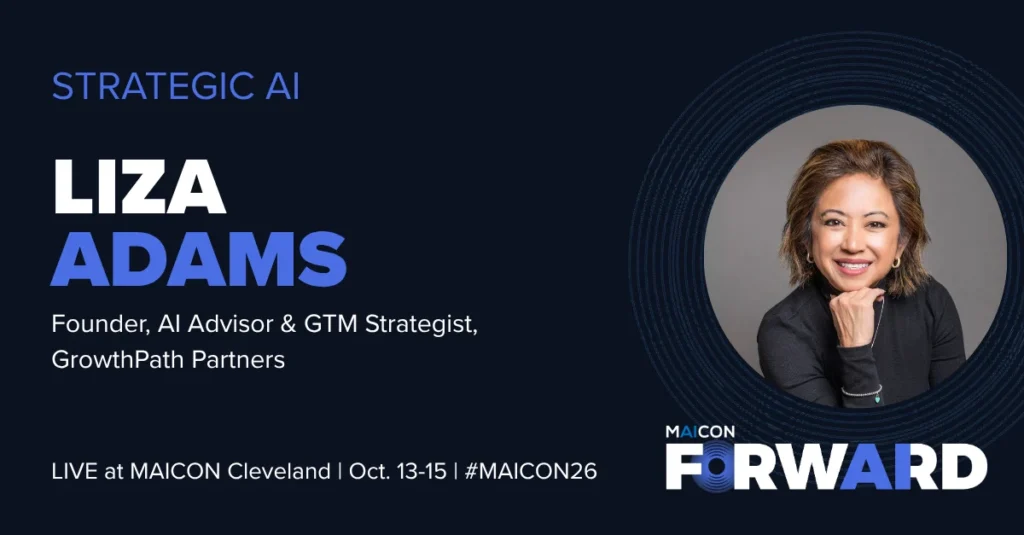
Beyond Efficiency: Why Marketing Leaders Must Stop Using AI to Simply Do “Old Work” Faster
In the current corporate landscape, marketing departments are under immense pressure to integrate Artificial Intelligence. The promise is seductive: automate the mundane, speed up the production of content, and optimize the bottom line. However, Liza Adams, Founder and AI Advisor at GrowthPath Partners, warns that most organizations are falling into a dangerous trap. By using AI merely to do the same work faster, marketing leaders are inadvertently creating a business case for downsizing rather than scaling.
As the marketing industry gears up for MAICON 2026, Adams is set to challenge the status quo with a provocative message: Efficiency is a starting point, not a destination. True growth, she argues, happens when leaders stop asking how to do old tasks quicker and start asking which tasks were previously impossible to achieve.
The Efficiency Trap: A Strategic Misstep
For many CMOs and marketing directors, AI adoption is measured by time saved. If a team can draft a blog post in five minutes instead of two hours, that is deemed a win. Adams, who brings over 25 years of senior executive experience to the conversation, views this metric as fundamentally flawed.
"Most teams use AI to do old work faster," Adams explains. "They draft emails, generate variations, and score leads. But doing faster work should not be all we do with AI. It’s just a starting point."
The implication of an efficiency-only strategy is profound. When an organization focuses solely on output speed, it positions its human capital as a commodity. If a task can be done 10 times faster by an algorithm, the logical financial conclusion for many CFOs is that the team size should be reduced. Conversely, "reimagined work"—tasks that were once too expensive, complex, or time-consuming to execute—requires a high-level human touch, thereby cementing the necessity of a skilled, AI-augmented workforce.
The “Human+AI” Litmus Test
To help leaders distinguish between mere automation and true innovation, Adams proposes a simple yet rigorous diagnostic test. She encourages managers to strip AI out of a specific workflow and observe the aftermath.
- The Efficiency Test: If the work would eventually get done, just at a slower pace or with more effort, that is simply "faster work." It is an optimization of the status quo.
- The Reimagination Test: If the work would cease to exist entirely without AI—because it was previously too costly, technically impossible, or beyond the scope of human bandwidth—that is "reimagined work."
By focusing on the latter, marketing departments move from being cost centers that need to be slimmed down to value-generation engines that provide unique competitive advantages.
The Anatomy of an AI-Driven Failure
Adams is direct about where most organizational transformation efforts go wrong. Too often, leaders conflate buying software licenses with developing a strategy. This creates a "training problem" in the minds of management, when in reality, it is a "belief problem."
The Cart Before the Horse: Org Charts
A common pitfall is the attempt to restructure the organization before the workflow has been redefined. Adams cautions against this approach, comparing it to hiring a cast of actors before a script has even been written.
"The work changes first, then roles, then the org chart," she notes. When companies start by redrawing their reporting lines, they build structures that serve the old, inefficient ways of working, effectively locking in outdated processes under the guise of modernization.
The Death of Experimentation
Perhaps the most damaging failure mode Adams observes is the lack of psychological safety regarding AI pilots. Many leaders champion a culture of "innovation," but they withdraw support the moment a project fails.
"Leaders say they want experimentation and then shut it down the first time it fails," she explains. This creates a culture of fear. When employees are unable to share what didn’t work without judgment, the experimentation stops. For AI transformation to take root, companies must foster an environment where "failing forward" is treated as a necessary cost of discovery rather than a reason to retreat to manual processes.
Reimagining Workflows: A Blueprint for Leaders
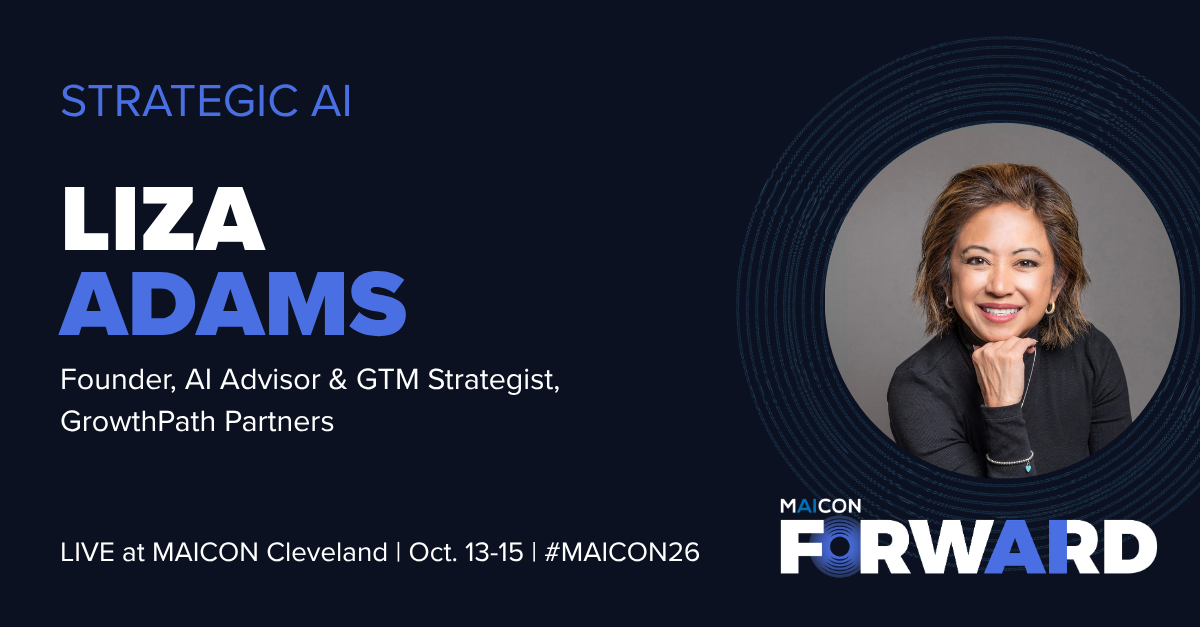
At MAICON 2026, Adams will lead a live-build session titled How to Reimagine and Build Workflows That Weren’t Possible Before. This session is designed to move beyond the theoretical and into the granular, tactical application of AI in enterprise environments.
The Framework for Success
The session will provide attendees with a repeatable framework for identifying and constructing these "impossible" workflows. Rather than providing a list of one-off prompts—which, as Adams notes, are often fragile and context-dependent—she will focus on building resilient systems that integrate AI into the core fabric of business operations.
Attendees will learn how to:
- Audit current workflows to identify hidden pockets of "impossible" work that AI can unlock.
- Design human-in-the-loop systems that prioritize creative strategy and empathy over robotic execution.
- Scale successful pilots across enterprise departments without losing the agility that made them successful in the first place.
The Case for Human Essentialism
The ultimate goal of Adams’s philosophy is to secure the future of the marketing professional. By pivoting toward workflows that require human judgment, strategic oversight, and nuanced emotional intelligence, teams become more resilient.
When AI handles the data processing and basic synthesis, humans are freed to do the work that actually grows a brand: building relationships, developing creative strategy, and navigating the complexities of human behavior. This is what Adams calls the "Human+AI" organization. It is not about replacing the human; it is about providing the human with tools that allow them to operate at a higher level of complexity and impact.
Preparing for MAICON 2026
As the marketing industry continues to grapple with the seismic shifts brought on by generative AI, the distinction between "fast work" and "reimagined work" will become the defining line between companies that thrive and those that stagnate.
Liza Adams’s participation in MAICON 2026 offers a rare opportunity for leaders to pressure-test their strategies. With over two decades of experience navigating technological disruption, her guidance is aimed at those who are ready to stop treating AI as a mere efficiency play and start treating it as a catalyst for a new era of marketing.
The conference, which brings together over 50 of the world’s leading AI experts and business pioneers, is designed to provide more than just industry trends—it offers a blueprint for survival and growth in an AI-first world.
Join the Conversation
For marketing leaders, the question is no longer "How do we implement AI?" but rather "What will our team be capable of once we stop doing the work of the past?"
The shift from efficiency to reimagination requires courage, a shift in culture, and a willingness to dismantle legacy processes. As Adams consistently demonstrates, those who embrace this challenge are not just building faster teams—they are building better ones.
To learn more about how to evolve your marketing strategy and to join industry experts like Liza Adams at MAICON 2026, register for the conference today.
Supporting Insights: The Path Forward
The discourse surrounding AI in marketing has shifted significantly since the emergence of LLMs. In 2023, the focus was almost exclusively on prompt engineering and cost reduction. By 2025, the conversation moved toward AI integration and ethics. As we approach 2026, the focus must shift to structural organizational design.
Industry data suggests that companies prioritizing "AI-augmented roles" report 30% higher employee retention than those who view AI as a replacement tool. Furthermore, projects that focus on "impossible workflows" tend to have a 4x higher ROI than those focused on general efficiency, as the former generates new revenue streams rather than just trimming operational fat.
As the industry moves toward the MAICON 2026 sessions, the consensus among experts is clear: The technology is no longer the variable. The variable is the leadership—and their ability to define a vision for the human, not just the machine.
