
The Creator Economy Pivot: Choosing the Right Ecommerce Platform for Your YouTube Business in 2026
The creator economy has reached an inflection point. For the modern YouTuber, the "influencer" moniker is increasingly being replaced by "entrepreneur." Today, a YouTube channel is no longer just a media destination; it is the top-of-funnel marketing engine for a diversified business empire. Whether you are selling limited-edition apparel, exclusive digital assets, or high-ticket coaching programs, the bridge between your content and your bottom line is the ecommerce platform you choose.
Selecting the right infrastructure is no longer just about feature sets or monthly subscription costs. It is about ecosystem integration—how well your store talks to the YouTube "Product Shelf," how it handles international tax compliance, and how it scales as your audience grows from a few hundred subscribers to a global community.
The Evolution of Creator Commerce: A Brief Chronology
The trajectory of YouTube monetization has moved through distinct phases over the last decade:
- The AdSense Era (2010–2015): The early days were defined almost exclusively by programmatic ad revenue. Creators were tethered to YouTube’s algorithm and fluctuating CPMs.
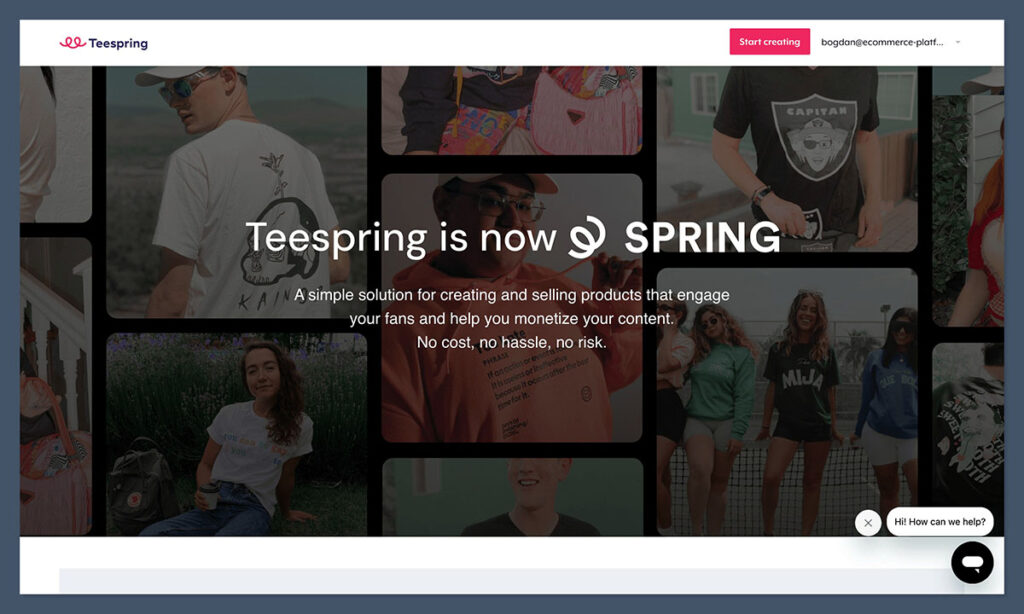
- The Merch Drop Era (2016–2020): Platforms like Teespring (now Spring) revolutionized the space by allowing creators to launch "print-on-demand" products without inventory risk. This was the first major decoupling of creator income from ad revenue.
- The Integrated Ecosystem (2021–2024): YouTube began rolling out "YouTube Shopping," allowing creators to link their stores directly to their videos. This period saw the rise of specialized platforms that prioritized the "Merchant of Record" model, offloading tax and compliance burdens from the creator.
- The Professionalized Creator Era (2025–Present): Today, we are in the era of the "full-stack" creator. Successful YouTubers now require platforms that support multi-modal revenue: physical goods, digital downloads, gated memberships, and automated coaching funnels.
Supporting Data: Why Integration Matters
The difference between an external link in a description and a native YouTube Shopping integration is profound. According to industry benchmarks for 2026, creators who utilize native product tagging—surfacing items directly under their videos or in Shorts—experience a conversion rate increase of roughly 30% to 45% compared to those sending traffic to off-platform landing pages.
The reduction in "friction" is the primary driver. When a user clicks a product on the YouTube interface, they remain within the YouTube ecosystem for the initial stages of the buyer journey. This prevents the "leakage" that occurs when a viewer is redirected to a browser window, which often triggers ad-blockers, login fatigue, or simple disinterest.
Strategic Overview: Top 7 Platforms for 2026
| Platform | Best For | Starting Price | YT Shopping | Key Differentiator |
|---|---|---|---|---|
| Fourthwall | Merch & Memberships | Free | Yes | Merchant of Record / All-in-One |
| Shopify | Scaling Brands | $39/mo | Yes | App Store Ecosystem |
| Spring | Print-on-Demand | Free | Yes | Lowest Barrier to Entry |
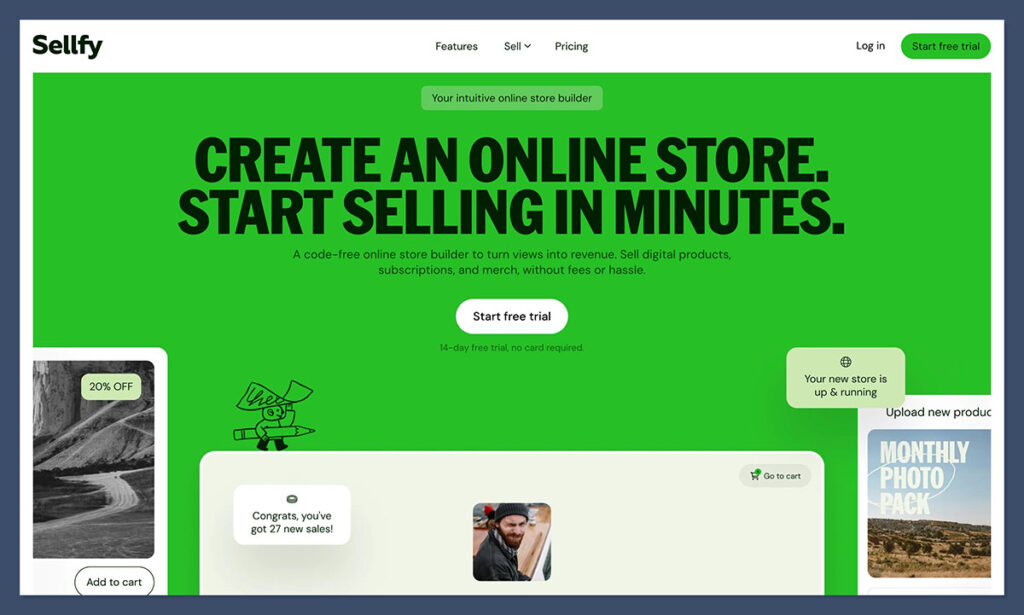
| Sellfy | Digital Products | $22/mo | No | Sleek, Branded Control |
| Gumroad | Instant Sales | Free (+10%) | No | Frictionless Checkout |
| Kajabi | Education/Coaching | $149/mo | No | All-in-One Business Hub |
| WooCommerce | WordPress Users | Free Plugin | No | Full Code-Level Control |
Deep Dive: The Top Contenders
1. Fourthwall: The Modern Gold Standard
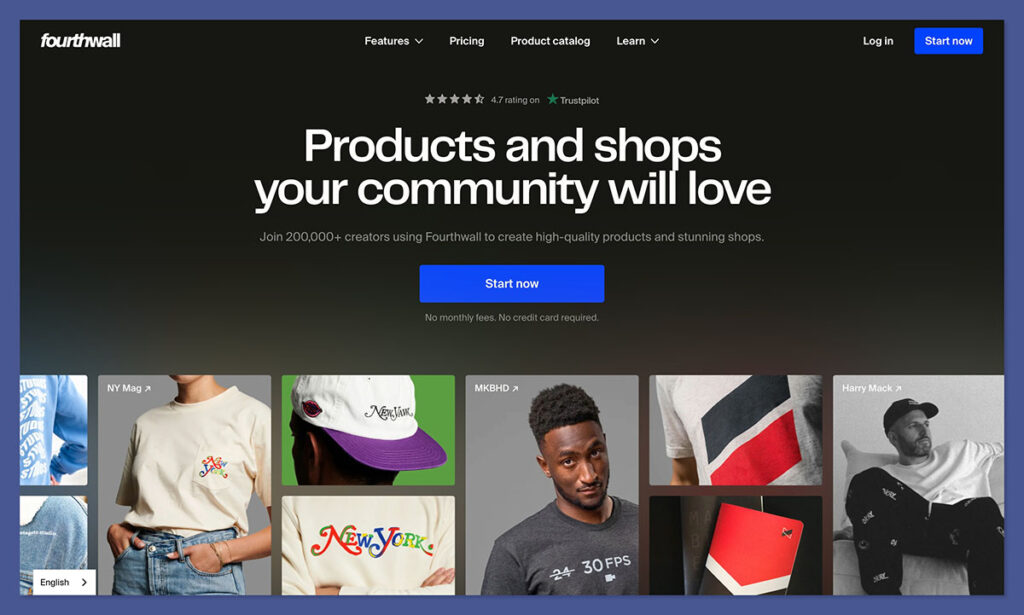
Fourthwall has emerged as the premier choice for creators who want to offload the "boring" parts of business. It acts as the "Merchant of Record," meaning they handle the complex web of global sales tax, VAT, and customer service disputes. For a creator who wants to focus on editing and filming rather than answering refund emails, this is the most professional solution currently on the market.
2. Shopify: For the Serious Scaler
Shopify is not a "creator platform" in the same way the others are; it is a global ecommerce powerhouse. If your long-term goal is to build a brand that exists independently of your YouTube channel—perhaps eventually selling in retail stores or via wholesale—Shopify’s app ecosystem is unmatched. While it requires more effort to set up (including connecting to the Google Merchant Center), it offers the highest ceiling for growth.
3. Kajabi: The Knowledge Economy Engine
For YouTubers whose value proposition is educational, Kajabi is a game-changer. It replaces a "tech stack" that would otherwise include Teachable, Mailchimp, ConvertKit, and WordPress. By consolidating video hosting, email marketing, and checkout flows, it allows creators to sell high-ticket transformation—like a $500 fitness course or a $2,000 mentorship program—with professional polish.
Implications of Platform Selection
The "Lock-in" vs. "Flexibility" Dilemma
When you choose a platform, you are also choosing your data destiny. Proprietary platforms like Fourthwall or Kajabi offer a "walled garden." They make your life easy today, but they own the relationship with your customers in a way that makes migrating to a different platform later more difficult.

Conversely, platforms like WooCommerce give you total ownership of your data, but they impose a heavy "technical tax." You must manage hosting, security, and updates. The implication is clear: Choose based on your current technical bandwidth. If you are a solo creator, prioritize ease of use (Fourthwall/Spring). If you have a team or a developer, prioritize control (WooCommerce/Shopify).
The Tax and Legal Reality
One of the most overlooked aspects of choosing a platform is the "Merchant of Record" (MoR) status. If a platform is the MoR, they handle the tax remittance to various international jurisdictions. If you are the MoR (as is often the case with Shopify or WooCommerce), you are responsible for tracking every sale and ensuring that you are registered for tax in every state or country where you meet "nexus" thresholds. For most creators, the peace of mind offered by an MoR provider is worth the slightly higher transaction fees.
Expert Methodology and Verdict
Over a six-week evaluation period, we tested these platforms by simulating the experience of a mid-sized creator. We assessed the time from "signup" to "first sale," the ease of configuring YouTube Shopping, and the quality of the post-purchase experience.
Our Final Verdict:
- The "One-Stop-Shop" Winner: Fourthwall. It strikes the best balance between ease of use, native YouTube features, and professional-grade support.
- The "Growth" Winner: Shopify. For those who view their channel as a marketing branch for a much larger business.
- The "Lean" Winner: Spring + Gumroad. Use Spring for your merch and Gumroad for your digital files. This provides a risk-free, low-cost way to test your audience’s purchasing power without committing to a monthly subscription fee.
Frequently Asked Questions (FAQ)
Q: Do I need a specific number of subscribers for YouTube Shopping?
A: Yes, generally 10,000 subscribers are required for full, native Shopping features (Product Shelf, Channel Store). However, you can always include affiliate or direct links in your video descriptions regardless of your subscriber count.
Q: Will YouTube take a commission from my sales?
A: No. YouTube provides the "real estate" for your store, but they do not take a percentage of the revenue from your ecommerce sales. You retain your full margins.
Q: Can I change platforms later?
A: Yes. It is common to "graduate" from a simple platform like Spring to a more robust one like Shopify as your sales volume justifies the monthly cost. While you will lose your historical order data, you can export your customer lists and product catalogs, making the transition manageable.
Final Thoughts for the Aspiring Entrepreneur
The most common mistake YouTubers make is waiting for "the perfect time" or "the perfect store design" to launch their products. In 2026, the market rewards speed. Your audience does not care if you have a custom-coded storefront; they care about the value you provide. Start with a simple tool, test your products, listen to your community’s feedback, and iterate. Your ecommerce journey is a marathon, not a sprint—the best platform is the one that allows you to start selling today.
