
The Convergence of Culture and Commerce: Inside Acceleration Partners’ Strategic Pivot to Performance Influencer Marketing
The marketing landscape is currently undergoing a structural transformation. For years, the industry operated under a binary system: influencer marketing was the domain of "top-of-funnel" awareness, prized for its cultural cachet and creative storytelling, while affiliate marketing sat firmly in the "bottom-of-funnel" camp, driven by rigid attribution models and conversion-based KPIs.
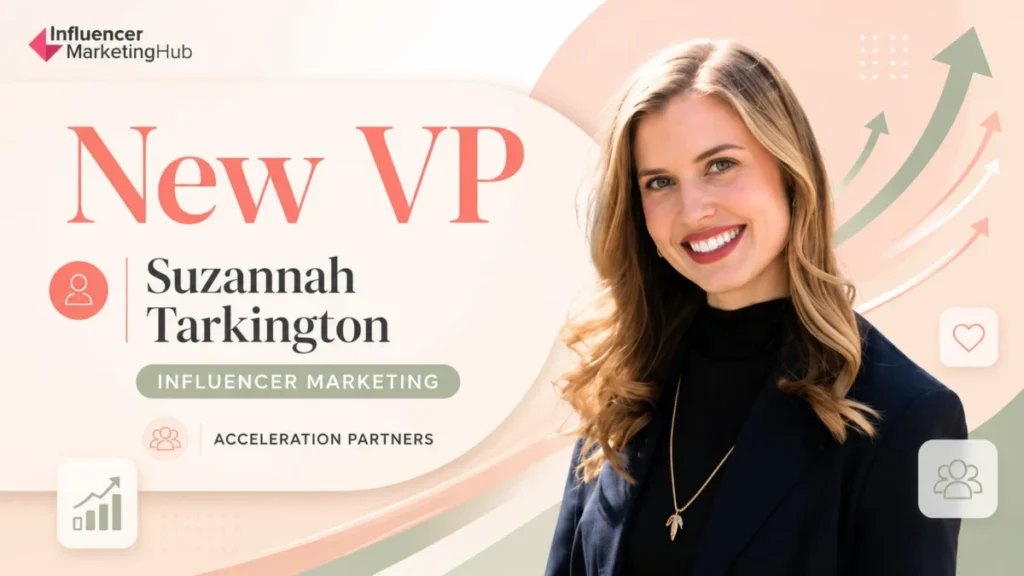
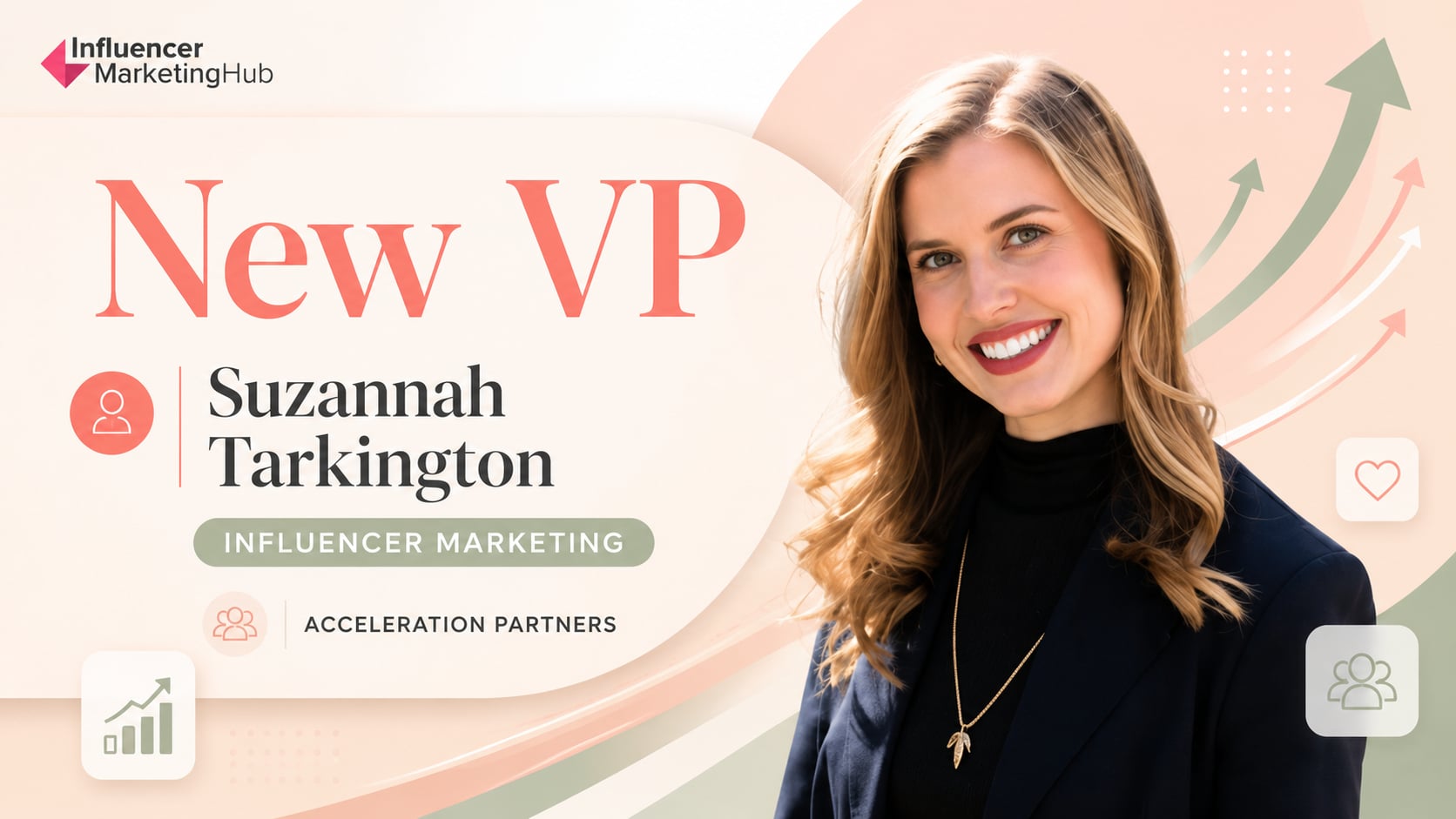
However, as consumers increasingly rely on creator recommendations to navigate the entire buying journey, that division has become a strategic liability. Brands no longer want to choose between cultural impact and commercial outcome; they want both. In response to this market demand, Acceleration Partners (AP), a global leader in partnership marketing, has appointed industry veteran Suzannah Tarkington as Vice President of Influencer. This move signals a significant shift in how agencies are operationalizing creator relationships, moving away from disparate activations toward a unified, performance-driven growth practice.
The Strategic Appointment: Suzannah Tarkington’s Mandate
The appointment of Suzannah Tarkington is more than a standard executive hire; it is an architectural decision for the agency. Tarkington joins Acceleration Partners with over a decade of deep-rooted experience in the creator economy, most notably a seven-year tenure at the influencer marketing firm Fohr.
As the 26th employee at Fohr, Tarkington was instrumental in scaling the agency’s client services division fivefold. Her portfolio includes the management of high-profile, multi-year programs for industry titans such as Sephora, DICK’S Sporting Goods, Pandora, The RealReal, and Colgate-Palmolive.
At Acceleration Partners, Tarkington’s mandate is comprehensive. She will oversee the vision, commercial strategy, and operational infrastructure of the firm’s "Performance Influencer" offering. Her role extends beyond mere account management; she is tasked with managing the division’s P&L, driving team development, refining the operating model, and steering the agency’s market positioning. By placing an executive of her caliber at the helm, AP is signaling that influencer marketing is no longer a peripheral service—it is a core business unit with its own financial accountability and executive-level oversight.
Chronology of a Transformation
The evolution of AP’s service model has been a deliberate, multi-year progression rather than a sudden pivot.
- Foundational Years: Acceleration Partners built its reputation on the back of performance-based partnership and affiliate programs, establishing a global footprint across 40 countries and managing programs that generated over $8.6 billion in client revenue and 110 million conversions in 2025 alone.
- The 2022 Inflection Point: Recognizing the tightening integration between influencer marketing and affiliate channels, AP acquired Influencer Response and Volt Agency in late 2022. This acquisition served as the catalyst for integrating direct-response influencer management and paid social amplification into their existing partnership framework.
- The "Performance Influencer" Formalization: Post-acquisition, the agency began refining its methodology, culminating in the release of its Performance Influencer Playbook. This internal roadmap codified the shift from reach-based metrics to outcome-based compensation.
- The 2025 Executive Shift: With the appointment of Suzannah Tarkington, AP is now moving into a phase of scaling this model, treating influencer marketing as a dedicated, high-growth engine integrated into the agency’s global infrastructure.
Supporting Data: Lessons from the Field
Tarkington’s previous successes offer a blueprint for the kind of "full-funnel" execution she is bringing to Acceleration Partners. Her work with Sephora’s "Sephora Squad" stands as a case study in how to build scalable, high-performance communities.
Rather than relying on the vanity metric of follower count, the program utilized an application-based model that assessed applicants based on community sentiment, passion, and audience engagement. Leveraging Fohr’s proprietary technology, the team processed thousands of applications, scaling the squad from 27 to 72 members within three years. Crucially, the program prioritized diversity and authentic influence, with 79% of the 2021 cohort identifying as BIPOC.
Similarly, her work with The RealReal explored the intersection of predictive intelligence and creator casting. By utilizing campaign data to inform investment decisions before a launch, Tarkington demonstrated that influencer marketing could be as data-rigorous as traditional digital advertising. These programs required a sophisticated blend of recruitment, community management, and financial rigor—a skill set that is now being applied at scale within Acceleration Partners’ client base.
The "Performance Influencer" Paradigm
The term "performance influencer" is often misconstrued as simply "paying creators on commission." In reality, it represents a fundamental change in the planning and evaluation cycle.
Traditional campaigns often start with a budget and a creative deliverable. Success is measured in "likes" and "shares." In the performance-led model adopted by AP, the process begins with a business question: What is the desired outcome? Whether the goal is an app install, a high-value subscription, or a first-time purchase, the entire partnership—from creator selection to content format and tracking—is structured to drive that outcome.
This does not mean that awareness is ignored. Instead, it recognizes that different creators serve different roles in the funnel. One creator might excel at driving brand discovery, while another is a conversion specialist. By treating these roles as part of a single, measurable ecosystem, brands can optimize their spend, ensuring that investment is directed toward the specific stage of the customer journey where it provides the highest ROI.
Implications for the Agency Model
The industry is currently witnessing a "professionalization" of the influencer agency. For years, agencies differentiated themselves through their "rolodex" of creators or their creative flair. While these remain important, they are no longer sufficient.
Brands today are demanding the infrastructure of a traditional media agency:
- Attribution and Data: Brands require clean, reliable data that links creator content to specific sales events.
- Operational Scale: As programs move from single-campaign activations to "always-on" engines, the administrative burden of contracts, payment, content approvals, and compliance has grown exponentially.
- Financial Accountability: CMOs are increasingly tasked with justifying influencer spend against clear revenue targets. Agencies that cannot provide this transparency risk being cut from the budget.
Acceleration Partners’ strategy is a direct response to this demand. By consolidating influencer and affiliate strategy under a single roof, the agency offers a "one-stop-shop" model. This reduces the friction of managing two separate agency relationships and allows for a more holistic view of the customer journey.
Future Outlook: A New Standard for Creator Programs
The challenge for Suzannah Tarkington and the wider team at Acceleration Partners is to balance the "human" element of influencer marketing with the cold, hard reality of performance metrics. If a program becomes too focused on clicks, it risks losing the authenticity that makes creator marketing effective in the first place.
However, the inverse is also true: creative, culturally relevant content that doesn’t drive measurable growth is increasingly viewed as a luxury expense in a constrained economic environment.
The success of AP’s model will ultimately be judged by its ability to bridge this gap. By combining the global partnership infrastructure and proprietary technology of AP with Tarkington’s experience in building massive, community-led creator programs, the agency is positioned to set a new standard for the industry. The goal is to prove that brands do not need to choose between the art of influence and the science of performance. They can—and must—have both.
As the boundaries between social commerce, affiliate marketing, and brand building continue to blur, the agencies that thrive will be those that can successfully navigate the intersection of culture and conversion, treating every creator partnership as a strategic investment in long-term, scalable growth.
