

The Comprehensive Guide to Meta Verified: Everything You Need to Know in 2026
In the evolving landscape of digital identity, the blue checkmark has transitioned from a status symbol reserved for the elite to a widely available utility. Meta Verified, the subscription service for Facebook, Instagram, and WhatsApp, has fundamentally altered how creators and businesses manage their online presence. As of 2026, the program has matured into a cornerstone of Meta’s non-advertising revenue strategy, contributing hundreds of millions of dollars to the company’s quarterly earnings.
For professionals, influencers, and businesses, understanding the nuances of this subscription is no longer optional—it is a strategic necessity for brand protection and platform visibility.
The Core Concept: What is Meta Verified?
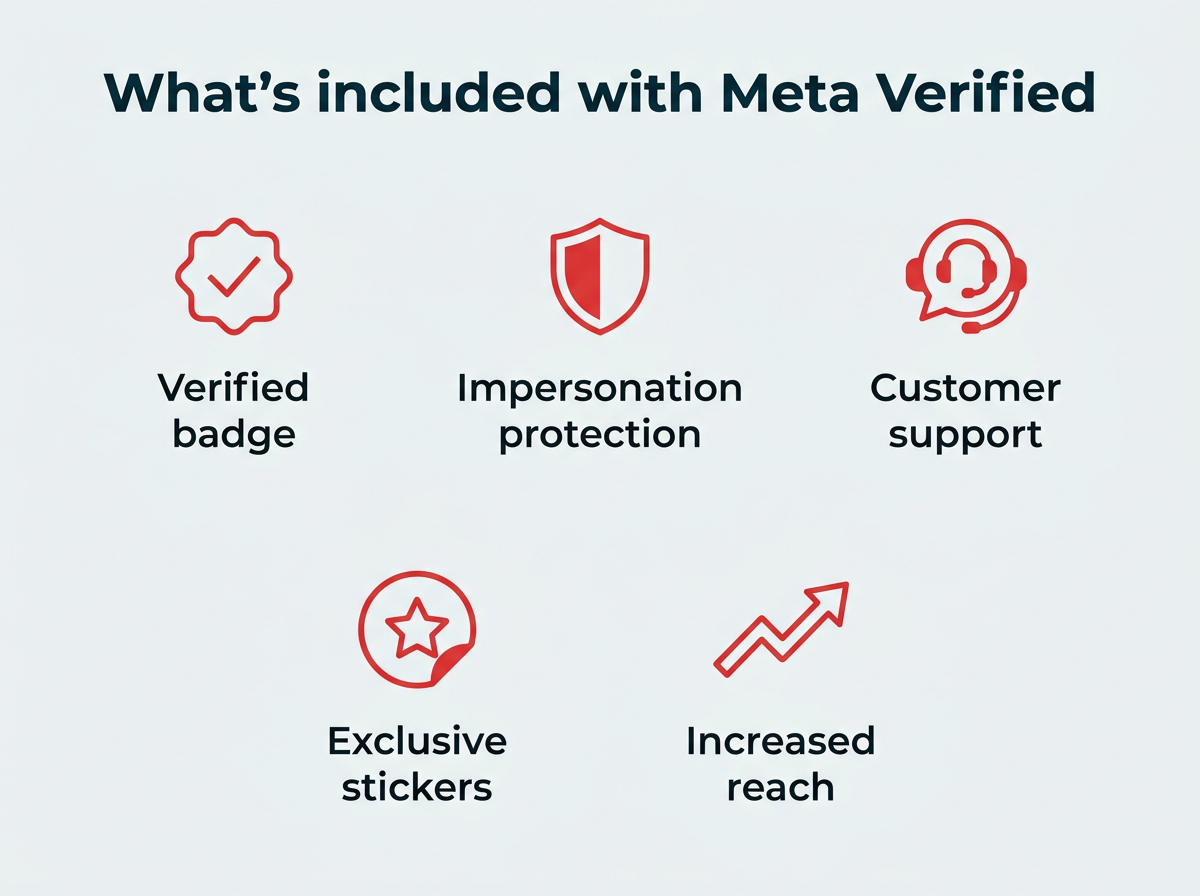
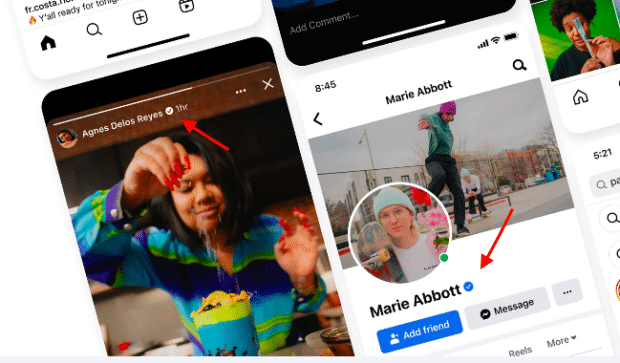
Meta Verified is a subscription-based "trust and safety" bundle. Unlike the legacy verification system, which was opaque and invitation-only, Meta Verified is an opt-in service. By paying a monthly fee, users undergo a rigorous identity verification process involving government-issued documentation. In return, they receive the iconic blue badge, bolstered account security, and, perhaps most importantly, access to human-led customer support.

The program is designed to solve three persistent problems: the proliferation of impersonator accounts, the difficulty of recovering compromised profiles, and the desire for "notable" visibility on crowded platforms.
A Chronology of Trust: From Legacy to Paid Verification
To understand the current state of Meta Verified, one must look at the platform’s history.
- Pre-2023: Verification was a badge of "notability." To earn it, a public figure, celebrity, or major brand had to prove they were at risk of impersonation and maintain a consistent presence in media coverage. It was free, exclusive, and often perceived as a "black box" by users who were denied for unclear reasons.
- March 2023: Meta launched the pilot for Meta Verified in Australia and New Zealand, offering a paid route for creators to gain a blue checkmark. This marked a seismic shift in social media business models.
- Late 2023 – 2024: The program expanded rapidly across global markets, adding business-specific tiers. This allowed small and medium-sized enterprises (SMEs) to access tools previously reserved for multinational corporations.
- 2025 – 2026: Meta solidified the program as a primary revenue driver. During the Q3 2025 earnings call, Meta reported $690 million in non-advertising revenue, a figure largely bolstered by the rapid adoption of Meta Verified subscriptions across the globe.
Pricing Structures: The Cost of Authenticity
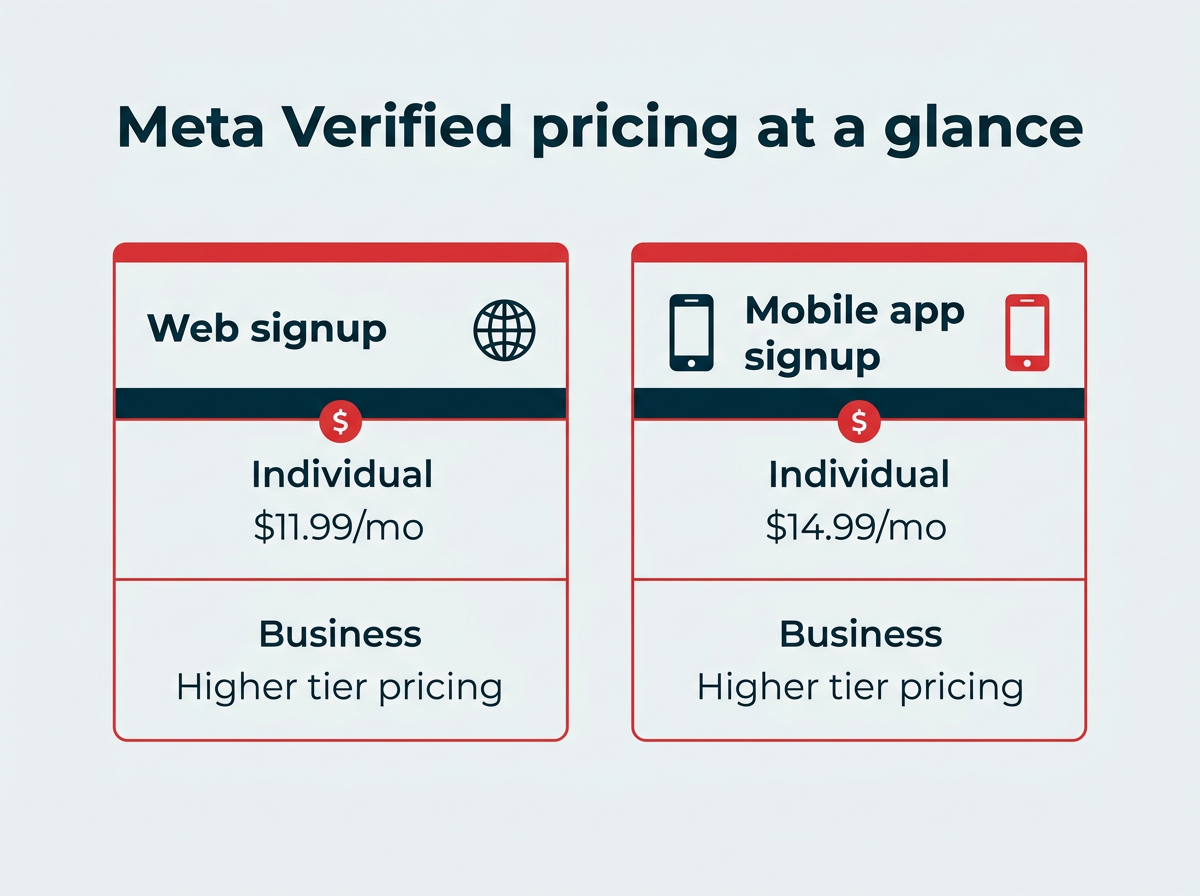
Meta has adopted a dual-pricing model that accounts for the "Apple/Google Tax." Because app store transactions carry a commission, the company incentivizes users to subscribe via the web.

Individual Pricing
- Web Signup: $11.99 per month.
- Mobile Signup (iOS/Android): $14.99 per month.
It is important to note that these subscriptions are not cross-platform. A creator who wants to be verified on both Instagram and Facebook must purchase two separate subscriptions.
Business and WhatsApp Pricing
Meta Verified for Business employs a tiered structure. Costs vary depending on the region and the scale of the business. Because businesses often require higher-level account management, they gain access to specialized features, including advanced analytics and, in the case of WhatsApp, direct integration into business communication channels.
Supporting Data: Why Businesses are Investing
The surge in adoption is not merely about vanity. Data suggests that the primary driver for subscription is account recovery and security.
- Impersonation Protection: Meta utilizes machine learning to scan for accounts that mimic the user’s name and profile photo. This has become a vital tool for brands losing revenue to phishing scams.
- Support Accessibility: For years, the most common complaint regarding Meta’s platforms was the lack of human support for account lockouts. Meta Verified addresses this by providing direct access to live chat agents for account-related troubleshooting.
- Visibility Metrics: While Meta does not explicitly guarantee "viral" status, it has confirmed that Meta Verified accounts receive a slight boost in visibility in comments and search results. This is statistically most significant for newer accounts or those with smaller, growing followings.
Official Stance and Community Standards
Meta’s official documentation emphasizes that the program is not a "pay-to-win" scheme, but a "pay-for-protection" service. However, the company remains firm on its rules: Community Standards are paramount.
If a user violates these policies—whether through harassment, hate speech, or spam—the blue badge can be revoked. Furthermore, any change to the account’s handle, display name, or date of birth triggers a re-verification process. This ensures that the badge remains tied to a real-world identity, not just a static profile.
The Strategic Implications: Is it Worth It?
Whether a user should subscribe depends on their specific goals:
Why You Should Subscribe:
- You are a small business: The badge builds instant trust with customers who may be skeptical of a new brand.
- You have been targeted by imposters: The proactive monitoring is the most effective defense against account cloning.
- You rely on your account for income: The access to human support can save a business from losing days or weeks of revenue during a lockout.
Why You Should Wait:
- You already have legacy verification: If you are a recognized public figure, your free badge remains, and you already have "notable" status.
- You are a casual user: If your account is purely for friends and family, the benefits (like increased search visibility) offer very little return on investment.
Comparative Analysis: Meta vs. The Industry
The landscape of paid verification has become a standard feature of the modern social web.
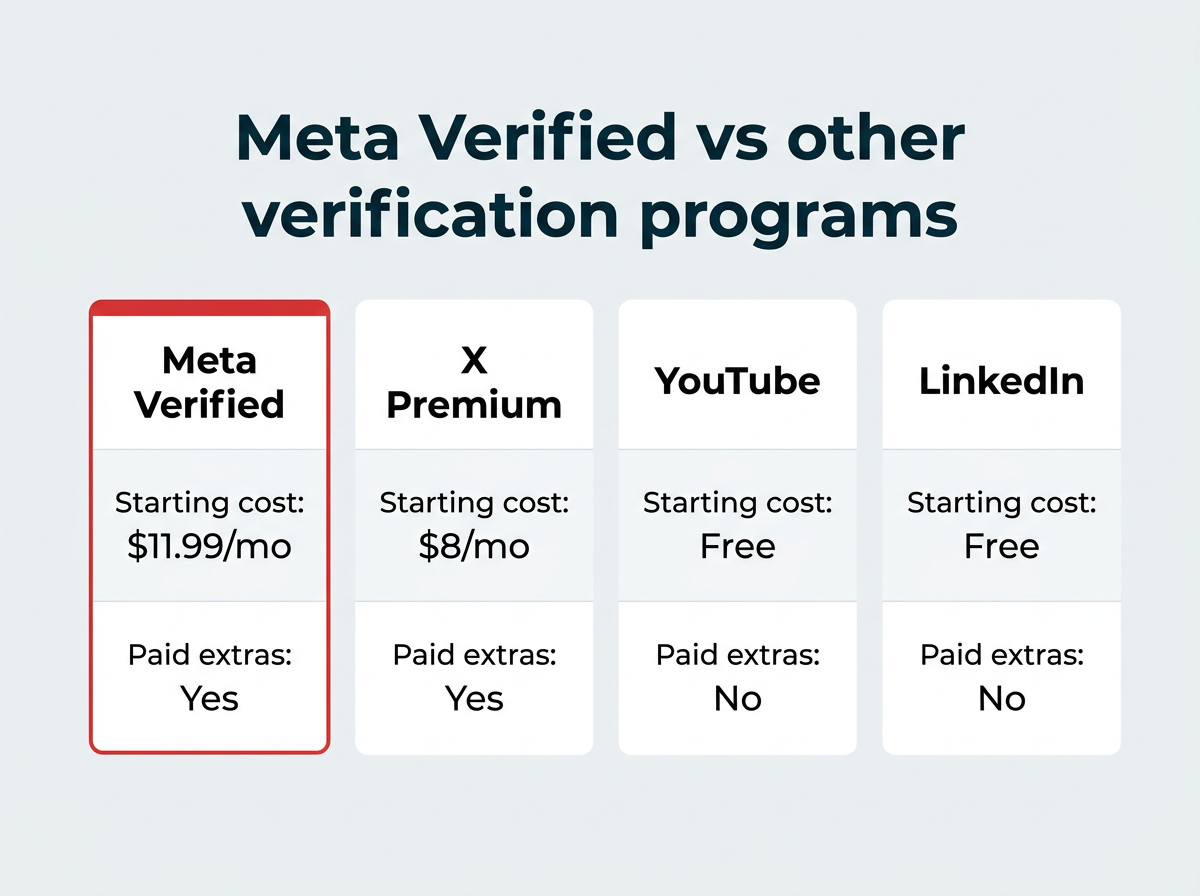
| Platform | Program | Key Advantage |
|---|---|---|
| Meta | Meta Verified | Best-in-class impersonation protection and support. |
| X (Twitter) | X Premium | Focus on long-form content, ad revenue sharing, and customization. |
| Verification | Identity verification focused on professional credibility. | |
| YouTube | Legacy | Still focused on audience size (100k+ subscribers). |
Meta currently occupies the "premium" tier. While it is more expensive than X’s subscription, it provides a much more robust infrastructure for businesses and professional creators who prioritize security over vanity features.
Looking Ahead: The Future of Identity
As we look toward the latter half of 2026, it is clear that Meta intends to continue refining the Meta Verified ecosystem. The focus is shifting from simply "getting the badge" to "leveraging the suite." We expect to see further integrations with AI-driven marketing tools and deeper support for the WhatsApp business ecosystem, which is currently the fastest-growing sector of the program.
For the average user, the choice is simple: social media is no longer just a place to socialize; it is a professional storefront. In this environment, verifying one’s identity isn’t just a badge—it is a business insurance policy.
FAQ: Quick Answers for Your Strategy
Q: Can I share my verification across Facebook and Instagram?
A: No. Meta Verified is handled on a per-account basis. You must pay for each platform separately.
Q: Will I get more followers just because I am verified?
A: Not directly. However, your visibility in comments and search results will increase, which may lead to higher discovery rates.
Q: What happens if I stop paying?
A: You will lose the blue badge, access to the priority support queue, and your enhanced impersonation protection.
Q: Is the verification process manual?
A: It is a hybrid process. Machine learning systems conduct the initial scan of your ID, while human teams are involved in complex cases and ongoing monitoring for policy violations.
Disclaimer: This article is for informational purposes. For the most current terms of service, always consult the official Meta Business Help Center or the Settings menu within your Meta applications.
