
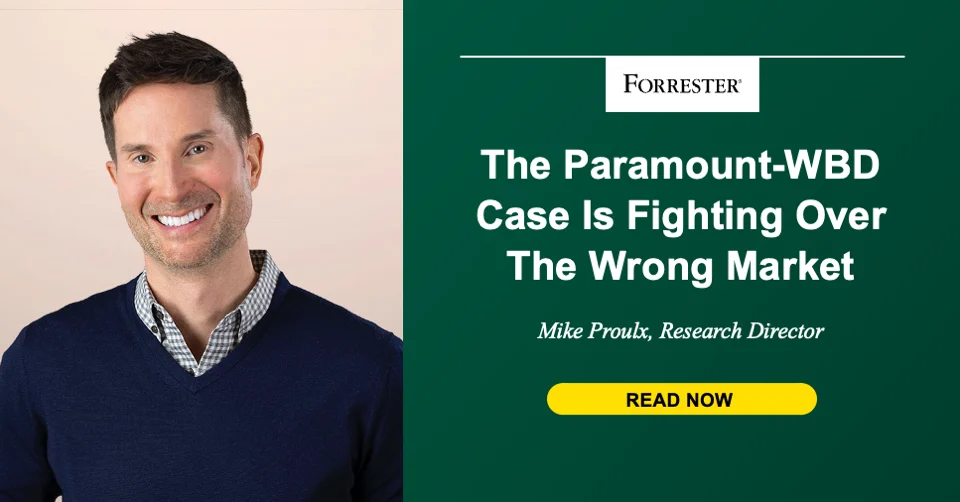
The Collision of Legacy Law and Modern Media: The Paramount-WBD Merger Trial
This past Friday, the long-gestating $110 billion merger between Paramount Global and Warner Bros. Discovery (WBD) shifted from the quiet corridors of executive boardrooms into the high-stakes theater of federal court. A coalition of 12 state attorneys general, citing deep concerns over market dominance, petitioned a federal judge to issue a temporary restraining order (TRO) to halt the transaction. Their objective: to freeze the merger while an antitrust lawsuit proceeds, arguing that once the deal is consummated, the structural damage to competition will be irreversible.
Paramount, however, remains defiant. Legal counsel for the media giant pushed back during the hearing, characterizing the request for emergency intervention as premature. They contend that the deal remains months away from closing and that the states are attempting to obstruct a corporate evolution based on outdated definitions of what constitutes a "media company."
The Legal Battlefield: A Chronology of Conflict
The path to this moment has been paved with significant hurdles, beginning with the formal announcement of the deal, which followed months of speculation regarding the consolidation of two of Hollywood’s oldest and most storied empires.
- April 2026: In a major milestone for the deal, WBD shareholders officially voted to approve the transaction, signaling a desire for consolidation in a fragmented and increasingly expensive streaming environment.
- Late Spring 2026: Following the shareholder approval, the regulatory scrutiny intensified. State attorneys general began coordinating a multi-jurisdictional legal strategy, focusing on the potential monopolization of content production and cable distribution.
- July 2026 (The Current Stand): The federal hearing held this past Friday marks the most significant legal challenge to date. The court is currently weighing whether the merger poses an imminent threat to market competition that necessitates a judicial pause.
- July 22, 2026: The industry waits with bated breath for Judge Araceli Martínez-Olguín to issue a written ruling. This decision will determine whether the merger is forced into a state of suspended animation while the broader antitrust litigation plays out.
The Disconnect: Legacy Definitions vs. Consumer Reality
The core tension in this courtroom drama is not merely about market share; it is about the fundamental definition of "entertainment." The state attorneys general are framing their argument through the lens of traditional media silos. They contend that the merger would consolidate roughly 27% of wide-release theatrical distribution, 30% of blockbuster film production, and 27% of the basic cable bundle.
From the perspective of the regulators, these are immutable categories. In Friday’s proceedings, the states argued that for a theater owner, a library of streaming content is not a functional substitute for a high-budget theatrical blockbuster. They maintain that the sheer volume of intellectual property and cable reach controlled by a combined Paramount-WBD entity would give them insurmountable bargaining leverage over distributors and exhibitors.
However, industry analysts and the defendants argue that this regulatory framework is stuck in a pre-digital era. As evidenced by Forrester’s 2026 Consumer Benchmark Survey, the modern audience does not categorize media by "broadcast" or "cable." Instead, consumers exist in a fluid, cross-platform ecosystem.
Supporting Data: How Consumers Actually Consume
To understand why the regulators’ argument may be missing the mark, one must look at how Gen Z and younger Millennials interact with content. According to the 2026 survey data:
- Platform Agnosticism: 64% of Gen Z stream Netflix monthly, but they are equally invested in Instagram (56%), YouTube (49%), and TikTok (47%) on a weekly basis.
- The Rise of Microdramas: The emergence of short-form, episodic "microdramas" is shifting the landscape entirely. One-third of US online adults now consume microdramas. Crucially, they are finding these stories on YouTube Shorts (63%) and TikTok (54%) rather than through legacy streaming apps.
- The Streaming Synergy: Perhaps most tellingly, 57% of microdrama viewers report that these short-form clips actually drive them toward traditional streaming services to finish stories or explore deeper content, proving that social media and streaming are symbiotic, not mutually exclusive.
A typical Gen Z consumer journey is a chaotic, multi-channel experience: starting with sports highlights on TikTok, moving to a YouTube-based microdrama, checking news clips on a podcast platform, and finally settling into an HBO Max feature film. The idea that these mediums exist in separate competitive boxes is a legal fiction that ignores the reality of the attention economy.
Industry Convergence: The Drive Toward Total Scale
The companies involved in this merger are not just buying assets; they are attempting to survive a total convergence of the media market. The end state for all major players—Netflix, YouTube, TikTok, and the WBD-Paramount entity—is the same: a digital-first ecosystem that captures as many dayparts and as much user attention as possible.
- Netflix has evolved from a pure-play subscription service into a digital publisher, licensing content from legacy brands like Rolling Stone and Vanity Fair while aggressively pursuing live sports.
- YouTube has moved far beyond user-generated content, securing the NFL Sunday Ticket and becoming the future exclusive home for the Academy Awards.
- TikTok is pivoting toward long-form content, using its "Creatorverse Incubator" to fund professional-grade series for streaming services like Tubi.
In this context, the Paramount-WBD merger is an attempt to build a "digital-first entertainment ecosystem." By combining CBS, CNN, HBO Max, Paramount+, and massive film libraries, the new entity hopes to compete with the sheer scale of the tech giants. Similarly, Fox’s push to acquire Roku highlights the industry-wide belief that scale—encompassing content, distribution, ad tech, and first-party data—is the only currency that matters in a post-linear world.
Implications: The Regulatory Precedent
This legal battle echoes the Federal Trade Commission’s 2025 antitrust case against Meta. In that instance, regulators attempted to define Meta’s market narrowly as "personal social networking," ignoring the reality that Meta competes with TikTok, YouTube, and gaming platforms for the same finite resource: human attention.
Paramount’s defense is mirroring this strategy. By pointing to Apple’s F1 coverage and Amazon’s MGM film output, Paramount is arguing that the market is already flooded with massive, well-capitalized tech competitors. If the court rules in favor of the states, it would validate a model of regulation that treats media as a static, legacy industry. If the court sides with Paramount, it would signal a major shift in how antitrust law is applied to the digital age—moving away from distribution categories and toward a broader, more realistic view of consumer consumption habits.
Conclusion: A Turning Point for Media
The decision expected on July 22 will be about much more than a temporary pause on a merger. It will serve as a bellwether for the future of media regulation. Judge Martínez-Olguín is tasked with deciding whether the law should protect the competitive dynamics of 20th-century distribution or acknowledge the fluid, platform-agnostic reality of 21st-century entertainment.
As the industry watches, the outcome of this case will likely dictate the pace of future consolidation. If regulators continue to rely on narrow, outdated market definitions, they may find themselves playing a game of "whack-a-mole" in a market that has already moved beyond their reach. Conversely, if the merger is allowed to proceed, it could trigger a new wave of defensive consolidation, as every remaining media player seeks to achieve the "scale" required to survive the inevitable collapse of the traditional television model.
For now, the courtroom remains the most important place to watch the future of media be written. Whether the merger closes in the coming months or remains stuck in the gears of litigation, one thing is certain: the era of neat, predictable media categories is over. The struggle to define what comes next is only just beginning.
