

The Battle for Digital Experience: Crazy Egg vs. Contentsquare in the Age of CRO
In the modern digital landscape, data is the lifeblood of optimization. Businesses are no longer satisfied with simple pageview counts; they demand granular insights into how users navigate, struggle, and convert on their websites. Two heavyweights currently dominate the conversation: Crazy Egg and Contentsquare.
While both platforms promise to unlock the "why" behind user behavior, they cater to fundamentally different organizational needs. For the lean, growth-focused startup or mid-market team, the choice often hinges on feature consolidation and ease of use. For the global enterprise with a massive budget and a dedicated team of data scientists, the conversation shifts toward depth, scalability, and integration. This analysis explores the technical, financial, and strategic divide between these two industry leaders.
The Core Philosophy: Consolidation vs. Complexity
To understand the difference between these two platforms, one must look at their underlying architecture.

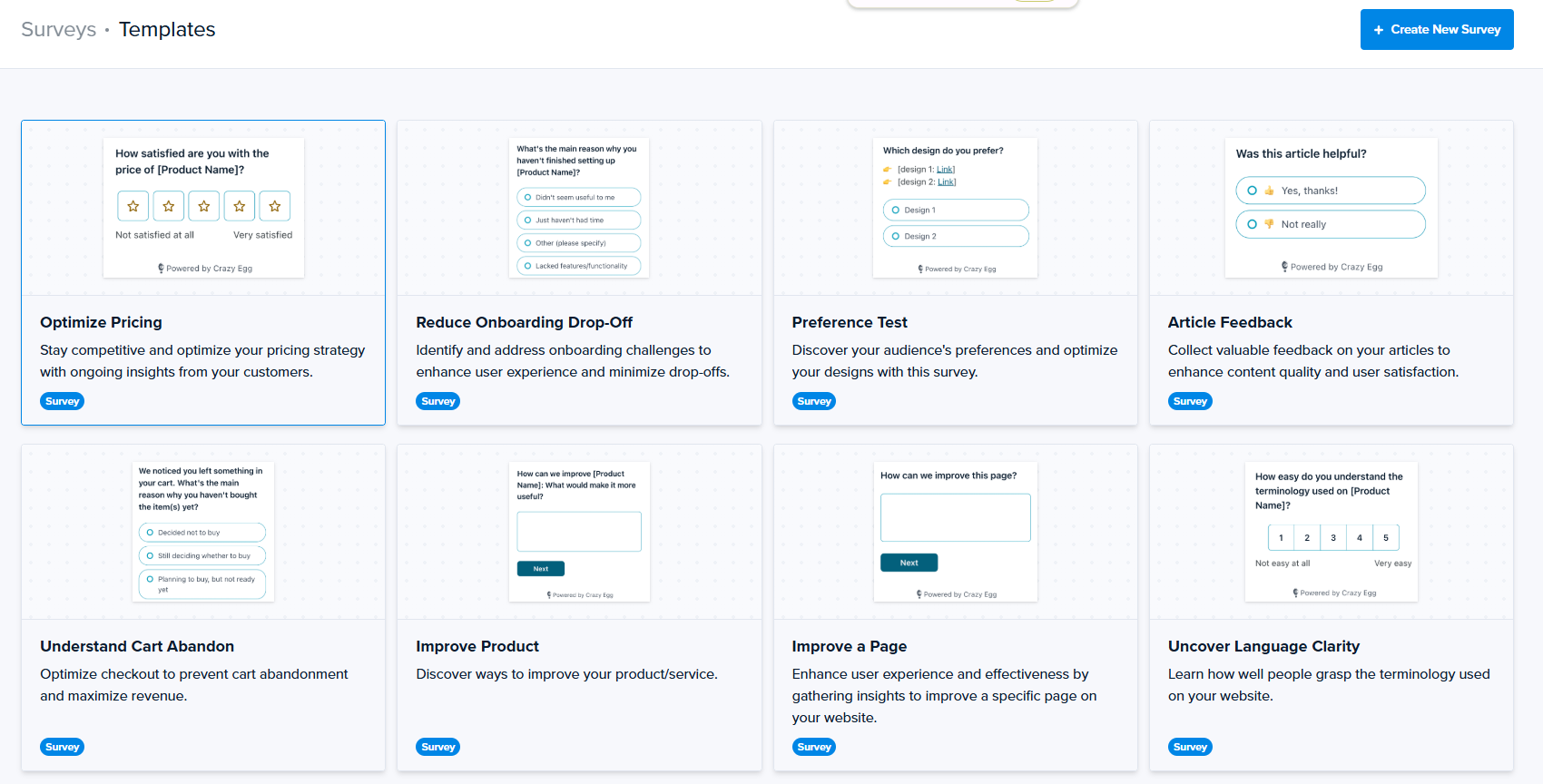
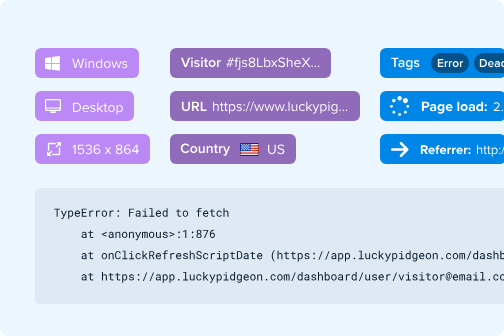
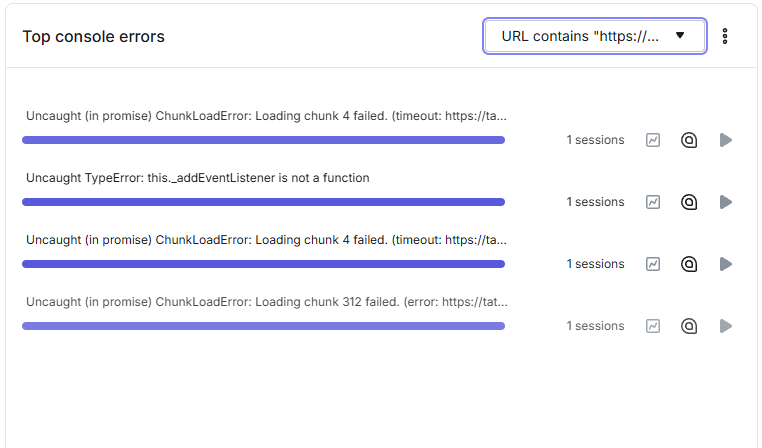
Crazy Egg operates on the principle of the "all-in-one" toolkit. By bundling heatmaps, session recordings, A/B testing, surveys, and error tracking into a single, transparent subscription, it serves the needs of marketers and product managers who need to act quickly. It minimizes the "tool fatigue" often associated with managing multiple SaaS subscriptions.
Contentsquare, conversely, is a digital experience analytics powerhouse. It is a modular ecosystem. Following its acquisition of Hotjar (to capture the SMB market) and Heap (for product analytics), Contentsquare has constructed a tiered architecture. While it offers a robust entry-level experience, its true power lies in its higher-tier enterprise features, which are designed to support complex, multi-layered digital ecosystems, including mobile app tracking and sophisticated journey mapping.
Chronology and Market Evolution
The market positioning of these platforms has been shaped by strategic M&A activity:

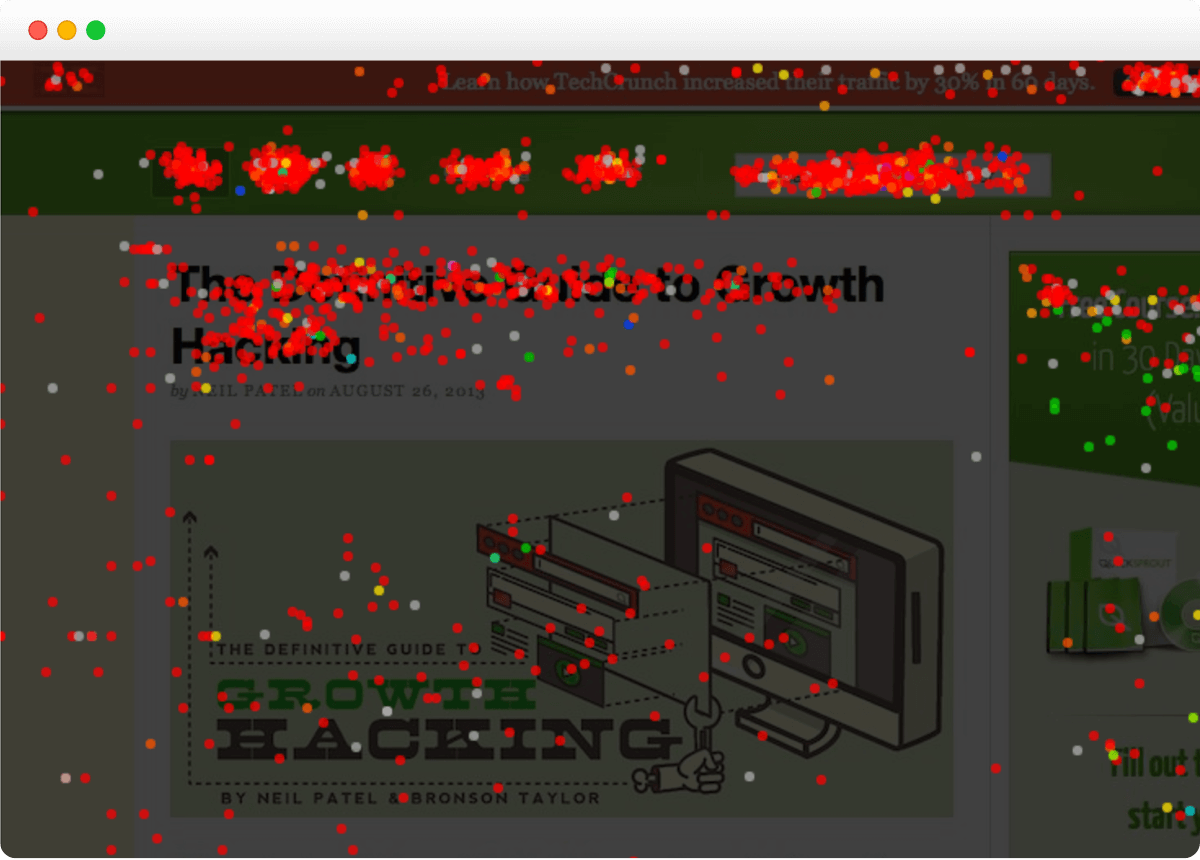
- The Rise of Crazy Egg: Founded with a focus on democratizing website optimization, Crazy Egg became the industry standard for visual analytics. Its "Confetti" and "Scroll" maps provided early visual evidence that revolutionized how marketers viewed page layout.
- The Contentsquare Expansion: Contentsquare grew through aggressive acquisition. By absorbing Clicktale (the pioneer of session replay), Hotjar (the leader in SMB feedback loops), and Heap (a leader in product analytics), Contentsquare transitioned from a niche heatmap provider into an end-to-end digital intelligence giant.
This difference in heritage is visible today. Crazy Egg feels like a unified, singular product, whereas the Contentsquare experience can feel like a collection of integrated technologies depending on your plan level.

Comparative Deep Dive: Feature Sets
1. The Heatmap War: Precision vs. Context
Heatmaps remain the "gateway drug" for CRO teams.
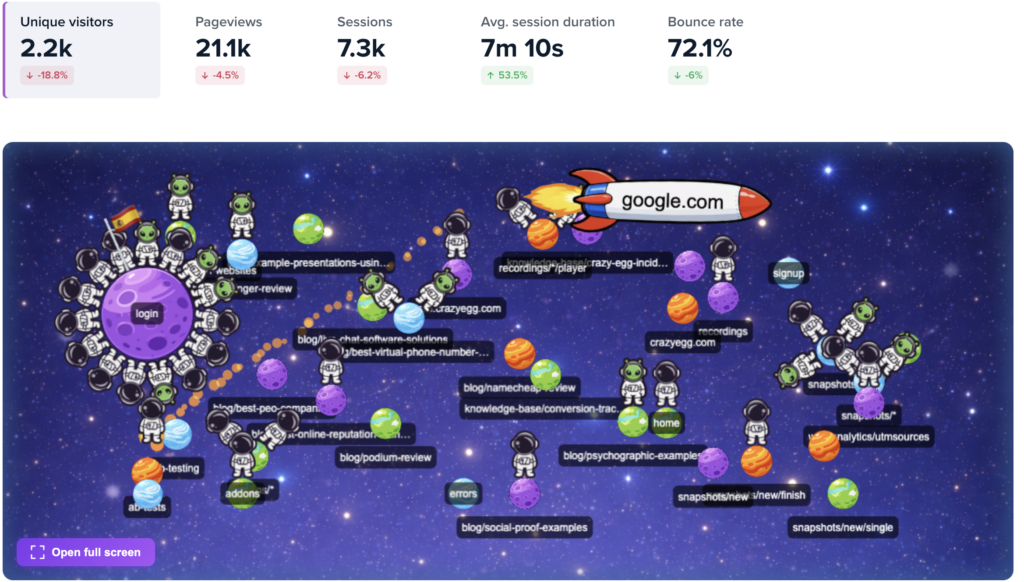
- Crazy Egg offers five distinct heatmap types, including the powerful Confetti map, which allows for deep per-click segmentation. Its "Instant Heatmaps" allow users to view data immediately upon installation, making it ideal for rapid iteration.
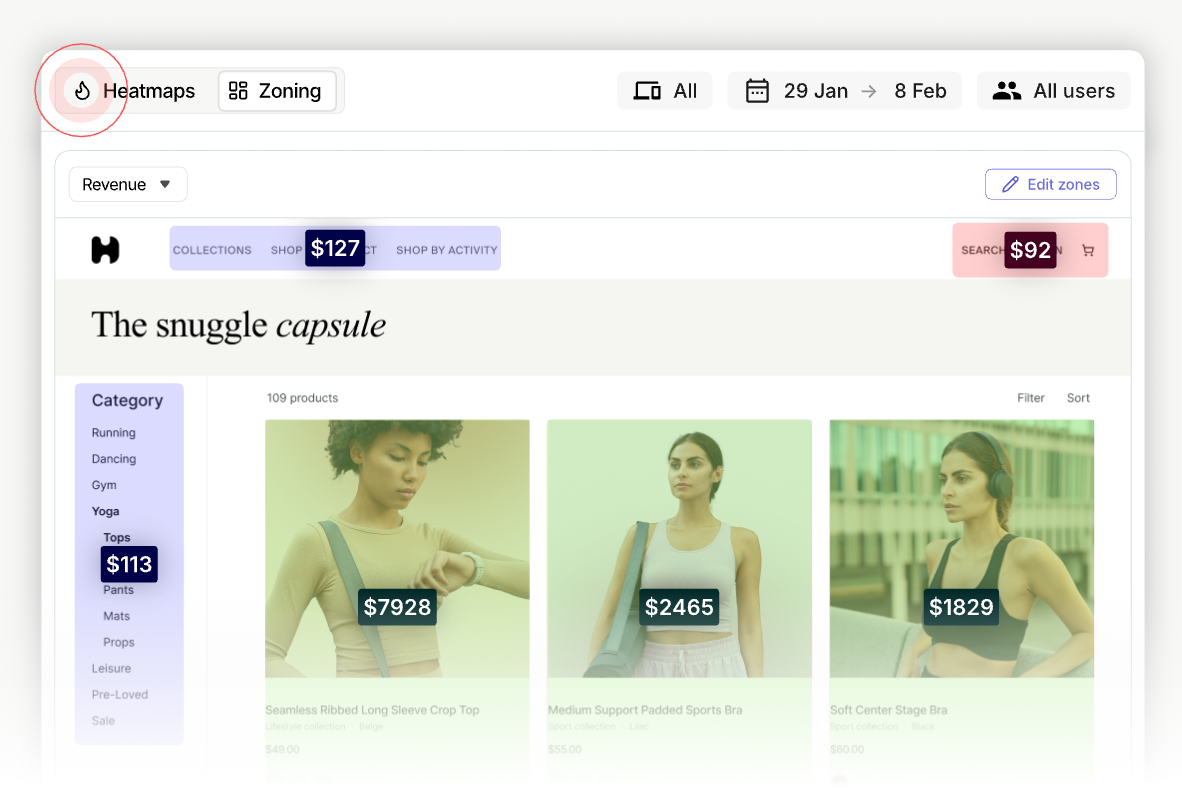
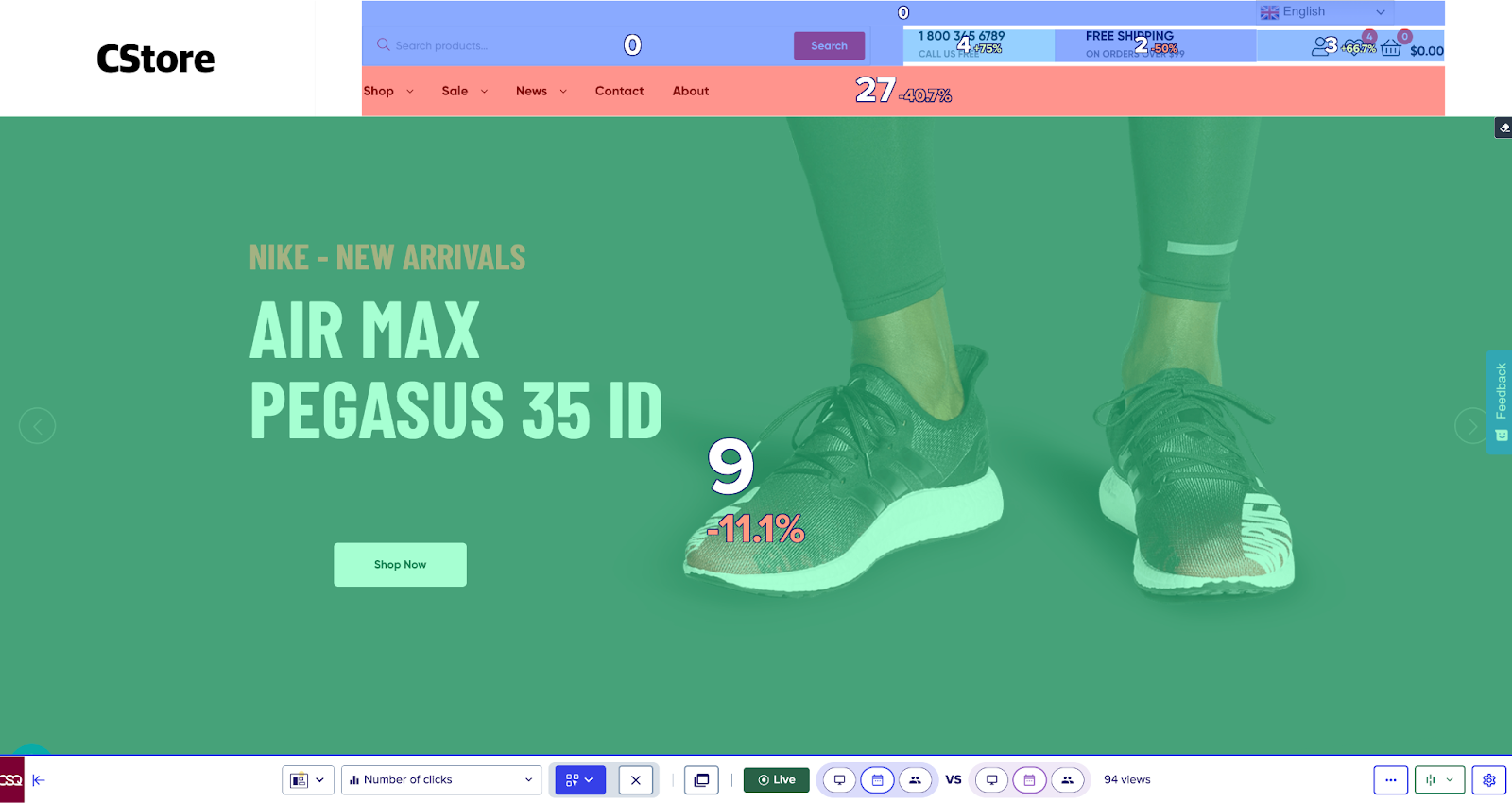
- Contentsquare built its reputation on zone-based heatmaps. By drawing rectangles around specific page elements, users can see revenue, engagement, and conversion metrics tied to specific zones. While incredibly powerful for e-commerce, it requires a more methodical setup than Crazy Egg’s plug-and-play approach.
2. Session Recordings: Retention and Sampling
The ability to "watch" a user is invaluable for identifying friction points.
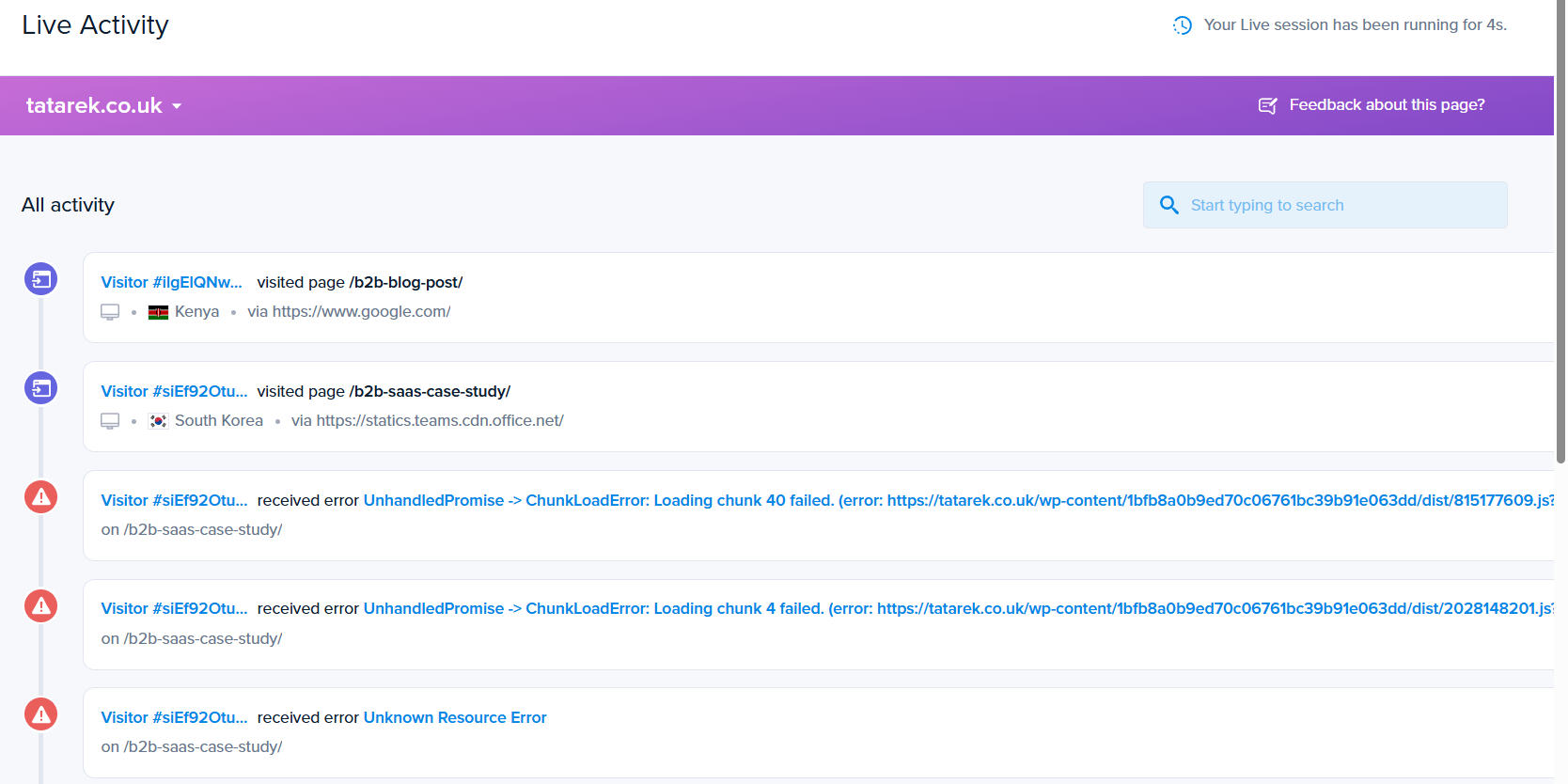
- Crazy Egg excels in data longevity, offering up to two years of retention depending on the plan. Its auto-tagging system (13+ event types) ensures that teams can immediately find relevant sessions without manual labor.
- Contentsquare provides sophisticated replay capabilities, but it employs a more rigid sampling model. Replays are capped as a percentage of total sessions, which can lead to data gaps if a company is not careful with their configuration.
3. A/B Testing: The Native vs. Third-Party Gap
This is perhaps the most significant functional divide.
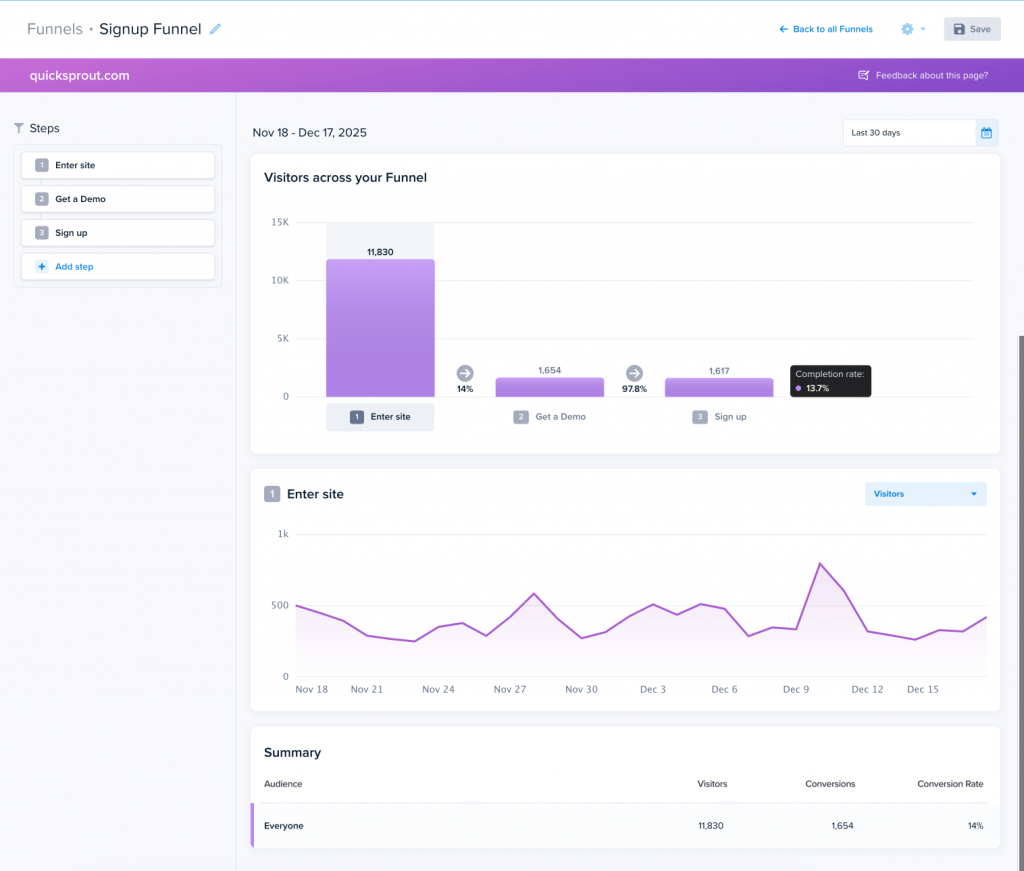
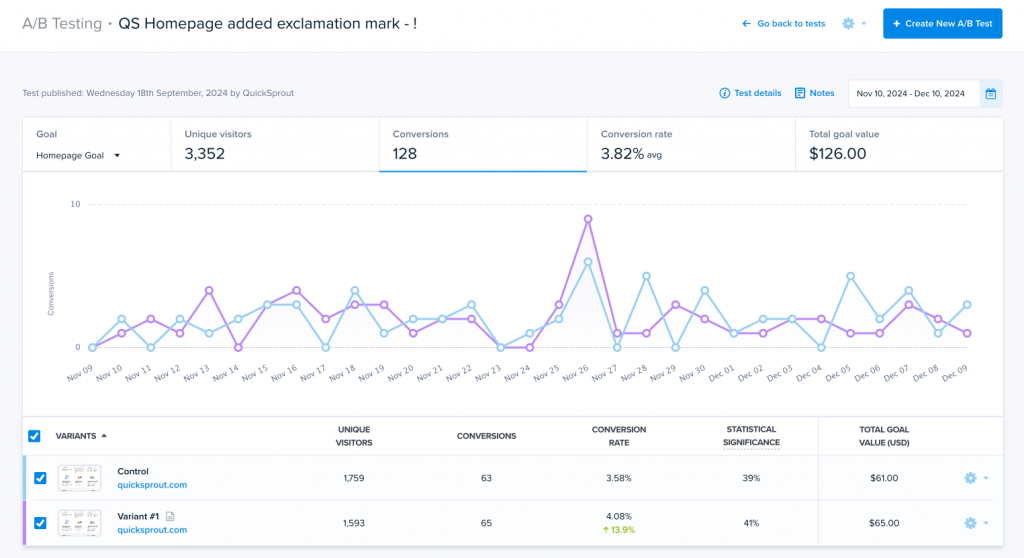
- Crazy Egg includes native A/B testing, complete with a visual editor and multi-armed bandit algorithms. This allows a marketer to launch, test, and optimize a landing page without ever touching a line of code or needing a separate testing subscription.
- Contentsquare does not offer native A/B testing. Instead, it provides "A/B Test Analysis" connectors that pull data from third-party tools like Optimizely or AB Tasty. While this is helpful for large enterprises already using these tools, it adds significant complexity and cost for smaller teams.
Supporting Data: Understanding the Value Gap
| Feature | Crazy Egg (Plus Plan) | Contentsquare (Growth Plan) |
|---|---|---|
| A/B Testing | Native/Included | Third-Party Required |
| Surveys | Included (Unlimited) | Add-on ($79+/mo) |
| Pricing Model | Fixed / Predictable | Tiered / Sales-Led |
| Error Tracking | Native / Built-in | Gated to Pro/Enterprise |
The financial implications are stark. A team looking to run surveys, test pages, and track errors will find everything they need in a single $99/mo Crazy Egg subscription. To achieve the same capability in the Contentsquare ecosystem, a team would need the Growth plan ($40/mo) plus the "Voice of Customer" add-on ($79+/mo), plus an additional subscription for an A/B testing platform—often costing hundreds of dollars more per month.
Official Responses and Strategic Positioning
When asked about their respective target audiences, the companies lean into their core strengths:
- Crazy Egg emphasizes its role as a "CRO partner." Their official documentation focuses on helping founders and small-to-medium business owners move from "guessing" to "knowing" without needing a team of data analysts.
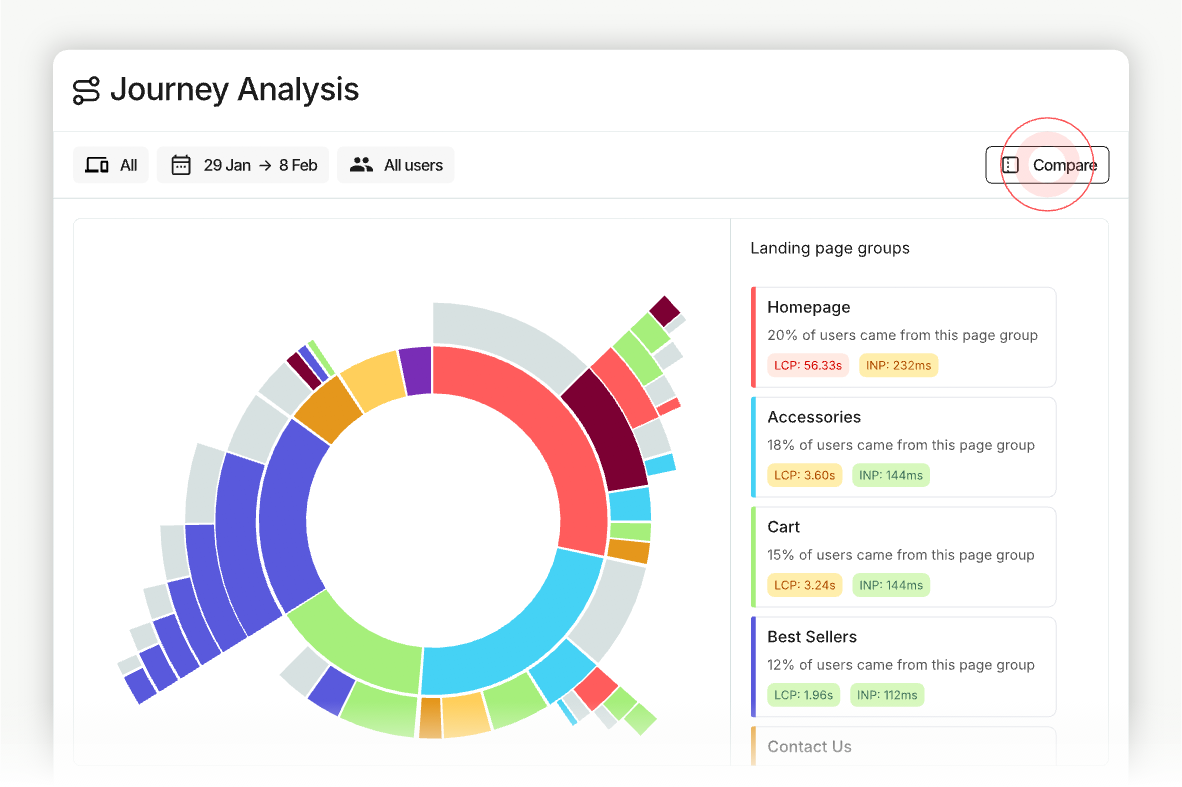
- Contentsquare positions itself as the "Enterprise Intelligence Layer." Their messaging focuses on "Revenue Attribution," "Digital Trust," and "Customer Journey Analysis." They cater to stakeholders who need to justify their digital spend to a C-suite or board of directors.
Implications for Your Tech Stack
When to choose Crazy Egg:
- You are an SMB, startup, or a lean marketing team.
- You need to move fast and don’t have a dedicated web analyst.
- You require a "one-stop-shop" for heatmaps, A/B testing, and surveys.
- You are cost-conscious and need predictable, transparent monthly pricing.
When to choose Contentsquare:
- You are an enterprise organization with a complex digital footprint.
- You have a large, six-figure budget specifically allocated for digital analytics.
- You need to analyze behavior across mobile apps and web platforms simultaneously.
- You have a dedicated team of analysts capable of interpreting complex journey maps and zone-based revenue data.
Final Assessment: Choosing Your Path
The debate between Crazy Egg and Contentsquare is ultimately a debate about organizational maturity.
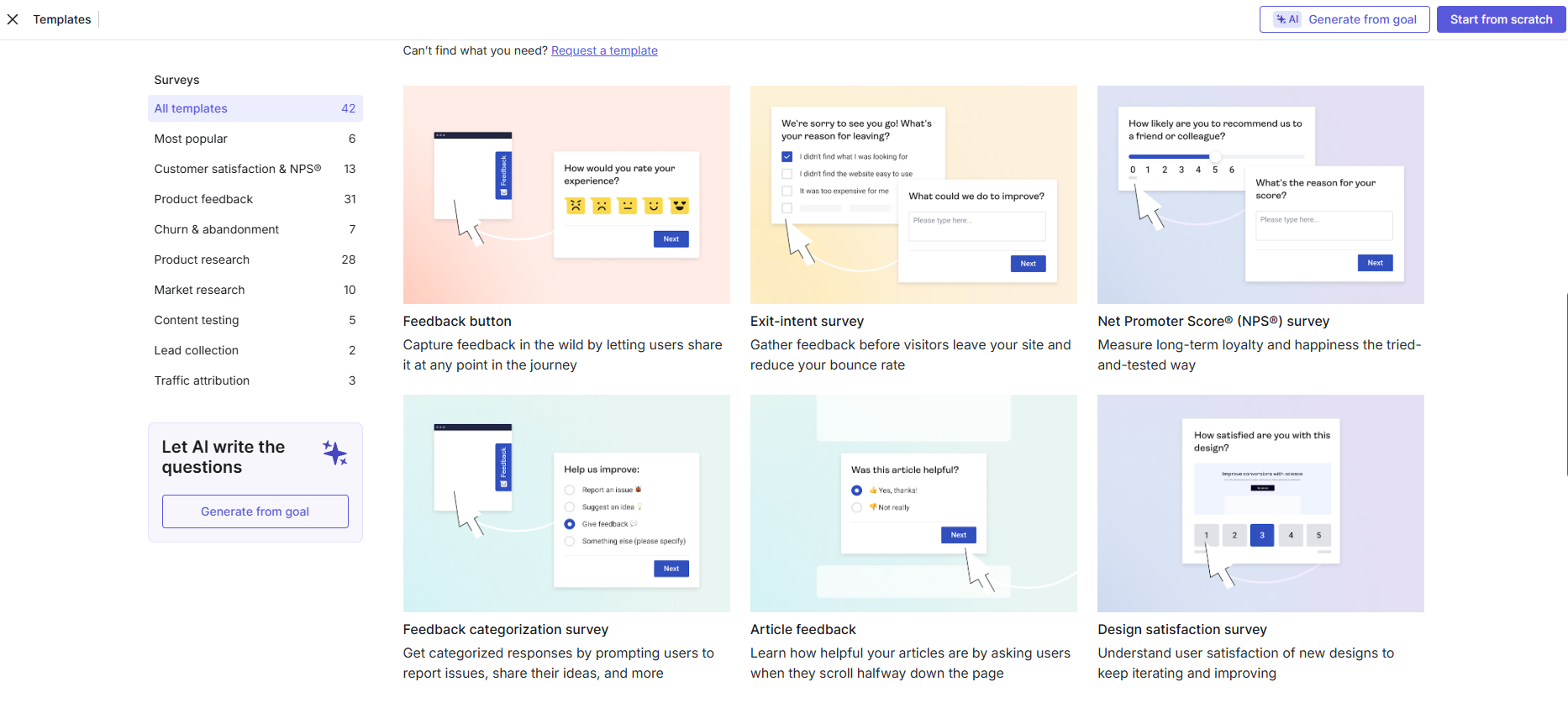
If you view CRO as a series of tactical improvements to landing pages and conversion flows, Crazy Egg provides the best value-to-complexity ratio on the market. Its ability to bundle essential tools into one subscription allows teams to remain agile and focused on outcomes rather than managing vendors.
If you view CRO as a part of a wider, enterprise-grade data science initiative—where you need to map thousands of user journeys across a massive, multi-product digital ecosystem—Contentsquare is the superior, albeit significantly more expensive, choice. Its ability to quantify the financial impact of every user action is, for the right organization, worth the premium price tag.
Before committing, take advantage of the 30-day free trial offered by Crazy Egg. If your needs are less clear, explore the entry-level tiers of Contentsquare to understand the baseline capabilities. In the end, the "best" tool is the one that your team will actually use every single day to make their next decision.
