
Beyond the Archetype: How the PRISM Model Defines the Future of Agentic Branding
The New Frontier: From Passive Tools to Active Agents
For decades, technology was a utility—a passive tool we operated to achieve a specific outcome. We used computers to write, phones to call, and browsers to search. However, the rise of Artificial Intelligence has fundamentally inverted this relationship. Today, technology is no longer something we merely operate; it is something we operate within.
We have entered the era of the "Agentic Economy," where interactions have shifted from transactional exchanges to fluid, conversational, and deeply personalized experiences. AI is no longer just retrieving data; it is synthesizing new contexts and creating original content in real-time. In this landscape, the communication bridge between humans and corporations is being rebuilt by algorithms. For brand leaders, this transition is the most significant paradigm shift since the advent of digital advertising.
Chronology of the Emotional Connection
To understand where we are going, we must look at the evolution of how brands have historically built loyalty.
- Early 20th Century: Psychology enters the advertising sphere. Experts begin to realize that rational persuasion is secondary to emotional triggers.
- 1990s–2000s: The "Lovemark" concept, pioneered by Kevin Roberts, emerges. Brands shift focus from mere products to entities that command "loyalty beyond reason."
- 2000–2025: The 12-Brand Archetype model (popularized by Margaret Mark and Carol Pearson) becomes the gold standard. It provides a human-inspired personality framework—the Hero, the Outlaw, the Caregiver—to give brands a cohesive look and feel.
- 2026 and Beyond: The "Agentic Shift." With AI agents mediating consumer choices, the traditional, static archetypal approach proves insufficient. A new, more granular, and technically precise model—the PRISM—is introduced to govern the digital personality of modern brands.
The Limitation of Archetypes in the Agentic Age
For twenty-five years, the 12-brand archetype model served as a north star. It provided a rational guide to the irrational nature of human consumption. However, the agentic economy demands a level of precision that archetypes cannot provide.
Archetypes are intentionally broad to allow for cultural resonance, but they are too interpretative for machines. When a brand hands its "personality" over to an AI, it needs consistent, reproducible behavior. If a brand relies solely on an archetype—such as "The Explorer"—the AI might generate wildly different tone, vocabulary, and decision-making logic depending on the prompt or the context. In an age where brand experiences are generated on-demand, this leads to fragmentation. A brand that feels like a stranger one day and a friend the next fails to build the "Agentic Lovemark" required for long-term loyalty.
The Legible-Lovable Law: Bridging Human Emotion and Machine Logic
The evolution of branding is currently guided by what industry leaders, such as former Philips and ASML brand executive Thomas Marzano, call the "Legible-Lovable Law."
In the agentic economy, a brand must satisfy two masters:

- Legibility: The brand must be structured in a way that an AI can "read," parse, and index it accurately. If the AI cannot understand the brand’s core constraints and values, it cannot effectively recommend or represent it.
- Lovability: Once the AI has successfully rendered the brand, the human on the receiving end must still feel an emotional connection.
This requires a move away from static brand manuals toward "Brand Constitutions." These constitutions act as a technical reinforcement of the brand’s identity, ensuring that the AI’s verbal tone, vocabulary, and response behaviors are consistent, branded, and deeply human-like.
Introducing the PRISM Model
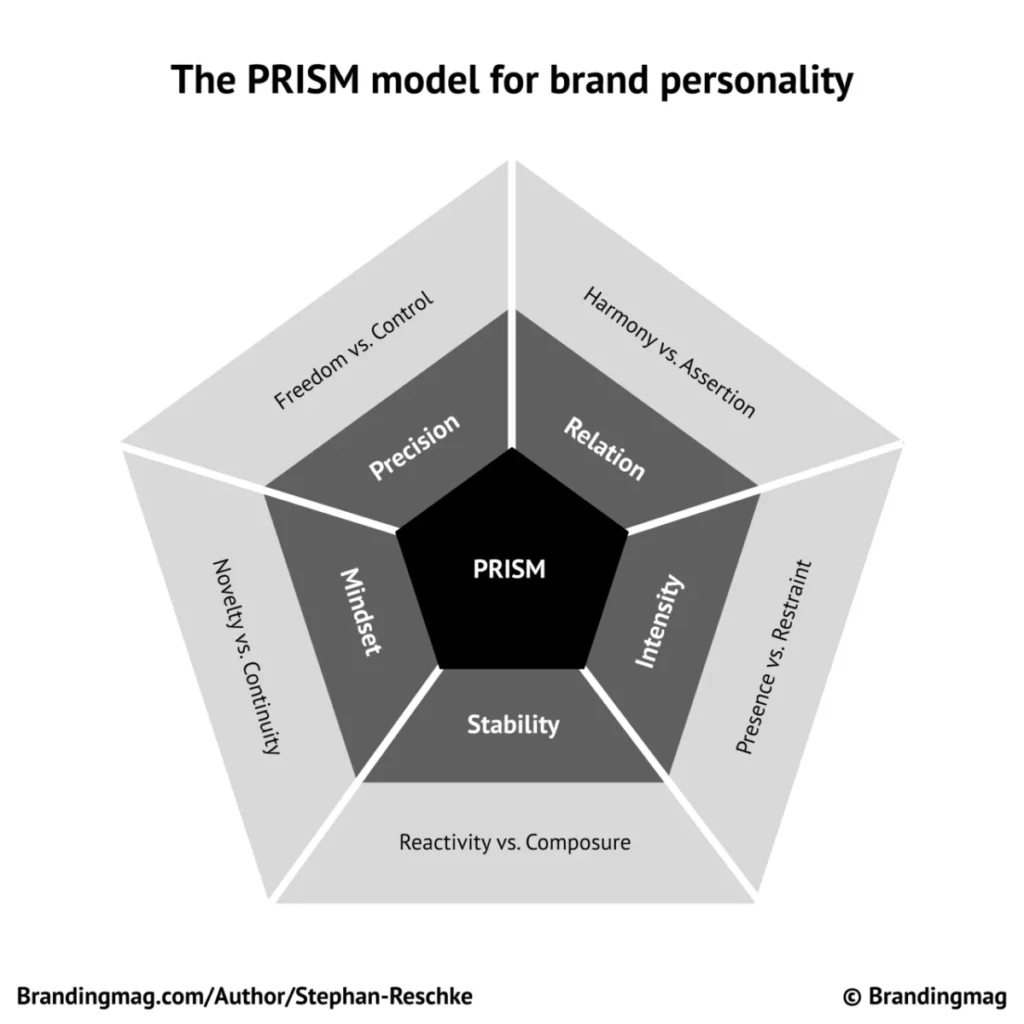
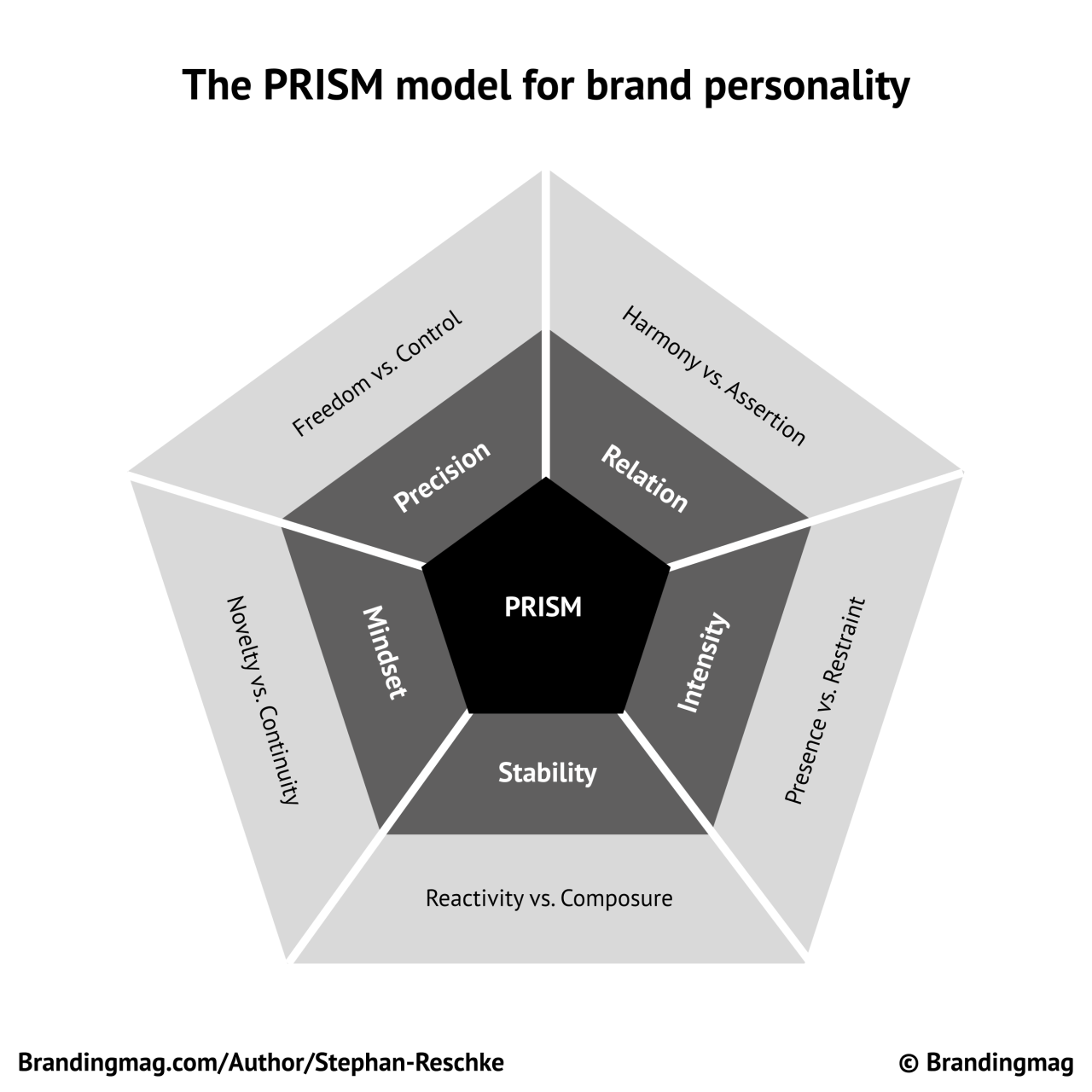
To achieve this level of machine-readable consistency, we must adopt a more sophisticated framework. Enter the PRISM model. Drawing inspiration from the OCEAN (or "Big Five") personality trait model used in psychology, PRISM translates complex human traits into a format that AI can operationalize.
The Five Core Domains of PRISM:
- Perspective (Openness): Defines the brand’s mindset—is it visionary and unconventional, or traditional and pragmatic?
- Responsiveness (Conscientiousness): Dictates the brand’s reliability, attention to detail, and goal-oriented focus.
- Interaction (Extraversion): Governs the social frequency and intensity of the brand’s communication style.
- Sociality (Agreeableness): Determines the warmth, empathy, and collaborative nature of the brand’s interactions.
- Modulation (Neuroticism/Stability): Sets the emotional baseline—is the brand bold and volatile, or steady and composed?
Unlike archetypes, which place a brand in a "box," PRISM uses a scale-based system. Each of the five domains is broken down into six defining characteristics, allowing for a nuanced, multidimensional profile. This data-heavy approach is exactly what Large Language Models (LLMs) need to calibrate their behavior.
Implications for Brand Strategy
The shift toward the PRISM model has profound implications for how companies allocate their marketing budgets and design their infrastructure.
1. Brand Language Over Campaigns
In a world of voice-first interfaces and AI-mediated search, the traditional "campaign" is losing ground to "brand language." LLMs do not "see" a billboard or a flashy TV spot; they process text, data, and context. Consequently, the primary touchpoint between a human and a brand is now the vocabulary and grammar used by the AI agent representing that brand.
Brands must now invest in developing a linguistic framework that lives not just in a creative brief, but directly within the system prompts of their AI infrastructure.
2. The Creation of a "Digital Soul"
The PRISM model allows for the construction of a brand’s "digital soul." By implementing these personality parameters into the web architecture, brands can ensure that their AI agents:
- Maintain Consistency: No matter the platform or the query, the brand’s response will always reflect its core personality.
- Contextualize Responses: The AI can adjust its tone to suit the specific user while remaining within the defined bounds of the brand’s identity.
- Optimize for Relevance: By being "legible," the brand increases the probability of being selected by the AI as the ideal answer to a consumer’s need.
Expert Perspectives: The Shift Toward Agentic Lovemarks
Arjan Kapteijns, former CEO of Saatchi & Saatchi Netherlands, has been a leading voice in this transition. He argues that the concept of the "Lovemark"—a brand that earns emotional devotion—is not dead; it has simply migrated. Today, consumers are forming emotional bonds with the digital agents that help them navigate their lives.
If a personal assistant AI suggests a brand, the user trusts that brand based on the AI’s delivery. If the AI’s tone is robotic or misaligned with the user’s values, the "Lovemark" is tarnished. Thus, the brand-AI relationship is now the most critical frontier of brand equity.
Future-Proofing the Brand
The anxiety surrounding AI is, at its core, a fear of the unknown. However, the history of branding has always been about mastering new technologies to deepen human connection.
The PRISM model represents a transition from "branding as art" to "branding as an experience engine." By moving away from the limitations of static archetypes and embracing a data-driven, scalable personality framework, companies can ensure they remain relevant in an era where the most important interaction a consumer has with their brand might be a conversation they never actually hear.
Conclusion: A Call to Action
The conversations about the future of branding have already moved from the abstract to the operational. The brands that will lead the next decade are those that are already hard-coding their values, tone, and behavior into the fabric of the agentic economy. Whether through refining their PRISM profile or drafting their own Brand Constitution, the time for experimentation is now.
In this new reality, brands must be more than just recognizable; they must be legible to the machines that guide human choice and lovable to the humans who make them. The future is complex, but with the right framework, it is an opportunity to forge deeper, more intelligent, and more lasting connections than ever before.
