

The Art of the Headline: 8 Strategies for Crafting Titles That Drive Traffic and Engagement
In the digital ecosystem, where attention is the most coveted currency, the blog post title acts as the ultimate gatekeeper. It is the first—and often the only—point of contact between a creator and a potential reader. As the legendary advertising executive David Ogilvy famously noted, "The purpose of a title is to get potential readers to read the first line of your content."
If a headline fails to capture interest, the thousands of words that follow remain invisible. This article explores the mechanics of high-performing headlines and provides a definitive guide for writers looking to turn passive browsers into engaged readers.
The Strategic Importance of Headlines
Your blog post title is a multi-purpose tool. It serves as the primary hook in RSS feeds, the anchor for search engine results pages (SERPs), the social media "call to action" on platforms like X (formerly Twitter) or LinkedIn, and the internal navigation element on your own website.
When a reader scrolls through an infinite feed, they are performing a rapid-fire triage. A boring, cryptic, or overly complex title will be discarded in milliseconds. Conversely, a well-crafted headline acts as a beacon, signaling value, relevance, and intrigue. Whether your post becomes a viral sensation or languishes in the digital graveyard of your archives depends almost entirely on the effort you invest in those few opening words.
Chronology of Crafting: The "Pause and Polish" Method
Great writing is rarely spontaneous; it is the result of intentional friction. The most successful bloggers treat the headline not as an afterthought to be dashed off at the last minute, but as a critical, standalone task.

- The Drafting Phase: Initially, focus on the core value proposition of your content. What problem are you solving?
- The Iteration Phase: Once the post is written, draft at least five to ten variations of the title. Do not settle for the first thing that comes to mind.
- The Refinement Phase: Apply the "pause" method. Step away from the screen. When you return, evaluate your list with fresh eyes. Which title is the most punchy, clear, and benefit-driven?
8 Proven Techniques for Irresistible Headlines
1. Communicate a Tangible Benefit
Readers are inherently self-interested. They want to know, "What is in this for me?" Titles that explicitly state the utility of the post—such as "How to Master Digital Photography" or "10 Ways to Improve Your Workflow"—perform consistently better than abstract or clever titles. By promising a solution to a specific problem, you align your content with the reader’s immediate needs.
2. Ignite Controversy and Debate
Controversy is a powerful driver of engagement. When you take a firm stance on a polarizing topic, you invite discussion. However, this strategy comes with a caveat: you must be prepared to defend your position within the body of the text. Superficial "clickbait" that promises controversy but delivers fluff will alienate your audience. Authenticity is the bridge between a provocative title and a loyal readership.
3. The Power of the Interrogative
Questions are cognitively engaging. When a headline asks a question, the human brain is naturally inclined to seek the answer. Furthermore, questions create a conversational tone. If you use the word "you" in your question (e.g., "Are you making these common writing mistakes?"), you transform the article from a static lecture into a personal consultation.
4. Personalize the Experience
Even when writing for an audience of thousands, your content should feel like a one-on-one conversation. Incorporating the word "you" or "your" directly into the title fosters a sense of intimacy. It shifts the focus from "what I (the blogger) am writing" to "what you (the reader) can achieve."
5. Leverage Search Engine Optimization (SEO)
A brilliant title is useless if it cannot be found. Integrating high-volume keywords—particularly those related to products, companies, or specific industry terms—is essential for discoverability.

- Front-loading: Place your primary keywords as close to the beginning of the title as possible.
- Clarity over cleverness: Search engines prioritize clarity. While a witty pun might be fun, a descriptive title that uses standard search terminology will rank higher.
6. The Strategic Use of "Power Words"
Psychology plays a significant role in click-through rates. Certain words, such as Essential, Proven, Guaranteed, Secret, and Ultimate, act as triggers for the reader’s curiosity.
- Caution: These should be used sparingly. Over-reliance on "power words" can trigger skepticism. If a title promises the "Ultimate Secret" but the content is mundane, you will lose the reader’s trust forever. Use them only when the content truly delivers on the promise.
7. Make Bold Claims and Promises
Big claims—such as "Double Your Traffic in 30 Days"—are high-risk, high-reward. These titles pique interest by offering a transformative result. The success of this technique relies entirely on the depth and quality of the supporting content. If the promise is substantial, the article must provide a clear, step-by-step roadmap to achieve that result.
8. Employing Humor
Humor is a sophisticated tool. A funny, lighthearted, or witty headline can differentiate you in a crowded, overly formal niche. However, humor is subjective. What one reader finds hilarious, another may find unprofessional. Use this strategy only if it aligns with your brand voice and your specific audience’s sensibilities.
Supporting Data: Why Length and Punctuation Matter
While there is no "perfect" length for a title, there are technical constraints to consider.
- The 65-Character Limit: Search engines typically truncate titles that exceed 60–65 characters. If your title is too long, the most important part of your message may be cut off in the results.
- The Punctuation Debate: Many seasoned copywriters advise against using periods (full stops) at the end of headlines. A period acts as a visual "stop sign," signaling that the thought is finished. Conversely, an open-ended title encourages the eye to continue moving down into the first paragraph of the post.
Official Perspective: The "Zero-Rush" Philosophy
The consensus among professional content strategists is clear: Do not rush.
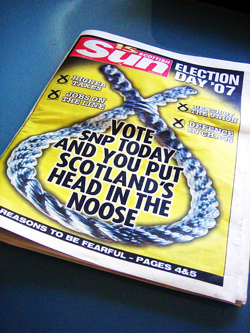
The headline is the most high-leverage part of your writing process. If you spend three hours writing an article but only three minutes on the title, you have fundamentally misallocated your time. Consider the headline the "headline of your success." If the title fails, the content is effectively nonexistent. Treat each headline as a project in its own right, iterating and testing until you find the perfect balance of clarity, intrigue, and SEO optimization.
Implications for the Future of Content
As AI-generated content becomes more prevalent, the ability to write a human-centric, emotionally resonant headline will become an increasingly rare and valuable skill. Algorithms can generate thousands of titles, but they struggle to capture the nuance of a brand’s unique voice or the specific, pressing anxieties of a target audience.
By mastering these eight strategies, you move beyond the role of a "writer" and into the role of a "communicator." You are no longer just producing content; you are building a bridge to your reader. Remember: the destiny of your work is written in your headlines. Give them the time, the research, and the creative energy they deserve.
