
The Architecture of Disruption: Scaling Lessons from Uber, Spotify, and Airbnb
In the modern digital economy, the difference between a stagnant startup and a global powerhouse often boils down to a specific set of operational philosophies. Companies like Uber, Spotify, and Airbnb did not merely enter their respective markets; they fundamentally re-engineered how the world moves, listens, and travels. By analyzing their trajectories from scrappy Silicon Valley hopefuls to industry-defining titans, we can distill a blueprint for hyper-growth that remains relevant for any business navigating today’s volatile landscape.
The Core Philosophy: Why Disruptors Win
The success of these three companies is not accidental. It is the result of a deliberate, rigorous, and scientific approach to growth. They moved away from traditional top-down decision-making and embraced an iterative cycle of experimentation. By institutionalizing the "test-and-learn" methodology, they ensured that their product evolution was guided by real-world behavior rather than executive intuition.
1. The Culture of Constant Experimentation
For Uber, Spotify, and Airbnb, experimentation is not a department—it is a culture. This involves creating environments where failure is treated as a data point rather than a setback.
- Uber’s Iterative Evolution: Uber began as a premium black-car service. Had they remained rigid, they would have been a niche luxury player. Instead, they experimented with price points and accessibility, leading to the creation of UberX, UberPOOL, and UberEATS. Each pivot was a calculated risk aimed at capturing a different segment of the transport market.
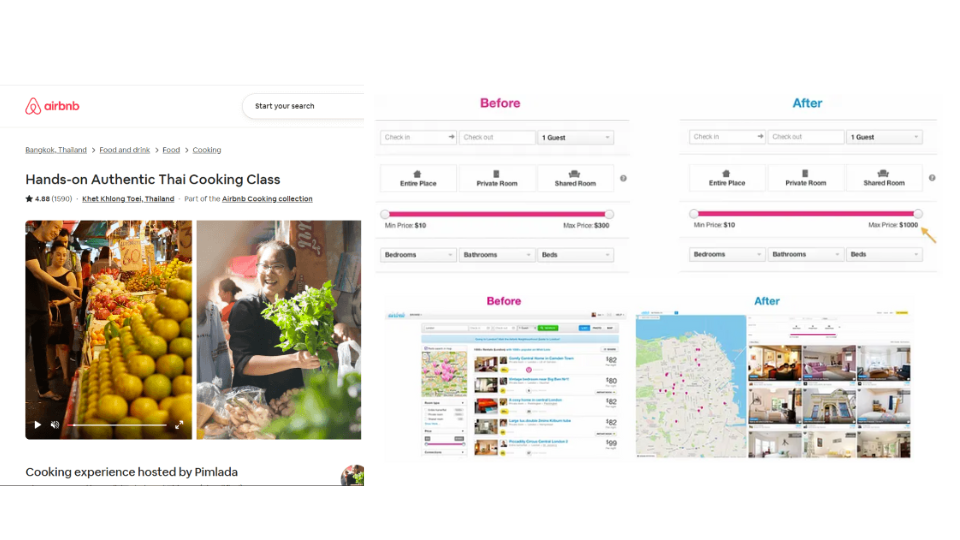
- Airbnb’s Visual Bet: In its infancy, Airbnb faced a conversion hurdle: users were hesitant to book strangers’ homes. Through internal experimentation, the team discovered that listings with high-quality, professional photography performed significantly better. By formalizing this into a standard service for hosts, they solved a core trust issue.
- Spotify’s Algorithmic Personalization: Spotify’s growth is anchored in its ability to keep users engaged. By experimenting with machine learning-driven playlists like "Discover Weekly," they turned passive listening into an active, personalized ritual. This data-backed feature effectively locked in users, making churn significantly more difficult.
Chronology of Scale: From MVP to Global Dominance
To understand how these companies scaled, one must look at the progression from their Minimum Viable Product (MVP) to their current multi-billion dollar ecosystems.

The Early Stages: Solving the "Cold Start" Problem
All three companies faced the classic marketplace dilemma: how to attract users without a supply, and how to attract providers without a user base.
- Airbnb: Founders famously went door-to-door in New York, photographing apartments themselves to prove the platform could work.
- Uber: Focused on high-density urban areas like San Francisco, creating a localized network effect that made the service indispensable before attempting to scale nationally.
- Spotify: Focused on a "freemium" model that prioritized user adoption in Europe first, building a critical mass of data before launching in the highly competitive U.S. market.
The Expansion Phase: Diversification
Once the core product achieved "product-market fit," these companies shifted to expansion. Airbnb expanded into "Experiences," transforming from a lodging platform into a travel concierge. Spotify moved from a music library to a multi-media giant by acquiring podcast networks. Uber evolved into a logistics powerhouse by leveraging its existing driver network for food delivery (UberEats).
Data-Driven Decision-Making: The Engine of Growth
Data is the currency of the modern tech giant. These companies do not guess; they measure.
A/B Testing as a Standard
Spotify is perhaps the most prolific practitioner of A/B testing in the consumer tech space. Every UI change, from the placement of a "shuffle" button to the color of a "play" icon, is tested against a control group. This ensures that every update serves a specific, measurable goal—whether that is increasing session length or driving premium conversions.
Smart Algorithms and Dynamic Pricing
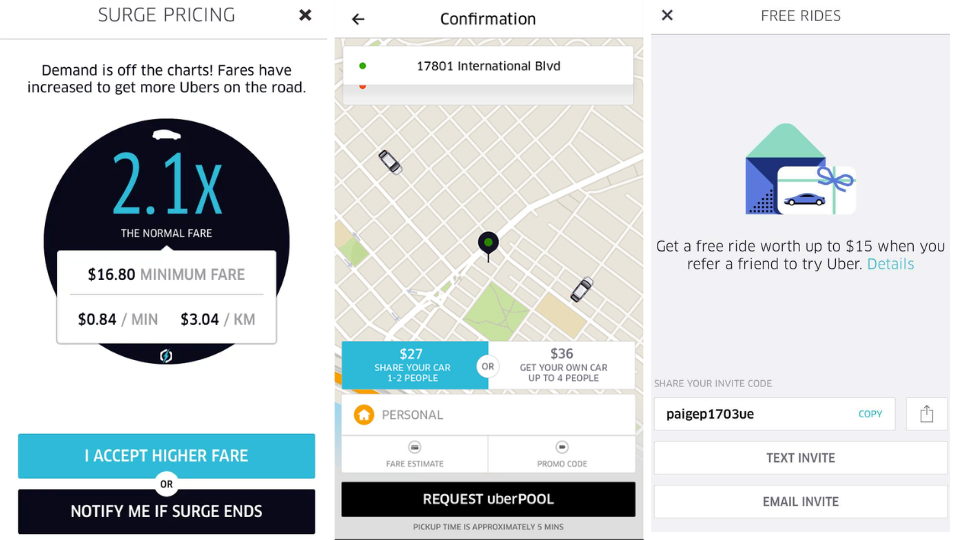
Airbnb’s pricing algorithm is a marvel of data science. By analyzing thousands of variables—including local events, seasonal demand, and even the host’s historical responsiveness—the platform suggests the optimal price to maximize a host’s earnings. This reduces the cognitive load on the host and ensures the guest receives a competitive market rate. Similarly, Uber’s surge pricing is not just about revenue; it is a sophisticated mechanism for balancing supply and demand in real-time, ensuring that a ride is available when and where it is needed.
Risk-Taking and the "Fail Fast" Mantra
In a world of rapid technological advancement, the greatest risk is standing still. Uber, Airbnb, and Spotify have all cultivated an environment where employees are empowered to propose "crazy" ideas.
- The "Fail Fast" Mindset: This is not about failing for the sake of it; it is about reducing the cost of failure. By keeping experiments small and controlled, these companies can determine the viability of a new market or feature in weeks rather than years.
- Challenging the Status Quo: Airbnb’s foray into professional experiences was a risk that diverted resources from their core lodging business. However, by treating it as an experiment rather than a permanent mandate, they were able to pivot quickly when the data indicated strong consumer interest.
Cross-Functional Collaboration: Breaking the Silos
Innovation rarely happens in a vacuum. It requires the collision of different disciplines: engineering, design, marketing, and data science.
- The Spotify Squad Model: Spotify is famous for its organizational structure, often cited in management literature. By organizing teams into "Squads" and "Tribes," they ensure that engineers and designers are working on the same user-focused problem. This eliminates the "us vs. them" mentality that plagues legacy corporations.
- Uber’s Operations-Product Bridge: Uber bridges the gap between digital product development and physical-world operations. Their product teams are required to understand the constraints of the driver’s experience, ensuring that the app is not just beautiful, but functional in the chaos of urban traffic.
Implications for Modern Business
The strategies employed by these industry disruptors provide a clear roadmap for any organization aiming to scale.
1. Prioritize the User Experience (UX)
If the app is hard to use, the user will leave. It is that simple. Uber’s one-tap ride request, Airbnb’s secure booking flow, and Spotify’s seamless device switching are not just features; they are the core competitive advantage. Companies must view UX as the most important marketing tool in their arsenal.
2. Democratize Data Access
Data should not be siloed in a basement analytics office. When teams across the organization have access to real-time performance metrics, they become empowered to make better decisions on the fly.
3. Embrace Agility
Growth is rarely a straight line. It is a series of pivots and adjustments. Organizations must be prepared to kill features that aren’t working, double down on those that are, and constantly listen to the voice of the customer.
Conclusion: The Path Forward
The journeys of Uber, Spotify, and Airbnb are not just stories of success; they are lessons in adaptability. By embracing a culture of experimentation, leveraging data to drive strategy, and fostering a cross-functional environment, these companies have rewritten the rules of business. For the modern entrepreneur, the message is clear: success is not about having the perfect plan on day one. It is about building a system that allows you to learn, iterate, and improve faster than the competition.
In the race for growth, the companies that learn the fastest are the ones that win. As you look at your own business, ask yourself: Are we experimenting enough? Are we truly data-driven? And most importantly, are we making it easier for our customers to say "yes"?
