
The Architecture of Desire: Why Modern Brands Are Moving from Utility to World-Building
Why do we crave specific products with such intensity? Why are some brands magnetic, drawing us into their orbit, while others remain invisible, ignored despite competitive pricing? And, perhaps most pressingly, why do we rationalize the purchase of an overpriced wellness smoothie or a trendy piece of tech as a "necessary" upgrade to our daily existence?
The answer lies in a fundamental shift in the consumer psyche. We have moved past the era of utility-based consumption. Today, the world’s most successful brands are no longer selling products; they are selling entry into curated, immersive worlds. A Dairy Boy sweatshirt, a Dyson Airwrap, a Canon PowerShot G7 X, or a Loewe tank are not merely items of utility—they are identity signals.
The Psychology of the "Extended Self"
To understand why modern consumers prioritize aesthetics and brand association over pure functional value, we must look to the psychological frameworks that govern human desire.
Psychologist Russell Belk famously introduced the concept of the "extended self," which posits that our possessions are not separate from who we are, but are instead external manifestations of our identities. When we purchase a product, we are curating our own image. M. Joseph Sirgy’s "self-congruity theory" further explains this phenomenon: consumers gravitate toward brands that act as mirrors, reflecting either their current reality or, more importantly, the person they aspire to become.
Consider the divergent paths of two Nike customers. One may already identify as an elite athlete, purchasing gear that reinforces their self-image. Another may be a novice, buying the same shoes to signal to themselves and the world their commitment to a future, healthier version of themselves. Both are buying identity, not just footwear.
Furthermore, Pierre Bourdieu’s work on cultural capital suggests that our consumption habits are a form of social currency. By choosing the "right" brands or aesthetics, individuals signal that they possess the necessary taste and knowledge to belong to a specific cultural tier. This creates a sense of belonging—a powerful, subconscious incentive to buy into a brand’s ecosystem. When you drink that specific brand of matcha or carry that specific camera, you aren’t just consuming; you are asserting, "I understand this world. I belong here."
The Chronology of Consumption: From Function to Identity
The evolution of the consumer landscape has unfolded in distinct, recognizable phases:
- The Utility Era (Pre-1970s): Consumption was largely transactional. Brands focused on the "how" and the "what." A refrigerator was bought to keep food cold; a car was bought to travel from point A to point B.
- The Branding Era (1980s–2000s): Marketing shifted toward brand equity and logos. It was no longer about the refrigerator, but about the reliability and status associated with the label on the door.
- The Experience Era (2010s): Companies began to emphasize the "user experience." Design, interface, and customer service became the primary differentiators.
- The World-Building Era (Present Day): We have entered a phase where the product is merely an entry ticket to a lifestyle. Brands are now building "ecosystems" that encompass a specific aesthetic, a set of values, and a community.
This shift has been accelerated by social media, where the "world" of a brand can be broadcast, replicated, and lived out in real-time.
The Role of the Creator as a Cultural Architect
In this new paradigm, traditional advertising often falls flat. Audiences have become adept at filtering out polished, corporate-led messaging. This is where the creator economy has become the most vital piece of the marketing puzzle.
Great creators do not function as mere billboards. They are storytellers who invite their audience to experience a specific, curated world. When a creator partners with a brand, they are essentially "lending" their world—their trust, their aesthetic, and their community’s sense of belonging—to the product.
This creates a powerful effect: the partnership ceases to feel like an advertisement and begins to feel like a recommendation from a peer or a mentor. The creator is not just selling a product; they are expanding the universe around the brand, making it feel accessible and authentic to the consumer.
Supporting Data: Why "World-Building" Wins
Data from recent consumer behavior studies indicates that the "world-building" strategy yields significantly higher ROI than traditional performance marketing.
- Conversion Rates: Brands that leverage creator-led community building see, on average, a 20-30% increase in conversion rates compared to those relying on generic display ads.
- Customer Lifetime Value (CLV): Consumers who view themselves as part of a brand’s community show a 45% higher CLV. They are less price-sensitive and more likely to advocate for the brand to others.
- Trust Metrics: According to recent market surveys, 78% of Gen Z consumers prefer to discover new products through creators they follow rather than through traditional commercials.
These figures underscore the reality that in an attention-starved economy, emotional resonance is the only true currency.
Implications for Enterprise Brands
The primary challenge for large, legacy brands is a lack of "cultural fluency." While these companies possess massive budgets, efficient supply chains, and superior product quality, they often struggle to speak the language of the modern consumer.
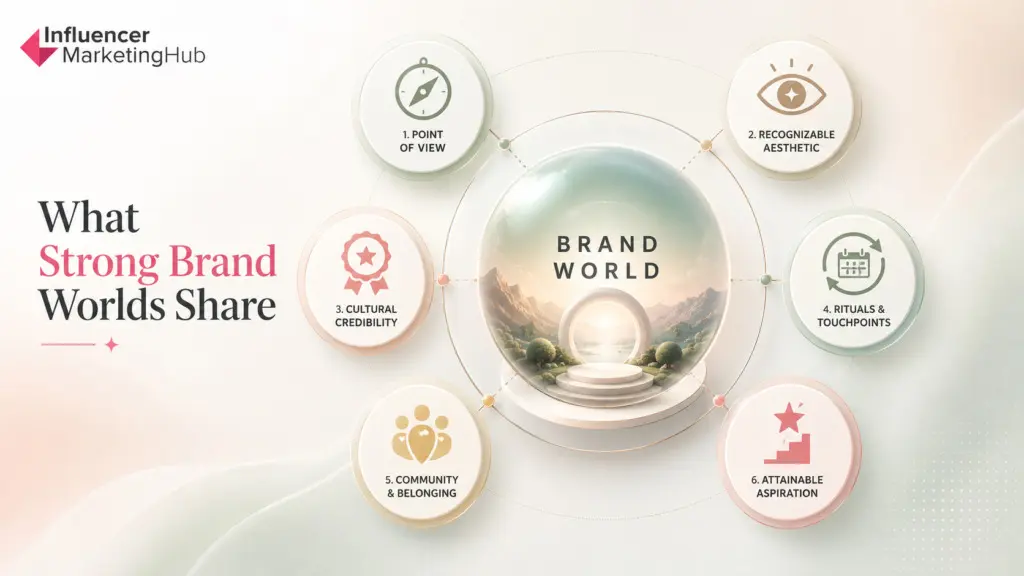
Many enterprise brands continue to treat creators as a "line item" in a media plan—a distribution channel to be optimized for low cost-per-click. This is a fatal strategic error. The brands that are winning are those that treat creators as co-architects. They invite creators into the strategy process, allowing them to shape the brand’s identity and cultural messaging.
When an enterprise brand stops trying to control the narrative and starts trying to facilitate a world that people want to live in, they unlock a level of brand loyalty that cannot be bought with traditional ad spend.
Conclusion: The Invitation to Belong
The most powerful brands today are not those that simply offer the most features for the lowest price. They are the ones that successfully answer the question: Who does this product make me?
As we look toward the future of marketing, the divide between the winners and the losers will only widen. The losers will continue to compete on price, feature sets, and aggressive ad spend. The winners will continue to build worlds—communities, rituals, aesthetics, and fandoms that invite the consumer to participate in something larger than themselves.
Building a brand is no longer a boardroom activity. It is a process that happens in the "wild"—through cultural moments, creator partnerships, and shared experiences. For the modern enterprise, the directive is clear: stop selling, and start inviting. The world is waiting to be built, but you cannot build it alone.
