
The Architecture of Connection: Why the PRISM Model is the New Blueprint for Agentic Lovemarks
Main Facts: The Paradigm Shift from Transactional to Agentic
Technology has undergone a fundamental metamorphosis. We have moved past the era where digital tools were merely external utilities we "operated with." We now exist within an immersive, AI-driven environment that is increasingly conversational, adaptive, and, in many respects, alive. Interactions have evolved from static, transactional exchanges into dynamic, context-aware dialogues.
In this new "Agentic Economy," the traditional metrics of brand loyalty are being rewritten. Arjan Kapteijns, former CEO of Saatchi & Saatchi Netherlands, has spearheaded a crucial evolution of Kevin Roberts’ iconic "Lovemark" concept. He introduces the "Agentic Lovemark"—a framework acknowledging that in a world governed by Large Language Models (LLMs) and digital agents, human emotional connection is no longer directed solely toward human-led brand experiences, but toward the digital interfaces that curate our reality.
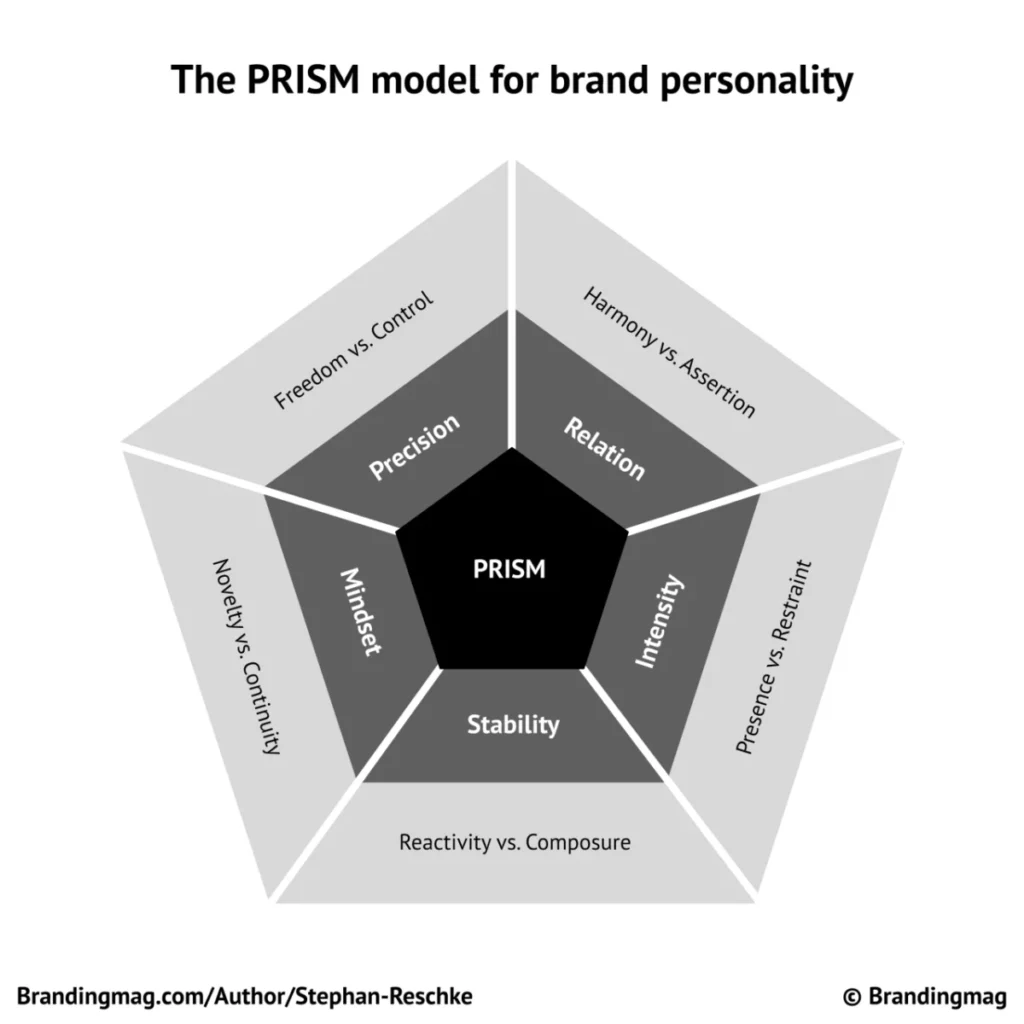
To bridge the gap between human emotional needs and machine-driven delivery, the industry is moving away from broad, subjective brand archetypes toward a more precise, technical, and data-driven personality framework: the PRISM model.
Chronology: From Archetypes to Algorithmic Personality
The history of branding has always been a quest to humanize the inanimate.
- The Early 20th Century: Psychology enters the advertising arena. Marketers discover that emotional persuasion is the most effective driver of long-term loyalty.
- 1999–2000s: Margaret Mark and Carol Pearson publish The Hero and the Outlaw, introducing the 12-brand archetype model. This provided a rational guide to the irrational nature of consumer behavior, helping brands manifest a consistent, human-like identity.
- The 2020s (The AI Inflection Point): The explosion of Generative AI renders traditional, static archetypes insufficient. Because AI agents now act on our behalf, the "personality" of a brand must be interpretable by machines, not just felt by humans.
- 2026: The emergence of the PRISM model and the "Brand Constitution" philosophy (led by figures like Thomas Marzano). This marks the transition from brand design as an aesthetic exercise to brand design as a technical architecture.
Supporting Data: Why Archetypes No Longer Suffice
The 12-brand archetype model—while still useful for high-level strategy—lacks the granularity required for real-time, 1-on-1 AI conversations. When a brand relies solely on a "Hero" or "Sage" archetype, it leaves too much room for algorithmic interpretation.
If an AI is given only an archetype as a prompt, the resulting output can be inconsistent, leading to fragmented brand experiences. Imagine a customer querying a brand about a return policy; one day the AI responds with the stoic precision of a Sage, and the next, it speaks with the chaotic energy of an Outlaw. This lack of "operationalized personality" is fatal in an age where trust is built through consistency.
The Legible-Lovable Law
Thomas Marzano, former brand leader of Philips and ASML, codified the requirement for this new era in his manifesto, Brand Constitutions. He argues that for a brand to thrive in the agentic economy, it must satisfy the Legible-Lovable Law:
- Legible to AI: The brand must be machine-readable, allowing algorithms to recognize, prioritize, and recommend the brand effectively.
- Lovable by Humans: The brand must maintain an emotional resonance that feels authentic and human-centric.
The PRISM model acts as the structural foundation for this law, turning abstract brand values into actionable, system-prompt-ready data.

The PRISM Model: A Deep Dive
The PRISM model is derived from the "Big Five" (OCEAN) personality traits of human psychology, translated into a framework suitable for corporate identity. It classifies brand personality across five core domains, each further broken down into six granular characteristics.
1. Openness to Experience
This domain defines how a brand handles innovation, creativity, and complexity. A high-openness brand will lead with avant-garde solutions and abstract thinking, while a lower-openness brand will prioritize traditional, reliable, and proven methodologies.
2. Conscientiousness
This measures the brand’s drive for precision, reliability, and organization. In an AI-driven interaction, this determines whether the agent acts as an efficient, task-oriented assistant or a more fluid, conversational partner.
3. Extraversion
This dictates the "energy" of the brand’s language. Is the brand outgoing, assertive, and high-frequency in its communication, or is it reserved, understated, and reflective?
4. Agreeableness
Perhaps the most critical domain for "Lovemarks," this defines the brand’s empathy, warmth, and cooperative nature. An agreeable brand’s AI agent will prioritize user comfort and conflict resolution.
5. Neuroticism (Emotional Stability)
In a branding context, this measures the brand’s resilience and consistency under pressure. It determines how the AI reacts to customer frustration or systemic errors—does it maintain a calm, steady persona, or does it mirror the user’s volatility?
By scoring a brand on these axes, organizations can move beyond the "vague archetype" and create a digital soul that can be programmatically injected into LLMs.
Implications for the Future of Marketing
The adoption of the PRISM model signals a radical shift in how marketing departments operate. We are moving from the era of "Brand Campaigns" to the era of "Brand Language."
The Death of the PDF Brand Guide
In the near future, static brand books in PDF format will become historical artifacts. The new brand manual will exist as System Prompts—living code that sits within the infrastructure of a company’s web services and AI agents.
The Rise of Branded Language
As voice-first technology (hearables, smart homes, and AI assistants) becomes the primary interface, visual branding will take a backseat to verbal branding. The PRISM model provides the specific vocabulary, tone, and grammar rules that ensure an AI sounds exactly like the brand it represents. This allows for:
- Predictable Interaction: Every touchpoint with an AI agent feels like the brand.
- Operationalized Emotion: By embedding PRISM scores into the system prompts, brands can "dial in" the perfect level of empathy for any given customer journey stage.
- Scalable Humanization: Large enterprises can now provide a consistent, high-quality, "human-like" experience to millions of users simultaneously.
Official Perspectives and Expert Insight
Industry leaders are increasingly vocal about the necessity of this transition. As Arjan Kapteijns notes, "The base remains the need to create emotional connection; it’s just that that connection is now orchestrated by machines."
The consensus among digital strategists is that the anxiety surrounding AI is primarily rooted in the "black box" nature of current machine interactions. By adopting models like PRISM, brands are taking back control. They are no longer leaving their reputation to the whims of a generic Large Language Model. Instead, they are defining their identity in a language that the machines can actually process.
The "Experience Engine," as described by Marzano, is the ultimate destination. It is a real-time, on-demand brand experience that is hyper-personalized, technically sound, and emotionally resonant. For brands that fail to adapt, the risk is not just irrelevance—it is invisibility. If an AI agent cannot "read" your brand’s personality, it will simply default to a generic, non-competitive response.
Conclusion: The Path Forward
The future of branding is not a choice between "human" and "machine." It is a synthesis of both. The PRISM model represents a bridge across the chasm of uncertainty that currently defines the AI landscape.
For marketing professionals, the mandate is clear: Stop viewing AI as a tool for content generation and start viewing it as a medium for brand expression. The conversations between humans and AI have already begun. Brands that fail to provide their agents with a distinct, measurable, and "lovable" personality will be left behind in the silent, static corners of the internet, while those that adopt the PRISM model will continue to build the Lovemarks of tomorrow.
The era of the Agentic Lovemark is here. It is time to dive in, explore the frameworks, and begin the work of defining your brand’s digital soul.
