
The Architects of Disruption: Scaling Strategies from Uber, Spotify, and Airbnb
In the modern digital economy, few companies have reshaped the global landscape as profoundly as Uber, Spotify, and Airbnb. These "unicorn" disruptors did not merely enter their respective markets; they dismantled legacy structures, rewrote consumer expectations, and established new benchmarks for growth. For contemporary businesses and entrepreneurs, these organizations serve as the ultimate case studies in hyper-scaling.
By deconstructing the early growth trajectories of these tech giants, we can identify a repeatable blueprint for success. This analysis explores the five foundational pillars—experimentation, data-driven decision-making, risk-taking, cross-functional collaboration, and user-centric design—that propelled these companies from niche startups to household names.
1. The Culture of Perpetual Experimentation
At the heart of the growth engines of Uber, Spotify, and Airbnb lies a shared philosophy: the world is a laboratory. These companies do not view product development as a linear path, but as a series of iterative hypotheses.
Uber: The Pivot and Expand Strategy
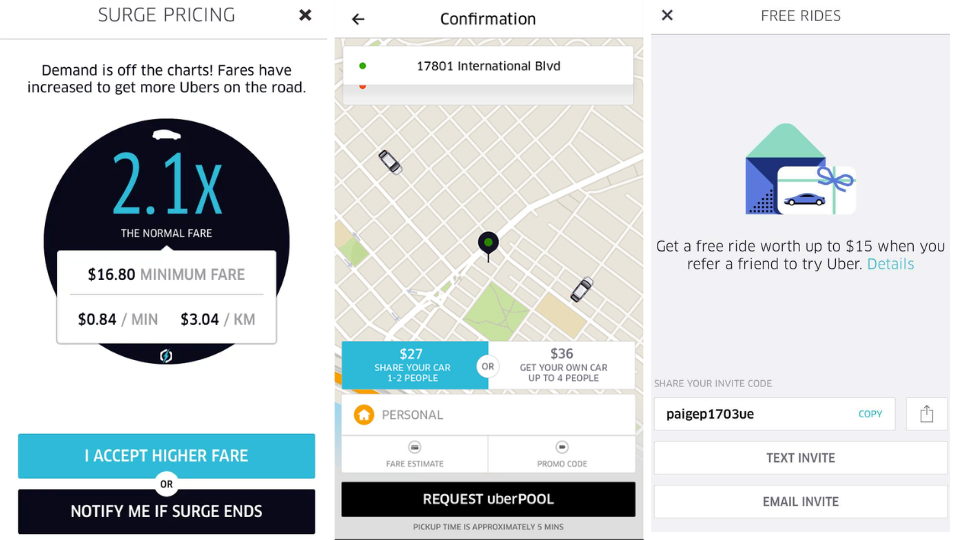
Uber’s journey is defined by its refusal to remain stagnant. It began as a premium, high-end black car service—a luxury for the few. However, leadership recognized that mass-market adoption required a pivot. Through relentless experimentation, they launched UberX, followed by the groundbreaking UberPOOL.

The introduction of UberPOOL served as a masterclass in experimentation. By testing whether riders would trade off individual convenience for a lower price point through ride-sharing, Uber identified a massive, untapped market segment. This was not a gamble, but a controlled test of user price sensitivity and behavioral psychology, which eventually became a core revenue pillar.
Airbnb: The Power of Visual Trust
In its infancy, Airbnb struggled with a fundamental hurdle: trust. Why would a stranger stay in a stranger’s home? The company hypothesized that the barrier was not the service, but the presentation. They conducted a localized experiment in New York City, dispatching professional photographers to capture listings. The resulting data was unambiguous: professional photography led to a significant increase in booking rates. What started as a manual, labor-intensive experiment evolved into a global standard that professionalized the peer-to-peer accommodation market.
2. Data-Driven Decision-Making: Beyond Intuition
In the Silicon Valley lexicon, "data-informed" is the gold standard. For these three companies, data is not just a reporting tool; it is the fuel for strategic architecture.
Spotify’s Algorithmic Personalization
Spotify’s dominance in music streaming is largely attributed to its ability to turn listening habits into predictive intelligence. By leveraging machine learning, Spotify moves beyond generic categorization to hyper-personalized experiences. Their "Discover Weekly" and "Wrapped" campaigns are not just marketing stunts; they are products of massive data synthesis. By analyzing millions of data points—skip rates, replay frequency, and genre affinity—Spotify ensures that users are consistently engaged, which directly correlates to lower churn rates and higher lifetime value (LTV).
Uber and the Science of Dynamic Pricing
Uber’s surge pricing is perhaps the most famous application of real-time data in the service economy. By analyzing traffic patterns, demand spikes, and driver availability in real-time, the platform balances the marketplace. This data-driven approach ensures that supply meets demand, maintaining the "seamless" promise of the app even during peak hours or inclement weather.
3. The "Fail Fast" Ethos and Calculated Risk-Taking
Innovation is inherently tied to the possibility of failure. Uber, Airbnb, and Spotify have successfully institutionalized a "fail fast" culture, where the cost of failure is viewed as the price of admission for innovation.
Encouraging Intellectual Daring
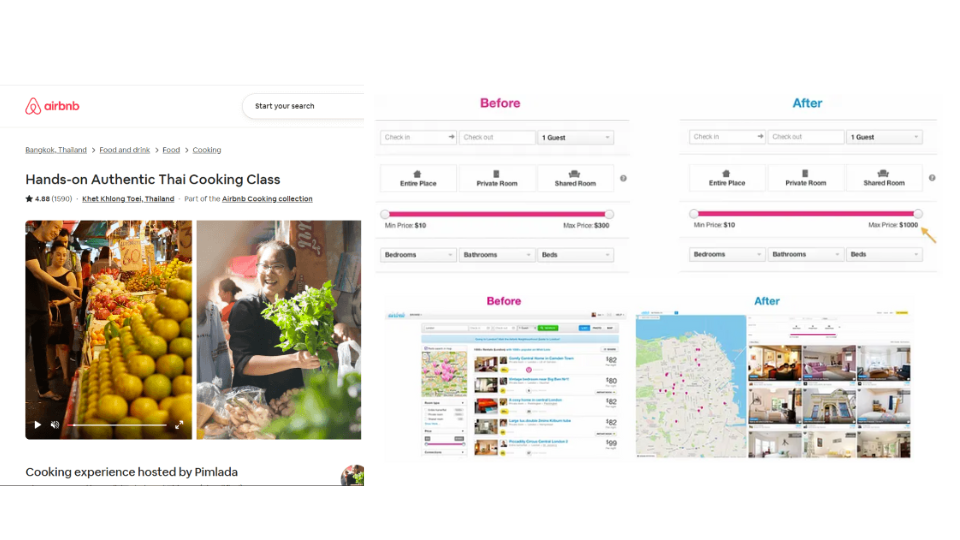
Airbnb operates on the principle that the status quo is the greatest enemy of growth. When the company expanded into "Experiences," it was a significant departure from their core business of renting space. While not every host-led experience was an immediate success, the company’s internal structure allowed for rapid prototyping. They launched, gathered user feedback, and pruned the non-performers while scaling the winners.
Managing Risk
The "Fail Fast" mantra is often misunderstood as reckless. In practice, for these companies, it is about minimizing the cost of failure. By launching features in limited, beta-tested markets, they isolate the impact of potential failure. If an experiment doesn’t move the needle on key performance indicators (KPIs), it is discarded before it consumes significant capital or engineering resources.
4. Cross-Functional Collaboration: Breaking the Silos
Growth is rarely the result of a single department. It requires the synchronization of engineering, marketing, data science, and design.
Spotify’s Squad Model
Spotify is famous for its "Squad" structure, where small, cross-functional teams act as "mini-startups." A squad might include a developer, a designer, and a product manager working together on a single feature. This eliminates the "hand-off" delays that plague traditional corporate hierarchies. Because the team possesses all the skills necessary to ship a feature, they can move with the speed of an early-stage startup despite having thousands of employees.
Airbnb’s Holistic Product Design
Airbnb emphasizes that the user experience is not just an interface issue; it is a trust issue. Consequently, their cross-functional teams integrate customer support insights directly into the design process. If support teams report a recurring issue with host-guest communication, that data is immediately funneled to product engineers. This integration ensures that the platform evolves based on the actual problems faced by the community, not just the assumptions of the developers.
5. The Obsession with Seamless User Experience (UX)
If there is one common denominator, it is the radical simplification of complex tasks.
- Uber: Reduced the complex, anxiety-inducing process of hailing a taxi to a single button press.
- Airbnb: Transformed the fragmented world of lodging into a curated, trustworthy, and visual shopping experience.
- Spotify: Ended the era of file management and piracy by making the world’s music library instantly accessible.
These companies understood that every "click" or "friction point" in an app is a potential drop-off point for a user. By obsessing over UI/UX, they converted casual users into loyal advocates.
Implications for Today’s Businesses
The lessons from these giants are clear: growth is a science, not an accident. To replicate their success, organizations must:
- Democratize Data: Ensure that teams have access to the metrics that matter.
- Institutionalize Learning: Create a culture where a failed experiment is treated as a win for knowledge.
- Minimize Friction: Ruthlessly eliminate any step in the user journey that does not add value.
- Flatten Hierarchies: Empower cross-functional teams to make decisions without waiting for top-down approval.
The age of the disruptor is far from over. As technology continues to evolve, the businesses that will lead the next decade are those that treat growth as a continuous, collaborative, and data-backed pursuit. By looking back at the early-stage strategies of Uber, Spotify, and Airbnb, modern enterprises can move beyond trial and error and begin to engineer their own path to scale.
