
The AI Trust Signal: Why Google Reviews Have Become the New Currency of Search in 2026
The digital landscape of 2026 has fundamentally decoupled from the traditional "ten blue links" model that defined the internet for three decades. As Google AI Overviews, ChatGPT, Perplexity, and Gemini become the primary interfaces through which consumers interact with the web, the mechanics of visibility have undergone a radical transformation. For local businesses, the question is no longer just "How do I rank on page one?" but rather, "How do I ensure the AI recommends me?"
According to new industry analysis and data provided by Reviewly.ai, the answer lies in a single, potent metric: the AI trust signal. Specifically, the freshness, sentiment, and narrative depth of Google reviews have emerged as the primary data points used by Large Language Models (LLMs) to determine business credibility.
Main Facts: The Shift from Keywords to Credibility
In the current search ecosystem, AI platforms act as digital concierges. When a user asks, "Find me a reliable HVAC repair service in Austin that handles emergency calls," the AI does not simply scan for keywords on a website. Instead, it aggregates data from across the web to build a "trust profile."
The primary findings of the 2026 search landscape indicate:
- Reviews as Infrastructure: Reviews are no longer just social proof for human eyes; they are structured data for AI training.
- The Death of Stagnant Volume: A business with 500 reviews from 2023 is now being outranked by a business with 50 reviews, provided 10 of those were posted in the last 30 days.
- Narrative Weight: AI models prioritize "high-information" reviews—those that describe specific problems and solutions—over generic five-star ratings.
- The Feedback Loop: Active owner responses are categorized by AI as a signal of "business health" and operational reliability.
Chronology: The Evolution of Local Discovery (1998–2026)
To understand why reviews have reached this level of importance, one must look at the trajectory of Search Engine Optimization (SEO).
The Keyword Era (1998–2010)
Discovery was based on exact matches. If your website said "Plumber in Chicago" more times than your competitor’s, you likely ranked higher. Trust was a secondary concern to technical optimization.
The Backlink and Authority Era (2010–2020)
Google’s algorithms became more sophisticated, prioritizing "authority." This was measured through backlinks—other websites vouching for yours. Local businesses began to focus on citations in directories, but the "human element" remained filtered through technical signals.

The E-E-A-T Era (2020–2024)
Google introduced Experience, Expertise, Authoritativeness, and Trustworthiness (E-E-A-T). This was the first major step toward prioritizing real-world reputation. Google Business Profiles (formerly Google My Business) became the cornerstone of local SEO.
The AI Recommendation Era (2024–Present)
With the integration of Generative AI into search, the "middleman"—the search results page—began to disappear. Users now receive direct answers. Because AI models are trained to avoid "hallucinations" and provide safe recommendations, they lean on the most verifiable, third-party data available: the live feed of customer experiences found in Google Reviews.
Supporting Data: Why "Freshness" and "SMS" are the New Standards
Data from Reviewly.ai highlights a growing gap between businesses that automate their reputation management and those that treat it as an occasional marketing campaign.
The Freshness Factor
In 2026, the "half-life" of a review has shrunk significantly. Analysis shows that AI recommendation engines apply a "decay filter" to reviews. A review older than six months carries 40% less weight in AI-generated summaries than a review posted within the last 30 days. For local service providers, the optimal "velocity" is now identified as 5 to 10 new reviews per month. This steady stream signals to the AI that the business is currently operational, reliable, and maintaining quality standards.
The Outreach Channel Gap
The method of requesting reviews has a direct impact on the success of these trust signals. Comparative data indicates:
- Email Requests: Average open rates have plateaued at roughly 18-20%, with a review conversion rate of less than 2%.
- SMS Requests: Text messages see open rates as high as 98%, with conversion rates for reviews hovering between 10% and 15%.
The immediacy of SMS allows businesses to intercept customers at the "Peak of Satisfaction"—usually within one to two hours of service completion.
The Detail Dividend
AI models utilize Natural Language Processing (NLP) to "read" reviews. A study of AI Overviews found that businesses mentioned in "Best of" AI summaries had 3.5x more descriptive keywords in their customer reviews (e.g., "fixed my leaking pipe in under an hour," "transparent pricing") than businesses that were omitted.

Official Responses and Expert Perspectives
Industry leaders suggest that the shift toward AI-driven recommendations is a permanent recalibration of the market.
"The era of ‘gaming the system’ through metadata is over," says a spokesperson for Reviewly.ai. "We are now in an era of ‘Reputation Infrastructure.’ If an AI cannot find fresh, consistent, and positive data points about your business from third-party customers, you effectively do not exist in the eyes of the modern consumer."
Experts at Reviewly.ai argue that businesses must move toward "always-on" systems. "The biggest mistake we see is the ‘review spike’—a business realizes they have a low rating, runs a campaign to get 50 reviews in a week, and then stops. AI algorithms flag this as inorganic behavior. Consistency is the only way to build long-term AI trust."
Furthermore, the role of the business owner has shifted from service provider to "community engager." Responding to reviews is no longer a courtesy; it is an SEO requirement. When an owner responds to a review, they have the "editorial freedom" to include context that the AI indexes. For example, responding with, "We were happy to help with your HVAC installation in North London," reinforces both the service type and the geographic location for the LLM.
Implications: The Digital Divide of 2026
The rise of reviews as a primary AI trust signal has significant implications for the competitive landscape.
1. The Visibility Tax
Businesses that do not have an automated system for review generation are essentially paying a "visibility tax." While they may provide superior service, the lack of digital data points means they are bypassed by AI agents in favor of competitors who may have slightly lower skill but a much higher "data velocity."
2. The Narrative Economy
The "star rating" is becoming secondary to the "narrative." Because AI can summarize hundreds of reviews into a single paragraph, one detailed negative review that outlines a specific failure (e.g., "they were late three times and didn’t return calls") can outweigh ten generic five-star reviews that simply say "great job." This puts a premium on total quality management.

3. The End of Multi-Platform Dilution
While it was once advised to spread reviews across Yelp, Facebook, and industry-specific sites, the 2026 data suggests a consolidation. Google Reviews remain the "source of truth" for the majority of AI platforms, including Google’s own Gemini and SGE. Businesses are now being advised to "double down" on Google to create a singular, undeniable pillar of authority rather than several weak ones.
4. Automation as a Necessity
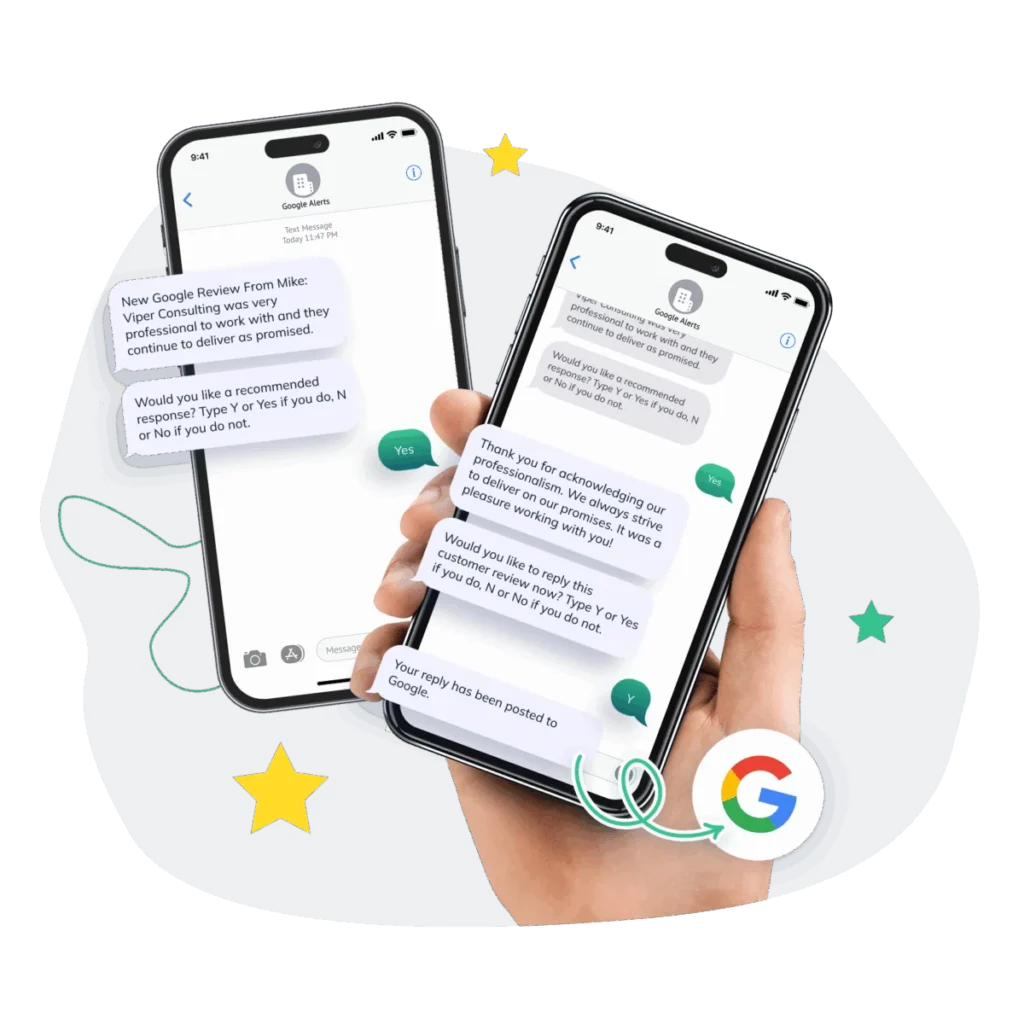
As the requirement for "freshness" increases, manual outreach becomes impossible to scale. The emergence of AI-powered tools like Reviewly.ai—which can automate requests, prompt customers for specific details, and even draft keyword-optimized responses—has moved from a "luxury" to a "core utility."
Conclusion: Building for the Machine, Winning for the Human
As we move deeper into 2026, the boundary between "reputation" and "search engine optimization" has vanished. A business’s reputation is its SEO. The AI models that now mediate our world are designed to replicate human trust, and humans trust recent, detailed, and verified experiences.
To survive in this landscape, local businesses must stop viewing reviews as a passive byproduct of a sale and start viewing them as the essential fuel for their AI visibility engine. By mapping customer touchpoints, utilizing high-conversion channels like SMS, and fostering a culture of detailed feedback, businesses can ensure they are not just found, but recommended.
In the words of the Reviewly.ai team: "Every review you earn is doing double duty: it is winning the heart of a future customer, and it is proving to the AI that your business is a pillar of the community worth talking about."
