
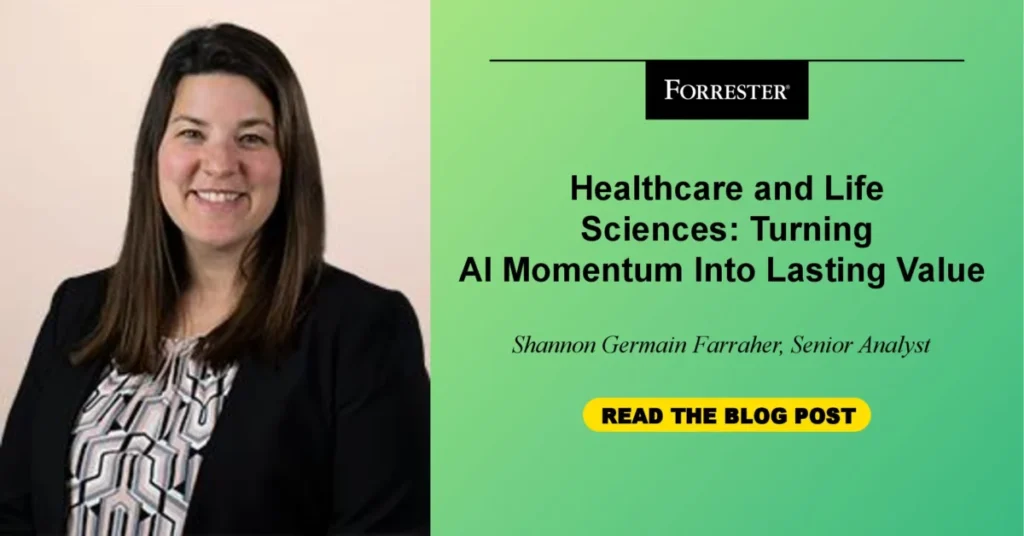
The AI Reckoning: Why Healthcare and Life Sciences Must Pivot from Speed to Strategy
The healthcare and life sciences (HCL) industry is currently undergoing one of its most significant technological transformations in history. Artificial Intelligence (AI) has moved from the periphery of research laboratories into the heart of clinical operations, drug discovery pipelines, and patient engagement platforms. However, as the pace of deployment accelerates, a sobering consensus is emerging among industry analysts: the industry is prioritizing speed over sustainability, risking a repeat of the costly, fragmented digital failures that plagued previous decades.
While the promise of the "Intelligent Healthcare Organization" (IHO)—an ecosystem where AI drives seamless, personalized, and efficient care—is closer than ever, the path to achieving it is littered with systemic obstacles.
Main Facts: The Acceleration of AI in HCL
The current landscape of AI in HCL is defined by a frantic push toward integration. From ambient technology that automates clinical documentation to predictive algorithms that slash years off the drug discovery process, the momentum is undeniable. Consumers, emboldened by the rise of generative AI in their personal lives, are now demanding the same level of intuitive, hyper-personalized experiences from their health providers and insurers.
Yet, this rapid adoption is occurring without a cohesive structural foundation. The "AI-first" mindset is often applied as a series of disconnected pilots and bolt-on solutions. While these tools show promise in controlled environments, they frequently encounter a "reality gap" when deployed across the complex, legacy-heavy architectures of modern healthcare systems. The primary tension lies between the desire for immediate competitive advantage and the long-term necessity of operational maturity.
Chronology: A History of Technological Hype and Falling Short
To understand the risks facing AI today, one must look at the digital health trajectory of the past twenty years.
- The EMR Era (2000s–2010s): Electronic Medical Records were heralded as the panacea for clinical inefficiency. While they digitized data, they often created "siloed" information and burdensome workflows that led to physician burnout rather than efficiency.
- The Big Data/Analytics Wave (2015–2019): Real-world evidence platforms promised to revolutionize population health. Many fell short because the underlying data remained fragmented, dirty, and inaccessible, rendering sophisticated analytics useless.
- The Chatbot/Virtual Assistant Push (2020–2022): Early conversational agents were deployed to reduce administrative overhead. Most failed to achieve meaningful front-line adoption because they were not integrated into the core patient-provider workflow.
Today, we are in the Generative AI Phase. The risk is that HCL firms are treating AI with the same "layering" approach used for EMRs—deploying high-level tools on top of broken, fragmented foundations. Without addressing the underlying data governance and workflow integration issues, history suggests these tools will suffer from the same low adoption rates and lack of measurable ROI as their predecessors.
Supporting Data: The "Trust Tax" and Operational Friction
As investment dollars pour into HCL, a phenomenon known as the "trust tax" has emerged. This is the financial and operational burden of retrofitting AI capabilities after they have been deployed in a haphazard manner.
Forrester research indicates that when organizations skip the foundational work of data cleansing and organizational readiness, they encounter significant hurdles:
- Operational Friction: AI models often hallucinate or provide suboptimal guidance when integrated into workflows that were not designed to support machine-augmented decision-making.
- The Integration Deficit: Many HCL firms report that their AI tools remain "islands of excellence" that cannot communicate with the core enterprise systems.
- Workforce Resistance: Clinicians, already struggling with "alert fatigue" from previous digital health initiatives, are increasingly skeptical of new tools that add complexity to their daily routines.
Industry leaders are now acknowledging that the "AI-first" approach is no longer sustainable. Without a strategy that accounts for the human-in-the-loop, organizations face a potential decline in patient and employee trust—a currency that, once lost, is difficult to regain in the highly regulated HCL sector.
Official Responses and Industry Sentiment
The professional community is divided between unbridled optimism and a necessary "operational reckoning."
Industry experts argue that the HCL sector is entering a phase where the "shiny object" syndrome is being replaced by a focus on governance. "AI is not a plug-and-play solution," notes one senior analyst. "It is an organizational transformation." Professional organizations are increasingly calling for standardizing the evaluation of AI, emphasizing that algorithmic bias, clinical safety, and data privacy must be addressed at the design stage, not as an afterthought.
Furthermore, big tech firms and non-traditional entrants—such as retailers moving into primary care—are currently setting the benchmark for what a "good" AI experience looks like. Because these entrants are not burdened by decades of legacy infrastructure, they are delivering seamless, consumer-centric interfaces that make traditional HCL firms appear sluggish and out of touch. This creates an "unbalanced environment" where traditional HCL organizations risk losing their relevance in the patient experience.
Implications: Building the Intelligent Healthcare Organization
The future of HCL hinges on moving from experimentation to enterprise-level discipline. To avoid repeating the failures of the past, organizations must pivot toward three core pillars:
1. Workflow-First Design
Instead of forcing a clinical workflow to accommodate a new AI tool, firms must redesign workflows around the AI. This means engaging clinicians, nurses, and administrative staff during the development phase to ensure that the tool reduces friction rather than increasing it.
2. Data Governance as a Foundation
AI is only as good as the data it consumes. HCL firms must prioritize the breaking down of data silos. This involves establishing enterprise-wide standards for interoperability and data quality. Without a "single source of truth," AI will continue to provide disconnected and potentially dangerous recommendations.
3. Measuring Outcomes, Not Engagement
Many HCL firms currently define "success" by the number of AI-driven interactions or user clicks. This is a vanity metric. Success must be measured by clinical outcomes—such as reduced readmission rates, faster diagnostic timelines, or improved patient satisfaction scores. If the technology does not translate into a measurable improvement in health or business outcomes, it is a failure, regardless of how advanced the algorithm is.
The Path Forward
The next generation of HCL leadership will be defined by those who can successfully balance the urgency of innovation with the discipline of execution. Organizations that view AI as a foundational, long-term capability rather than a tactical "bolt-on" will be the ones that survive the current transition.
As the industry moves into the next phase of deployment, the focus must shift toward:
- Standardization: Establishing industry-wide ethics and performance benchmarks for AI in care.
- Reskilling: Investing in the workforce to ensure that humans remain empowered, not replaced, by AI.
- Transparency: Building systems that are explainable, particularly in clinical settings where a "black box" model is unacceptable.
The "Intelligent Healthcare Organization" is not just a technological target—it is a cultural one. It requires a fundamental shift in how HCL firms think about value creation. By moving beyond rapid, uncoordinated experimentation and committing to a rigorous, governance-first strategy, the industry has the opportunity to finally realize the potential of digital health.
For HCL leaders, the message is clear: The "trust tax" is a choice. You can pay it now by investing in the necessary foundational infrastructure, or you can pay it later through failed deployments, eroded patient trust, and diminished influence in an increasingly competitive, AI-driven market. The choice to act with discipline today will define the next decade of healthcare delivery.
For those looking to navigate this transition, upcoming reports from industry analysts will delve deeper into the intersection of consumer-facing AI and workforce readiness. These studies aim to provide a roadmap for scaling AI in ways that prioritize value, sustainability, and trust—the core principles required for any organization to lead in the era of intelligence.
