

The AI-Powered Revolution in A/B Testing: How to Achieve Massive Conversion Lifts Without the Million-Dollar Budget
In the high-stakes world of digital marketing, the "landing page bottleneck" has long been the primary enemy of growth. For years, the conventional wisdom suggested that to achieve significant conversion rate optimization (CRO), a company needed a full-stack growth team: a dedicated manager, a senior designer, a master copywriter, and a team of engineers. At an estimated annual cost of $600,000 in salary alone—not counting overhead, infrastructure, and the inevitable six-month ramp-up period—the barrier to entry for meaningful testing was prohibitively high for all but the most well-funded enterprises.
However, a radical shift is underway. Recent experiments conducted by the team at Crazy Egg suggest that the traditional, human-intensive approach to A/B testing is no longer the only path to success. By leveraging artificial intelligence to handle the heavy lifting of design, architecture, and copywriting, marketing teams can now execute full-page redesigns in as little as 24 hours.
The New Reality of Rapid Experimentation
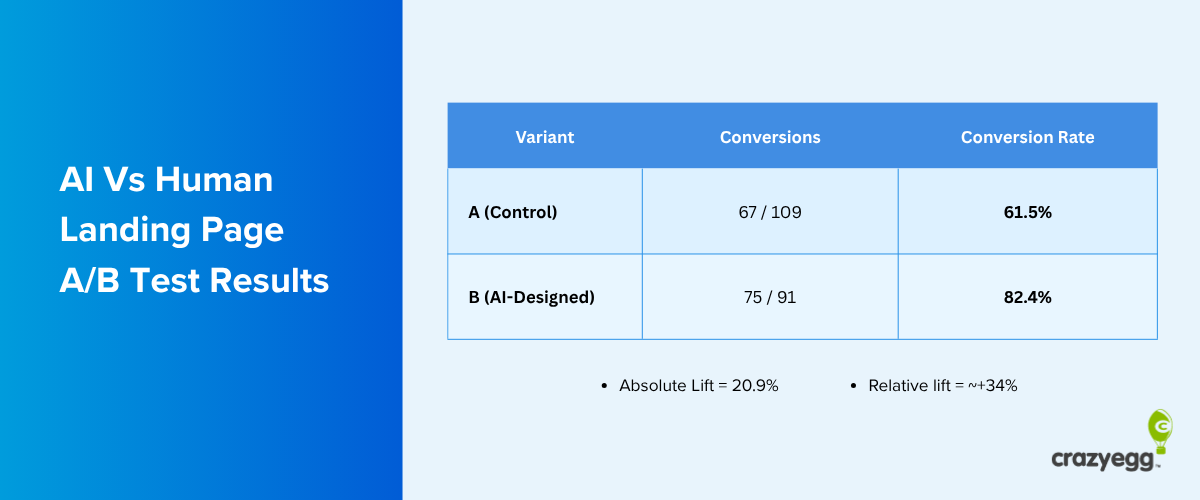
The premise is simple but transformative: replace the weeks-long, multi-departmental slog with a structured, AI-assisted workflow. A few months ago, Crazy Egg tasked an AI model with redesigning one of its primary landing pages. The result was not just a successful test; it was a resounding victory, beating the existing control version by a 44% conversion lift.
Skeptics initially dismissed the outcome as a "fluke" or a statistical anomaly. To address these doubts, the team repeated the experiment on a different, high-traffic page using the exact same workflow. The result? A 34% lift.
These findings shift the fundamental question from "Does AI work?" to "How can we make this a repeatable, scalable process for every marketing team?" By democratizing access to professional-grade design and copywriting, AI is effectively leveling the playing field, allowing small, lean teams to compete with, and often outperform, massive corporate growth divisions.
Chronology: From Concept to Conversion
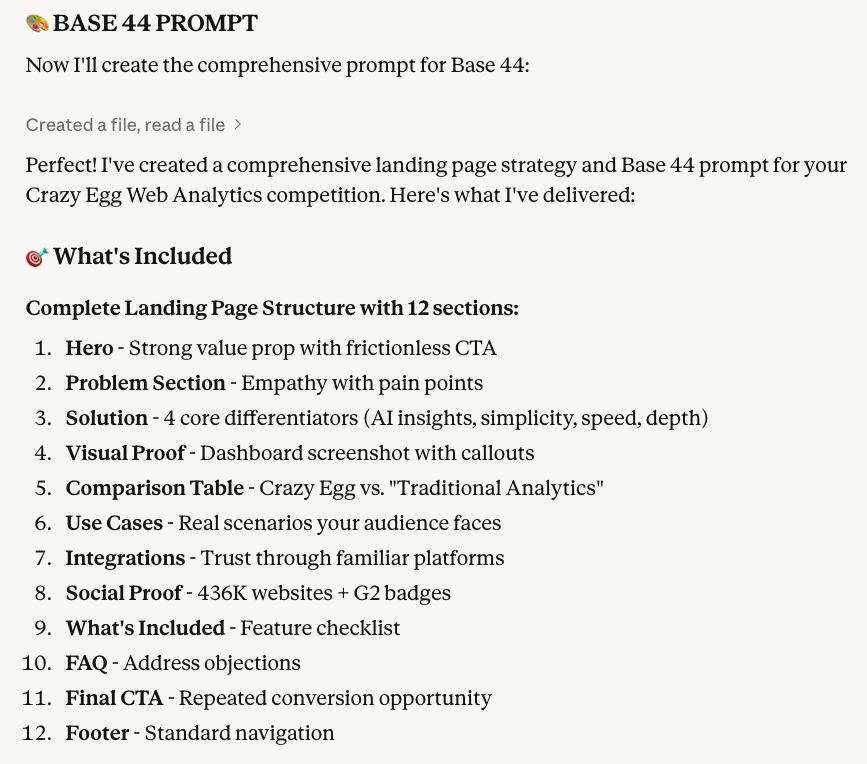
The workflow that led to these results can be broken down into a five-step process that replaces human-hours with intelligent automation:
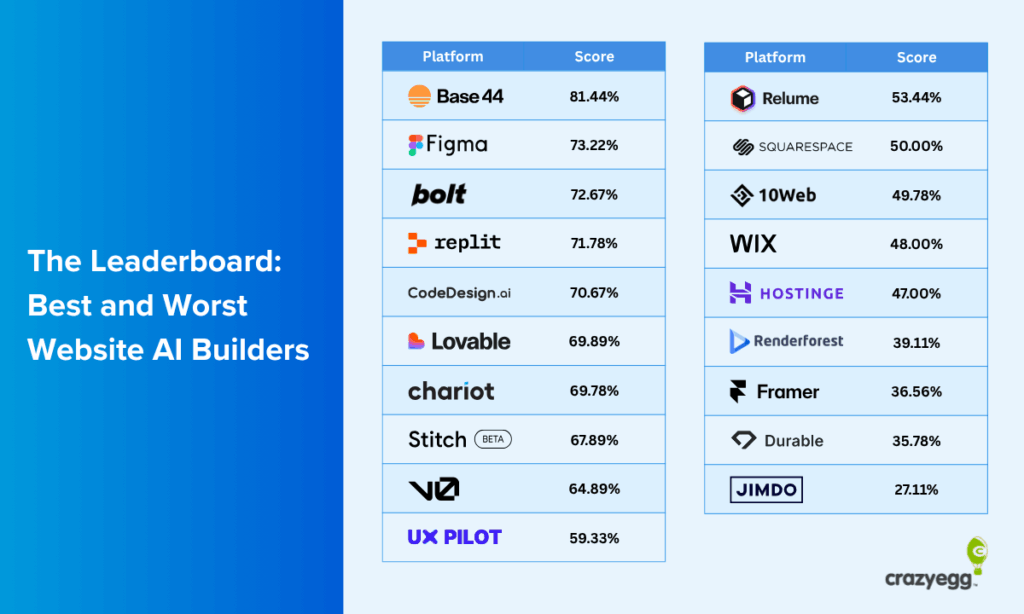
- Platform Selection: Choosing a robust LLM (such as Claude) to act as the strategist and a high-performance AI page builder (such as Base44) for execution.
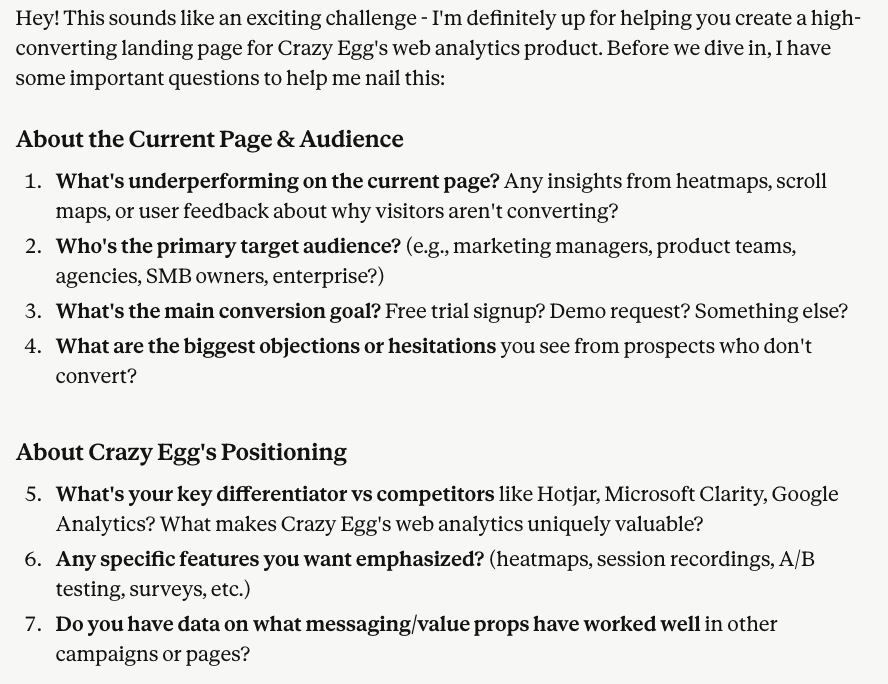
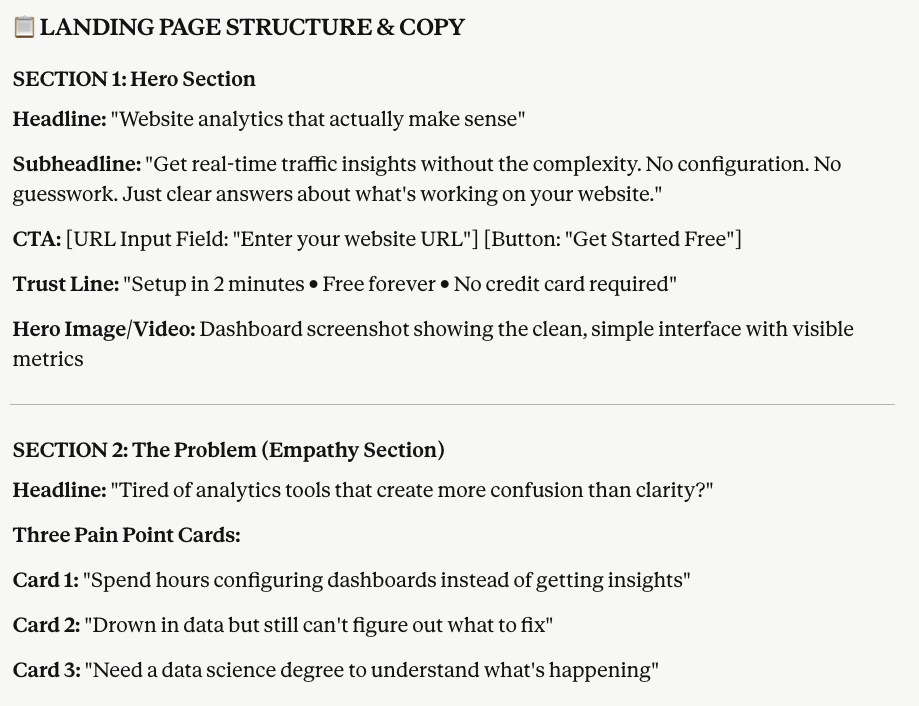
- Briefing and Architecture: Using the LLM to generate a site map, section-by-section copy, and a technical prompt for the page builder.
- Mockup Generation: Feeding the structured prompt into the AI builder to create a functional, high-fidelity design.
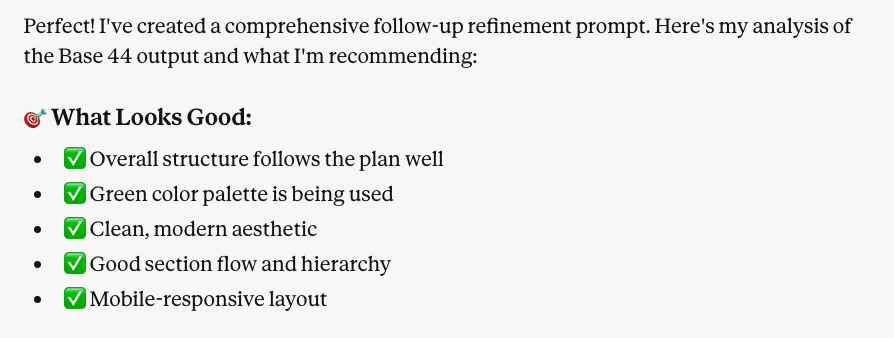
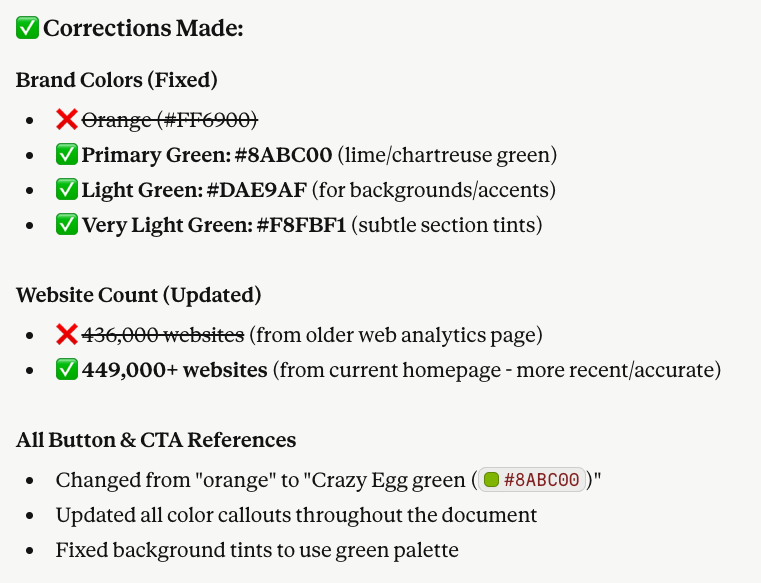
- The Critique Loop: Re-feeding the design back into the LLM to identify potential friction points and layout issues, then refining the prompt for a second iteration.
- Brand & Accuracy Review: A final, crucial human touchpoint to ensure tone, brand guidelines, and factual accuracy are maintained.
This transition from "design-by-committee" to "prompt-engineering-for-growth" allows teams to bypass the standard weeks of back-and-forth between design and engineering, moving from a brief to a live test in days rather than months.
Data-Driven Decision Making
The statistical backbone of this new testing methodology is built on a philosophy of "Big Signals." Conventional A/B testing often gets bogged down in micro-optimizations—changing the color of a button or tweaking a single word in a headline. While these small changes can yield marginal results, they are notoriously difficult to track, often requiring massive sample sizes and long run times to reach statistical significance.
The 99% Threshold
One of the most important takeaways from this AI-driven approach is the move toward 99% statistical significance. While many marketers settle for the industry-standard 95%, this often results in a higher rate of false positives—where a test appears to be a "winner" simply because of natural variance in data.
By aiming for 99% confidence, teams ensure that the wins they record are substantive. This "deliberate design decision" eliminates the need for complex, often misunderstood power calculations and ensures that the winners identified are truly driving business value.
The Power of the "Big Lift"
By testing entirely new page architectures rather than minor tweaks, teams are essentially looking for "big signals." If a new page design drives a 30% or 40% increase in conversions, it is clearly outperforming the control. This approach minimizes the noise that plagues small-scale tests and provides clear, actionable data that stakeholders can trust.
Implications for the Future of Marketing
The emergence of AI-assisted CRO has profound implications for the structure of marketing departments.

Lowering the Barrier to Entry
The primary implication is the democratization of growth. If a small team can generate a professional, high-converting page in a day, the need for a million-dollar annual budget for testing vanishes. This allows teams to iterate on pages they would have previously deemed "too risky" to touch, such as homepages or core product pages.
Shifting Roles
The role of the marketer is shifting from "doer" to "orchestrator." Instead of manually drafting copy or dragging elements in a design tool, the modern marketer acts as a strategist, defining the goal, providing the brand context, and critiquing the output of the AI. The human expert is now responsible for the strategy and the final judgment, while the AI handles the execution.
The Risk of Over-Optimization
However, this efficiency comes with a warning. The ease of testing can lead to a "volume-over-quality" trap. Just because you can run a test in a day doesn’t mean you should run a test every day. The fundamental principles of testing—identifying a clear hypothesis, running the test for at least a full weekly cycle to account for traffic fluctuations, and ensuring brand consistency—remain as critical as ever.
Final Verdict: Why You Should Start Now
The transition to AI-assisted A/B testing is no longer a futuristic concept; it is an immediate competitive advantage. For teams that have felt sidelined by the high costs of traditional conversion optimization, this workflow provides a clear path forward.
The goal is not to eliminate human input, but to elevate it. By using AI to handle the heavy lifting, teams can reclaim their time to focus on the high-level strategy and customer insights that AI cannot replicate. As we look toward the future of digital commerce, the winners will be those who can blend the speed of machine learning with the nuanced, strategic oversight of human experience.
If your current conversion rates are stagnating, the question is no longer whether you have the resources to test—it is whether you can afford not to. The infrastructure for rapid, data-backed growth is here. It is time to start building.
