
The AI Frontier: Navigating the Explosion of Marketing Technology
The modern marketing landscape is currently undergoing its most significant transformation since the dawn of the internet. If you can name a marketing function—from predictive search and hyper-personalization to account-based intelligence and campaign optimization—there is almost certainly an artificial intelligence (AI) tool designed to handle it.
However, for CMOs and marketing managers, the rapid proliferation of these platforms presents a paradox: the more tools available, the harder it becomes to determine which ones will provide a genuine competitive advantage and which are merely "shiny objects." The current challenge is not to adopt every available automation tool, but to strategically identify the technologies capable of fundamentally disrupting day-to-day operations and expanding human potential.
The State of the AI Marketing Ecosystem
The AI marketing sector has moved beyond the hype cycle of early generative models and into a phase of tactical integration. We are seeing a shift from "AI for the sake of AI" toward specialized platforms that solve granular, high-value problems.
The current landscape is defined by a massive influx of venture capital and R&D spending, resulting in a crowded market where new players emerge weekly. This environment requires a disciplined approach. Rather than viewing AI as a replacement for human intellect, forward-thinking organizations are viewing these platforms as a means of augmentation. By offloading repetitive analytical tasks to machine learning models, marketers are finding the space to return to the core of their profession: strategy, creative conceptualization, and deep customer empathy.
A New Era of Capability: Augmentation Over Automation
The most compelling AI tools currently on the market do not simply help us complete existing tasks faster. Instead, they expand the boundaries of what is possible. For instance, whereas traditional personalization was limited by static segmentation rules, modern AI platforms can now analyze thousands of data points in real-time to craft bespoke messaging journeys that evolve based on user intent.
This shift represents a fundamental change in how marketers view their roles. By leveraging tools that can predict churn, forecast demand, and automate complex cross-channel campaigns, the marketer moves from a "doer" of administrative tasks to an "orchestrator" of sophisticated AI systems.
Chronology: The Rapid Ascent of Marketing AI
To understand where we are, we must look at the compressed timeline of this technological surge:
- 2020–2021: The Foundations of NLP. The focus was primarily on Large Language Models (LLMs) and basic natural language processing for social media sentiment analysis.
- 2022: The Generative Explosion. The public release of tools like ChatGPT and Midjourney forced every marketing department to rethink content creation and creative workflows.
- 2023: Integration and Infrastructure. Organizations shifted from testing standalone AI tools to building "AI stacks," integrating these models into existing CRM and CMS architectures.
- 2024–2025: The Era of Agentic AI. We have moved beyond simple prompts to autonomous agents capable of managing entire campaign workflows, from audience identification to A/B testing and performance reporting.
Supporting Data: Why AI Adoption is No Longer Optional
The data regarding AI adoption in marketing is definitive. According to recent industry benchmarks, high-performing marketing teams are now 3.5 times more likely to use AI than underperforming teams. Key performance indicators (KPIs) associated with AI integration include:
- Efficiency Gains: Organizations reporting a 20–30% reduction in time spent on content production and administrative reporting.
- Conversion Improvements: A 15% average increase in lead-to-customer conversion rates through AI-driven personalization.
- Cost Mitigation: A significant reduction in customer acquisition costs (CAC) as predictive analytics allow for more efficient ad spend allocation.
These metrics underscore the fact that AI is not merely a creative tool; it is a financial lever. Those who fail to integrate these systems risk being priced out of the market by more efficient, data-informed competitors.
Official Perspectives: Expert Insights on the AI Shift
Cathy McPhillips, Chief Marketing Officer at SmarterX and the Marketing AI Institute, emphasizes that the true value of AI lies in its ability to handle the "messy" data that humans simply cannot process at scale.
"The opportunity isn’t just to adopt every shiny new tool," says McPhillips. "It’s to understand what’s possible and identify the technologies that have the potential to disrupt your day-to-day operations. We are currently seeing a shift where the tools are becoming partners in the creative process rather than just calculators."
Industry practitioners suggest that the most successful implementations occur when companies start with a specific "use case" rather than a platform. By identifying a bottleneck—such as the inability to personalize emails for 100,000 subscribers—the search for the right AI tool becomes a matter of solving a business problem rather than keeping up with trends.
The Implications for Future Marketing Careers
The long-term implications of this technological wave are profound. We are moving toward a future where the "Marketing AI Stack" will be as essential as an internet connection.
1. The Skill Gap Evolution
Marketing roles are shifting. We are seeing a decreased demand for entry-level manual tasks (like basic copywriting or manual tagging) and an increased demand for roles centered on AI strategy, data ethics, and "prompt engineering."
2. The Ethics of Automation
As AI takes over more decision-making, the burden of ethical oversight increases. Marketers must now be stewards of brand reputation, ensuring that AI-generated content adheres to truth-in-advertising standards and does not perpetuate biases present in training data.
3. The Return to Human-Centricity
Counterintuitively, as AI becomes more capable, the premium on human-to-human connection increases. Authenticity, brand storytelling, and high-level strategy are the areas where human marketers are currently irreplaceable. AI provides the speed; humans must provide the direction.
See the Technology in Action: The Path Forward
Reading about the theoretical capabilities of AI is the first step, but the industry is reaching a point where experiential learning is vital. There is a distinct difference between understanding a tool’s marketing copy and witnessing its interface, logic, and output in a live environment.
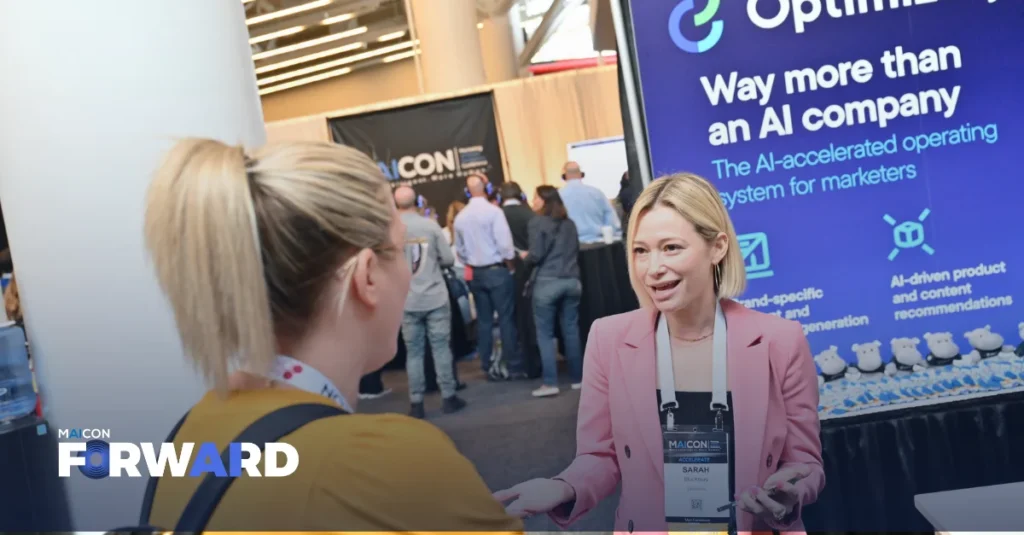
For marketers looking to cut through the noise, the Marketing AI Conference (MAICON) serves as a critical junction. Rather than navigating the vast and often confusing landscape of SaaS platforms in isolation, professionals have the opportunity to engage with the creators behind the technology.
By attending events like MAICON, practitioners can:
- Receive Live Demonstrations: See how specific tools handle real-world data sets.
- Engage with Practitioners: Learn from the mistakes and successes of early adopters who have already integrated these tools into their workflows.
- Explore Ethical Frameworks: Participate in discussions regarding the future of privacy, regulation, and the responsible use of AI in marketing.
Conclusion: The Horizon
We are still in the very early innings of the AI revolution. While 23 platforms might seem like a large number today, it is merely the tip of the iceberg. The coming years will be defined by the consolidation of these tools into more robust, enterprise-grade ecosystems.
For the modern marketer, the mandate is clear: remain curious, stay critical, and prioritize tools that demonstrably augment your capacity to deliver value to your customers. The technology is no longer coming; it is already here, integrated into the fabric of the modern digital economy. The question is no longer whether your organization will use AI, but how effectively you will orchestrate it to define the next generation of marketing excellence.
Join the conversation at the 7th annual Marketing AI Conference (MAICON), taking place October 13–15, 2026, in Cleveland, Ohio. Discover how leading organizations are moving beyond the hype and putting AI to work across every facet of the marketing function.
