
The Plumbing of the Modern Web: How Zapier Built the Infrastructure of Automation
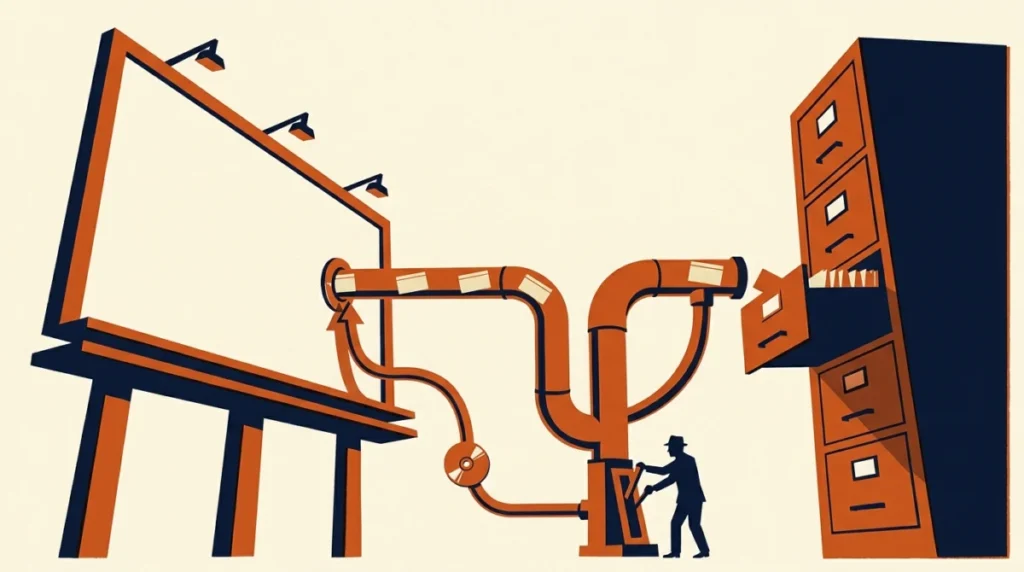
In the digital era, software has proliferated at an exponential rate, yet the vast majority of these business applications remain isolated silos. Companies often find themselves managing a fragmented stack—ad platforms, CRMs, email marketing tools, and internal communication apps—that refuse to talk to one another. Zapier has spent the last fifteen years positioning itself as the “plumbing” of this ecosystem, enabling businesses to move data between disparate platforms without requiring a single line of code.
As of October 2026, Zapier serves as a vital connective tissue for the marketing and operations world. By providing a bridge between advertising forms and customer databases, it has become a non-negotiable tool for small businesses and large enterprises alike. Yet, as the industry pivots toward artificial intelligence and autonomous agents, Zapier’s role is evolving from a simple workflow executor into an orchestrator of complex, AI-driven business logic.
The Mechanics of Automation: How a "Zap" Works
At its core, Zapier operates on the "Zap," a workflow composed of a trigger and one or more actions. A trigger is the inciting incident—such as a new lead form submission on Google Ads or a new row added to a Google Sheet—while an action is the subsequent task, such as creating a contact in Salesforce or sending a notification via Slack.
Beyond Simple Chains
While early workflows were strictly linear, modern Zapier automations have become sophisticated. Users can now build multi-step Zaps that incorporate:
- Filters: Ensuring actions only occur if specific conditions are met.
- Formatters: Cleaning or transforming data (e.g., converting time zones or capitalizing names).
- Branching Paths: Directing data through different routes based on complex logic.
The platform handles these events in one of two ways: "Webhooks," where applications push data to Zapier instantly, or "Polling," where Zapier checks the source app at set intervals. As of late 2026, the efficiency of these checks depends on the user’s subscription tier, with polling intervals ranging from 15 minutes on the free plan down to one minute for Team and Enterprise users.
Chronology: From Startup Weekend to the AI Frontier
Zapier’s history is a testament to the "lean startup" philosophy. Founded in 2011 in Columbia, Missouri, by Wade Foster, Bryan Helmig, and Mike Knoop, the company began as a humble hackathon project.
- 2011–2012: The team builds the first prototype. After an initial rejection, they join the Y Combinator Summer 2012 batch.
- 2014: The company achieves profitability, a rare feat for a venture-backed tech firm.
- 2021: Sequoia Capital and Steadfast Financial acquire shares from early investors at a $5 billion valuation.
- 2025: A year of rapid AI transformation. Zapier launches "Zapier Agents" in January, allowing users to build assistants that act in plain language across apps. By April, the company releases its Model Context Protocol (MCP) server, allowing LLMs like Claude and ChatGPT to execute Zapier actions directly.
- 2026: At ZapConnect 2026, the company introduces "Next Gen Zaps," a feature utilizing "Fluid Determinism," which allows workflows to switch dynamically between fixed logic and AI-driven reasoning.
Supporting Data: The Scale of Integration
The true power of Zapier lies in its vast ecosystem. Reporting over 9,000 connected applications as of October 2026, the platform has seen astronomical growth from the 1,500 integrations cited in 2020.
Pricing and Economic Impact
Zapier’s business model is built on "tasks"—successful action steps. While basic triggers and utilities are free, the cost scales with usage.
- Free Tier: 100 tasks per month; limited to two-step Zaps.
- Professional/Team: Tiers ranging from $19.99 to significant enterprise commitments for up to 2 million tasks.
Industry estimates from Sacra suggest an annual recurring revenue (ARR) of approximately $310 million as of late 2023. With over 800 staff members spread across 38 countries, the company has maintained a fully remote culture since its inception, proving that distributed teams can manage the world’s most critical integration infrastructure.
Implications for Marketing Operations
For marketers, Zapier is the engine behind "closing the loop." In the world of paid media, advertising platforms like Google and Meta need to know which clicks lead to actual revenue.
The Conversion Feedback Loop
The standard workflow involves:
- Lead Capture: A user clicks an ad and submits a form.
- Data Sync: Zapier passes this data to a CRM in real time.
- Offline Conversion: Once a sale is confirmed, Zapier sends that conversion data back to the ad platform, allowing bidding algorithms to optimize for actual revenue rather than just clicks.
This process is critical for small advertisers who lack the engineering resources to build direct API integrations. Furthermore, with the launch of Google’s Data Manager API in late 2025, Zapier has been cemented as a primary partner for centralizing first-party data, standing alongside enterprise-grade tools like Tealium and Hightouch.
Security, Criticisms, and Challenges
Despite its ubiquity, Zapier faces significant hurdles.
Predictability and Latency
Critics often point to the "metered task" pricing as a source of cost unpredictability. A single lead moving through a complex, AI-heavy workflow can consume multiple tasks, potentially leading to budget overruns. Furthermore, reliance on polling introduces latency. In the high-stakes world of performance marketing, a delay—or worse, a broken webhook—can mean lost data. As the company’s lead ads explainer notes: "A broken webhook does not delay leads; it destroys them."
Security Vulnerabilities
Handling credentials for thousands of third-party systems creates a massive target for bad actors. In 2025, Zapier suffered a breach involving a 2FA misconfiguration that exposed some code repositories. Additionally, in February 2026, a researcher identified an exploit chain dubbed "Zapocalypse," which could have theoretically allowed for unauthorized code execution. While Zapier remediated these issues swiftly, the incident underscored the inherent risks of "tool poisoning" in an era where AI agents are granted broad access to business accounts.
The AI Shift: Is the "Visual Workflow" Dying?
The most existential question facing Zapier is whether the era of "visual workflows" is waning. As AI agents gain the ability to call APIs directly, some observers argue that a drag-and-drop interface is becoming an unnecessary middle layer.
Evidence suggests a shift: a16z data from August 2026 showed a double-digit decline in web traffic to automation platforms like Zapier, Make, and n8n over a trailing twelve-week period. This may indicate that developers and power users are bypassing traditional UI-based platforms in favor of native agentic coding or direct API-to-LLM connections.
However, Zapier is not standing still. By integrating "Fluid Determinism" and creating an MCP server that allows AI models to interact with its 9,000+ app ecosystem, Zapier is attempting to pivot from a "platform for building Zaps" to a "platform for powering AI agents."
Conclusion: The Future of Integration
Zapier occupies a unique space in the technology landscape. It is neither a pure-play enterprise iPaaS like MuleSoft, nor is it a simple data pipe. It is a massive, user-friendly abstraction layer that has successfully democratized enterprise-grade automation.
As we look toward 2027 and beyond, the battle for the "marketing stack" will move from manual workflow construction to autonomous agent orchestration. Whether Zapier can maintain its dominance as users move from clicking buttons to prompting LLMs remains the central question. For now, it remains the standard-bearer, providing the essential, if sometimes invisible, infrastructure that keeps the modern digital economy running.
